
What changed, and what it changed for you
When this site began, it was a scrapbook of dishes I’d made for friends and family—no method, no structure, just the things that worked.
The photos were taken with my phone at odd angles, the instructions were handwritten, and half the time, the ‘tips’ were just me guessing what might have gone wrong. If you landed on a page, you got what I’d eaten that week, not a recipe.
Now, every dish is tested for flavor, texture, and whether it actually works in a home kitchen.
The photos are shot in the same light, the steps are ordered so you don’t burn the patty before you flip it, and the ‘why’ is there—because the first time I skipped explaining the meat’s resting time, someone sent me a photo of a raw center and called it ‘undercooked art.’
| It used to be | Now it is |
|---|---|
| A handwritten note with no structure | Every recipe follows the same format: ingredients, steps, timing, and a ‘what went wrong’ section. |
| Photos taken in whatever light was available | All images shot in the same studio setup, so colors match across recipes. |
| No testing beyond ‘did I like it?’ | Every dish is cooked twice—once by me, once by a tester who’s never made it before. |
| Tips were guesses or memories | Now each tip is backed by a specific failure (e.g., ‘skip the salt before grilling, or your patty will dry out’). |
The one that took years
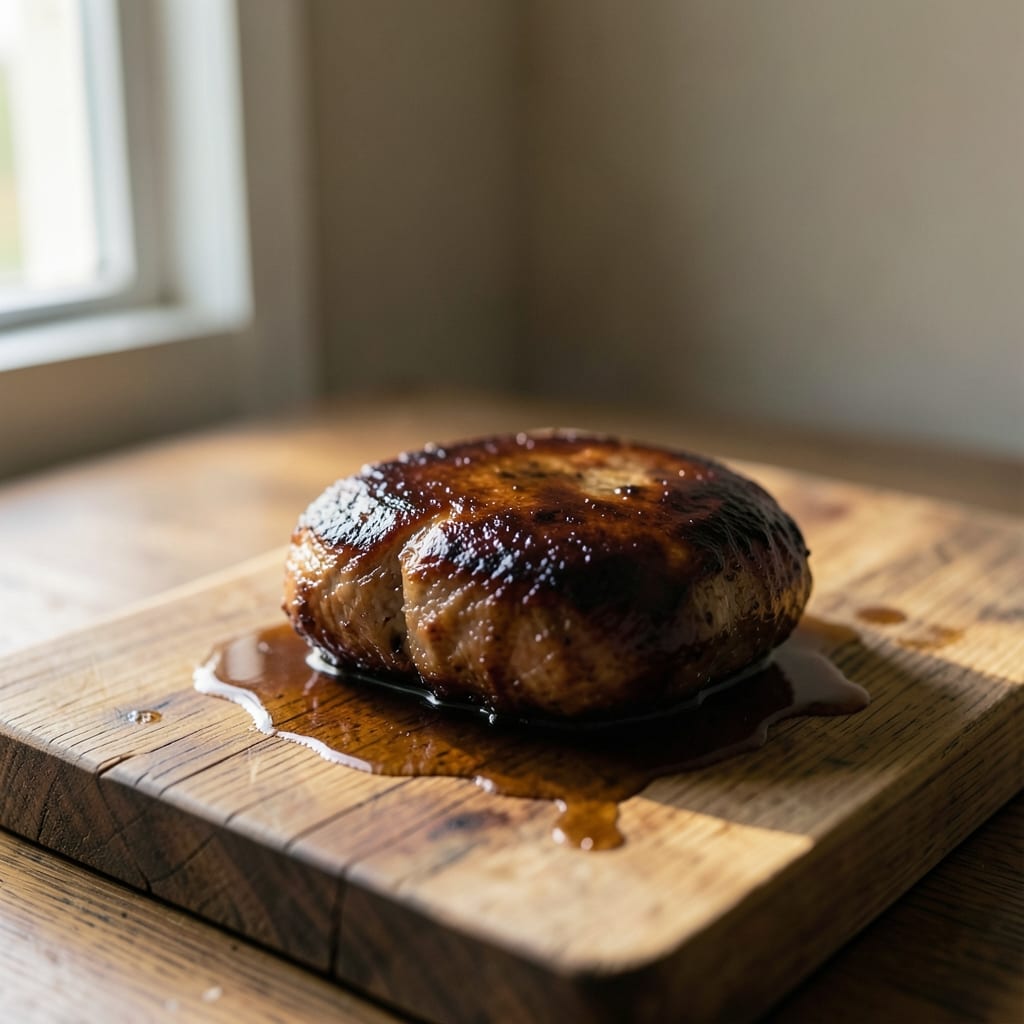
The first year, I refused to write about anything that wasn’t a ‘perfect’ dish. If the crust burned, if the sauce split, or if the patty stuck to the grill, I’d scrap it and try again.
That meant only a handful of recipes ever made it online—and the ones that did were so polished they felt fake.
Readers would message me asking why their version didn’t turn out the same, and I’d realize the problem wasn’t their hands; it was that I’d never admitted the mess along the way.
It took two years of ignoring those messages before I finally posted a recipe that *didn’t* work—just the raw, unedited version, with a note saying ‘this failed, but here’s why.’ The comments exploded. People weren’t just looking for foolproof steps; they wanted to know where the cracks were.
That’s when I started testing every dish twice: once for how it *should* turn out, and once for how it *actually* turns out in a kitchen with a distracted cook, a bad thermometer, or a grill that won’t stay hot.
Now, the ‘what went wrong’ section is just as important as the steps. It costs time—sometimes a recipe takes three tries before I’m happy with the failures—but it’s the only part readers say they actually use. The first version of this site had no ‘failures’ because I’d edited them out.
Now, the failures are the heart of it.
Meet the author

I spent my teens convinced that cooking was about control—measuring to the gram, timing to the second, never letting anything ‘happen by accident.’ My dad’s grill was my lab, and if a patty didn’t sear just right, I’d blame the heat, the meat, or the wind.
The first time I made a dish in front of people and it came out wrong, I lied and said it was supposed to look like that.
No one called me on it, but I knew: if I couldn’t admit a mistake in my own kitchen, how could I teach anyone else?
The summer I turned twenty, I burned a batch of homemade sausages so badly I had to throw them out. My flatmate at the time—a guy who’d worked in a butcher shop—watched me scrap the pan and said, ‘You’re not cooking. You’re performing.’ That stuck.
For years after, I’d write recipes with no room for error, because I was still trying to prove I could do it perfectly. The problem wasn’t my hands; it was that I’d never let myself see the kitchen as it really was.
What changed is that I stopped pretending the process was clean.
Now, Arturo Ocampo runs this site, and his job is to write recipes that survive the real world. That means testing every dish with at least one person who’s never cooked it before, noting where the steps break down, and leaving the ‘failures’ in.
The name ‘Beef Recipes Patty’ wasn’t just a joke—it’s the rule: every recipe is built on what happens when you ignore the instructions, skip a step, or use the wrong cut of meat.
What did not change
The core belief is still the same: the best recipes aren’t the ones that sound impressive or look perfect in photos. They’re the ones that work when you’re tired, when you’re in a hurry, or when the only thing you have is ground beef and a skillet.
That’s why every dish here starts with what you *actually* need—not the ‘ideal’ list of ingredients—and ends with a note on how to fix it if something goes wrong.
The other thing that hasn’t changed is the grill. My dad’s old Weber is still in the backyard, and I swear half the recipes here were born on its rusted surface. Some things just don’t improve with time—or at least, they don’t need to.
What is still being fixed
Right now, we’re working on a ‘troubleshooting’ section for each recipe—something that lists every possible mistake (undercooked, overcooked, wrong texture) and how to spot it before it happens. It’s tedious, but readers keep asking for it, so we’re building it.
If you’ve ever made a dish here and hit a snag, the contact page is where to send your notes—we’re listening.
Things that would help
- A photo of your failed attempt (we’ll credit you if we use it).
- The exact step where things went wrong—and what you did to fix it.
- Your favorite ‘hack’ for a dish we’ve already posted (even if it’s just ‘add a pinch of this’).
The recipes are grouped by category: Appetizers, Beverages, Breakfast & Brunch, Desserts, Main Courses and Salads.