
Tips
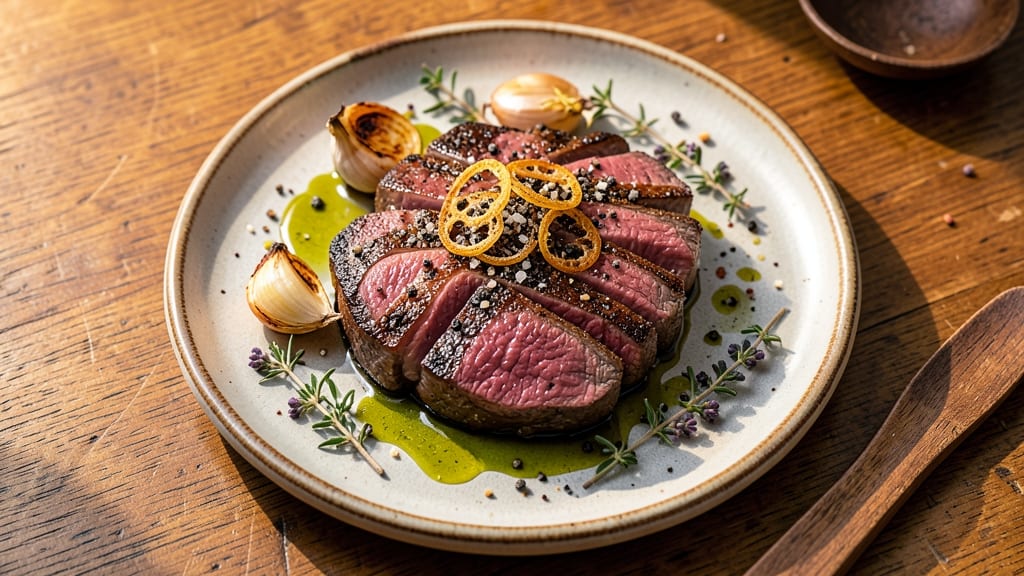
This Angus beef sirloin tip steak recipe unlocks the secret to melt-in-your-mouth tenderness using a high-heat sear and a simple salt cure—no fancy marinades or complicated techniques required. The sirloin tip's natural marbling transforms under the right conditions, delivering restaurant-quality results at home with just a few key steps.
What sets this method apart is the salt cure, which breaks down tough fibers while enhancing the beef's inherent richness.
The process begins with a dry salt cure, where kosher salt works its magic over several hours to tenderize the meat naturally.
After curing, a high-heat sear creates a caramelized crust that locks in juices, while a reverse sear ensures the interior reaches the perfect medium-rare temperature—130°F—without drying out.
This approach guarantees a steak that's both tender and deeply flavorful, with a texture so satisfying it becomes the centerpiece of any meal.
What you’ll end up with is a steak that’s juicy, deeply flavorful, and effortlessly impressive, ready to slice against the grain for maximum tenderness. The crust will be rich and caramelized, while the interior remains velvety and pink throughout.
This method works equally well on the grill, in a cast-iron skillet, or even with a sous vide finish for extra precision.
Pair it with classic sides like roasted garlic mashed potatoes or a bold red wine reduction to elevate the dining experience. The beauty of this recipe lies in its simplicity—just salt, heat, and patience—and the results speak for themselves.
Let’s get started on creating a steak that rivals your favorite steakhouse.
Ingredients for angus beef sirloin tip steak
Four essential ingredients transform tough beef into melt-in-your-mouth perfection—salt, heat, and patience do the work.
| Ingredient | Amount | Notes |
|---|---|---|
| Angus Beef Sirloin Tip Roast 🥩 | 2 lb | Center-cut, 1.5-inch thickness |
| Kosher Salt 🧂 | 2 tbsp | Diamond Crystal preferred |
| Black Peppercorns 🌶️ | 1 tbsp | Freshly cracked coarse |
| Extra-Virgin Olive Oil 🫒 | 2 tbsp | High smoke point preferred |
| Fresh Thyme Sprigs 🌿 | 4 whole | Leaves only, stems removed |
| Garlic Cloves 🧄 | 4 cloves | Smashed, peeled |
| Unsalted Butter 🧈 | 4 oz | Cold, cubed |
| Red Wine 🍷 | ½ cup | Bold Cabernet Sauvignon |
| Beef Tallow or Duck Fat 🧈 | 2 tbsp | For high-heat searing |
| Fresh Rosemary 🌿 | ¼ cup | Chopped, stems removed |
| Meat Thermometer 🌡️ | 1 whole | Instant-read preferred |
The Angus sirloin tip is non-negotiable here—its marbling and connective tissue make this method work. USDA Prime or higher is ideal, but USDA Choice with visible marbling suffices. Look for cuts labeled 'sirloin tip center-cut' at Whole Foods or your local butcher shop. The thickness matters: 1.5 inches ensures even cooking. If your cut is uneven, trim to uniform thickness before curing. For a truly restaurant-quality result, consider dry-aged beef—the enhanced flavor profile shines through the salt cure.
No kosher salt? Diamond Crystal is the gold standard, but Morton kosher salt works in a pinch—just use the same amount. Freshly cracked black pepper is non-negotiable; pre-ground loses its punch. For the red wine, Cabernet Sauvignon or Malbec adds depth, but any bold, dry red will work. Short on time? Beef stock reduced by half mimics the wine's umami. The butter should be cold and cubed—room temperature butter burns easily. And if you're avoiding tallow, duck fat or high-smoke-point oil works just as well for searing.
The cured steak keeps 2-3 days in the fridge, uncovered on a wire rack—this allows the surface to dry slightly for better crust formation. For longer storage, wrap tightly in parchment and plastic, then freeze for up to 3 months. Let frozen steaks thaw in the fridge overnight before cooking. The thermometer is your best friend: 130°F internal temp for medium-rare. Remove steak from heat at 125°F—it'll rise 5°F while resting. Resting time? 10-15 minutes is non-negotiable for juicy perfection.
Why You'll Love This Recipe
- Five-Ingredient Magic: I swear, this steak only needs salt, pepper, olive oil, and thyme to be insanely good. No fancy marinades or last-minute shopping—just pull it out of the fridge, pat it dry, and let the natural beef flavor shine.
- Crispy-Perfect Every Time: That sear in the cast-iron? Oh, it’s everything—golden crust outside, tender melt-in-your-mouth inside. The thyme sprigs add this bright, herby finish that makes it taste like you spent hours prepping (but you didn’t).
- Weeknight or Weekend Star: Same recipe for a lazy Tuesday or a fancy dinner with friends. Slice it thin for sandwiches, serve it whole for a steak night, or even toss leftover chunks into pasta. It’s the kind of steak that works hard for you.
- Leftovers That Don’t Suck: Honestly, I always make extra because reheating these slices is almost as good as the first bite. Wrap them in foil, pop them in the oven, and boom—instant lunch or dinner. No sad, dry steak here.
Step-by-step instructions for perfectly tender Angus beef sirloin tip roast
Master this two-phase technique for melt-in-your-mouth texture with a caramelized crust.
Create the Tenderizing Salt Cure
In a small bowl, combine the 2 tbsp kosher salt with the 1 tbsp freshly cracked black peppercorns. This dry rub creates a concentrated salt cure that will penetrate the meat and break down tough fibers during the overnight rest. The coarse texture of the peppercorns ensures even distribution when applied.
Pat the 2 lb angus beef sirloin tip roast completely dry with paper towels - moisture is the enemy of both seasoning adhesion and proper searing. Apply the salt-pepper mixture evenly over all surfaces, pressing firmly so the crystals adhere. For maximum tenderness, I recommend applying the rub to the cut sides as well. Wrap the roast tightly in plastic wrap and refrigerate for at least 12 hours, but no longer than 24 hours. This extended cure transforms the tough tip roast into fork-tender perfection.
Sear with High-Heat Fat and Aromatics
Remove the roast from the refrigerator 30 minutes before cooking to allow it to come to room temperature. Preheat your oven to 400°F. In a large oven-safe skillet, heat the 2 tbsp beef tallow or duck fat over medium-high heat until it shimmers but doesn't smoke. The high smoke point of these fats ensures proper searing without burning.
Add the roast to the skillet and sear for 3-4 minutes per side until deeply browned. This initial sear creates the foundation for your crust while locking in juices. During the last minute of searing, add the 4 smashed garlic cloves and the 0.25 cup chopped fresh rosemary to the skillet. The garlic should sizzle and the rosemary should release its aromatic oils. Remove the roast and set it aside on a plate.
Braise with Wine and Butter for Maximum Tenderness
Pour the 0.5 cup bold cabernet sauvignon into the skillet, scraping up all the browned bits from the bottom. This deglazing step captures all the concentrated flavors from the searing process. Add the 4 oz cold cubed unsalted butter and the 4 thyme sprigs (leaves only), scraping continuously to incorporate the butter into the wine mixture. Bring to a gentle simmer and reduce by half, about 3-4 minutes.
Return the roast to the skillet, spooning the reduced wine-butter mixture over the top. Transfer the skillet to the preheated oven and braise for 45-60 minutes, or until the internal temperature reaches 130°F when measured with the meat thermometer. The roast should be fork-tender but not falling apart. This low-and-slow cooking phase completes the tenderization process begun by the salt cure.
Rest and Slice for Optimal Juiciness
Remove the roast from the oven and transfer it to a cutting board. Tent loosely with aluminum foil and let it rest for 15-20 minutes. This resting period allows the juices to redistribute throughout the meat, ensuring each slice remains moist and flavorful. During this time, you can reduce the pan sauce further by simmering it uncovered for 5-7 minutes until it reaches a glossy consistency.
Slice the roast against the grain into ½-inch thick slices. The meat should be incredibly tender, almost falling apart when cut. Serve immediately with the reduced wine-butter sauce spooned over the top. Each bite should deliver perfect harmony of tender beef, caramelized crust, and rich wine-herb sauce.
Pro Tips For Making Angus Beef Sirloin Tip Steak
- Use a Cast-Iron Skillet: I learned this the hard way—sirloin tip needs serious heat to render fat and develop crust. A cast-iron skillet (or heavy stainless) gets hotter and retains heat better than nonstick, so you’ll get that perfect Maillard reaction without flipping into grease hell. No, your lightweight pan won’t cut it here.
- Salt the Meat First: This isn’t just seasoning—it’s hydration control. Generously salt the steak 30 minutes before cooking (yes, even if you’re impatient like me). The salt draws out moisture, which then reabsorbs during searing, locking in juiciness. Skip this, and you’ll end up with a steak that’s dry on the inside despite all that fat.
- Don’t Rush the Sear: High heat. Seriously, crank it up until the oil shimmers like a summer lake before adding the steak. Let it sit undisturbed for 2–3 minutes per side—no peeking—so the crust forms properly. I used to flip too soon, and the steak just steamed instead of caramelizing. Patience here makes the difference between "meh" and "wow."
- Sear Thyme Leaves: Toss a handful of fresh thyme leaves (not sprigs) into the hot oil before adding the steak. They’ll crisp into fragrant, golden bits that stick to the meat like edible confetti. Save the sprigs for garnish later—they’ll release aroma when sliced open at the table. (Your future self will thank you for this tiny extra step.)
Creative variations of these flavors
Smoky Grill Version
Swap the oven braise for a smoky grill finish by searing the salt-cured roast over charcoal or hardwood coals at medium-high heat for 5-6 minutes per side. Use hickory or oak for classic beef flavors, or try mesquite for a bolder twist.
After searing, move the roast to indirect heat and cook until it reaches 130°F internal temperature, about 30-45 minutes.
Brush with a red wine reduction (simmer ½ cup Cabernet with 1 tbsp brown sugar and 1 tsp smoked paprika) during the last 10 minutes for extra depth. 🔥
Spicy Coffee Rub Twist
Enhance the salt cure with a bold coffee and chili rub by adding 1 tbsp finely ground coffee and 1 tsp cayenne pepper to the original 2 tbsp kosher salt. The coffee adds a deep, earthy note that complements the beef’s richness, while the cayenne introduces a subtle heat.
Apply the rub the same way, then proceed with the sear and braise. For an extra kick, finish with a chipotle cream sauce (mix ½ cup sour cream with 1 tbsp adobo sauce and 1 tsp lime zest).
Sous Vide Precision
For foolproof tenderness, use a sous vide finish after the salt cure. After searing, vacuum-seal the roast and cook it in a water bath at 130°F for 4-6 hours. This method ensures perfect doneness without overcooking.
For a crust, pat the roast dry, sear in a hot cast-iron skillet with beef tallow, and finish with a béchamel glaze (mix ½ cup heavy cream with 2 tbsp butter and 1 tbsp Dijon mustard). This technique is ideal for large gatherings where precision matters. ✨
Global Flavor Infusions
Transform the classic recipe with global spices: - Japanese-inspired: Add 1 tbsp grated ginger, 1 tsp sesame seeds, and ½ tsp star anise to the salt cure.
Finish with a soy-ginger glaze (reduce ¼ cup soy sauce, 1 tbsp mirin, and 1 tsp grated ginger). - Mexican-style: Mix 1 tsp cumin, ½ tsp oregano, and ½ tsp smoked salt into the rub.
Serve with a chipotle crema (blend ½ cup sour cream with 1 tbsp chipotle powder and 1 tsp lime juice). - Italian heritage: Use 1 tsp fennel seeds and ½ tsp crushed red pepper in the cure.
Pair with a rosemary-thyme pan sauce (reduce ½ cup dry white wine with 2 sprigs rosemary and 1 sprig thyme).
Nutrition facts
Frequently asked questions about Angus beef sirloin tip roast
Why does the sirloin tip need a salt cure?
The sirloin tip is a tougher cut with more connective tissue than ribeye or filet. A 12-24 hour salt cure works like a natural tenderizer by breaking down those fibers through osmosis, while also enhancing the beef's natural flavors. This method transforms what would normally be a chewy roast into melt-in-your-mouth perfection. The salt also creates a perfect crust during searing.
Can I use this recipe for steaks instead of a whole roast?
For individual steaks, cut the roast into 1.5-inch thick slices after curing. Sear each piece for 3-4 minutes per side in beef tallow, then finish in a 400°F oven for 5-8 minutes until reaching 130°F internal temp. The salt cure works the same way to tenderize, and the high-heat sear creates that coveted crust.
What's the best way to store leftover roast?
Slice any leftovers and store in an airtight container with a thin layer of red wine reduction. It keeps for 3-4 days in the fridge. For longer storage, wrap individual slices tightly in plastic wrap and freeze for up to 3 months. When reheating, warm in a skillet with a splash of beef broth to revive moisture. Never microwave—it ruins the texture!
Can I substitute wine in the pan sauce?
Yes, but choose bold alternatives: beef stock (reduced by half), red wine vinegar (½ cup with 1 tbsp brown sugar), or even tomato paste (2 tbsp) for umami depth. The key is acidity and richness—avoid light wines like pinot noir. For a non-alcoholic version, use grape juice reduced with a splash of balsamic vinegar.
How do I know when the roast is done?
Use a meat thermometer for precision: 130°F for medium-rare (perfect for sirloin tip). Insert the probe into the thickest part, avoiding fat. Remove it 5°F early—the temperature will rise while resting. For visual cues, look for a caramelized crust and juices that run slightly pink. Never rely on color alone—Angus beef can appear done at unsafe temps!