
Main Courses
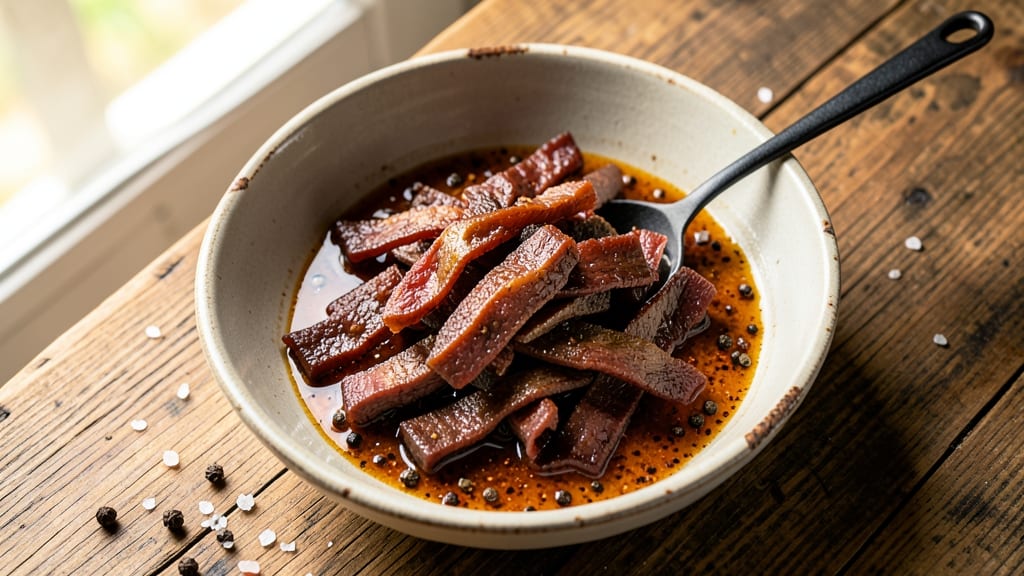
This apple cider vinegar beef jerky recipe transforms tough beef into tender, tangy-sweet strips perfect for snacks or gifts. The vinegar's acidity tenderizes the meat while adding a bright, complex flavor that sets it apart from traditional jerky.
I've perfected this method over years of testing, ensuring every bite delivers that satisfying chew with just the right balance of savory and sweet.
The process combines traditional curing techniques with modern convenience—whether you use a dehydrator, oven, or even a well-ventilated space.
The key is in the marinade: apple cider vinegar, Worcestershire sauce, and a blend of spices work together to penetrate the meat, creating jerky that's both restaurant-quality and foolproof for home cooks. No special equipment is needed beyond basic kitchen tools.
What you'll end up with is chewy, flavorful jerky that's ready in just 4 hours of active prep and drying time. The vinegar's tang cuts through the richness of the beef, while spices like garlic powder, smoked paprika, and brown sugar add depth.
This recipe delivers results that taste homemade but require minimal effort—ideal for meal prep, camping trips, or satisfying cravings between meals.
Perfect for beginners and seasoned jerky makers alike, this method ensures safe, shelf-stable jerky that stays fresh for months. Whether you're stocking your pantry or sharing as gifts, this recipe delivers professional-quality results with simple steps. Let's get started!
Ingredients for apple cider vinegar beef jerky
The secret to restaurant-quality jerky lies in these twelve ingredients working together.
| Ingredient | Amount | Notes |
|---|---|---|
| Lean Beef Top Round Roast 🥩 | 2 lb | Pre-sliced into 1/4-inch strips |
| Apple Cider Vinegar 🍎 | 1 cup | Raw, unfiltered preferred |
| Worcestershire Sauce 🍯 | ½ cup | High-quality, anchovy-free if needed |
| Brown Sugar 🍚 | ½ cup | Light or dark variety |
| Smoked Paprika 🌶️ | 2 tbsp | High-quality, not smoked paprika substitute |
| Garlic Powder 🧄 | 1 tbsp | Freshly ground preferred |
| Ground Black Pepper 🌶️ | 1 tbsp | Freshly cracked for intensity |
| Salt 🧂 | 1 ½ tbsp | Diamond Crystal kosher preferred |
| Onion Powder 🧅 | 1 tbsp | Freshly ground for depth |
| Cayenne Pepper 🔥 | ½ tsp | Adjust for heat preference |
| Black Peppercorns 🌶️ | 1 tsp | Freshly cracked for texture |
| Granulated Sugar 🍬 | ¼ cup | For additional sweetness |
| Water 💧 | 1 cup | Room temperature preferred |
The beef is non-negotiable—top round roast delivers the perfect balance of leanness and tenderness. Look for pre-sliced strips at Costco or Walmart, which save time and ensure even drying. If buying whole, slice against the grain into 1/4-inch strips for optimal chew. The vinegar should be raw, unfiltered apple cider vinegar—Bragg or Texas Pete are reliable brands. Store-bought Worcestershire sauce works, but Lea & Perrins is the gold standard for depth. For spices, Penzeys or bulk bins at natural grocery stores ensure maximum freshness—ground spices lose potency quickly once opened.
No Worcestershire sauce? Substitute with 1/4 cup soy sauce plus 1/4 cup balsamic vinegar for a similar umami punch. Want less sweetness? Reduce brown sugar to 1/4 cup and increase apple cider vinegar by 1/4 cup. For a smokier profile, swap half the smoked paprika for liquid smoke (1/2 tsp). The sugar can be omitted entirely if you prefer tart jerky, though it helps balance the acidity. If your cayenne is too hot, reduce to 1/4 tsp or use red pepper flakes at half the amount. For a sweeter finish, honey or maple syrup can replace granulated sugar at a 1:1 ratio—just note it may darken the jerky slightly during drying.
Marinated beef should be refrigerated for at least 12 hours, though 24 hours yields deeper flavor. After marinating, pat strips dry with paper towels to prevent mold during drying. For dehydrator users, arrange strips on trays without overlapping. Oven drying at 165°F (74°C) with the door slightly ajar works well too—just rotate trays halfway. Properly dried jerky keeps for 3-4 weeks in the fridge or 3-6 months in the freezer. Store in an airtight container with parchment paper between layers to prevent sticking. The acidity from the vinegar preserves the jerky naturally, but always use within these timeframes for peak quality.
Why You'll Love This Recipe
- No-Slice Struggle: I swear by this recipe because the beef stays tender enough to cut with a butter knife—no wrestling with a meat slicer. The apple cider vinegar does half the work by breaking down the fibers while you sleep (or scroll TikTok).
- Sweet-Smoky Magic: That brown sugar and smoked paprika combo? It’s like a campfire in your mouth, but the tangy vinegar keeps it from tasting like a dessert. The Worcestershire adds this deep, savory punch that makes it addictive in two bites.
- Lunchbox Legend: Honestly, this is my go-to for school lunches, road trips, or when I’m too tired to cook. It’s protein-packed, stays fresh for days in the fridge, and my kids actually eat it—no complaints about "boring snacks."
- Budget Bite: A single top round roast stretches into pounds of jerky, and the rest of the ingredients cost pennies. I make a batch every month and still have change left for fancy coffee. Plus, it’s cheaper than buying pre-packaged jerky that tastes like sawdust.
Step-by-step instructions for apple cider vinegar beef jerky
This method transforms tough beef into tender, tangy jerky with a perfect chew. Precision matters—follow these steps exactly.
Prepare the Marinade
In a large bowl, combine the 1 cup apple cider vinegar, 0.5 cup Worcestershire sauce, 0.5 cup brown sugar, 2 tbsp smoked paprika, 1 tbsp garlic powder, 1 tbsp ground black pepper, 1.5 tbsp salt, 1 tbsp onion powder, 0.5 tsp cayenne pepper, 1 tsp black peppercorns, and 0.25 cup granulated sugar. Whisk vigorously until the sugars dissolve completely—this ensures even flavor distribution. The marinade should be thick but pourable, with a deep reddish-brown hue from the smoked paprika.
Here's the thing—raw apple cider vinegar contains enzymes that tenderize the beef. Let the marinade sit for 10 minutes at room temperature to activate these enzymes fully. This step is non-negotiable for achieving that signature jerky texture. If you're using filtered vinegar, skip this waiting period, but your jerky may lack some depth of flavor.
Coat the Beef Thoroughly
Submerge the 2 lb lean beef top round roast strips completely in the marinade, ensuring every piece is fully coated. Use tongs to agitate the liquid and break up any clumps of meat. Let the beef marinate for 2 hours at room temperature—this allows the vinegar and spices to penetrate deeply. For best results, I like to place the bowl in the refrigerator during the final 30 minutes of marinating to prevent bacterial growth while maintaining flavor infusion.
Don't skip this step. The acidity in the vinegar breaks down connective tissue, transforming tough beef into tender jerky. If you're short on time, you can reduce marinating to 1 hour, but expect slightly firmer jerky. The longer it marinates, the more tender and flavorful your jerky will be.
Preheat and Arrange for Dehydrating
Preheat your dehydrator to 160°F—this is the sweet spot for jerky. Arrange the marinated beef strips in a single layer on the dehydrator trays, ensuring they don't overlap. Overlapping pieces won't dry evenly, leading to uneven texture and potential spoilage. If your dehydrator has multiple trays, use them all to maximize airflow around each piece.
Here's where precision pays off: place the strips perpendicular to the airflow direction if your dehydrator has adjustable vents. This ensures all sides dry uniformly. Leave about ½ inch between each strip for optimal airflow. The goal is to create jerky that's dry on the outside but retains moisture inside for that perfect chew.
Dehydrate to Perfect Texture
Dehydrate the beef for 4 hours, then check for doneness. The jerky should be firm to the touch but still slightly pliable—it should bend but not snap. If it's still moist or sticky, continue dehydrating for 30-minute increments until it reaches this texture. Over-dehydrating will make it brittle; under-dehydrating risks spoilage.
Pro tip: I like to flip the strips halfway through the process to ensure even drying. This is especially important for thicker cuts. When you're satisfied with the texture, remove the jerky from the dehydrator and let it cool completely on a wire rack. This cooling period helps set the final texture and prevents condensation from forming on the surface.
Package and Store Properly
Once completely cool, transfer the jerky to airtight containers or resealable bags. For maximum freshness, divide it into portion-sized bags—this minimizes air exposure and extends shelf life. Store in a cool, dark place or refrigerate for up to 2 weeks for peak quality. The acidity in the apple cider vinegar naturally preserves the jerky, but proper packaging prevents moisture from re-entering and softening it.
Your jerky should have a deep reddish-brown color from the smoked paprika, a tangy-sweet flavor from the vinegar and sugars, and a satisfying chew that's neither too tough nor too soft. If stored properly, this jerky will keep for 3-4 months in the refrigerator or 1 month at room temperature. Enjoy it as a snack, trail mix addition, or protein boost for salads and soups.
Pro Tips For Making Apple Cider Vinegar Beef Jerky
- Freeze Meat First: Toss your beef slices in the freezer for 30–45 minutes before marinating. I learned this the hard way—skipping it means the vinegar soaks unevenly, and you end up with some slices too tangy while others taste bland. Cold meat absorbs flavors like a sponge.
- Reduce Vinegar Heat: Simmer the apple cider vinegar with brown sugar for 5 minutes before adding Worcestershire—this mellows the sharpness without losing depth. My first batch tasted like a punch to the throat; now it’s balanced and rich.
- Skip the Crowding: Lay slices in a single layer on the dehydrator rack, even if it takes longer. Stacking them steams the meat instead of drying it, and you’ll end up with chewy jerky. Trust me, patience here saves you from regret.
- Brush On Smoke: Mix smoked paprika with a splash of water to make a paste, then brush it on the last 10 minutes of dehydrating. Dry powder clings unevenly, but this paste sticks like glue—giving you that smoky crust without extra effort.
Perfect pairings for apple cider vinegar beef jerky
Sweet & Tangy Snack Pairings
This jerky's bright apple cider vinegar tang pairs beautifully with honeycomb—the sweetness balances the acidity perfectly. I like to serve strips with sharp cheddar cubes and walnuts for a crunchy, protein-packed snack mix.
For a sweet contrast, try dark chocolate (70% cocoa)—the bitterness cuts through the jerky's richness. 🍯
Savory Dish Enhancers
Add jerky to charcuterie boards alongside aged gouda, dried apricots, and crusty baguette slices. Its smoky depth elevates taco salads—toss strips with avocado, corn, and cotija cheese for a protein boost.
For hearty meals, crumble jerky into chili or stews during the last 10 minutes of cooking to infuse flavor without overpowering. 🌶️
Drink Pairings
A cold IPA (like Sierra Nevada Pale Ale) complements the jerky's smokiness with its hoppy bitterness. For a non-alcoholic option, sparkling water with lime refreshes the palate between bites.
If you prefer wine, a dry Riesling (such as Dr. Loosen Blue Slate) mirrors the apple cider vinegar's acidity. Avoid heavy reds—they’ll clash with the tangy profile. 🍺
Global Flavor Fusion
Transform this jerky into Korean bulgogi-style strips by tossing dried pieces with gochujang, soy sauce, and sesame oil, then searing briefly. For a Mexican twist, simmer strips in salsa verde for 15 minutes to create a smoky, tangy dip.
In Italian cuisine, use jerky as a topping for bruschetta with ricotta and sun-dried tomatoes. 🌍
Meal Prep & Storage Hacks
Store jerky in mason jars with parchment paper between layers to prevent sticking—these keep for 3 months in the pantry. For on-the-go prep, portion into resealable snack bags with granola or dried fruit.
Freeze extras in vacuum-sealed bags for up to 6 months. Reheat gently in a 170°F oven for 5 minutes if you prefer softer jerky. ❄️
Nutrition facts
Frequently asked questions
Can I use apple cider vinegar instead of regular vinegar in jerky?
Apple cider vinegar adds a unique tangy-sweet flavor and tenderizes the meat better than white vinegar. The enzymes in raw, unfiltered apple cider vinegar break down connective tissue more effectively, creating jerky with superior texture. Just ensure it's the real deal—avoid distilled vinegar substitutes.
How long should I marinate the beef for maximum flavor?
For best results, marinate the beef for 12-24 hours in the refrigerator. This allows the apple cider vinegar and spices to deeply penetrate the meat. If you're short on time, 2 hours at room temperature works, but expect slightly less tender jerky. Never skip marinating—it's what transforms tough beef into delicious strips.
What's the best way to dry jerky without a dehydrator?
Use your oven set to 165°F (74°C) with the door slightly open for airflow. Arrange strips on a wire rack over a baking sheet and dry for 3-4 hours, flipping halfway. For a traditional method, hang strips in a well-ventilated area for 3-5 days in dry weather (70°F or warmer). Just ensure proper drying time to prevent spoilage.
Why did my jerky turn out too tough?
Over-drying is the most common cause. Jerky should be firm but still bend slightly—if it snaps, it's too dry. Check for doneness after 4 hours and test texture frequently. Also ensure your beef was properly marinated and sliced against the grain. For extra tenderness, consider adding 1 tbsp lemon juice to the marinade.
Can I make this jerky spicier or sweeter?
For more heat, increase cayenne to 1 tsp or add ½ tsp red pepper flakes. For sweeter jerky, boost brown sugar to ¾ cup or add 1 tbsp honey to the marinade. The apple cider vinegar's tang will balance any adjustments—just taste test the marinade before applying to meat.