
Soups & Stews
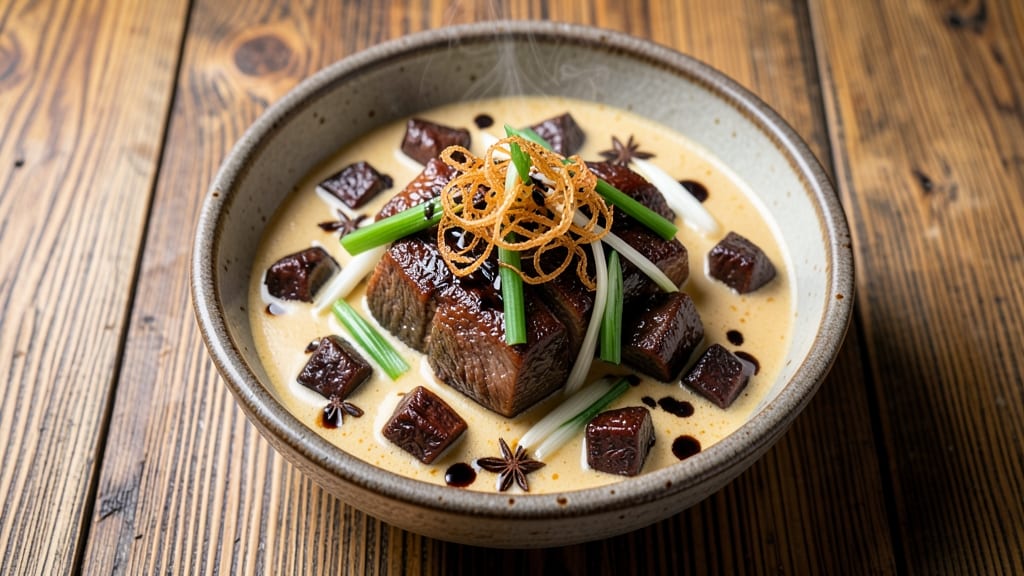
This Asian-style beef stew transforms tough cuts into melt-in-your-mouth tenderness with a deep, aromatic broth and silky coconut richness. 🌟 The secret lies in wok-searing the beef for intense caramelization before slow-braising, creating layers of umami that make every bite unforgettable.
I developed this recipe after years of experimenting with Japanese, Korean, and Thai techniques—now simplified into one foolproof method.
What sets this stew apart is the balance of flavors: salty soy, sweet coconut milk, and earthy fermented pastes like miso or douchi create a complex broth that clings to the beef.
Aromatics like ginger, garlic, and star anise infuse the liquid with warmth, while a touch of chili oil adds brightness. The result is a hearty, comforting dish that’s restaurant-quality but built for home cooks.
By the time you’re done, you’ll have tender beef that falls apart at the touch, a velvety sauce that coats every spoonful, and a depth of flavor that lingers long after the last bite.
Serve it over steamed rice with pickled vegetables or fresh herbs for a complete meal that feels both nostalgic and modern.
The beauty of this recipe is its versatility—adjust the spice level, swap in mushrooms or tofu for vegetarian versions, or use leftover broth for soups. Whether you’re feeding a family or meal prepping for the week, this stew delivers satisfaction with minimal effort. Let’s get cooking!
Ingredients for asian style beef stew
The heart of this stew: tender beef, velvety coconut, and bold Asian flavors that come together effortlessly.
| Ingredient | Amount | Notes |
|---|---|---|
| Chuck Roast 🥩 | 2 lb | Cut into 1-inch cubes |
| Coconut Milk 🥥 | 1 can | Full-fat, 13.5 oz can |
| Soy Sauce 🍶 | ½ cup | Dark or light variety |
| Miso Paste 🧈 | 2 tbsp | White or red miso preferred |
| Douchi 🍫 | 1 tbsp | Fermented black bean paste |
| Star Anise 🌟 | 2 whole | Crushed lightly |
| Ginger Root 🧅 | 2 tbsp | Fresh, grated |
| Garlic Cloves 🧄 | 6 cloves | Minced finely |
| Chili Oil 🌶️ | 1 tbsp | Or substitute red pepper flakes |
| Brown Sugar 🍯 | 2 tbsp | Light or dark |
| Green Onions 🧅 | ¼ cup | Sliced for garnish |
| Sesame Oil 🫒 | 1 tbsp | For finishing |
| Vegetable Oil 🫒 | 2 tbsp | For wok-searing |
| Water 💧 | 2 cups | Or beef broth |
| Salt 🧂 | 1 tsp | Kosher or sea salt |
The beef is everything here. Chuck roast is your best bet—it's tough enough to develop that melt-in-your-mouth texture when braised. Grab it from the butcher counter if you can, or the pre-cut beef stew meat section at Whole Foods or Trader Joe's. Look for good marbling; that's where the flavor hides. If you're using a whole roast, cube it yourself for even cooking. The coconut milk? Full-fat, no substitutes—it's what gives this stew its signature silkiness. A 13.5 oz can is perfect, and Thai Kitchen brand is my go-to (it's widely available and affordable).
No miso paste? Substitute soy sauce plus a pinch of sugar—it won't be identical, but you'll still get that umami punch. Douchi is the secret weapon here, but if you can't find it (it's in the Asian aisle), extra soy sauce plus a dash of molasses works in a pinch. The star anise and ginger are non-negotiable—they're what give this stew its depth. Fresh ginger is ideal, but if you're using powdered, double the amount. For the chili oil, any brand works, but Lao Gan Ma is the classic choice. No chili oil? Red pepper flakes plus a splash of sesame oil gets you close.
This stew tastes even better the next day, so make a double batch if you can. Store leftovers in an airtight container in the fridge for up to 5 days, or freeze for 3 months. I like to portion mine into individual containers for easy lunches. The aromatics (star anise, ginger) can be removed after cooking if you prefer a cleaner flavor. And if you've got extra broth, freeze it for future soups—it's packed with flavor.
Why You'll Love This Recipe
- One-Pot Magic: I swear by this—literally dump everything into a single pot, walk away, and come back to melt-in-your-mouth beef. The chuck roast turns tender without babying it, and the coconut milk soaks up all the umami from the miso and douchi while you’re still deciding what to watch on TV.
- Umami Bomb: Between us, that miso paste and douchi combo? It’s the secret weapon. The douchi adds this funky, salty depth, while the miso caramelizes into a glossy sauce that clings to every bite like a flavor hug. Honestly, I’ve made stews with fancier ingredients that didn’t hit this hard.
- Budget Beef Boost: Chuck roast is the unsung hero of affordable meat, and this recipe makes it feel special. A pound feeds four, and the coconut milk and soy sauce stretch every dollar without tasting cheap. Plus, douchi lasts forever—so you’re basically getting two recipes in one. Win.
Step-by-step instructions for Asian style beef stew
Here's how to build deep umami flavors with a silky coconut finish.
🔥 Step 1: Wok-Sear the Chuck Roast for Maximum Flavor
Heat a large wok or deep skillet over medium-high heat until hot. Add the 2 tablespoons vegetable oil and let it shimmer. Working in batches if needed, add the 2 lb chuck roast cut into 1-inch cubes and sear undisturbed for 3-4 minutes until deeply browned on all sides.
This high-heat sear creates the Maillard reaction that forms those rich, caramelized flavors we want in every bite. Don't crowd the pan—give each piece room to develop that perfect crust. Once all pieces are golden brown, transfer them to a plate and set aside. You'll notice the meat releases easily when it's ready to move.
🍳 Step 2: Build the Umami-Packed Base
In the same wok, reduce heat to medium and add the 2 tablespoons grated ginger root and 6 cloves minced garlic. Sauté for 30 seconds until fragrant—you should smell that pungent garlic-ginger aroma filling your kitchen. Add the 2 whole crushed star anise and stir for another 10 seconds.
Here's where the magic happens: pour in the 0.5 cup soy sauce, 2 tablespoons miso paste, and 1 tablespoon douchi. Stir vigorously to scrape up all those browned bits from the bottom of the pan—this is called deglazing, and it captures all that concentrated beef flavor. Let this mixture bubble for 2 minutes until slightly reduced and thickened.
🥘 Step 3: Simmer the Stew to Tender Perfection
Return the seared beef to the wok along with any accumulated juices. Add the 2 cups water, 2 tablespoons brown sugar, and 1 teaspoon salt. Bring to a gentle simmer, then reduce heat to low and cover partially. Let it cook for 1 hour, stirring occasionally, until the beef is fork-tender and easily pulls apart.
This slow cooking is crucial—it breaks down the tough muscle fibers in the chuck roast, transforming it into melt-in-your-mouth beef. You'll know it's ready when a fork slides through with minimal resistance. If the liquid reduces too much before the beef is tender, add a splash of water to maintain the right consistency.
🍳 Step 4: Finish with Coconut Milk and Aromatics
Once the beef is tender, stir in the 1 can coconut milk and 1 tablespoon chili oil. Simmer uncovered for another 10-15 minutes until the sauce thickens slightly and the coconut milk is fully incorporated. Taste and adjust seasoning—you might want to add a bit more soy sauce or salt depending on your preference.
The coconut milk should create a velvety texture that coats the beef beautifully. If the sauce is too thin, let it simmer a bit longer to reduce it to your desired consistency. Real talk: this is where the stew transforms from good to extraordinary—the creamy coconut balances the deep umami flavors perfectly.
🍽️ Step 5: Garnish and Serve with Confidence
Remove from heat and stir in the 1 tablespoon sesame oil and 0.25 cup sliced green onions. Let the stew rest for 5 minutes to allow the flavors to meld together. Serve immediately over steamed rice or noodles, garnished with additional green onions if desired.
Each bite should deliver tender beef with layers of umami from the miso and douchi, a touch of heat from the chili oil, and that luxurious coconut creaminess. The green onions add a fresh contrast that brightens the rich flavors. This stew tastes even better the next day as the flavors continue to develop—perfect for meal prep!
Pro Tips For Making Asian Style Beef Stew
- Sear the Chuck Hard: That chuck roast won’t tenderize itself—get it deep brown in a screaming-hot pot first. I used to rush this, and the meat stayed chewy. Two minutes per side with a tablespoon of oil, no crowding, or you’ll steam it. The crust locks in flavor and melts into the coconut milk later.
- Strain the Coconut Milk: The thick, creamy part is gold, but the watery bit ruins the balance. After opening the can, let it sit 10 minutes, then spoon out the top layer—discard the rest or save it for smoothies. Your stew won’t turn gloppy, and the miso and douchi will sing instead of fight for depth.
- Bloom the Miso First: Tossing miso into hot liquid kills its umami. Instead, whisk it with a splash of cold water (or coconut milk) for 30 seconds before adding to the pot. This prevents graininess and lets the paste dissolve smoothly—no one wants to taste grit with their beef.
- Salt the Douchi Early: Douchi’s funk needs time to mellow. Add it with the soy sauce at the start, not as a last-minute flavor bomb. Let it simmer 15 minutes before the beef goes in, or you’ll hit your palate with a wall of salt. Think of it as seasoning the broth first, not just the meat.
Wine and beer pairings for these flavors
Japanese Sake Pairings
For a lighter, more delicate approach, pair this stew with a crisp dry junmai sake like Hakkaisan Junmai or Dassai. The sake's clean acidity cuts through the richness of the coconut milk while complementing the umami depth of the miso and douchi.
Serve it slightly chilled (45-50°F) to enhance its refreshing qualities. 🍶
Korean Soju Complements
A warm soju like Chum Churum or Jinro adds a smooth, slightly sweet contrast to the stew's bold flavors. The neutral profile of soju ensures it doesn’t overpower the dish but instead enhances the overall experience.
For an extra touch, rim your glass with a pinch of salt and sesame seeds to mirror the stew’s Asian-inspired notes.
Thai White Wine Balance
If you prefer wine, a dry Thai white wine such as Oakley Grange Sauvignon Blanc or Chardonnay from Thailand works beautifully. The wine’s citrus notes and subtle tropical hints harmonize with the coconut milk and chili oil, creating a refreshing balance.
Serve it slightly cooler than room temperature (50-55°F) for the best flavor profile.
Craft Beer Options
For beer lovers, a light lager like Asahi Super Dry or a wheat beer such as Hoegaarden pairs well with the stew’s creamy texture. The beer’s crispness contrasts the richness, while its subtle sweetness complements the brown sugar and soy sauce.
If you prefer something bolder, a light IPA like Sierra Nevada Pale Ale can add a touch of hoppy brightness to cut through the umami.
Non-Alcoholic Refreshers
For a non-alcoholic option, try a sparkling yuzu soda or ginger beer to cleanse the palate between bites. The effervescence and citrus notes refresh your taste buds, making each spoonful of stew taste even more vibrant.
A simple iced green tea with a splash of lemon also works wonderfully, especially if you prefer a lighter accompaniment.
Nutrition facts
Frequently asked questions
Can I use a different cut of beef for this stew?
While chuck roast is ideal for its marbling and tenderness, brisket or short ribs work beautifully too. For brisket, cut it into 1-inch cubes and increase cooking time to 1.5 hours to ensure tenderness. Short ribs will be ready in about 1 hour but develop incredible flavor. Avoid lean cuts like sirloin—they won't become as tender during braising.
What if I can't find douchi or miso paste?
No problem! For douchi, substitute 1 extra tablespoon soy sauce plus 1 teaspoon molasses to mimic its fermented depth. If you're missing miso, use 2 tablespoons soy sauce plus 1 teaspoon sugar. The stew will still be delicious—just slightly less complex. For extra umami, add 1 teaspoon fish sauce (if you're comfortable with seafood flavors) or an extra pinch of salt.
How can I make this stew spicier?
Boost the heat by adding 1 extra tablespoon chili oil or 1 teaspoon red pepper flakes directly to the stew. For smoky depth, stir in 1 teaspoon gochujang (Korean chili paste) during the final simmer. If you love Thai flavors, add 1 tablespoon sambal oelek when incorporating the coconut milk. Always taste first—you can adjust to your preference!
Can I make this stew in a slow cooker?
Yes! Follow the same wok-searing step, then transfer everything (including beef and juices) to your slow cooker. Add 1 cup water instead of 2 cups, as slow cookers evaporate less liquid. Cook on low for 6-7 hours or high for 3-4 hours, then finish with coconut milk and chili oil on the stovetop for 10 minutes to thicken the sauce. The slow cooker version is even more tender!
What are the best sides to serve with this beef stew?
This rich stew pairs perfectly with steamed jasmine rice or sticky rice to soak up the flavorful sauce. For freshness, serve with quick-pickled cucumbers or kimchi to balance the richness. Hearty options like garlic mashed potatoes or roasted sweet potatoes add texture. Don't forget steamed bok choy or blistered green beans for a vegetable component that complements the beef.