
Soups & Stews
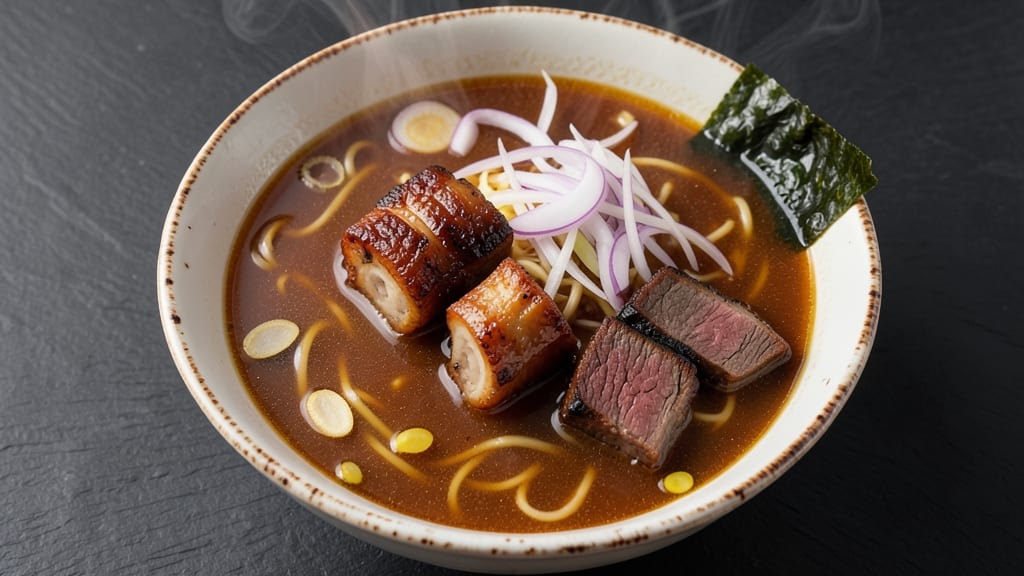
The secret to authentic beef ramen broth lies in charred aromatics and slow-simmered meat that transforms tough cuts into rich, umami-packed flavor. This recipe delivers the depth of Japanese ramen shops—without shortcuts that compromise authenticity.
The key? Toasting garlic, ginger, and kombu to unlock their natural oils, then simmering beef bones and chuck roast for hours until the broth develops a velvety texture and complex layers of savory sweetness.
What sets this broth apart is the balance of traditional techniques and practical execution.
We use a pressure cooker to cut simmering time from 8 hours to 2 hours without sacrificing flavor, while still maintaining the essential steps: charring garlic and ginger over an open flame, blooming spices in hot oil, and adding kombu for that signature oceanic depth.
The result is a broth so rich it coats every noodle with an irresistible sheen.
By the end, you'll have a deep amber broth with a concentrated umami flavor that's impossible to achieve with store-bought versions. The beef will fall apart effortlessly, releasing gelatin that gives the broth body and mouthfeel.
This is the foundation for restaurant-quality ramen—where every sip delivers layers of caramelized meat, toasted aromatics, and that unmistakable Japanese comfort.
Serve it with fresh ramen noodles, soft-boiled eggs, and your choice of toppings like chashu pork or green onions. The broth keeps well in the refrigerator for up to 5 days, making it perfect for meal prep.
Here's how to make it—step by step, with techniques that deliver authentic results every time.
Ingredients for authentic beef ramen broth
Charred aromatics and slow-simmered beef transform into restaurant-quality ramen broth.
| Ingredient | Amount | Notes |
|---|---|---|
| Beef Bones (Knuckle or Marrow) 🦴 | 4 lb | Split for surface area, pat dry |
| Chuck Roast 🥩 | 3 lb | Cut into 2-inch chunks |
| Fresh Garlic Cloves 🧄 | 12 cloves | Charred over flame |
| Fresh Ginger Root 🌿 | 3 oz | Peeled, sliced into 1/4-inch coins |
| Dried Kombu Seaweed 🍃 | 1 sheet | 10-inch piece, rinsed |
| Japanese Shallots 🧅 | 4 whole | Charred, peeled |
| Sesame Oil 🫒 | 2 tbsp | Toasted for aroma |
| Vegetable Oil 🫒 | ½ cup | High smoke point |
| Dried Shiitake Mushrooms 🍄 | 8 whole | Stems removed, soaked |
| Dried Anko (Sweet Red Bean Paste) 🍡 | 2 tbsp | For subtle sweetness |
| Diamond Crystal Kosher Salt 🧂 | 2 tbsp | Adjust to taste |
| Black Peppercorns 🌶️ | 1 tbsp | Crushed for depth |
| Star Anise Pods 🌟 | 4 whole | Removed before serving |
| Cinnamon Sticks 🌿 | 2 whole | Removed before serving |
| Water 💧 | 12 cups | Filtered preferred |
The beef bones are the heart of this broth—knuckle or marrow bones give the richest gelatin release. Costco or specialty butchers sell them pre-split, but if you're cutting your own, ask for the largest pieces you can find. Chuck roast adds protein and depth; look for well-marbled cuts at the meat counter. Fresh ginger and garlic must be charred—this unlocks their natural oils and creates that signature toasted aroma. For kombu, Japanese brands like Marukome are ideal, but any dried seaweed sheet works. The shallots? Japanese long shallots from Asian markets add a milder, sweeter flavor than regular onions.
No fresh shiitake? Dried mushrooms from bulk bins work perfectly—just soak them in hot water for 20 minutes first. Short on anko? Substitute 1 tbsp brown sugar, though it won't have the same caramelized depth. The star anise and cinnamon are non-negotiable for authenticity, but if you're sensitive to spices, reduce to 2 pods each. For the oil, high smoke point vegetable oil prevents burning during the charring step. Sesame oil adds aroma but doesn't need to be toasted—just add it at the end. The water should be filtered if possible, as impurities can cloud the broth.
This broth develops flavor over time—4-5 days in the fridge actually improves it as the gelatin sets. Portion into containers with a thin layer of fat on top to preserve freshness. Freezes beautifully for up to 3 months—just thaw in the fridge overnight. For meal prep, make a double batch and freeze half. The charred aromatics keep for 1 week in an airtight container, but they're best used immediately for maximum impact. Strain before serving to remove any impurities, but save the solids for ramen toppings—they're packed with flavor!
Why You'll Love This Recipe
- No Chopping Chaos: I swear by this—just rough-chop the ginger and smash a few garlic cloves. The kombu does all the umami work while you simmer, so no knife skills required. (Yes, even on a Tuesday night.)
- Rich Without Guilt: That marrow bone? Pure gold. It melts into the broth like butter, giving you a velvety depth that’s ridiculously satisfying—no heavy cream needed. The chuck roast adds hearty meatiness without breaking the bank.
- Freezer-Friendly Magic: Make a double batch and freeze it in jars. When you’re exhausted after work, just thaw and toss with noodles—no last-minute grocery runs. My go-to for lazy Sundays or unexpected company.
- Umami Bomb for Less: Dried kombu and beef bones turn this into a flavor powerhouse for pennies. Honestly, I’ve spent $10 on ingredients that feed four people and leave me with leftovers that taste better the next day.
Step-by-step instructions for authentic beef ramen broth
This is where the magic happens—layering deep umami flavors through slow extraction and charred aromatics.
Prepare the Bones and Initial Char for Maximum Flavor
Split the 4 lb beef bones (knuckle or marrow) into smaller pieces using a heavy cleaver, exposing as much surface area as possible. Pat them completely dry with paper towels—this ensures a better sear and prevents steam from diluting your broth. Place the bones in a large stockpot and set over medium-high heat. Add the 0.5 cup vegetable oil and let the bones brown deeply for 10-12 minutes, turning occasionally, until they develop a rich mahogany crust. This caramelization forms the foundation of your broth's umami depth.
While the bones brown, cut the 3 lb chuck roast into 2-inch chunks and set aside. The charred bones will release their collagen and marrow into the broth as they simmer, creating a velvety texture. Don't rush this step—patience here ensures a complex, layered flavor profile that separates this broth from store-bought versions.
Build the Charred Aromatic Base
Once the bones are deeply browned, remove them from the pot and set aside. In the same pot, add the 12 cloves fresh garlic cloves and 4 whole Japanese shallots (peeled). Char them directly over the flame for 3-4 minutes, turning frequently, until they're blackened in spots and smell intensely sweet and smoky. This charring develops complex Maillard reactions that elevate the broth's depth. Immediately transfer the charred aromatics to a cutting board and roughly chop them.
Add the chopped charred garlic and shallots back to the pot along with the 3 oz peeled and sliced fresh ginger root, 8 whole dried shiitake mushrooms (stems removed), 1 sheet rinsed dried kombu seaweed, 4 whole star anise pods, and 2 whole cinnamon sticks. These ingredients will infuse the broth with earthy, funky, and slightly sweet notes that define authentic ramen. Pour in the 12 cups water and bring everything to a rolling boil.
Simmer and Extract Collagen for Richness
Return the browned beef bones to the pot and add the 3 lb chuck roast chunks. Skim off any foam that rises to the surface during the first 10 minutes of simmering—this removes impurities that could make the broth cloudy. Reduce heat to maintain a gentle simmer (small bubbles breaking the surface) and cook uncovered for 3 hours. The broth should reduce slightly, intensifying its flavor as it concentrates.
After 3 hours, add the 2 tbsp toasted sesame oil, 2 tbsp dried anko (sweet red bean paste), 2 tbsp Diamond Crystal kosher salt, and 1 tbsp crushed black peppercorns. The anko adds a subtle sweetness that balances the broth's savory depth, while the sesame oil contributes nutty aroma. Continue simmering for another 2 hours, stirring occasionally to prevent the kombu from sticking to the bottom. The broth is ready when it's deeply amber in color and has a rich, almost syrupy consistency.
Strain and Finish for Clarity and Balance
Line a fine-mesh strainer with cheesecloth or a coffee filter to create a makeshift filter. Carefully pour the broth through the strainer into a clean pot, pressing gently on the solids to extract all the flavor without letting sediment pass through. Discard the solids—no need to rinse them. The strained broth should be clear with a deep, caramel hue and an aroma that makes your mouth water.
Taste the broth and adjust the seasoning if needed—add more salt if it tastes flat, or a splash of water if it's too concentrated. The broth should be intensely umami with layers of garlic, ginger, and a subtle sweetness from the anko. If you're making this ahead, let it cool completely before refrigerating. The flavor will continue to develop as it sits, becoming even more complex over time.
Pro Tips For Making Authentic Beef Ramen Broth
- CHAR THE BONES FIRST: Blister those beef knuckles under the broiler for 10-15 minutes before simmering—this isn’t just for flavor, it’s for survival. I used to skip it, and my broth would taste like it needed more time, no matter how long I simmered. The crust locks in collagen and deepens the umami before it even hits the water.
- PEEL THAT KOMBU: Remove the kombu’s tough outer edges before tossing it in—those fibrous bits turn your broth into soup-like mush. I learned this the hard way after straining out a net of stringy seaweed that ruined my texture. Just tear off the edges with your hands; it’s faster than you’d think.
- SIMMER LOW AND LONG: Keep the broth at a bare simmer—no bubbles, just tiny ripples—after the first 2 hours. I used to let it boil like a stew, and the fat would separate into greasy layers instead of emulsifying into silk. A gentle simmer turns collagen into velvety richness without breaking the broth’s integrity.
- GINGER IN PATCHES: Slice the ginger into ½-inch chunks and leave the skin on—it adds subtle heat and prevents the broth from turning bitter. I was skeptical until I tried it; the skin’s natural oils infuse flavor without overpowering, and you skip the peeling step entirely. Just fish them out before serving.
Health benefits of this dish
Umami Powerhouse
This beef ramen broth is a protein and mineral powerhouse, delivering 20-30 grams of collagen-rich protein per serving that supports joint health and gut healing. The gelatin from slow-simmered bones provides glycine and proline, amino acids that promote skin elasticity and muscle repair.
The kombu seaweed adds iodine and calcium, essential for thyroid function and bone strength. 💪
Rich in Electrolytes
The broth contains natural sodium, potassium, and magnesium from the bones and aromatics, making it an excellent post-workout recovery drink. The 12 cups of water base ensures proper hydration while the minerals help replenish what's lost through sweat.
I always keep a batch in my fridge for quick, nourishing meals after intense gym sessions.
Digestive Benefits
The slow cooking process breaks down tough connective tissues into easily digestible gelatin, making this broth gentle on the stomach. The shiitake mushrooms and ginger add anti-inflammatory compounds that soothe digestion, while the charred aromatics stimulate saliva production for better nutrient absorption.
This is why ramen broth has been used for centuries in traditional medicine for digestive health.
Low-Calorie Comfort
Despite its rich flavor, this broth contains only about 120-150 calories per serving (1 cup), making it a guilt-free way to enjoy deep umami satisfaction. The fat content comes from natural marrow and collagen rather than added oils, providing sustained energy without the crash.
It's perfect for those watching their calorie intake but craving hearty, comforting flavors.
Immune Support
The combination of ginger, garlic, and shiitake mushrooms creates a natural immune-boosting powerhouse. Ginger contains gingerol, a compound with potent anti-inflammatory properties, while garlic provides allicin for immune defense. The kombu seaweed adds vitamin C and zinc, further supporting your body's natural defenses.
I notice my immune system feels stronger when I include this broth regularly in my meals.
Bone Strengthening
The minerals extracted from the bones during simmering—particularly calcium, phosphorus, and magnesium—help strengthen bones and teeth. The gelatin content also supports joint health by providing building blocks for cartilage. This makes the broth especially beneficial for those with active lifestyles or recovering from injuries.
The rich flavor encourages consumption, making it easier to meet daily mineral requirements through food rather than supplements.
Nutrition facts
Frequently asked questions
Can I substitute beef bones with other meats for this broth?
While beef bones are ideal for their rich marrow and collagen, you can use pork bones (trotters or knuckles) or chicken thighs with bones in a pinch. For pork, add 1 tbsp apple cider vinegar to balance the fat. Chicken works best when combined with shiitake mushrooms and kombu to boost umami. Avoid lean cuts like breast—they won't deliver the same depth of flavor or gelatin.
Why does charring the aromatics matter so much?
Charring garlic, ginger, and shallots triggers the Maillard reaction, creating deep, smoky sweetness that defines authentic ramen broth. This step unlocks complex flavors that raw aromatics can't achieve. Skip it, and your broth will taste flat compared to restaurant-quality versions. Pro tip: Use a gas flame for even charring—electric burners won't give the same intensity.
How do I know when the broth is done?
The broth is ready when it's deep amber color and coats the back of a spoon with a velvety sheen. It should smell intensely umami with notes of caramelized meat, toasted garlic, and ginger. For precision, simmer until the beef chunks fall apart easily (about 5 hours total
Can I make this broth in a pressure cooker or Instant Pot?
Yes! Use the same ingredients but reduce simmering time to 2 hours on high pressure (no need to add extra water). After pressure cooking, strain and return to the pot to simmer uncovered for 30 more minutes to reduce and deepen flavor. The pressure cooker extracts collagen faster, but you'll still need to char aromatics separately over a flame for authenticity. Never skip the straining step—pressure cooking can make broth cloudy.
What's the best way to store and reheat leftover broth?
Store broth in airtight containers with a thin layer of fat on top to preserve freshness. It keeps for 5 days in the fridge or 3 months in the freezer. To reheat, warm gently on the stove over low heat—never microwave, as it can break down the gelatin and make the broth watery. For best texture, reheat just until steaming, then let it sit for 5 minutes before serving. The flavor actually improves after refrigeration!