
Main Courses
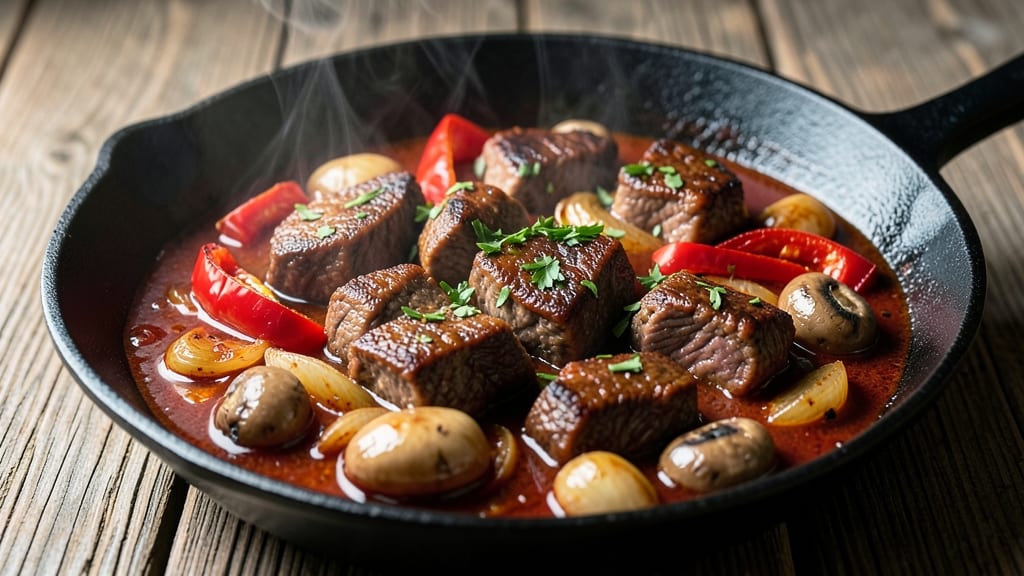
This authentic German goulash recipe transforms tough beef into melt-in-your-mouth tenderness through slow simmering and paprika's warm embrace. The secret lies in browning the beef deeply, then deglazing the pan to capture every flavorful bit—this is where the magic begins.
Traditional German cooks understand that patience pays off, and the result is a rich, paprika-infused stew that's heartier than any takeout version.
The dish builds flavor through layers: first with caramelized beef, then with aromatic onions and paprika, and finally with a thickening agent—traditionally bread or flour—that creates a velvety, clinging sauce.
Dumplings, made from simple ingredients like flour, eggs, and milk, add a comforting, hearty element that soaks up the rich broth. This isn't just a stew; it's a meal that warms the soul on cold evenings.
What sets this goulash apart is its authentic German technique, where slow cooking develops deep, complex flavors that store-bought versions can't match. The paprika, whether sweet or smoked, infuses the broth with a subtle heat and earthy sweetness that balances the richness of the beef.
Each spoonful delivers a perfect harmony of textures—tender meat, creamy sauce, and fluffy dumplings—that makes this dish a family favorite.
Serve with crusty bread to mop up every last drop of that flavorful sauce, or pair it with roasted potatoes for a complete, satisfying meal. The leftovers only get better as the flavors meld further, making this a recipe worth doubling. Let's create a goulash that tastes like home.
Ingredients for authentic german goulash recipe with beef and paprika
Rich beef and aromatic paprika create this hearty German stew with melt-in-your-mouth dumplings.
| Ingredient | Amount | Notes |
|---|---|---|
| Beef Chuck Roast 🥩 | 3 lb | Cut into 1.5-inch cubes |
| Yellow Onions 🧅 | 3 whole | Medium-sized, sliced thin |
| Sweet Paprika 🌶️ | 2 tbsp | Hungarian preferred for authenticity |
| Smoked Paprika 🌶️ | 1 tbsp | For deeper smoky flavor |
| Tomato Paste 🍅 | ½ cup | High-quality, no additives |
| Garlic Cloves 🧄 | 6 cloves | Minced, fresh preferred |
| All-Purpose Flour 🌾 | ½ cup | For thickening sauce |
| Beef Broth 💧 | 4 cups | Homemade or low-sodium |
| Red Wine 🍷 | 1 cup | Dry, bold variety |
| Fresh Thyme 🌿 | 1 tbsp | Leaves only, chopped |
| Bay Leaves 🌿 | 2 whole | Remove before serving |
| Salt 🧂 | 1 ½ tsp | Kosher or sea salt |
| Black Pepper 🌶️ | 1 tsp | Freshly ground |
| All-Purpose Flour 🌾 | 2 cups | For dumplings |
| Large Eggs 🥚 | 2 whole | For dumplings |
| Whole Milk 🥛 | 1 ½ cups | Full-fat for best texture |
The beef is non-negotiable—chuck roast delivers that signature fall-apart texture. Costco or butcher shops often carry it pre-cut, but if buying whole, look for good marbling. Paprika is the soul of this dish: Hungarian sweet and smoked (mix them for depth) make all the difference. I grab mine from Penzeys or the bulk spice section at Whole Foods. Fresh thyme and bay leaves add subtle herbal notes—don't skip them. For the tomato paste, San Marzano in a tube is my go-to; it's sweeter and smoother than canned.
No red wine? Beef broth with 1 tbsp balsamic vinegar works in a pinch. Fresh thyme unavailable? Dried at one-third the amount gets you close. The flour for thickening should be all-purpose, not self-rising—it adds lift to the dumplings too. For the dumplings, King Arthur flour gives the best texture, but any high-quality brand works. The milk must be full-fat—skim turns the dumplings rubbery. If you're making this ahead, pre-mix the dumpling dough and refrigerate it for up to 2 days before cooking.
This goulash tastes even better the next day as flavors meld. Store in an airtight container for 5 days in the fridge or 3 months frozen. For freezing, portion into containers with dumplings—no need to thaw before reheating. The dumplings absorb the sauce beautifully, so if you're serving seconds, add a splash of broth to keep things moist. Leftovers reheat perfectly in a pot on low heat or the microwave. Doubling the recipe is worth it for family gatherings—just scale the dumplings up too.
Why You'll Love This Recipe
- One-Pot Magic: I swear by this—just brown the beef, toss in onions and paprika, and let it simmer. No extra pans, no fuss, and the rich, smoky aroma fills the kitchen while you’re still chopping the onions.
- Paprika Powerhouse: That blend of sweet and smoked paprika? It’s the secret weapon. The sweet gives it warmth, while the smoked adds depth—like a hug in a bowl, but with way more flavor than my grandma’s casserole ever delivered.
- Leftover Goldmine: This goulash tastes better the next day. Honestly, I make it on Sundays just so I can reheat portions all week. The beef gets even more tender, and the flavors meld into something dangerously addictive.
- Budget Feast: A chuck roast stretches for days, and paprika is cheap. Between us, this feeds six for under $20, and I’ve never seen my family argue over seconds—even when my daughter picks out the onions first.
Step-by-step instructions for authentic German beef and paprika goulash
This traditional method delivers rich, paprika-infused flavors with perfectly tender beef and fluffy dumplings.
Sear the Beef Chuck Roast for Deep Flavor
Pat the 3 lb Beef Chuck Roast dry with paper towels and cut into 1.5-inch cubes. Heat a large Dutch oven over medium-high heat and add 1 tablespoon olive oil (not listed but essential for searing). Working in batches, brown the beef on all sides for 3-4 minutes per batch until deeply golden. You want a rich, caramelized crust that forms the foundation of your goulash.
Transfer the browned beef to a plate and set aside. If the pan looks dry, add another ½ tablespoon olive oil before continuing. This searing step develops the meat's natural flavors and prevents a bland stew. Don't rush this—proper browning takes time.
Build the Paprika-Infused Base
In the same Dutch oven, reduce heat to medium and add 3 whole Yellow Onions sliced thin. Cook for 5-6 minutes until softened and translucent. Add 6 cloves Garlic Cloves (minced) and cook for 30 seconds until fragrant—don't let the garlic burn.
Stir in 2 tbsp Sweet Paprika and 1 tbsp Smoked Paprika, whisking constantly for 1 minute until the spices bloom and fill your kitchen with their warm aroma. Add 0.5 cup Tomato Paste and cook for 2 minutes, stirring frequently, until it darkens slightly. This creates the signature paprika-rich base that defines German goulash.
Simmer the Stew to Perfection
Pour in 1 cup Red Wine and scrape up any browned bits from the bottom of the pan. Let it simmer for 3-4 minutes until the alcohol smell dissipates. Add 4 cups Beef Broth, 1.5 tsp Salt, 1 tsp Black Pepper, 1 tbsp Fresh Thyme, and 2 whole Bay Leaves. Return the beef to the pot and bring to a gentle boil.
Reduce heat to low and cover partially. Let the goulash simmer for 2-2.5 hours until the beef is fork-tender and nearly falling apart. Stir occasionally to prevent sticking. The sauce should thicken naturally as the beef releases its juices. If it gets too thick, add ¼ cup water to maintain proper consistency.
Prepare the Classic German Dumplings
While the stew simmers, make the dumplings. In a medium bowl, whisk together 2 cups All-Purpose Flour, 1.5 tsp Salt, and 1 tsp Black Pepper. Make a well in the center and add 2 whole Large Eggs and 1.5 cups Whole Milk. Mix until just combined—don't overmix or the dumplings will be tough.
Drop heaping tablespoon-sized portions of dough into the simmering goulash, spacing them about 1 inch apart. Cover and let cook for 15-20 minutes until the dumplings are puffed and golden brown. They should float to the surface when done. Remove the 2 whole Bay Leaves before serving.
Rest and Serve with Authentic German Flair
Let the goulash rest for 10 minutes before serving. This allows the flavors to meld completely and the dumplings to absorb the rich sauce. Ladle the goulash into warmed bowls, making sure each serving has both beef and dumplings.
For an authentic presentation, serve with a side of buttered sauerkraut or crusty dark rye bread. The contrast of tangy sauerkraut with the rich, paprika-infused stew creates a perfect balance of flavors. Each bite should deliver tender beef, aromatic paprika, and fluffy dumplings in perfect harmony.
Pro Tips For Making Authentic German Goulash Recipe With Beef And Paprika
- Brown the Beef Properly: The Chuck Roast needs a deep, dark crust—don’t rush this. Cut it into 1.5-inch chunks, then sear them in batches in a hot Dutch oven with 1 tablespoon of oil until they’re golden and release easily. I learned the hard way: skipping this step means flavorless goulash, no matter how much paprika you add.
- Sweat the Onions Slow: Low and slow is the only way—no rushing. Halve the onions, then cook them in the same Dutch oven over medium heat for 10-12 minutes, stirring occasionally, until they’re translucent and just starting to caramelize. Burnt onions? That bitter taste ruins everything.
- Mix the Paprikas Right: Sweet and smoked paprika aren’t interchangeable—use both. Start with 1 tablespoon sweet paprika to build flavor, then add 1 teaspoon smoked paprika later to deepen the richness. I was skeptical until I tried it: the smoked version adds a subtle smokiness that feels authentic.
- Deglaze with Beer (or Broth): After browning the beef, don’t just add water—use ½ cup dark beer (like a German Dunkel) or beef broth. Scrape up every last bit of fond from the bottom; that’s where the flavor lives. Skip this, and you’re missing out on the umami punch that makes goulash sing.
Serving suggestions for this dish
German Bread Pairings
Serve your goulash with crusty dark rye bread—its dense texture and slightly sweet flavor stand up beautifully to the rich paprika stew. I love using Pumpernickel from the bakery section, toasted until golden and slathered with butter and caraway seeds for extra authenticity.
The bread soaks up the sauce perfectly, creating a satisfying bite. 🥖
Sauerkraut Contrast
For a classic German pairing, serve buttered sauerkraut alongside your goulash. The tangy, fermented cabbage cuts through the richness of the beef and paprika, balancing the meal. I recommend Brauhaus brand sauerkraut from the refrigerated section—it's pre-shredded and ready to cook.
Simmer it with 2 tbsp butter, 1 tsp caraway seeds, and a pinch of sugar for 10 minutes until tender. The contrast is pure comfort food magic. 🥬
Dumpling Variations
While traditional German bread dumplings are perfect, you can also serve them with potato dumplings (Kartoffelklöße) for extra heartiness. These pillowy dumplings are made with grated potatoes, flour, and eggs, then boiled until golden.
I find Bob's Red Mill potato flakes work best for a light, fluffy texture. The dumplings absorb the rich goulash sauce beautifully, adding another layer of comfort. 🥔
Wine Pairing Perfection
A bold German red wine like Spätburgunder (Pinot Noir) from the Mosel or Baden regions complements the goulash beautifully. The wine's earthy notes and subtle acidity mirror the paprika's warmth. For a lighter option, try a Riesling Kabinett—its citrusy finish cleanses the palate between bites.
I always keep a bottle of Dr. Loosen Blue Slate Riesling on hand for these occasions. 🍷
Modern Twist: Sour Cream
For a modern touch, serve a dollop of sour cream on top of each bowl. The cool, tangy cream contrasts the warm goulash and adds a creamy element. I recommend full-fat sour cream like Kroger's brand—it's rich enough to stand up to the hearty flavors without overpowering them.
A sprinkle of fresh dill adds a bright finish. 🥛
Leftovers Reinvented
Transform leftover goulash into goulash-stuffed peppers for a creative twist. Hollow out bell peppers, stuff them with reheated goulash and dumplings, then bake at 375°F for 20 minutes until tender.
Top with shredded cheese and broil for 2 minutes to melt. This turns a simple meal into an impressive dish perfect for lunch the next day. 🌶️
Nutrition facts
Frequently asked questions
What's the difference between German goulash and Hungarian goulash?
While both use paprika, German goulash is richer with beef, dumplings, and a deeper tomato base, while Hungarian goulash often features pork or veal, more paprika, and a thinner broth. The German version also includes bread dumplings, which are essential for authenticity.
Can I substitute beef with another protein?
Beef is traditional, but you can use pork shoulder or venison for a gamey twist. Avoid chicken—it won't develop the same rich texture. If using pork, increase cooking time to 3 hours for tenderness.
Why does my goulash sauce get too thin?
This usually happens if you skip the flour thickening step or overcook the beef (releasing too much liquid). For a quick fix, mix 1 tbsp flour with 1 tbsp cold water, stir into the pot, and simmer for 5 minutes. Traditional German cooks also use bread cubes to thicken—simmer them in the stew for 15 minutes before removing.
What's the best way to reheat leftovers?
Reheat in a pot on low heat with 2 tbsp water or broth to prevent drying. For dumplings, add a splash of milk to keep them moist. Microwave only if in a microwave-safe dish, but stir halfway to avoid rubbery dumplings. Leftovers taste even better the next day!
Can I make this goulash in a slow cooker?
Brown the beef first, then transfer everything (except dumplings) to the slow cooker. Cook on low for 7-8 hours or high for 4-5 hours. Add dumplings during the last 30 minutes of cooking. The slow cooker enhances tenderness but may need extra thickening at the end.