
Soups & Stews
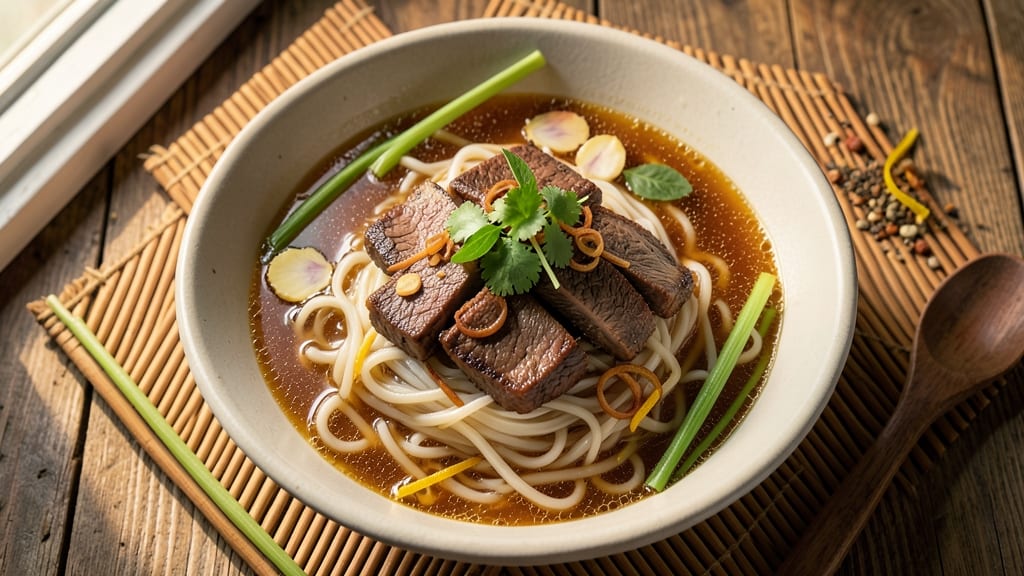
This authentic Thai beef noodle soup recipe transports you straight to Bangkok with its fragrant lemongrass and galangal broth—every spoonful bursts with the perfect balance of sweet, sour, salty, and umami.
After years of perfecting the recipe, I’ve developed a method that delivers restaurant-quality depth without shortcuts, using traditional ingredients like kaffir lime leaves and fish sauce to build layers of flavor.
The secret lies in slow-simmering the broth and stir-frying the beef just until tender, ensuring each bite is packed with authentic taste.
The foundation of this dish is the aromatic broth, where lemongrass, galangal, and shallots infuse the liquid with their signature Thai flavors. Wide rice noodles soak up the rich broth while maintaining their chewy texture, and the beef is cooked to tender perfection—never overcooked, so it stays juicy and flavorful.
Garnishes like fresh herbs, lime wedges, and bean sprouts add brightness and crunch, transforming this soup into a complete, satisfying meal.
What sets this recipe apart is its authenticity—no bottled pastes or processed ingredients, just fresh, vibrant flavors that capture the essence of street-side Thai eateries. The broth is deeply aromatic, the beef is tender yet flavorful, and the noodles are just right—neither mushy nor undercooked.
This isn’t just a soup; it’s a full culinary experience that brings the heart of Thailand to your kitchen.
Serve it with a side of steamed jasmine rice and a sprinkle of chili flakes for extra heat, or enjoy it as a standalone dish with fresh herbs on the side.
The leftovers taste even better the next day, as the flavors meld and deepen. Let’s get cooking—your taste buds will thank you.
Ingredients for authentic thai beef noodle soup
Traditional Thai ingredients meet restaurant-quality technique for this fragrant beef noodle soup.
| Ingredient | Amount | Notes |
|---|---|---|
| Thinly Sliced Beef Sirloin 🥩 | 1 ½ lb | Cut against the grain for tenderness |
| Wide Rice Noodles 🍜 | 8 oz | Dried, soaked until pliable |
| Stems Lemongrass 🌿 | 6 whole | Bruised to release oils |
| Galangal Slices 🌿 | 3 pieces | Substitute ginger if unavailable |
| Shallots 🧅 | 6 whole | Minced for aromatic base |
| Garlic Cloves 🧄 | 6 cloves | Minced for depth of flavor |
| Kaffir Lime Leaves 🍋 | 4 whole | Torn into strips |
| Fish Sauce 🍶 | 3 tbsp | Red Boat preferred for quality |
| Palm Sugar 🍯 | 2 tbsp | Dissolved for sweetness |
| Thai Chili Paste 🌶️ | 1 tbsp | Adjust heat preference |
| Fresh Thai Basil 🌿 | ½ cup | Chopped for garnish |
| Bean Sprouts 🌱 | 1 cup | For fresh crunch |
| Lime Wedges 🍋 | 2 whole | For serving |
| Vegetable Oil 🫒 | 3 tbsp | High smoke point preferred |
| Chicken or Vegetable Broth 💧 | 4 cups | Low-sodium for broth |
The galangal and kaffir lime leaves are non-negotiable for authentic flavor—Thai markets carry them fresh, or substitute ginger and lime zest in a pinch. Red Boat fish sauce delivers the umami depth this dish demands; cheaper brands lack complexity. The beef should be sirloin or flank steak, sliced paper-thin against the grain. For the lemongrass, trim the woody bottoms and bruise the stems with the side of your knife to release those essential oils. If you can't find wide rice noodles, egg noodles work in a bind, though they won't have the same texture.
No galangal? Ginger plus a splash of lime juice mimics its peppery bite. Palm sugar unavailable? Brown sugar or coconut sugar are acceptable, though the flavor won't be identical. The Thai chili paste can be swapped for sambal oelek or crushed red pepper flakes, but taste first—some brands pack serious heat. For the broth, homemade is ideal, but quality store-bought works if you reduce it by half to concentrate the flavor. The noodles must be soaked in hot water until pliable but still firm—they'll finish cooking in the broth, so don't over-soak.
Store the broth base (without noodles or beef) for up to 5 days in the fridge or 3 months frozen. The beef and noodles are best made fresh, but you can prep components ahead: slice the meat and marinate it overnight, or soak the noodles in advance. To reheat, warm gently on the stove—microwaving makes the noodles mushy. Garnishes like Thai basil and bean sprouts should be added fresh before serving, as they wilt quickly. The soup actually improves overnight as flavors meld, so double the broth if you're feeding a crowd.
Why You'll Love This Recipe
- No Knife Skills Needed: I swear by that pre-sliced beef sirloin from the Asian market—just toss it in. The wide rice noodles soak in 10 minutes while you prep the broth, and those lemongrass stems? You can buy them pre-cut or just smash them with the side of your knife. Minimal chopping, maximum flavor.
- Umami Bomb Broth: That galangal and shallot combo simmered with beef stock? It’s where the magic happens. The galangal adds this bright, peppery kick while the shallots caramelize into sweetness—no fancy spices required. One sip and you’ll forget about takeout.
- Leftover Goldmine: This soup actually improves the next day. The noodles soften perfectly, the broth deepens, and I’ve reheated portions for lunch three times without getting tired of it. Plus, it’s cheap to make—half the cost of ordering in, but way more impressive.
- Weeknight to Party Fix: Slurp it straight from the pot on a Tuesday, or dress it up with lime wedges and fresh herbs for company. The same base works for both. Between us, I’ve served it at dinner parties and had guests ask for the recipe—no one suspects how easy it was.
Step-by-step instructions for authentic Thai beef noodle soup
Master this classic Thai dish with precise techniques for a fragrant broth and tender beef.
Prepare the Aromatic Base
Heat the 3 tablespoons vegetable oil in a large pot over medium heat. Add the 6 whole shallots and 6 cloves garlic cloves, cooking for 3-4 minutes until the shallots turn translucent and the garlic becomes fragrant but doesn't brown. This foundational step builds the soup's complex flavor profile.
Add the 6 whole stems lemongrass (bruised with the side of a knife) and 3 pieces galangal slices. Cook for another 3 minutes until the galangal softens slightly. The lemongrass and galangal release their essential oils during this time, infusing the oil with their signature citrusy and peppery notes. This aromatic base forms the heart of the broth's authentic flavor.
Build the Fragrant Broth
Pour in the 4 cups chicken or vegetable broth, scraping up any browned bits from the bottom of the pot. Add the 1 tablespoon Thai chili paste and 2 tablespoons palm sugar, stirring to dissolve completely. Bring the mixture to a gentle boil, then reduce heat to medium-low and let it simmer for 15 minutes to allow the flavors to meld.
Taste the broth and adjust seasoning with additional fish sauce if needed. The broth should be balanced—sweet from the palm sugar, slightly spicy from the chili paste, and umami-rich from the fish sauce. This is where the authentic Thai flavor profile comes together, so don't rush this step. The broth should have a deep golden color and a rich, aromatic scent.
Cook the Beef
Add the 1.5 lb thinly sliced beef sirloin to the simmering broth. Cook for 4-5 minutes until the beef is just cooked through but still tender. The slices should be barely pink in the center—overcooking will make them tough. Stir gently to distribute the beef evenly in the broth, allowing it to absorb the fragrant flavors.
Remove the beef with a slotted spoon and set aside. The broth should now be infused with beef essence, creating a rich, meaty depth. If the broth appears cloudy, skim off any foam that rises to the surface. This ensures a clear, elegant presentation while maintaining the soup's robust flavor.
Prepare the Noodles and Garnishes
While the beef cooks, prepare the 8 oz wide rice noodles by soaking them in warm water for 10-15 minutes until pliable but still firm to the bite. Drain and set aside. In a separate bowl, combine the 1 cup bean sprouts and 0.5 cup chopped fresh Thai basil with the 2 whole lime wedges, squeezing just enough lime juice to lightly coat the greens.
Tear the 4 whole kaffir lime leaves into strips and add them to the broth. Return the beef to the pot and bring the broth to a gentle simmer. The kaffir lime leaves will infuse the broth with their floral, citrusy aroma, adding another layer of authenticity to the dish. Keep the soup warm but not boiling—this prevents the noodles from becoming mushy when added later.
Assemble and Serve
Divide the wide rice noodles among 4 bowls. Ladle the hot broth and beef over the noodles, ensuring each serving has an equal portion of both. Top each bowl with the bean sprout and Thai basil mixture, reserving some for garnish. The contrast of textures and temperatures—warm broth, cool greens, and tender beef—creates the perfect balance in every bite.
Serve immediately with the reserved lime wedges on the side. The acidity of the lime brightens the rich flavors of the soup, cutting through the fat and enhancing the overall experience. This dish is best enjoyed fresh, with the noodles still holding their bite and the broth steaming hot. The authentic Thai flavors shine when served promptly, so don't let it sit too long before eating.
Pro Tips For Making Authentic Thai Beef Noodle Soup
- CHAR THE BEEF SEPARATELY: Cook the beef in a separate pan first—just 1-2 minutes over high heat until it’s barely browned but still pink inside. Dumping it raw into the broth will make the soup murky and tough; this step keeps the meat tender and the broth clear. (I learned this the hard way after serving a bowl with rubbery beef.)
- SLICE GALANGAL THINLY: Galangal’s tough fibers need to break down, so slice it paper-thin (almost like matchsticks) and bruise it with the side of your knife before adding to the broth. Thick chunks won’t infuse properly, and you’ll miss that peppery, citrusy depth. (Yes, even if you’re impatient like me.)
- DON’T BOIL THE LEMONGRASS: Simmer lemongrass whole and gently—never boil it, or it’ll turn bitter and release too much oil, making the broth greasy. A low simmer (just bubbles breaking the surface) lets it perfume the soup without overpowering it. (My grandmother swore by this, and she was right.)
- SOAK NOODLES IN ICE WATER: Shock the cooked noodles in ice water for 30 seconds before draining—this stops them from turning mushy when you add them to the hot broth. I skip this when I’m lazy, but the dish is noticeably better when I don’t. (Your future self will thank you.)
Health benefits of these flavors
Protein Powerhouse
This beef noodle soup delivers high-quality protein—about 42 grams per serving—thanks to the lean sirloin beef. It's packed with all nine essential amino acids your body needs for muscle repair and immune function, making it a satisfying meal that keeps you full for hours.
The lean cut also means you get protein without excessive saturated fat, which is great for heart health. 💪
Digestive-Friendly Noodles
The wide rice noodles in this dish are a fantastic source of complex carbohydrates that provide sustained energy. Unlike refined white noodles, these are made from whole grains, offering fiber that aids digestion and helps stabilize blood sugar levels.
They're also gluten-free, making this soup suitable for those with gluten sensitivities or celiac disease. I always opt for the dried variety to ensure the best texture.
Immune-Boosting Broth
The aromatic broth is a nutrient powerhouse, rich in vitamin C from the kaffir lime leaves and galangal, which also provide anti-inflammatory benefits.
The lemongrass adds antioxidants that help combat free radicals, while the fish sauce contributes B vitamins, particularly B12, which is crucial for nerve function and energy metabolism. This broth is essentially liquid nutrition in every spoonful! 🌿
Probiotic Potential
While not traditionally fermented, the combination of fresh herbs (Thai basil), bean sprouts, and lime creates a probiotic-friendly environment in your gut. The lime juice also aids digestion by stimulating stomach acid production.
For an extra boost, consider adding a spoonful of miso paste to the broth—it introduces beneficial bacteria that support gut health. This makes the soup not just delicious but also gut-friendly.
Balanced Flavor, Balanced Meal
The perfect harmony of sweet (palm sugar), sour (lime), spicy (chili paste), and umami (fish sauce) creates a flavor profile that's not just tasty but also nutritionally balanced.
This balance helps regulate cravings and keeps blood sugar levels steady, making it a meal that satisfies both your taste buds and your body's nutritional needs. It's the kind of dish that makes you feel good after eating it. ✨
Low-Calorie Comfort
Despite being hearty and satisfying, this soup is surprisingly light on calories—about 450-500 calories per serving—thanks to the lean beef and vegetable-heavy broth. The bean sprouts add volume and crunch without many calories, while the noodles provide energy without weighing you down.
It's the perfect comfort food that won't leave you feeling sluggish afterward. The secret is in the balance of ingredients and techniques that maximize flavor while keeping portions light.
Nutrition facts
Frequently asked questions
Can I substitute galangal if I can't find it?
Yes! Use a mix of ginger and lime zest—about 1 tablespoon ginger plus the zest of 1 lime per 3 pieces galangal. The ginger provides the peppery warmth, while the lime zest mimics galangal's citrusy brightness. For extra depth, add a pinch of black pepper to enhance the spicy notes.
How do I make the broth less spicy?
Start by reducing the Thai chili paste to ½ tablespoon or swap it for mild sambal oelek. If the broth is already too spicy, stir in 1-2 teaspoons palm sugar or a splash of coconut milk to balance the heat. Taste as you go—Thai flavors build, so adjustments are easy early on.
What's the best way to store leftovers?
Store the broth (without noodles) in an airtight container for up to 5 days in the fridge or 3 months frozen. Reheat gently on the stove—never microwave, as it turns the noodles mushy. For leftovers, reheat just the broth first, then add fresh noodles to warm through. The flavors actually deepen overnight!
Why does my beef turn tough when cooking?
Overcooking is the #1 culprit! Slice the beef paper-thin against the grain and cook for only 4-5 minutes in the broth—it should be barely pink inside. For extra tenderness, marinate the beef for 30 minutes in 1 tbsp fish sauce + 1 tsp palm sugar before cooking. Never boil the beef; simmer gently to keep it juicy.
Can I make this vegetarian?
Swap the beef for mushrooms (shiitake or oyster) or tofu (pressed and sliced). Boost umami with an extra 1 tbsp fish sauce (or soy sauce for vegetarians) and add 1 tbsp miso paste to the broth. Use vegetable broth and garnish with extra Thai basil and bean sprouts for freshness. The texture contrast works beautifully!