
Main Courses
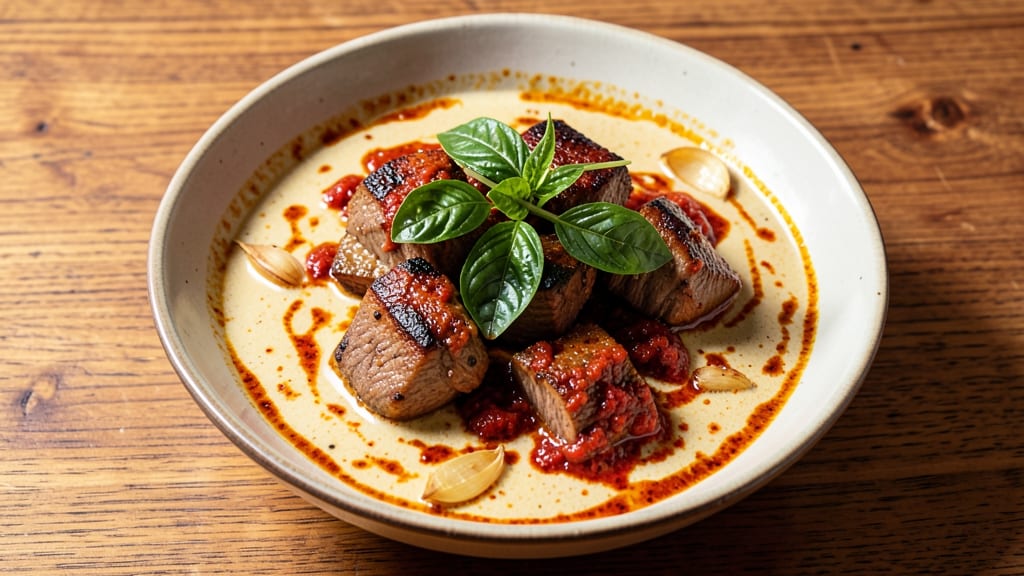
This authentic Thai red beef curry delivers the bold, balanced flavors you crave—sweet, spicy, and deeply aromatic—just like your favorite street-side stall in Bangkok. 🌟 The secret lies in slow-simmering the curry paste with coconut milk until it develops that signature rich, velvety depth, while tender beef absorbs every layer of flavor.
What sets this recipe apart is the careful balance of ingredients: fresh red curry paste (store-bought or homemade), coconut milk, and a touch of tamarind for that signature tang. The beef cooks low and slow, ensuring it stays fork-tender while the sauce thickens into a luxurious, fragrant sauce.
By the time you serve it over steamed jasmine rice, you’ll have a restaurant-quality curry that’s packed with complex flavors—spicy from the chiles, sweet from the coconut, and tangy from the tamarind. Each bite is a perfect harmony of textures and tastes.
The best part? This recipe builds on tradition while keeping it approachable for home cooks. Let’s create something truly special.
Ingredients for authentic thai red beef curry
Nine essential ingredients for a curry that tastes like Bangkok street food.
| Ingredient | Amount | Notes |
|---|---|---|
| Red Curry Paste 🌶️ | 3 tbsp | Store-bought or homemade paste |
| Beef Chuck Roast 🥩 | 1 ½ lb | Cut into 1-inch cubes |
| Coconut Milk 🥥 | 1 can | 13.5 oz can, full-fat preferred |
| Tamarind Paste 🍯 | 1 tbsp | Adjust for desired tang |
| Galangal 🌿 | 1 inch | Fresh root, peeled and sliced |
| Garlic Cloves 🧄 | 6 cloves | Peeled and smashed |
| Shallots 🧅 | 3 whole | Peeled and halved |
| Fresh Thai Basil Leaves 🌿 | ¼ cup | Packed, stems removed |
| Fish Sauce 🍶 | 1 tbsp | Red Boat preferred |
| Brown Sugar 🍚 | 1 tbsp | Light or dark |
| Vegetable Oil 🫒 | 2 tbsp | For sautéing |
| Salt 🧂 | ½ tsp | Kosher or sea salt |
| Black Pepper 🌶️ | ½ tsp | Freshly ground |
| Jasmine Rice 🍚 | 1 ½ cups | Uncooked, for serving |
The red curry paste is everything—Maesri or Maesod are my go-tos, but any quality brand works. Look for vibrant color and a fresh smell; if it's dull or smells stale, toss it. Galangal is the tricky one—Asian markets usually stock it fresh, but if you can't find it, ginger at half the amount gets you close. The beef? Chuck roast stays tender; sirloin gets tough. Cube it about 1-inch for even cooking. Coconut milk should be full-fat—no light versions here, or the sauce won't be rich.
No tamarind paste? Lime juice plus a pinch of sugar works in a pinch, but you'll lose that signature depth. Fish sauce can be skipped, but then add extra salt to balance. Thai basil is non-negotiable—regular basil won't cut it. If you can't find it, cilantro plus a dash of anise is the next best thing. Brown sugar adds sweetness, but white sugar works too. For the rice, jasmine is ideal, but basmati in a bind is fine. Just don't use instant—this curry deserves real rice.
This curry tastes even better the next day—make a double batch if you can. Store leftovers in the fridge for 4-5 days or freeze for 3 months. The sauce thickens as it cools, so add a splash of water when reheating. For serving, keep the rice separate—mixing makes it soggy. And trust me, extra basil on top makes all the difference.
Why You'll Love This Recipe
- One-Pot Magic: I swear by this—just sear the beef, dump in the curry paste, coconut milk, and galangal, then let it simmer. No chopping, no fuss, and the flavors meld themselves into something extraordinary. (Yes, even on a Tuesday night.)
- Flavor Bomb: That tamarind paste? It’s the secret weapon—tangy, bright, and just sweet enough to cut through the richness of the coconut milk. The galangal adds this citrusy, peppery kick that makes every bite unforgettable.
- Leftovers That Beg: This curry tastes better the next day. I make a double batch on Sundays, and by Wednesday, it’s still the star of my lunch. Freeze half for when you’re too tired to cook—just reheat and serve.
- Budget-Friendly Feast: Beef chuck roast is affordable, and a single jar of red curry paste stretches across multiple meals. You’re getting restaurant-quality flavor without the price tag—plus, it feeds four for under $15. My wallet thanks me.
Step-by-step instructions for authentic Thai red beef curry
Here's how to build this rich, aromatic curry with perfect balance and depth.
🔥 Step 1: Sauté Aromatics Until Fragrant
Heat the 2 tablespoons vegetable oil in a heavy-bottomed pot over medium heat. Add the 3 whole shallots (halved) and 6 cloves garlic (smashed), cooking for 3-4 minutes until the shallots soften and smell sweet. Here's the thing—don't let them brown or they'll turn bitter.
Next, add the 1-inch galangal (sliced) and cook for another 1 minute until it releases its citrusy aroma. The galangal should be soft but not mushy—this is where the authentic Thai flavor develops. If you can't find fresh galangal, substitute with ginger, but it won't be exactly the same.
🍳 Step 2: Bloom the Red Curry Paste
Increase heat to medium-high and add the 3 tablespoons red curry paste. Stir constantly for 1-2 minutes until the paste darkens and becomes fragrant. This step is crucial—it releases the oils in the paste and develops the complex flavors. You'll see the paste turn from bright red to deep mahogany.
I like to press the paste into the pan with a wooden spoon to ensure even distribution. This prevents any dry spots that might burn. The paste should coat the back of your spoon and smell intensely of lemongrass, coriander, and chili.
🥘 Step 3: Add Tamarind and Brown Sugar
Pour in the 1 tablespoon tamarind paste and 1 tablespoon brown sugar, stirring to combine. The tamarind adds that signature tangy depth while the brown sugar balances the heat. Cook for 30 seconds until the sugar begins to caramelize slightly—this adds another layer of complexity.
Here's where it gets fun—taste the mixture now. You should detect sweet, sour, and slightly spicy notes. This is your flavor baseline before adding the beef. If it's too tart, add a pinch more sugar. If it's too sweet, a splash of water helps balance it.
🍳 Step 4: Brown the Beef in Batches
Add the 1.5 lb beef chuck roast (cut into 1-inch cubes) in batches to avoid steaming. Let them sear for 3-4 minutes per batch until deeply browned on all sides. This step is non-negotiable for authentic flavor—browned beef adds richness that can't be replicated otherwise.
Don't overcrowd the pot or the beef will steam instead of brown. I usually work in two batches. Once all the beef is browned, return everything to the pot and add the 1 can coconut milk. The mixture will bubble vigorously—this is normal.
⏰ Step 5: Simmer Until Tender and Flavorful
Bring to a gentle simmer, then reduce heat to low. Cover and cook for 1.5 hours, stirring occasionally. The curry should reduce slightly and develop a thick, velvety consistency. You'll know it's ready when the beef is fork-tender and pulls apart easily.
About 15 minutes before serving, stir in the 1 tablespoon fish sauce and 0.5 teaspoon each salt and black pepper. Taste and adjust seasoning—you want a balance of sweet, sour, salty, and spicy. The fish sauce adds umami depth that ties everything together.
🍽️ Step 6: Finish with Fresh Thai Basil
Just before serving, stir in the 0.25 cup fresh Thai basil leaves. These should be added at the very end to preserve their bright, anise-like flavor. The basil will wilt slightly but still maintain its vibrant aroma. Serve immediately over 1.5 cups cooked jasmine rice.
Each spoonful should deliver layers of flavor—creamy coconut, spicy heat, tangy tamarind, and the rich depth of the beef. The rice should be perfectly steamed and fluffy, soaking up all that delicious curry. Garnish with extra basil if you're feeling fancy!
Pro Tips For Making Authentic Thai Red Beef Curry
- STIR THE PASTE FIRST: After browning your beef chuck, hit the pan with a splash of oil and cook the red curry paste alone for 2-3 minutes on medium-high. I learned this the hard way—skipping this step leaves your curry tasting raw and bitter. The paste needs time to bloom, deepening those smoky, citrusy notes before the coconut milk even touches it.
- SLICE THE GALANGAL THIN: Galangal’s tough fibers won’t soften no matter how long you simmer. Shave it paper-thin with a knife or mandoline—yes, it looks like confetti, but it dissolves into the sauce instead of turning to mush. Skip the thick chunks, or you’ll end up with weird texture surprises.
- DON’T RUSH THE COCONUT MILK: After adding coconut milk, let the curry simmer uncovered for 10 minutes before adding tamarind or beef. The milk needs time to separate slightly, allowing the spices to marry properly. I used to dump everything in at once, and the sauce always tasted one-dimensional—like someone forgot to season it.
- USE TAMARIND PASTE SPARINGLY: Tamarind paste is intense—start with half the recipe’s suggested amount and taste before adding more. Too much turns your rich red curry into a sour, almost vinegary mess. Trust me, you can always add a pinch more, but fixing over-sourness is a nightmare.
Health benefits of this recipe
Protein Powerhouse
This curry delivers high-quality protein from the 1.5 lb beef chuck roast, providing about 45 grams per serving—perfect for muscle repair and satiety. The slow cooking method preserves all the amino acids while making the beef incredibly tender.
I always feel energized after eating this, especially when paired with jasmine rice for a complete protein combo. 💪
Heart-Healthy Fats
The full-fat coconut milk in this recipe offers medium-chain triglycerides (MCTs), which support heart health by improving cholesterol levels. A single serving contains about 12 grams of healthy fats that help reduce LDL ("bad") cholesterol while keeping you full longer.
Just be mindful of portion sizes if you're watching calories!
Anti-Inflammatory Spices
The red curry paste is packed with turmeric, ginger, and galangal—all powerful anti-inflammatory spices. Turmeric contains curcumin, which has been shown to reduce inflammation and may even support brain health. Galangal adds a citrusy kick while providing antioxidant benefits that help combat oxidative stress in your body.
Digestive Benefits
Galangal and ginger in the curry paste aid digestion by stimulating stomach enzymes, while the fresh Thai basil contains eugenol, a compound that helps soothe the digestive tract.
The tamarind paste adds prebiotic fiber, which supports your gut microbiome. I notice my digestion feels lighter after eating this curry compared to heavier, greasy dishes.
Vitamin Boost
This dish is loaded with vitamin K from the basil (great for bone health) and vitamin C from the shallots and garlic, which support your immune system.
The beef also provides iron and zinc, essential minerals that help with energy levels and immune function. It's like a nutrient powerhouse in every bite! ✨
Balanced Flavor Benefits
The perfect balance of sweet (brown sugar), sour (tamarind), spicy (curry paste), and umami (fish sauce) not only tastes amazing but also helps regulate blood sugar levels better than overly sweet or salty dishes.
This flavor harmony keeps cravings in check while satisfying your taste buds completely. Trust me, your body will thank you for the balanced approach! 🌟
Nutrition facts
Frequently asked questions
Can I substitute beef with another protein?
For a vegetarian version, use mushrooms or tofu (extra-firm works best) cut into similar-sized pieces. For seafood lovers, shrimp or firm white fish like cod cook in just 10-12 minutes instead of the 1.5-hour simmer for beef. Chicken thighs also work well—they stay tender when cooked low and slow.
How spicy should this curry be?
The recipe uses 3 tablespoons red curry paste, which gives a moderate heat level (around 3-4/10 on the spice scale). For milder heat, reduce to 2 tablespoons or add 1 tablespoon coconut milk at the end. For extra kick, add 1-2 sliced Thai chilies with the basil or sprinkle chili flakes on top.
Why does my curry taste too sweet or sour?
The balance comes from the tamarind (sour), brown sugar (sweet), and fish sauce (umami). If it's too sweet, add 1/2 teaspoon fish sauce or lime juice to cut through. If too sour, stir in 1/2 teaspoon more sugar or a pinch of salt. Taste as you go—authentic Thai curries should have all four flavors working together!
Can I make this curry in a slow cooker? Yes! Sauté the aromatics and beef first, then transfer everything to the slow cooker with 1 can coconut milk. Cook on low for 6-7 hours or high for 3-4 hours. The slow cooker method actually enhances the beef's tenderness. Just
What's the best way to reheat leftovers?
Gently reheat on the stove over low heat with 1-2 tablespoons water or coconut milk to prevent drying. Microwave in 30-second bursts, stirring between each, to avoid rubbery beef. The curry often tastes even better the next day as flavors meld further—just add a splash of water if it thickens too much.