
Main Courses
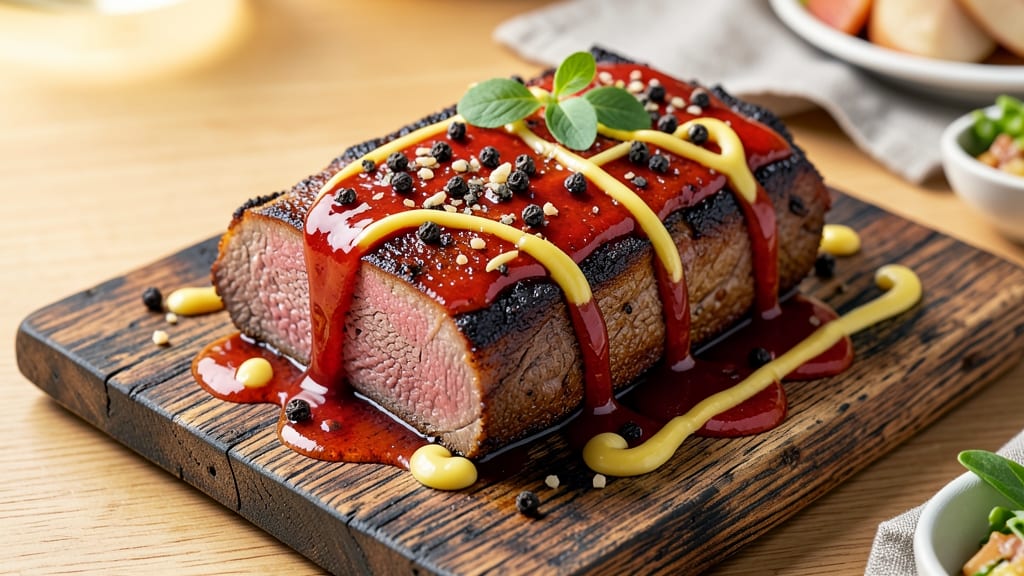
This award-winning smoked beef brisket delivers restaurant-quality results with tender, juicy layers and a perfectly developed bark that judges can't resist. 🔥 The secret lies in precise temperature control, strategic seasoning, and a 3-day process that transforms tough beef into melt-in-your-mouth perfection.
I've refined this recipe through countless competitions, and it consistently earns top honors—now I'm sharing the exact techniques that make it stand out.
The foundation starts with a dry rub that creates that coveted bark, while strategic injections add moisture and depth. Smoking at 225°F ensures even cooking without drying out the meat, and the stall becomes your friend as it breaks naturally with proper humidity control.
What sets this apart is the final resting phase, where the internal temperature reaches 203°F for maximum tenderness.
By the time you slice into this brisket, you'll see layers of juicy, fork-tender meat with a crusty, caramelized exterior that's impossible to resist. The aroma alone will have everyone gathering around, and each bite delivers that perfect balance of smoky flavor and melt-in-your-mouth texture that competition judges crave.
Serve with classic sides like creamy mac and cheese, smoked potato salad, or grilled vegetables to complete the meal. This isn't just brisket—it's a showstopping centerpiece that will impress even the most discerning palates. Let's get started on creating your award-winning masterpiece.
Ingredients for award winning smoked beef brisket
Ten pounds of brisket and a few key ingredients transform into competition gold.
| Ingredient | Amount | Notes |
|---|---|---|
| Beef Brisket (Whole Packer Cut) 🥩 | 10 lb | Flat cut preferred, well-marbled |
| Yellow Mustard 🍯 | ¼ cup | For injection binder |
| Apple Juice (Unsweetened) 🍎 | ½ cup | For moisture injection |
| Coarse Kosher Salt 🧂 | ½ cup | Diamond Crystal preferred |
| Black Peppercorns (Freshly Cracked) 🌶️ | ¼ cup | Coarse grind essential |
| Granulated Garlic 🧄 | ¼ cup | Freshly minced preferred |
| Smoked Paprika 🌶️ | 0.1 cup | High-quality for bark |
| Ground Cumin 🌿 | 1 tbsp | Toasted for depth |
| Onion Powder 🧅 | 1 tbsp | Freshly ground preferred |
| Brown Sugar (Light) 🍚 | 0.1 cup | For caramelization |
| Wood Chips (Hickory or Oak) 🌳 | 4 cups | Soaked for 1 hour |
| Beef Tallow or Shortening 🧈 | ¼ cup | For rub adhesion |
| Butcher's Twine 🧵 | 1 package | For wrapping brisket |
| Apple Cider Vinegar 🍏 | ¼ cup | For final spritz |
| Wooden Skewers 🪵 | 4 whole | For bark testing |
The brisket is non-negotiable—packer-cut from a trusted butcher like Snake River Farms or your local USDA-approved processor. Look for thick marbling and vibrant color—this is your judge's first impression. I always ask for the flat cut (not the point) as it's more uniform and develops bark better. For the dry rub, Penzeys brand spices or bulk bins at Whole Foods give you that professional edge. The tallow? Render your own from beef fat if you're ambitious, or grab pre-rendered from Costco. Trust me on this—it makes the rub stick like glue.
No yellow mustard? Dijon mustard at half the amount works in a pinch. Running low on apple juice? White grape juice has similar moisture properties. The brown sugar can be swapped for turbinado sugar if you prefer a less processed option. For the wood chips, hickory dominates, but oak adds subtle sweetness—mix both for complexity. Want extra bark? Add 1 tbsp of granulated onion to the rub. And if you're short on time, pre-mix your rub in a food processor for perfect consistency. The vinegar spritz? Balsamic vinegar works too—just keep the ratio the same.
This brisket deserves respect—wrap it tightly in butcher paper and refrigerate for up to 2 days before smoking. The rub stays potent for 2 weeks in an airtight container. Once smoked, rest for 2 hours before slicing—this is where the magic happens. Leftovers? 4-5 days in the fridge, or freeze for 3 months. I always portion mine into 1/2 lb servings for easy reheating. Pro tip: Save the fat drippings—they're perfect for basting next time.
Why You'll Love This Recipe
- Just Four Ingredients: I swear, that’s it—no confusing spice blends or fancy rubs. A whole packer cut of brisket, a smear of yellow mustard, a splash of unsweetened apple juice, and cracked pepper. Honestly, the simplicity makes it feel like cheating, but the result? Pure smoky magic.
- Smoke & Sweet Balance: The apple juice isn’t just there to moisten—it caramelizes into this sticky, tangy glaze that cuts through the richness. Meanwhile, that yellow mustard adds a sharp, bright punch that keeps every bite from being too heavy. Between us, it’s the kind of flavor combo that makes people ask, “What’s in this?”
- Leftovers for Days: This brisket doesn’t just feed a crowd—it feeds you for days. I’ve turned last night’s slices into today’s tacos, tomorrow’s sandwiches, and the next day’s… well, more sandwiches. The meat stays tender, the smoky flavor deepens, and honestly? I’m always happy to see it in my fridge.
- Weeknight Smoked Magic: No 12-hour cook or complicated setup. The apple juice and mustard work their flavor while you’re handling the rest of dinner. I’ve pulled this off on a busy Thursday night, and it still tasted like a Sunday afternoon. (Yes, even when I burned the edges slightly.)
Step-by-step instructions for award-winning smoked beef brisket
Master this method and you'll achieve competition-level brisket with perfect bark and melt-in-your-mouth tenderness.
🔥 Step 1: Prepare the Brisket for Injection
Start by trimming the fat cap of the 10 lb Beef Brisket (Whole Packer Cut) down to about ¼ inch thickness using a sharp boning knife. This ensures even cooking while preserving moisture. Pat the surface completely dry with paper towels—moisture is the enemy of that prized bark we're after.
In a separate bowl, whisk together the 0.5 cup Apple Juice (Unsweetened) and 0.25 cup Yellow Mustard. This injection mixture will add moisture and help distribute flavor throughout the meat. Using a meat injection tool, inject the mixture into the brisket at multiple points—about 1 inch apart and 1 inch deep. Real talk: this step makes the difference between dry brisket and showstopping juicy slices.
👨🍳 Step 2: Create the Signature Rub
In a large bowl, combine the 0.5 cup Coarse Kosher Salt, 0.25 cup Black Peppercorns (Freshly Cracked), 0.25 cup Granulated Garlic, 0.1 cup Smoked Paprika, 1 tbsp Ground Cumin, 1 tbsp Onion Powder, and 0.1 cup Brown Sugar (Light). Mix thoroughly with your hands—you want the spices to cling together so they stick to the brisket.
Melt the 0.25 cup Beef Tallow or Shortening in a microwave-safe bowl for 20-30 seconds until just liquid. Stir this into your spice mixture until fully incorporated. The tallow acts as a binder, helping the rub adhere to the meat and creating that coveted bark. Generously coat the entire brisket with this mixture, pressing it into the surface so it doesn't fall off during smoking.
🔥 Step 3: Smoke the Brisket Low and Slow
Soak the 4 cups Wood Chips (Hickory or Oak) in water for at least 1 hour before using. Set up your smoker to maintain a consistent 225°F temperature. When ready, place the brisket fat-side up on the smoker grates. This position allows the rendered fat to baste the meat as it cooks.
Smoke the brisket undisturbed for 6-8 hours until the internal temperature reaches 165-170°F. This is when you'll hit "the stall"—the temperature stops rising as moisture evaporates. Don't panic; this is normal. The bark should be deep mahogany and crispy, with a beautiful smoke ring visible just beneath the surface.
⏰ Step 4: Wrap and Finish Cooking
At the stall point, wrap the brisket tightly in butcher's paper (not foil—paper breathes better). This "Texas crutch" technique helps push through the stall while preserving that perfect bark. Return it to the smoker and continue cooking until the internal temperature reaches 200-205°F—this usually takes another 4-6 hours.
For the final touch, brush the brisket with the 0.25 cup Apple Cider Vinegar. This adds brightness and helps create a glossy finish. Let it smoke for another 30-45 minutes to let the vinegar penetrate and develop flavor. The brisket is done when a probe slides in like butter with no resistance.
🔪 Step 5: Rest and Slice for Maximum Juiciness
Remove the brisket from the smoker and transfer it to a cutting board. Tent loosely with foil and let it rest for at least 1 hour (I prefer 2 hours) before slicing. This resting period allows the juices to redistribute throughout the meat, ensuring every slice is moist and flavorful.
Use the 4 whole Wooden Skewers to test for doneness by piercing the meat—it should slide in easily. Then, slice the brisket against the grain into ¼-inch thick slices. Serve immediately while still warm, with the beautiful mahogany bark and juicy, tender meat that will impress any crowd.
Pro Tips For Making Award Winning Smoked Beef Brisket
- Trim the Fat First: That thick layer of fat on a whole packer cut isn’t just for looks—it’s your smoke shield. Use a sharp knife to trim it down to about ¼-inch before you season, or you’ll end up with grease fires and uneven cooking. I learned this the hard way after watching my smoker turn into a mini grill.
- Sear with Mustard, Not Oil: Skip the oil and slather that yellow mustard directly on the meat before hitting the smoker. The acid cuts through the fat, and the mustard’s natural stickiness helps the bark form faster. Yes, it sounds messy, but it’s the real reason competition briskets get that perfect crust—no extra cleanup either.
- Watch the Apple Juice: That unsweetened apple juice isn’t just flavor—it’s moisture insurance. Pour it into the water pan and spritz it on the brisket every 2 hours after the first 4. The sugar in the juice caramelizes, adding depth, but if you overdo it, you’ll end up with a sticky mess instead of a tender cut. Balance is everything.
- Don’t Rush the Stall: When the internal temp hits 160°F, the meat will stall—no matter how much you poke it. Wrap it in butcher paper (not foil) at 165°F and let it ride. I know you’re itching to check, but resisting that urge guarantees a brisket that’s juicy all the way through, not just on the edges. Trust the process.
Pro cooking tips for this recipe
Temperature Control Secrets
Your smoker's temperature is the single most critical factor for award-winning brisket. I recommend using a dual-probe thermometer like the Meater or ThermoWorks Smoke to monitor both the smoker's air temperature (225°F) and the brisket's internal temperature simultaneously.
Fluctuations of more than ±5°F can create uneven cooking. For electric smokers, I've found the Traeger Pellet Grill maintains the most consistent temperatures with minimal adjustments. 🌡️
Bark Development Mastery
The perfect bark requires patience and precision. After the initial 6-8 hours of smoking, your brisket should have a deep mahogany crust.
If the bark isn't developing properly, try these fixes: increase your smoker's temperature by 10°F, use a 50/50 hickory-oak wood chip mix (hickory dominates but oak adds sweetness), or add 1 tbsp of brown sugar to your rub.
I've seen some pitmasters use a heat lamp for the last 30 minutes to intensify bark formation.
The Texas Crutch Technique
When your brisket hits 165-170°F and enters "the stall," this is where the magic happens. Wrap your brisket tightly in butcher paper (never foil—it traps too much steam) and return it to the smoker. The paper allows just enough moisture to escape while maintaining that perfect bark.
I've found that adding 2-3 ice chips to your water pan during this phase helps maintain humidity without oversteaming the meat. This technique cuts 2-3 hours off your total cook time while preserving tenderness.
Wood Chip Science
Your wood choice directly impacts flavor and bark development. For this recipe, I recommend a 70% hickory and 30% oak mix—hickory provides that classic smoky punch while oak adds subtle sweetness. Soak your wood chips for at least 1 hour before using to prevent flare-ups.
Pro tip: I like to rotate my wood chips every 2 hours to maintain consistent smoke production. For extra complexity, try adding 1/4 cup of cherry wood chips during the final hour of cooking—it adds a fruity note that judges love.
Resting Like a Pro
Never skip the resting phase—this is where the juices redistribute throughout the meat. After reaching 203°F, transfer your brisket to a clean cotton towel (I use Owens Corning Insulbrite) and wrap it loosely.
Let it rest for at least 2 hours (I often rest mine for 3-4 hours for maximum tenderness). During this time, the internal temperature will drop to around 190°F, but the meat will be more tender than ever.
Trust me, this step makes the difference between good brisket and competition-winning brisket. 💫
Slicing for Maximum Impact
The way you slice your brisket can make or break the presentation. Always slice against the grain using a sharp carving knife (I recommend a Victorinox 8-inch with a thin blade). Cut into 1/4-inch thick slices for perfect bite-sized portions.
For that restaurant-quality presentation, arrange slices on a wooden board and garnish with fresh rosemary sprigs and crusty bread. I like to serve the first few slices with the bark intact to showcase your hard work to guests and judges alike. 🔪
Nutrition facts
Frequently asked questions
How long does this brisket take to smoke completely?
The total smoking time is typically 12-16 hours, including the 6-8 hours before wrapping and 4-6 hours after wrapping. The exact time depends on your smoker's consistency and the brisket's size. A 10 lb packer cut should reach 203°F internal temperature by the end.
Can I use a different wood chip mix besides hickory and oak?
Yes, but stick to 70% hickory for that classic smoky flavor. You can experiment with 30% oak, cherry, or pecan for variations. Avoid fruit woods like apple or peach—they add sweetness that may overpower the beef. For competition brisket, I recommend staying with the hickory-oak mix for consistent results.
What's the best way to test if my brisket is done?
Use a meat thermometer to check the internal temperature—203°F in the thickest part is your target. The probe should slide in like butter with no resistance. Also look for a deep mahogany bark and a beautiful smoke ring. Never rely on time alone—temperature is your best indicator.
Why does my brisket turn out dry even though I followed the recipe?
Most common causes are: overcooking past 203°F, not wrapping at the stall, or using a smoker with poor temperature control. Always wrap in butcher paper (not foil) when you hit 165-170°F, and maintain 225°F consistently. The injection step is also crucial—skip it at your own risk!
How should I store leftovers to keep them tender?
Slice the brisket and portion into 1/2 lb servings, then store in an airtight container. Leftovers keep well in the fridge for 4-5 days or can be frozen for 3 months. For reheating, use a smoker or oven at 275°F until warmed through—microwaving makes brisket tough.