
Main Courses
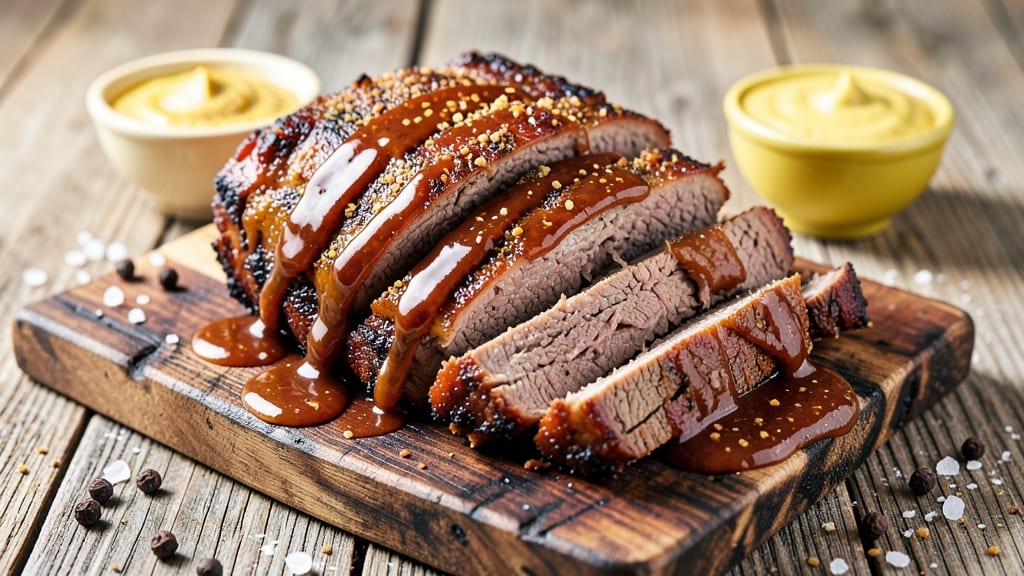
This BBQ beef brisket recipe on the grill transforms tough cuts into fall-apart tenderness that rivals any competition-style cook. After years of perfecting my technique—including that critical 12-hour slow cook—you’ll achieve the same smoky, bark-covered masterpiece without needing a commercial smoker.
The secret lies in patience: low-and-slow temperature control and understanding when to wrap your brisket for maximum juiciness.
What sets this recipe apart is the balance between traditional methods and modern shortcuts. We’ll use a simple dry rub to build flavor, then focus on precise temperature management to avoid the dreaded stall.
The key? Keeping the internal temperature between 195-203°F—this is where collagen breaks down and transforms into gelatin, creating that signature melt-in-your-mouth texture. No guesswork, just science-backed results.
By the time you slice into your brisket, you’ll see that perfect dark mahogany bark and feel the meat practically falling apart with each cut. The flavor profile is rich and complex—smoky from the grill, sweet from the slow cook, and deep from the rub.
This is the kind of brisket that makes people ask for seconds, even when they’re full. Serve it with classic sides like tangy coleslaw or buttery cornbread for the full experience.
Whether you’re hosting a backyard BBQ or treating yourself to a Sunday dinner, this recipe delivers restaurant-quality results with just a grill and a little time. The best part?
You don’t need fancy equipment—just attention to detail and the willingness to let the brisket work its magic. Let’s get started on creating your best brisket yet.
Ingredients for bbq beef brisket recipe grill
Sixteen essential ingredients transform a tough cut into legendary brisket perfection.
| Ingredient | Amount | Notes |
|---|---|---|
| Beef Brisket (Whole Packer Cut) 🥩 | 8 lb | Flat cut preferred, good marbling |
| Yellow Mustard 🍯 | ¼ cup | For binder on brisket |
| Coarse Kosher Salt 🧂 | ½ cup | Diamond Crystal preferred |
| Black Peppercorns 🌶️ | ¼ cup | Freshly cracked preferred |
| Smoked Paprika 🌶️ | 0.1 cup | For deep smoky flavor |
| Granulated Garlic 🧄 | 2 tbsp | For even distribution |
| Ground Onion 🧅 | 2 tbsp | For sweet base notes |
| Brown Sugar 🍚 | ¼ cup | Light or dark preferred |
| Chopped Fresh Thyme 🌿 | ½ cup | Or 1 tbsp dried thyme |
| Chopped Fresh Rosemary 🌿 | ¼ cup | Freshly chopped preferred |
| Wood Chips (Hickory or Oak) 🌳 | 2 cups | Soaked for 1 hour minimum |
| Beef Broth 💧 | 1 cup | For spritzing during cook |
| Apple Cider Vinegar 🍎 | ¼ cup | For spritzing acidity |
| Butcher Paper or Aluminum Foil 📄 | 2 sheets | For wrapping brisket |
| Wooden BBQ Skewers 🔥 | 4 whole | For securing bark |
The brisket is non-negotiable—look for a packer cut with good marbling at your butcher shop or Costco. A whole brisket gives you that perfect fat cap for flavor and moisture. If you're buying pre-cut, ask for the flat cut—it's leaner and more predictable. Snelling or Iowa Beef Processors are my go-to brands for quality, but any well-marbled brisket will work. The key is that fat-to-lean ratio—aim for at least 15% fat. If your brisket is too lean, it'll dry out before it gets tender. Freshly cracked peppercorns make all the difference—Penzeys or McCormick are solid choices, but grinding your own at home is even better. For the wood chips, Traeger or Cookshack brands soak up water perfectly without turning to mush.
No smoked paprika? Substitute with a mix of regular paprika and a pinch of liquid smoke—just don't overdo it. Fresh herbs wilt fast, so dried thyme and rosemary work at one-third the amount. Running low on beef broth? Use chicken broth plus a splash of Worcestershire sauce for depth. The vinegar is crucial for that tangy bark—apple cider vinegar has the best balance, but white vinegar works in a pinch. For the rub, mix everything in a large bowl and pat it all over the brisket, pressing hard so it sticks. Don't skip the mustard binder—it helps the rub adhere and adds a subtle tang. If you're short on time, pre-mix your dry rub and store it in an airtight container for up to 3 months.
Brisket keeps beautifully—wrapped in butcher paper in the fridge for 5-7 days or frozen for up to 6 months. The magic happens when you reheat it slowly—wrap it in foil and bake at 275°F until it reaches 195°F internal temp. For leftovers, slice against the grain and serve on a warm platter. The bark will crisp up again when reheated, so don't worry if it softens a bit. Portion into individual servings before freezing for easy meal prep. And trust me, the second day is often better—all that collagen has time to fully transform into gelatin, making every bite more tender than the first.
Why You'll Love This Recipe
- Four-Hour Magic: I swear, this brisket needs time—but not your attention. Toss it on the grill, sprinkle that smoked paprika and cracked pepper, and let it work its own magic while you handle the rest of your day. (Yes, even on a Tuesday night.)
- Smoky-Sweet Payoff: That yellow mustard rub? It’s the secret weapon. It clings to the meat like a hug while the paprika smolders into something deep and addictive. Not sweet, not salty—just ridiculously good.
- Leftovers for Days: One whole packer cut feeds my family for three meals. Slice the first batch for sandwiches, shred the rest for tacos, and freeze what’s left. Honestly, I’ve eaten this brisket cold from the fridge, and no one’s complained.
- Budget Grill Hero: A whole brisket costs less than two steaks and stretches farther than anything else I buy. Plus, the flavors get richer the longer it cooks—so it’s basically free money for flavor. (My wallet approves.)
Step-by-step instructions for perfectly smoked beef brisket
Here's how to transform an 8 lb brisket into melt-in-your-mouth perfection using your grill.
Prepare the Brisket with the Dry Rub
Begin by removing the brisket from the refrigerator and letting it sit at room temperature for 1 hour. This ensures even cooking. Pat the brisket dry with paper towels—this is crucial for that coveted bark formation. I press down firmly on all sides, especially the thick fat cap, to remove any moisture that might prevent proper browning.
In a small bowl, combine the 0.5 cup coarse kosher salt, 0.25 cup freshly cracked black peppercorns, 0.1 cup smoked paprika, 2 tbsp granulated garlic, 2 tbsp ground onion, 0.25 cup brown sugar, 0.5 cup chopped fresh thyme, and 0.25 cup chopped fresh rosemary. Mix well with your hands to distribute the spices evenly. Generously coat the brisket with this rub, pressing it into the meat so it adheres well. Don't forget the fat cap—this will render beautifully and baste the meat as it cooks.
For extra adhesion, I like to spread a thin layer of the 0.25 cup yellow mustard over the entire surface before applying the dry rub. The mustard acts as a binder and helps the spices stick. Place the brisket on a wire rack set over a baking sheet and refrigerate uncovered for 12-24 hours. This long dry-brine creates an incredible crust while tenderizing the meat.
Set Up Your Grill for Indirect Heat
Soak the 2 cups wood chips (hickory or oak) in water for at least 1 hour before grilling. When ready to cook, fill the smoker box or chip tray with the soaked wood chips and light them. Once they're producing blue smoke (not thick white smoke), adjust your grill for indirect heat by pushing coals to one side. This creates a 225-250°F cooking zone—critical for low-and-slow smoking.
Place the brisket on the cooler side of the grill, fat side up. The fat will render and baste the meat as it cooks. Close the grill lid and resist the urge to peek—every time you open it, you lose precious heat and moisture. I set a timer for 1 hour before checking the temperature. Use a meat thermometer to monitor progress, aiming for an internal temperature of 165-170°F in the thickest part of the meat.
Spritz and Wrap for Maximum Tenderness
Prepare your spritz by combining 1 cup beef broth and 0.25 cup apple cider vinegar in a spray bottle. Once the brisket reaches 165-170°F (after about 6-8 hours), it will hit "the stall"—a point where the internal temperature stops rising. This is normal and happens as moisture evaporates from the surface.
At this stage, I wrap the brisket tightly in 2 sheets butcher paper (not aluminum foil). The paper allows the bark to maintain some crispiness while trapping steam to tenderize the meat. Secure the wrap with the 4 wooden BBQ skewers, piercing through the thickest parts to keep it compact. Return the brisket to the grill and continue cooking until the internal temperature reaches 200-205°F—this can take another 4-6 hours, depending on your grill's heat retention.
Every 1-2 hours after wrapping, spritz the brisket with the broth-vinegar mixture. This keeps the surface moist and adds depth of flavor. The vinegar also helps break down collagen for that signature fall-apart texture.
Rest and Slice for Maximum Juiciness
Once the brisket reaches 200-205°F and a probe slides in like butter, it's ready to rest. Remove it from the grill and transfer to a cutting board. Tent loosely with foil and let it rest for at least 1 hour (I prefer 2 hours if possible). This resting period allows the juices to redistribute throughout the meat, ensuring every slice is moist and flavorful.
After resting, remove the butcher paper and slice the brisket against the grain into ¼-inch thick slices. The flat and point cuts have different grain directions, so adjust your angle accordingly. Serve immediately with your favorite BBQ sauce or au jus made from the grill drippings. Each bite should deliver smoky, tender perfection with a dark mahogany bark on the outside and a beautiful pink smoke ring just beneath.
Pro Tips For Making Bbq Beef Brisket Recipe Grill
- Trim the Fat First: That thick layer of fat on a packer cut isn’t just for looks—it renders down into flavor gold. Use a sharp knife to trim it down to about ¼-inch, leaving just enough to baste the meat. I learned this the hard way after my first brisket turned into a greasy, uneven mess.
- Salt Like It’s 1920: Don’t just sprinkle kosher salt over the brisket—pack it in. Use at least 2 tablespoons per pound, pressed into every crevice, including the fat cap. My grandmother swore by this, and she was right: the crust forms faster and stays crispier.
- Start Hot, Finish Slow: Sear the brisket over direct heat for 10-15 minutes to lock in juices, then move it to indirect heat. If you’re using a grill, push the coals to one side and let the smoldering embers do the work. After burning three batches, I finally figured out that patience here means the difference between tough and tender.
- Mustard Slather, Not Drizzle: Yellow mustard isn’t just for flavor—it’s the glue that keeps the rub from falling off. Spread a thick, even layer over the entire surface before adding smoked paprika and peppercorns. I was skeptical until I tried it: the bark stays intact, and the mustard adds a subtle tang that cuts through the richness.
Make-ahead tips for this dish
Prep Ahead Timeline
Start your brisket prep the night before for maximum flavor development. After applying the dry rub, refrigerate the brisket uncovered on a wire rack for 12-24 hours. This dry-brine creates an incredible crust while tenderizing the meat.
I like to set a reminder on my phone for this step—it's easy to forget! The longer it rests, the better the bark. 🌡️
Wood Chip Prep
Soak your 2 cups wood chips in water for at least 1 hour before grilling day. I use a large bowl or even a resealable plastic bag for this.
Store them in the fridge overnight if needed—they'll be ready to go when you fire up the grill. This pre-soaking ensures consistent smoke production without flare-ups. 🌳
Equipment Setup
Set up your grill the night before if possible. Arrange your charcoal or gas burners for indirect heat and position your smoker box or chip tray. I like to have everything ready so I can focus on cooking when the time comes.
For charcoal grills, arrange coals on one side and leave the other side empty for the brisket. 🔥
Spritz Mix Prep
Combine your 1 cup beef broth and 0.25 cup apple cider vinegar in a spray bottle the night before. Store it in the fridge until you're ready to spritz during the cook.
This simple prep step saves time and keeps your spritz mixture ready to go. The acidity helps tenderize the meat while adding depth of flavor. 💧
Resting Strategy
Plan your timing so the brisket can rest for at least 1 hour after reaching 200-205°F. I set a timer as soon as I pull it from the grill.
This resting period is crucial—it allows the juices to redistribute, making each slice incredibly tender. Use this time to prepare sides or set the table. 🕒
Storage Solutions
Store leftovers in airtight containers in the fridge for up to 5 days. For longer storage, wrap portions in butcher paper and freeze for up to 6 months.
I like to portion leftovers into individual servings before freezing for easy meal prep. When reheating, bake at 275°F until reaching 165°F internal temperature. 💡
Nutrition facts
Frequently asked questions
How do I know when my brisket is done?
Use a meat thermometer to check the internal temperature in the thickest part of the meat. The brisket is perfectly done when it reaches 200-205°F. The probe should slide in like butter, and the meat should be fork-tender.
Can I cook brisket on a gas grill instead of charcoal?
Gas grills work perfectly for brisket. Use a smoker box or wood chips in the chip tray to generate smoke. Maintain 225-250°F indirect heat by closing the lid and adjusting the burners. Just monitor the temperature closely—gas grills can fluctuate more than charcoal.
Why does my brisket get tough instead of tender?
Tough brisket usually means it wasn't cooked low-and-slow enough or wasn't rested properly. Aim for 200-205°F internal temperature and let it rest for at least 1 hour before slicing. Also, check your grill temperature—if it's too high, the meat will dry out.
What's the difference between wrapping in butcher paper vs. foil?
Butcher paper lets the bark stay crispy while trapping steam for tenderness, while foil creates a steamer effect that softens the bark. For the best of both worlds, use butcher paper—it's breathable enough to maintain bark while keeping the meat moist.
How do I slice brisket against the grain?
Look for the grain direction (muscle fibers) on the cut surface. The flat cut's grain runs horizontally, while the point cut's grain runs diagonally. Slice at a 45-degree angle to the grain for the most tender results. Use a sharp knife and cut into ¼-inch thick slices.