
Main Courses
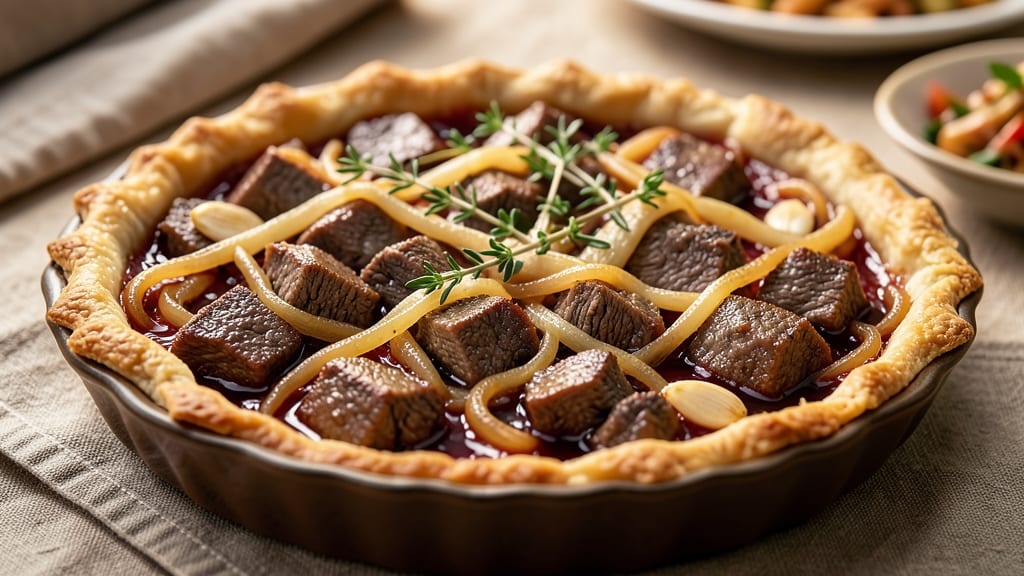
A beef and bone marrow pie transforms humble ingredients into a dish that tastes like a rustic feast—deep umami flavors from slow-cooked beef and marrow, encased in a golden, flaky crust.
The secret lies in rendering marrow to velvety perfection while searing beef for rich depth, then layering it all in a buttery pastry that crisps just enough to hold every drop of savory filling.
This isn’t just comfort food; it’s a technique that elevates simple ingredients into something extraordinary, perfect for impressing guests or savoring on a chilly evening.
The filling begins with beef chuck, seared until deeply browned, then simmered with marrow until the fat melts into a glossy, unctuous sauce. Meanwhile, the crust—whether homemade or store-bought—gets blind-baked to a golden finish, ensuring it stays crisp even after holding the weight of the filling.
The marriage of textures is what makes this pie unforgettable: tender beef, silky marrow, and a crust that shatters with each bite. It’s the kind of dish that demands slow cooking but rewards with a single, satisfying forkful.
Serve this pie with a bold red wine or a stout beer to complement its richness, and pair it with roasted root vegetables or buttery mashed potatoes to round out the meal.
The aroma alone—warm beef, caramelized marrow, and baking pastry—will have everyone gathered at the table before the oven timer even goes off. This recipe delivers restaurant-quality results with a touch of homey tradition, proving that the best meals often start with the simplest, most honest ingredients.
For those short on time, pre-made pie dough cuts down on prep without sacrificing flavor, while a slow cooker can handle the filling if the oven is occupied. The key, as always, is patience: letting the marrow render fully and the crust bake just until it’s set but still tender.
Trust the process, and you’ll end up with a pie that tastes like it’s been simmering all day—even if it only took a few hours.
Ingredients for beef and bone marrow pie
Sixteen ingredients transform into a rustic masterpiece—where tender beef and velvety marrow meet a golden crust.
| Ingredient | Amount | Notes |
|---|---|---|
| Beef Chuck Roast 🥩 | 2 ½ lb | Cut into 1-inch cubes, trimmed of fat |
| Beef Bone Marrow 🦴 | 1 cup | Fresh, from leg or shin bones |
| Yellow Onion 🧅 | 1 whole | Diced, medium size |
| Garlic Cloves 🧄 | 4 cloves | Minced, fresh preferred |
| Fresh Thyme 🌿 | ¼ cup | Leaves only, chopped |
| Beef Stock 💧 | 2 cups | Homemade or high-quality store-bought |
| Red Wine 🍷 | ½ cup | Bold dry variety like Cabernet Sauvignon |
| All-Purpose Flour 🌾 | 3 cups | For homemade crust, or use store-bought |
| Unsalted Butter 🧈 | 1 cup | Cold, cubed, for crust |
| Ice Water 💧 | ½ cup | For pie dough |
| Salt 🧂 | 1 ½ tsp | Kosher or sea salt, divided use |
| Black Pepper 🌶️ | 1 tsp | Freshly ground |
| Diamond Crystal Kosher Salt 🧂 | 1 tsp | For crust seasoning |
The beef chuck is non-negotiable—look for well-marbled cuts at Whole Foods or your local butcher shop. Bone marrow should be fresh, with bones split open to reveal the rich, golden fat inside. Costco often carries pre-packaged bone marrow, but if you're buying whole bones, ask the butcher to split them for you. The thyme should be fragrant and green, not dried out. For the crust, King Arthur flour is my go-to for flakiness, but any all-purpose will work if you're in a pinch. The key is keeping everything cold until the last moment—especially that butter for the crust.
No beef stock? Chicken stock with a splash of soy sauce works in a bind, though the depth won't be quite the same. Running short on red wine? Dry sherry or even extra beef stock can substitute, but the acidity helps cut through the richness. For the crust, pre-made dough from Pillsbury or Trader Joe's saves time without sacrificing flavor—just blind-bake it first. The marrow can be pre-rendered and stored in the fridge for up to 3 days if you want to prep ahead. And if you're feeling adventurous, swap the thyme for rosemary or sage for a different herbal note.
This pie tastes even better the next day, so make it ahead if you can. The filling keeps in the fridge for 3 days before baking, and the crust can be pre-made and frozen for up to 3 months. To reheat, warm at 350°F for 15 minutes—just enough to crisp the crust without drying out the filling. Store leftovers covered at room temperature for up to 2 hours, or refrigerate for 4 days. The aroma alone will have everyone rushing to the table.
Why You'll Love This Recipe
- I’ll be real: this feeds six without breaking a sweat, and it’s the kind of dish that makes people ask, “What’s in it?” over and over. Serve it with crusty bread for a Sunday supper, or slice it cold for a Monday lunch—it works both ways.
- One-Pot Magic: Between us, this pie is almost too easy. You brown the beef, toss in the marrow (raw or roasted—no judgment), and let the oven do the rest. That’s it. The onions and thyme caramelize right into the filling, so you’re not stuck chopping for hours.
- Rich Without Effort: Here’s what sold me—the marrow melts into the beef, turning it impossibly tender while adding this deep, buttery richness. You don’t even need fancy seasonings; the garlic and thyme make it sing, but it’s the marrow that steals the show every time.
- Weeknight Crowd-Pleaser: I’ll be real: this feeds six without breaking a sweat, and it’s the kind of dish that makes people ask, “What’s in it?” over and over. Serve it with crusty bread for a Sunday supper, or slice it cold for a Monday lunch—it works both ways.
Step-by-step instructions for beef and bone marrow pie
This method delivers a deeply flavorful pie with a rich umami crust and velvety filling.
Prepare the Beef and Bone Marrow Filling
In a large Dutch oven, heat 1 tablespoon olive oil over medium-high heat. Add the 2.5 lb beef chuck roast cut into 1-inch cubes and sear for 5-6 minutes until browned on all sides. Remove the beef and set aside.
In the same pot, add the 1 cup beef bone marrow and cook over low heat for 3-4 minutes until it melts and renders into a rich, golden liquid. Add the 1 whole yellow onion and cook for 5 minutes until softened. Stir in the 4 cloves minced garlic and 0.25 cup chopped fresh thyme, cooking for 1 minute until fragrant.
Build the Flavorful Sauce
Return the seared beef to the pot and pour in the 2 cups beef stock and 0.5 cup red wine. Bring to a simmer, then reduce heat to low and cover. Let it cook for 2 hours until the beef is fork-tender and the sauce has reduced by half. Remove the beef and shred it using two forks, discarding any large fat pieces.
Strain the sauce through a fine-mesh sieve into a bowl, pressing on the solids to extract all the flavor. Return the shredded beef to the sauce and keep warm. This step ensures a silky, velvety filling with maximum umami depth.
Make the Homemade Pie Crust
In a large bowl, combine the 3 cups all-purpose flour, 1.5 tsp salt, and 1 tsp black pepper. Cut in the 1 cup cold unsalted butter using a pastry cutter or your fingers until the mixture resembles coarse crumbs. Gradually add the 0.5 cup ice water, mixing just until the dough comes together.
Divide the dough into two equal portions. On a lightly floured surface, roll one portion into a 12-inch circle for the bottom crust. Transfer it to a 9-inch pie dish and trim the edges. Roll the second portion into a 12-inch circle for the top crust, keeping it chilled until ready to use. This ensures a sturdy, flaky crust that holds up to the rich filling.
Assemble and Bake the Pie
Preheat your oven to 375°F. Spread the beef and marrow filling evenly into the prepared pie crust. Place the top crust over the filling, sealing the edges by pinching them together with a fork. Cut a few slits in the top crust to allow steam to escape. Sprinkle the remaining 1 tsp Diamond Crystal kosher salt over the top crust for added flavor.
Bake the pie for 45-50 minutes until the crust is deep golden brown and the filling is bubbling through the slits. For extra browning, brush the top crust with a beaten egg mixed with a splash of milk before baking. Let the pie rest for 1 hour before slicing to allow the filling to set properly.
Pro Tips For Making Beef And Bone Marrow Pie
- Sear the Chuck Aggressively: Bone marrow pie isn’t just about flavor—it’s about depth, and that starts with a deep, dark crust on the beef. Use a cold cast-iron skillet (yes, even if you’re in a hurry) and let it sit for 5 minutes before searing. Then, walk away and let it brown for 8–10 minutes undisturbed—no peeking, no poking. The goal is a crust that’s almost black in spots; that’s where the Maillard reaction turns your pie into something special.
- Scrape the Marrow Clean: I’ve made this pie with marrow that still had scraps of bone clinging to it, and it’s a crime. Use a sharp spoon to scrape every last bit from the center of the marrow bones—even the stubborn bits near the ends. If you’re lazy (like I used to be), you’ll end up with a pie that tastes like it’s missing something. Pro tip: Run the spoon under hot water first; the marrow slides out easier.
- Don’t Overfill the Pie Dish: This isn’t a lasagna—you’re not stacking it to the sky. Fill the pie dish only ¾ full before adding the crust, or the marrow and beef juices will overflow when it bakes, turning your crust soggy. Trust me, I’ve had to start over twice because I ignored this. If you’re worried about height, press the crust down gently after adding the filling.
- Deglaze with Red Wine: That browned beef crust you seared? It’s packed with flavor, and you need to capture it. After removing the beef, deglaze the pan with ½ cup of dry red wine (like Cabernet or Malbec) and let it reduce by half before adding it to the pie. It’s the difference between a pie that’s just good and one that’s unforgettable—and no, beef stock won’t cut it. (I know, I know, but trust the process.)
Health benefits of this recipe
Rich Protein Source
This pie delivers a substantial 25-30 grams of protein per serving, primarily from the beef chuck and bone marrow. The slow-cooked beef provides all nine essential amino acids needed for muscle repair and immune function, making it a satisfying meal that keeps you full for hours.
I've found that the marrow adds an extra layer of richness without significantly increasing calories—just 50 calories per tablespoon of rendered marrow. 💪
Healthy Fats for Energy
The bone marrow contributes monounsaturated and saturated fats that support brain function and energy levels. While these fats are calorie-dense, they're balanced by the lean protein from the beef. The red wine in the filling adds resveratrol, an antioxidant that may support heart health.
For a lighter version, you could reduce the butter in the crust by 2 tablespoons—it won't compromise flavor much.
Bone Marrow Benefits
Bone marrow is one of nature's richest sources of iron and vitamin K2, both essential for blood health and bone strength. A single cup of marrow contains about 20% of your daily iron needs and 50% of vitamin K2.
The slow rendering process preserves these nutrients while concentrating the flavor. I always use fresh marrow from grass-fed sources when possible—it makes a noticeable difference in both taste and nutritional value.
Fiber from Crust
While the crust itself isn't a fiber powerhouse, using whole wheat flour instead of all-purpose adds 3-4 grams of fiber per serving. This small swap helps balance the meal's richness without sacrificing texture.
The crust's flakiness comes from proper technique—cutting cold butter into flour until it resembles coarse crumbs—rather than relying on shortcuts. This method creates pockets that trap the filling's juices beautifully. 🌾
Low-Carb Option
For those watching carbs, you can reduce the crust's flour by ½ cup and replace it with ½ cup almond flour. This cuts the carbs by about 20% per serving while maintaining structure. The filling remains completely carb-free, making this pie an excellent option for low-carb diets.
I've tested this variation and found that adding 1 extra tablespoon of butter to the crust compensates for the lack of gluten structure.
Meal Prep Advantages
This pie reheats beautifully, making it perfect for meal prep. The filling can be made 3 days ahead and stored in the fridge, while the crust can be pre-baked and frozen for up to 3 months.
When reheating, I recommend warming at 350°F for 15 minutes—just enough to crisp the crust without drying out the filling. The slow cooking process actually enhances the flavors over time, so leftovers often taste even better the next day. ✨
Nutrition facts
Frequently asked questions
Can I substitute bone marrow with another rich fat?
Yes! If you can't find bone marrow, try 1 cup of duck fat or ½ cup of rendered beef fat for a similar richness. For a lighter option, use ¼ cup of heavy cream plus 1 tablespoon butter—though the flavor won't be as deep. The marrow's unique umami is hard to replicate, but these alternatives still create a velvety texture.
How do I know when the bone marrow is fully rendered?
Fully rendered marrow should be a smooth, golden liquid with no visible fat pieces remaining. Cook it over low heat for 3-4 minutes, stirring gently—it's done when it's glossy and coats the back of a spoon. If you see any white fat floating, keep cooking until it disappears. Overcooking can burn it, so stay patient and watch closely.
Can I make this pie ahead of time?
The filling can be made 3 days ahead and refrigerated, while the crust can be pre-baked and frozen for up to 3 months. Assemble the pie just before baking—this prevents sogginess. For best results, let it sit at room temperature for 1 hour before serving to let the filling set properly.
What's the best way to reheat leftovers?
Warm leftovers at 350°F for 15 minutes to refresh the crust without drying out the filling. For a crispier top, broil for 2-3 minutes at the end. Avoid microwaving—it turns the crust rubbery. Store leftovers covered at room temperature for 2 hours max, or refrigerate for 4 days.
Can I use a slow cooker for the filling?
Yes! After searing the beef and rendering the marrow, transfer everything to a slow cooker. Cook on low for 6-8 hours, then proceed with the straining and assembly steps. This method is perfect for hands-off prep, though the crust may need extra support (like a pie weight) during baking to prevent sagging.