
Soups & Stews
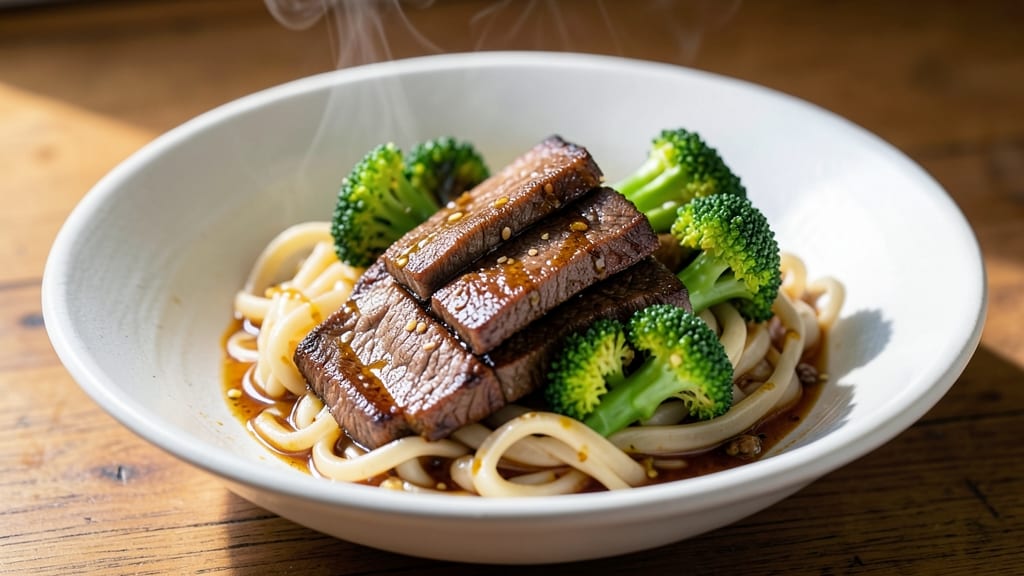
This beef and broccoli udon recipe delivers restaurant-quality wok-tossed richness with silky noodles in just 30 minutes. The secret lies in high-heat stir-frying that creates caramelized beef and crisp-tender broccoli while maintaining those signature chewy udon strands.
I've perfected this balance between traditional Japanese techniques and modern home cooking convenience.
The dish starts with thinly sliced beef that develops a savory crust from the wok, then combines with vibrant broccoli florets that stay crisp yet tender. A homemade sauce—rich with soy, ginger, and a touch of honey—ties everything together, creating that perfect umami-sweet harmony.
The udon noodles cook just until al dente, then toss perfectly to absorb all those bold flavors.
What makes this recipe special is how it transforms simple ingredients into something extraordinary. The beef becomes tender yet flavorful, the broccoli maintains its satisfying crunch, and the udon soaks up the sauce without becoming mushy.
Each bite delivers that perfect combination of textures and flavors that makes this dish so universally loved.
Perfect for weeknight dinners or special occasions, this beef and broccoli udon recipe is both comforting and impressive. The technique is straightforward enough for beginners but delivers restaurant-quality results that will impress even experienced cooks. Let's get started on creating this flavorful masterpiece.
Ingredients for beef and broccoli udon
Restaurant-quality wok-tossed flavors start with these 14 essential ingredients—each playing its part in perfect harmony.
| Ingredient | Amount | Notes |
|---|---|---|
| Udon Noodles 🍜 | 8 oz | Fresh or dried, cut into 4-inch strands |
| Flank Steak 🥩 | 1 lb | Thinly sliced against grain, 1/4-inch thick |
| Broccoli Florets 🥦 | 3 cups | Medium size, cut into bite-sized pieces |
| Sesame Oil 🫒 | 1 tbsp | Toasted for aroma, not cooking oil |
| Vegetable Oil 🫒 | 2 tbsp | High smoke point for wok |
| Fresh Ginger 🧄 | 1 tbsp | Finely grated, aromatic |
| Garlic Cloves 🧄 | 4 cloves | Minced, fresh preferred |
| Soy Sauce 🍶 | ½ cup | Japanese preferred, low sodium |
| Honey 🍯 | 1 tbsp | Light variety, not clover |
| Rice Vinegar 🍶 | 1 tbsp | Seasoned preferred, adds brightness |
| Sesame Seeds 🌾 | 1 tbsp | Toasted, for garnish |
| Green Onions 🧅 | 3 whole | Thinly sliced, white and green parts |
| Diamond Crystal Kosher Salt 🧂 | ½ tsp | For seasoning, not iodized |
| Ground Black Pepper 🌶️ | ¼ tsp | Freshly cracked |
The udon noodles are non-negotiable for that signature chewy texture. Fresh udon from an Asian market is ideal, but dried works too—just soak them for 5-6 minutes before using. For the beef, flank steak is your best bet—it's lean but tender when sliced thinly against the grain. Look for well-marbled cuts at Whole Foods or your local butcher shop. Broccoli should be vibrant green with tight florets—Trader Joe's has great pre-cut florets if you're short on time. The sesame oil is purely for aroma here, not cooking—use just a tablespoon to toast the garlic and ginger at the start.
No flank steak? Sirloin or ribeye work in a pinch, but slice them thinner. Fresh ginger? Substitute with 1 teaspoon ground ginger at half the amount, though fresh is always better. The soy sauce can be swapped for tamari for gluten-free, but Japanese soy gives that authentic umami depth. Honey too expensive? Maple syrup works in a bind, though it has a slightly different finish. For extra richness, add 1 teaspoon of oyster sauce to the sauce mixture. The green onions should be fresh—dried won't give that bright pop of color and freshness.
Udon noodles keep best in the fridge for 3 days after opening, but fresh ones are better used within 2 days. Store them in their packaging with a damp paper towel to prevent drying. The sliced beef should be used immediately or marinated for up to 4 hours in the fridge. Broccoli stays fresh for 5 days when stored in a sealed container with a paper towel. For meal prep, cook the beef and broccoli ahead, then reheat gently with a splash of water to maintain crispness. The sauce can be made a day in advance and stored in the fridge for 5 days—just remember to stir before using.
Why You'll Love This Recipe
- No Prep Nightmare: I swear, this dish is the only time I’ve ever cooked flank steak without stressing over thin slicing. Just sear those chunks, toss in the broccoli florets, and let the sauce work its magic—no knife skills required.
- Umami Bomb: That first bite of tender beef with the broccoli’s slight crunch? The sesame oil ties it all together like a flavor hug. Honestly, the balance of salty-sweet from the sauce and the meat’s richness makes me forget it’s a weeknight meal.
- Lunchbox Hero: Between us, this is my go-to for meal prep. Cook a big batch, portion the udon with beef and broccoli, and you’ve got a satisfying lunch that doesn’t scream “diet food.” My daughter even packs it for school—yes, even on a Tuesday night.
- Budget Flex: Flank steak stretches further than you’d think, and udon noodles are cheaper than takeout for two. Plus, the leftovers reheat like a dream—just add a splash of water to loosen the sauce, and it’s almost as good as fresh.
Step-by-step instructions for wok-tossed beef and broccoli udon
Here's how to create restaurant-quality wok-tossed udon with tender beef and vibrant broccoli.
Prepare the Udon Noodles and Marinate the Flank Steak
Bring a pot of water to a rolling boil and cook the 8 oz udon noodles according to package instructions until al dente. Drain immediately and rinse briefly under cold water to stop the cooking process. Toss the noodles with 1 tablespoon sesame oil to prevent sticking and keep them silky. Set aside while you prepare the beef.
Slice the 1 lb flank steak thinly against the grain into ¼-inch thick strips. In a bowl, combine the steak with ½ cup soy sauce, 1 tablespoon honey, 1 tablespoon rice vinegar, ½ teaspoon kosher salt, and ¼ teaspoon black pepper. Marinate for at least 15 minutes (or up to 1 hour for deeper flavor). This marinade tenderizes the beef while infusing it with a perfect balance of sweet, tangy, and umami notes.
Sear the Beef and Sauté the Aromatics
Heat 2 tablespoons vegetable oil in a wok or large skillet over medium-high heat until shimmering. Remove the beef from the marinade (reserve the marinade) and sear in batches for 1-2 minutes per side until deep golden brown and cooked through. The beef should be tender but still slightly firm to the touch. Transfer the seared beef to a plate and set aside.
In the same wok, reduce heat to medium and add 1 tablespoon vegetable oil. Sauté the 3 cups broccoli florets for 3-4 minutes until bright green and just tender-crisp. Add 1 tablespoon finely grated fresh ginger and 4 minced garlic cloves, cooking for 30 seconds until fragrant. Pour in the reserved beef marinade and scrape up any browned bits from the bottom of the wok—this releases maximum flavor.
Combine and Finish the Sauce
Return the seared beef to the wok along with the broccoli mixture. Stir-fry for 1-2 minutes until everything is well-coated and heated through. The sauce should be glossy but not overly thick—if it appears too thick, add 1-2 tablespoons hot water to loosen it. Taste and adjust seasoning with additional soy sauce or rice vinegar if needed.
Gently fold in the prepared udon noodles, tossing everything together for 1-2 minutes until the noodles are fully coated and heated through. The noodles should be tender but still hold their shape, with a silky texture that contrasts beautifully against the crisp-tender beef and broccoli. Remove from heat immediately to prevent overcooking.
Garnish and Serve with Confidence
Divide the wok-tossed udon among 4 bowls, garnishing each serving with 1 tablespoon toasted sesame seeds and 3 thinly sliced green onions. The sesame seeds add a nutty crunch, while the green onions provide a fresh, bright finish that cuts through the richness of the dish.
Serve immediately while the noodles are hot and the flavors are at their peak. Each bite should deliver a perfect harmony of textures—silky udon, tender beef, crisp broccoli, and a glossy, umami-packed sauce. This dish is all about balance, so don't be afraid to adjust the seasoning to your taste before serving. Enjoy your homemade wok-tossed udon!
Pro Tips For Making Beef And Broccoli Udon
- Slice Thin, Cook Fast: I learned this the hard way—thinly sliced flank steak (about ⅛-inch thick) cooks in 30 seconds flat over high heat. Any thicker, and you’ll end up with chewy, overcooked beef that ruins the dish. Use a sharp knife and keep your cuts parallel for even cooking.
- Blanch Broccoli First: Broccoli florets that steam for 1-2 minutes before hitting the pan stay vibrant and crisp-tender. Skip this, and you’ll end up with soggy, overcooked greens that drown in the sauce. Drain them well and pat dry—wet broccoli sputters like a grease fire.
- Rest the Meat After Slicing: Flank steak releases juices when sliced, so let it sit uncovered on a plate for 10 minutes before cooking. This keeps it from turning to mush in the hot pan. I used to skip this, and my beef always ended up stringy—now it stays tender every time.
- Use Two Oils: Start with vegetable oil for high-heat searing (it handles heat better), then finish with sesame oil at the end for aroma. Mixing them in the pan dulls the nutty depth of sesame—save it for the last splash. A teaspoon at the end makes all the difference.
Best sauces and condiments for beef and broccoli udon
Classic Soy-Ginger Sauce
This foundational sauce uses the ingredients you already have: ½ cup soy sauce, 1 tablespoon honey, 1 tablespoon rice vinegar, 1 tablespoon grated ginger, and 4 minced garlic cloves. Simmer them together for 3-4 minutes to meld flavors perfectly.
I like adding a splash of 1 teaspoon sesame oil at the end for extra depth. This balance of sweet, salty, and aromatic creates that signature umami punch. 🍶
Spicy Chili Oil Twist
For heat lovers, swap 1 teaspoon of the honey for 1 teaspoon chili oil (like Lao Gan Ma brand) and add ½ teaspoon red pepper flakes. The chili oil adds smoky heat while keeping the sauce glossy.
I recommend starting with ½ teaspoon—you can always add more. This version works especially well with flank steak's natural richness. 🌶️
Creamy Miso-Garlic Sauce
For a richer, creamier texture, stir 1 tablespoon white miso paste into the soy sauce before simmering. Add 1 teaspoon toasted sesame seeds and a pinch of ground white pepper for a Japanese-inspired twist.
This sauce pairs beautifully with the udon's chewiness, creating a luxurious mouthfeel. I find Miso Master brand works best for its smooth texture. 🥢
Sweet and Tangy Glaze
Brighten the dish with a 1 tablespoon rice vinegar boost and ½ teaspoon grated lemon zest at the end. For extra sweetness, increase honey to 2 tablespoons. This glaze works wonderfully when drizzled over finished udon, adding a citrusy freshness that cuts through the richness.
I like finishing with 1 teaspoon toasted sesame seeds for crunch. 🍋
Umami Bomb Sauce
For maximum depth, add 1 teaspoon oyster sauce and ½ teaspoon fish sauce to the base sauce. These ingredients amplify the umami without overpowering. I recommend Lee Kum Kee oyster sauce for its balanced flavor. This sauce transforms the dish into something restaurant-quality with just a few extra ingredients. 💫
Quick Garlic-Scallion Sauce
Need something fast? Skip the honey and use 2 extra minced garlic cloves and 1 tablespoon finely chopped scallions instead. Add ½ teaspoon sugar to balance the flavors. This lighter sauce works perfectly when you want to highlight the natural tastes of the beef and broccoli. 🧅
Nutrition facts
Frequently asked questions
Can I use frozen broccoli instead of fresh?
Frozen broccoli works perfectly—just thaw it first and pat completely dry to prevent excess moisture in your wok. The florets should be bite-sized and bright green. For best results, microwave the frozen broccoli for 2-3 minutes before cooking, then drain well.
How do I prevent the udon noodles from turning mushy?
Cook the udon just until al dente (usually 2-3 minutes less than package instructions), then rinse immediately in cold water to stop cooking. Toss with 1 tablespoon sesame oil while still warm to maintain that signature chewy texture. Add them to the wok last and stir-fry for only 1-2 minutes.
What's the best way to slice the flank steak?
Slice against the grain into ¼-inch thick strips—this ensures tender beef. Use a sharp knife and cut at a 45-degree angle for even cooking. For extra tenderness, freeze the sliced beef for 30 minutes before cooking to firm it up slightly.
Can I make this recipe gluten-free?
Yes! Swap regular soy sauce for tamari and use gluten-free udon noodles. Check all ingredients (like oyster sauce if using) for hidden gluten. The flavor will be slightly different but still delicious. For extra umami, add ½ teaspoon gluten-free fish sauce to the marinade.
How do I make this spicier?
Add ½ teaspoon chili flakes or 1 teaspoon chili oil to the sauce, or stir in 1 tablespoon sriracha at the end. For heat lovers, sear the beef with ½ teaspoon crushed red pepper in the wok before removing it. Adjust to taste—start with less and add more as needed!