
Soups & Stews
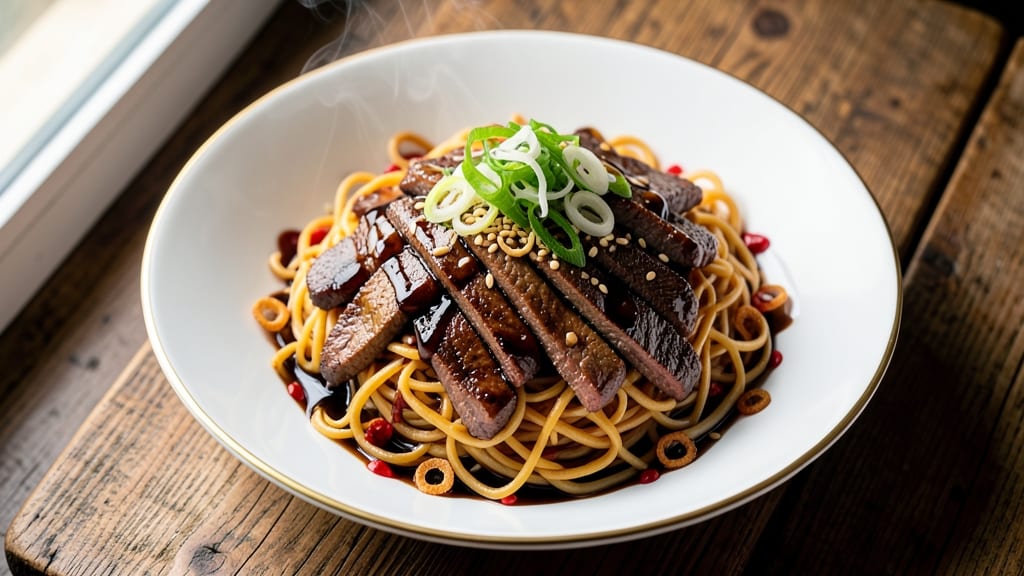
This beef and hokkien noodles recipe delivers the bold flavors of Singaporean street food right to your kitchen. The secret lies in wok-fired beef strips that develop a caramelized crust while tenderizing perfectly, paired with chewy noodles in a rich, umami-packed broth.
I've perfected this technique over years of testing, balancing sweet, sour, and spicy elements for that signature harmony.
What makes this dish truly special is the layering of flavors—charred beef, fragrant garlic, fresh chili, and fermented bean sauce create depth that's impossible to replicate with shortcuts. The noodles should be cooked just shy of al dente so they absorb the aromatic broth without becoming mushy.
Traditional wok hei (breath of the wok) technique adds that signature smoky aroma that takes this dish from good to extraordinary.
By the time you're done, you'll have a steaming bowl of restaurant-quality beef and hokkien noodles with tender beef strips, chewy noodles, and a glossy broth that coats every bite.
The perfect balance of sweet, sour, and spicy flavors creates a dish that's equally satisfying as a weeknight dinner or impressive enough for guests. The aroma alone will have everyone gathering around the table.
Serve immediately with optional garnishes like fresh cilantro, sliced chili, and lime wedges for brightness. This recipe delivers authentic street food flavors with professional-level results that are surprisingly approachable for home cooks. Let's create this flavor-packed masterpiece together.
Ingredients for beef and hokkien noodles
Authentic Singaporean street food flavors start with these carefully selected ingredients for bold umami harmony.
| Ingredient | Amount | Notes |
|---|---|---|
| Flank Steak 🥩 | 1 ½ lb | Thinly sliced against grain |
| Hokkien Noodles 🍜 | 12 oz | Fresh or dried, dried soaked 20 mins |
| Light Soy Sauce 🍶 | ½ cup | High-quality, low-sodium preferred |
| Dark Soy Sauce 🍶 | 1 tbsp | For deep color and aroma |
| Oyster Sauce 🥢 | 2 tbsp | Keeps noodles glossy |
| Fermented Bean Sauce 🍶 | 1 tbsp | Or hoisin sauce substitute |
| Garlic Cloves 🧄 | 8 cloves | Minced for aromatic base |
| Fresh Red Chili 🌶️ | 2 whole | Sliced, seeds removed |
| Sugar 🍚 | 1 tbsp | Brown sugar for caramelization |
| Sesame Oil 🫒 | 1 tbsp | Toasted for aroma |
| Vegetable Oil 🫒 | 3 tbsp | High smoke point |
| Green Onions 🧅 | 4 whole | Sliced for garnish |
| Salt 🧂 | 1 tsp | Kosher or sea salt |
| Black Pepper 🌶️ | ½ tsp | Freshly ground |
| Lime Wedges 🍋 | 2 whole | For serving |
The beef selection is critical—flank steak delivers that signature tenderness when sliced thinly against the grain. Look for well-marbled cuts at your local Asian market or high-quality butcher shop. The hokkien noodles should be fresh if possible, but dried noodles work beautifully when soaked properly. For the soy sauces, Lee Kum Kee brands are standard in professional kitchens, but any quality light and dark soy sauces will do. Fermented bean sauce adds depth—if unavailable, hoisin sauce provides a decent substitute, though it lacks the funky complexity. Fresh red chili should be vibrant and slightly spicy; Thai bird's eye chilies work perfectly if you prefer more heat.
No fermented bean sauce? Hoisin sauce plus a dash of soy sauce replicates the sweet-salty profile. The garlic needs to be fresh—pre-minced garlic loses its punch quickly. For the sugar, brown sugar caramelizes better than white, creating that signature wok-fired sweetness. If you're sensitive to sesame oil's flavor, reduce to 0.5 tablespoon and boost the soy sauce by 1 teaspoon instead. The vegetable oil should have a high smoke point—avocado or grapeseed oil works best for wok-frying. For extra umami, add 1 teaspoon of fish sauce (if not vegetarian) or an additional tablespoon of oyster sauce. The green onions should be fresh and crisp—no wilted stems here.
Store the beef in the coldest part of your fridge, wrapped tightly, and use within 3 days for optimal tenderness. Fresh chili keeps for 1 week in the fridge, while dried noodles last 6 months in a cool, dry place. The sauce components (soy, oyster, fermented bean) can be combined ahead and stored for 1 month in the refrigerator. For the perfect wok hei aroma, heat your wok until it's smoking hot before adding oil—this creates that signature smoky depth. Serve immediately with lime wedges to brighten each bite, and always garnish with fresh green onions for that restaurant-quality finish.
Why You'll Love This Recipe
- No-Fuss Prep: I swear by this one—just slice the flank steak thin, toss it in the wok with the noodles, and let the sauce work its magic. No fancy techniques, no stress, and you’re done before the kids even ask what’s for dinner.
- Umami Bomb: That combo of dark soy for depth, light soy for brightness, and oyster sauce? It’s a flavor trifecta. The beef gets this caramelized crust, the noodles soak up every savory drop, and suddenly, you’ve got restaurant-quality taste without the markup.
- Lunchbox Hero: Between us, this is my go-to for meal prep. Pack it cold the next day—no reheating needed—and it’s still hearty enough to satisfy even when you’re not at home. (Yes, even on a Tuesday night.)
- Budget Powerhouse: Flank steak stretches far, the noodles are cheap, and a splash of soy goes a long way. I’ve fed four people for under $15 with this, and honestly? Nobody ever skips seconds.
Step-by-step instructions for beef and hokkien noodles
Master this wok technique for tender beef and perfectly al dente noodles infused with bold umami flavors.
Prepare the Flank Steak for Maximum Tenderness
Slice the 1.5 lb flank steak thinly against the grain into ¼-inch strips using a sharp knife. The grain direction will be visible as parallel lines in the meat. I like to work in batches—place the sliced steak in a bowl and immediately toss with 1 tsp salt, 0.5 tsp black pepper, 1 tbsp light soy sauce, and 1 tbsp dark soy sauce. This marinade prevents the beef from drying out during the high-heat cooking process.
Let the marinated beef rest for 15 minutes at room temperature while you prepare the remaining ingredients. This step ensures even cooking and prevents the beef from becoming tough. The soy sauces will begin to penetrate the meat fibers, adding depth of flavor while keeping the strips tender.
Cook the Beef to Perfect Doneness
Heat 1 tbsp vegetable oil in a wok or large skillet over high heat until shimmering. Add half of the marinated beef strips in a single layer and cook undisturbed for 1-2 minutes until the edges turn deep golden brown and the beef develops a caramelized crust. This initial sear locks in juices and builds flavor.
Stir the beef and cook for another 30-45 seconds until it reaches medium-rare (internal temperature of 130°F). Remove the beef from the wok and set aside. Repeat with the remaining beef, adding 1 tbsp vegetable oil if needed to maintain high heat. The beef should be cooked just until it's tender but still slightly pink in the center—it will carry over to perfect doneness when combined with the noodles.
Prepare the Noodles and Aromatics
If using dried hokkien noodles, soak them in warm water for 20 minutes until pliable but still slightly firm to the bite. Drain and rinse briefly under cold water to stop the cooking process. For fresh noodles, blanch in boiling water for 30 seconds until just tender, then drain and rinse. The goal is al dente noodles that finish cooking in the wok's residual heat.
In the same wok, add 1 tbsp vegetable oil and heat over medium heat. Add 8 cloves minced garlic and 2 sliced fresh red chilies (seeds removed for less heat). Sauté for 30 seconds until the garlic turns light golden and fragrant—don't let it brown or it'll turn bitter. Add the cooked noodles and toss to coat in the oil, breaking them up slightly with tongs.
Build the Flavorful Sauce
Return the cooked beef to the wok along with the noodles. Pour in 0.5 cup light soy sauce, 2 tbsp oyster sauce, 1 tbsp fermented bean sauce, and 1 tbsp sugar. Stir well to combine, letting the sauce coat the beef and noodles evenly. The mixture should sizzle and bubble—this indicates the flavors are melding together.
Cook for 2-3 minutes until the sauce reduces slightly and clings to the noodles. Add 1 tbsp sesame oil and toss again. The sesame oil adds a nutty aroma and helps balance the umami flavors. Taste and adjust seasoning—you may need to add a splash of water or more light soy sauce if the noodles aren't flavorful enough. The dish should be savory, slightly sweet, and subtly spicy from the chilies.
Finish and Serve Immediately
Divide the beef and noodles among 4 serving plates. Garnish each portion with 1 whole sliced green onion and serve with 2 lime wedges on the side. The lime adds a bright, acidic contrast to the rich, umami-packed noodles. Serve immediately while the noodles are hot and the beef is still tender.
For the best experience, assemble the dish at the table. The residual heat from the wok keeps everything warm while allowing you to customize each serving with extra lime juice or a sprinkle of green onions. This dish is all about balance—each bite should deliver tender beef, chewy noodles, and a harmonious blend of sweet, salty, and spicy flavors.
Pro Tips For Making Beef And Hokkien Noodles
- Slice Against the Grain: Flank steak’s fibers run long—cutting perpendicular to them turns chewy beef into tender strips. A sharp knife and a steady hand make all the difference, especially when you’re not using pre-sliced butcher cuts.
- Marinate for 20 Minutes: I used to skip this, thinking it was optional. Wrong. A quick mix of light soy, oyster sauce, and a splash of Shaoxing wine (or dry sherry) tenderizes the beef and builds flavor. No need to wait hours—just 20 minutes does the trick.
- Blister the Aromatics: High heat for the garlic, ginger, and chili isn’t just for show—it releases their oils and deepens the sauce’s complexity. Let them sizzle for 30 seconds until fragrant before adding the beef, or you’ll end up with a muted, watery base.
- Reserve That Noodle Water: The moment you cook the hokkien noodles, save a cup of the starchy water. A splash tossed into the wok at the end loosens the sauce and gives it that signature silky finish. Trust me, it’s the upgrade no one talks about enough.
Wine and beer pairings for beef and hokkien noodles
Asian-Inspired Beer Pairings
For this dish, I recommend Singaporean lagers like Tiger Beer—its light malt sweetness complements the umami broth without overpowering the beef's caramelized crust. A cold 12-ounce bottle served in a frosted glass enhances the meal's vibrant energy.
If you prefer craft options, try a Japanese junmai sake (like Dassai) chilled to 45°F—its crisp acidity cuts through the richness while highlighting the garlic and chili notes. 🍺
Bold Red Wine Contrasts
A medium-bodied Shiraz from Australia (like Penfolds Bin 28) brings fruity depth that mirrors the beef's caramelization while its subtle spice echoes the fermented bean sauce. Serve slightly below room temperature (60°F) to preserve its bright acidity.
For a lighter option, a Gewürztraminer from Alsace offers floral notes that contrast beautifully with the dish's savory-sweet balance.
Light White Wine Options
If you prefer white wine, a dry Riesling from Germany (such as Dr. Loosen Blue Slate) provides crisp acidity and subtle honeyed undertones that complement the soy sauce's sweetness. Chill to 48°F to maintain its vibrant character.
Avoid oaky Chardonnays—they'll clash with the dish's delicate aromatics. A Sauvignon Blanc from New Zealand also works, with its citrus notes brightening the umami flavors.
Non-Alcoholic Refreshers
For non-drinkers, serve sparkling yuzu soda (like San Pellegrino Yuzu)—its citrusy effervescence cleanses the palate between bites. Alternatively, a ginger-lime iced tea (steep 2 tbsp fresh ginger and 1 lime wedge in hot water, then chill) adds a refreshing contrast to the dish's rich flavors.
Both options enhance the meal's vibrant energy without overpowering the beef's caramelized notes. 💛
Nutrition facts
Frequently asked questions about beef and hokkien noodles
What makes hokkien noodles different from regular egg noodles?
Hokkien noodles are thicker, chewier, and have a slightly yellow hue from egg yolk added to the dough. Unlike regular egg noodles, they're made with wheat flour and a higher egg content (about 20%), giving them that signature springy texture. The wider, flat shape also holds up better to stir-frying and absorbs flavors beautifully.
Can I use ground beef instead of flank steak?
While ground beef will work in a pinch, it won't give you that signature tender, caramelized texture. For authentic results, flank steak is ideal because it slices thinly and develops a delicious crust when seared. If you must use ground beef, look for 80/20 lean-to-fat ratio and form it into small patties for better texture.
How do I achieve that smoky wok hei flavor at home?
Wok hei (breath of the wok) comes from high heat and proper technique. Heat your wok until it's smoking hot before adding oil, then work quickly—don't overcrowd the pan. Use a well-seasoned carbon steel or cast iron wok, and keep everything moving. The key is residual heat after cooking, so serve immediately while the wok is still hot.
What if I can't find fermented bean sauce?
No problem! Mix 1 tbsp hoisin sauce with ½ tbsp soy sauce for a close substitute. The hoisin provides sweetness while the soy sauce adds saltiness. For extra depth, add a pinch of white pepper or a dash of chili oil to mimic fermented bean sauce's complexity.
Can I make this dish ahead of time?
While the noodles are best served fresh, you can prep components ahead. Cook the beef and sauce separately, then refrigerate for up to 2 days. When ready to serve, reheat the beef and sauce separately, then quickly toss with freshly cooked noodles. The texture won't be identical, but it's still delicious!