
Main Courses
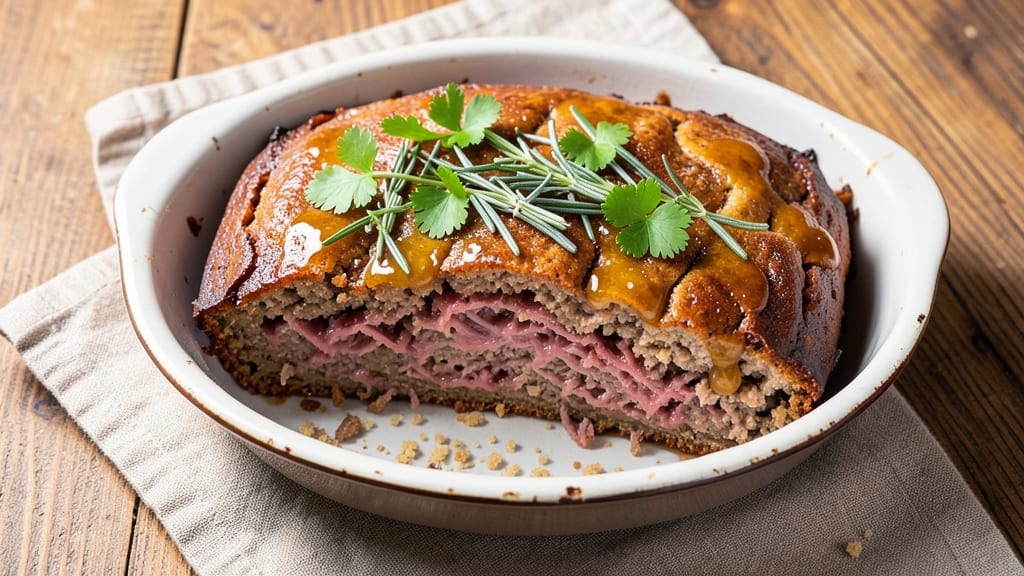
This beef and lamb meatloaf recipe reimagines a classic comfort dish with rich, layered flavors that transform it into something extraordinary. The combination of tender beef and lamb creates a juicier, more complex texture than traditional recipes, while fresh herbs and aromatic spices elevate every bite to restaurant-quality levels.
What makes this version stand out is the savory herb crust—crispy on the outside, perfectly seasoned on the inside—that seals in moisture and adds depth without overpowering the natural beefy flavor.
The secret to achieving this foolproof result lies in the preparation technique: combining ground beef and lamb for enhanced tenderness, using a mix of breadcrumbs and herbs for the crust, and baking at a precise temperature to ensure even cooking.
Unlike many recipes that rely on ketchup glaze, this version features a subtle honey-mustard drizzle that adds just the right balance of sweetness and tang. The result is a meatloaf that’s moist, flavorful, and packed with savory, herby notes that make it a centerpiece for any dinner table.
Once baked to golden perfection, this meatloaf develops a caramelized crust that contrasts beautifully with its tender interior, making each slice irresistibly satisfying.
It’s the kind of dish that pairs effortlessly with classic sides like mashed potatoes, roasted vegetables, or a crisp green salad, turning a simple weeknight meal into a memorable dining experience. The best part? It’s designed to be approachable for home cooks while delivering restaurant-worthy results every time.
Whether you’re serving it at a family gathering or enjoying a cozy night in, this beef and lamb meatloaf recipe delivers on both tradition and innovation. The method is straightforward, the flavors are bold, and the outcome is undeniably impressive—proving that even classic dishes can be reimagined for modern tastes.
Ready to elevate your meatloaf game? Let’s get started.
Ingredients for beef and lamb meatloaf
Sixteen ingredients transform classic meatloaf into a restaurant-worthy herb-crusted masterpiece.
| Ingredient | Amount | Notes |
|---|---|---|
| Ground Beef (80% lean) 🥩 | 1 ½ lb | Coarse-ground for texture |
| Ground Lamb 🐑 | 1 lb | Finely ground preferred |
| Large Eggs 🥚 | 2 whole | Room temperature for binding |
| Plain Breadcrumbs 🍞 | 1 cup | Panko for extra crunch |
| Fresh Parsley 🌿 | ½ cup | Finely chopped, stems included |
| Fresh Rosemary 🌿 | ¼ cup | Finely chopped, fresh preferred |
| Garlic Cloves 🧄 | 6 cloves | Minced, for depth of flavor |
| Diamond Crystal Kosher Salt 🧂 | 1 ½ tsp | Adjust to taste |
| Ground Black Pepper 🌶️ | 1 tsp | Freshly cracked |
| Dried Thyme 🌿 | 1 tsp | Or 1 tbsp fresh thyme |
| Mustard (Dijon) 🍯 | 2 tbsp | For tangy brightness |
| Honey 🍯 | 2 tbsp | Local preferred for flavor |
| Extra-Virgin Olive Oil 🫒 | 2 tbsp | For crust binding |
| Vegetable Oil 🫒 | 2 tbsp | For greasing loaf pan |
The ground beef and lamb combination is non-negotiable for texture—80% lean beef balances richness with tenderness, while finely ground lamb adds depth. Most grocery stores carry pre-ground lamb, but if you find a butcher section, ask for coarse grind—it makes all the difference. Fresh herbs like parsley and rosemary should be vibrant green, not wilted. Whole Foods or local farmers markets are ideal for quality herbs. The garlic should be plump and firm, not sprouting. For the crust, Panko breadcrumbs create superior texture compared to regular breadcrumbs—worth the extra cost.
No lamb? Extra ground beef or turkey works in a pinch, but the flavor profile shifts. Substitute fresh herbs with dried at one-third the amount—though texture suffers. The honey-mustard drizzle is essential for balance; Dijon mustard provides the tang, while local honey adds subtle floral notes. Olive oil quality matters here—California extra-virgin delivers the best flavor without overpowering. Preferring a different glaze? Balsamic reduction or spiced apple compote both pair beautifully. For the crust, ensure breadcrumbs are dry to prevent a soggy loaf—spread them on a baking sheet and toast for 5 minutes if they feel damp.
Prep ahead for perfect results: mix all ingredients except the drizzle 24 hours in advance and refrigerate. The crust stays crisp when assembled cold. Store leftovers in an airtight container for 4-5 days—reheat in a 350°F oven for 15 minutes to restore crispiness. Freezes beautifully for 3 months—wrap tightly in foil before freezing. For serving, drizzle with honey-mustard immediately after baking to lock in moisture and add that restaurant-quality finish. The crust can be made a day ahead and refrigerated, saving time on baking day.
Why You'll Love This Recipe
- No-Fuss Mixing: I swear by this combo—just toss the beef, lamb, eggs, and breadcrumbs in a bowl. No fancy techniques, no measuring cups stressing me out. The lamb adds richness without extra work, and the parsley brightens it up in seconds.
- Rich, Unexpected Depth: That lamb transforms this into something special. It’s not just beef—it’s got this earthy, almost Mediterranean warmth, especially when you let it rest before slicing. Honestly, it’s the kind of dish that makes you pause mid-bite.
- Leftovers That Shine: This meatloaf actually improves the next day. I slice it thin, reheat it in the oven, and serve it on toast or in wraps—no one ever guesses it’s reheated. My kids beg for it long after the original meal.
- Budget Booster: Ground lamb stretches the beef, so I’m getting two proteins for the price of one. Plus, breadcrumbs and eggs are pantry staples. It’s my go-to when I need to feed the family without breaking the bank or complicating things.
Step-by-step instructions for beef and lamb meatloaf
This elevated version delivers rich, herby depth with a crisp exterior—no dry crumb here.
Combine Wet Ingredients for Maximum Binding
In a large mixing bowl, whisk together the 2 whole Large Eggs until frothy. Add the 2 tbsp Mustard (Dijon), 2 tbsp Honey, 2 tbsp Extra-Virgin Olive Oil, 1.5 tsp Diamond Crystal Kosher Salt, 1 tsp Ground Black Pepper, and 1 tsp Dried Thyme. Mix vigorously until fully emulsified—the honey and mustard should blend seamlessly into the egg mixture. This step creates the backbone of your meatloaf's moisture and flavor matrix.
The honey adds subtle sweetness that balances the savory lamb and beef, while the Dijon mustard prevents dryness by tenderizing the meat fibers. Let the mixture sit for 5 minutes while you prepare the remaining ingredients—this resting period ensures even distribution of flavors throughout the loaf.
Mix Meats and Aromatics for Uniform Texture
Add the 1.5 lb Ground Beef (80% lean) and 1 lb Ground Lamb to the egg mixture. Using your hands (wear gloves if preferred), gently fold the meats into the wet ingredients until just combined. Avoid overworking the mixture—you should see streaks of meat throughout, not a uniform paste. This technique preserves the meat's natural juices while ensuring even distribution of seasoning.
In a separate small bowl, finely chop the 0.5 cup Fresh Parsley and 0.25 cup Fresh Rosemary, then mince the 6 cloves Garlic Cloves. Fold these aromatics into the meat mixture along with the 1 cup Plain Breadcrumbs. The breadcrumbs should be evenly dispersed but not overmixed—this creates a tender yet sturdy crumb structure. If the mixture feels too wet, add an additional 2 tablespoons of breadcrumbs to bind it properly.
Prepare the Loaf Pan and Shape the Meatloaf
Preheat your oven to 375°F. Lightly grease a 9x5-inch loaf pan with 2 tbsp Vegetable Oil, ensuring the entire surface is coated. This prevents sticking and promotes even browning. Transfer the meat mixture to the prepared pan, spreading it evenly to form a rectangular loaf. Press down gently but firmly—this step eliminates air pockets that could lead to uneven cooking.
Create a shallow well in the center of the loaf using your fingers. This prevents overflow during baking and allows the meatloaf to rise slightly in the oven. The top should be smooth but not compacted—you want a slightly textured surface that will develop a golden crust. Place the pan on a baking sheet to catch any potential drips.
Bake Until Internal Temperature Reaches 160°F
Bake the meatloaf uncovered for 50-60 minutes, or until the internal temperature reaches 160°F when measured with an instant-read thermometer. The exterior should be deep golden brown with a crisp texture when pressed gently. If the top begins to brown too quickly, tent loosely with aluminum foil to prevent over-browning while maintaining the internal temperature.
During the final 10 minutes of baking, the meatloaf should develop a rich, caramelized crust that seals in moisture. Avoid opening the oven door prematurely—each time you do, you risk losing heat and extending the cooking time. The loaf is done when it springs back slightly when touched and the edges pull away cleanly from the pan.
Rest and Serve for Optimal Texture
Remove the meatloaf from the oven and transfer it to a wire rack. Let it rest for 15 minutes before slicing—this crucial step allows the juices to redistribute throughout the meat, preventing them from pooling and creating a dry exterior. The internal temperature will rise another 5-10°F during this resting period, ensuring perfect doneness.
Slice the meatloaf into 6 even servings and serve immediately. The exterior should be crisp and aromatic, while the interior remains moist and tender with visible flecks of rosemary and parsley. Pair with a classic tomato sauce or horseradish cream for a complete meal that honors both traditional and gourmet elements.
Pro Tips For Making Beef And Lamb Meatloaf
- Mix the Lamb First: Ground lamb turns rubbery fast when exposed to air, so combine it with breadcrumbs, parsley, and half the egg before touching the beef. This keeps the lamb tender while you handle the beef separately—no one wants a meatloaf with chewy bits.
- Use Cold Hands: Warm hands make the mixture greasy to handle. Rinse your hands under cold water or wear gloves when shaping the loaf—this keeps the texture tight and prevents the lamb fat from oiling your fingers everywhere.
- Skip the Overmixing: After 10 turns with a spoon, stop. Overworking the beef and lamb breaks down the fibers, and you’ll end up with a dense, dry loaf. Just combine until just combined—like kneading dough until it holds together, not until it’s smooth.
- Rest Before Baking: Let the shaped loaf sit uncovered in the fridge for 20 minutes. This lets the lamb fat redistribute and the breadcrumbs firm up, so it doesn’t collapse or lose moisture while baking—trust me, it’s worth the wait.
Troubleshooting perfect results
Dry Meatloaf Fix
If your meatloaf emerges dry, it’s likely overcooked or underseasoned. First, check your internal temperature—it should reach 160°F, not higher.
For immediate rescue, slice the loaf horizontally, spread 2 tbsp Dijon mustard or 1 tbsp honey between layers, then wrap tightly in foil and reheat at 350°F for 10 minutes. This reinfuses moisture without overcooking further. 💫
Soggy Crust Issues
A soggy crust usually means excess moisture or underbaked breadcrumbs. To prevent this, toast your 1 cup Panko breadcrumbs for 5 minutes at 350°F before mixing—this removes any dampness.
If the crust still feels limp after baking, brush the top with 1 tbsp melted butter and broil for 2 minutes to crisp it up. Avoid overmixing the wet ingredients, which can also lead to a dense, gummy texture.
Uneven Cooking
Uneven cooking often stems from air pockets or inconsistent pan greasing. Before shaping, press the meat mixture firmly into the pan to eliminate gaps. Use a 9x5-inch loaf pan and ensure it’s well-greased with 2 tbsp vegetable oil.
If one side cooks faster, rotate the pan halfway through baking. For extra insurance, bake on the middle rack where heat is most even. A meat thermometer is your best friend here—probe the thickest part to confirm 160°F.
Crust Not Browning
A pale crust usually means insufficient fat or heat. For richer color, brush the top with 1 tbsp olive oil before baking, then sprinkle with an extra ½ tsp kosher salt. If browning is still lacking, increase oven temp to 400°F for the last 10 minutes.
A quick fix for already-baked loaf: broil for 1-2 minutes until golden. Avoid overcrowding the pan, which traps steam and prevents browning.
Meat Pulling Apart
If your meatloaf crumbles when slicing, it’s likely overmixed or underseasoned. Gently fold the meats into the wet ingredients—just until combined, with visible streaks. Add 1 extra egg yolk or 2 tbsp extra breadcrumbs if the mixture feels too loose.
For a quick fix, slice the loaf slightly thicker than usual. The crust should hold together while the inside remains tender—this is the ideal balance for a sturdy yet juicy texture. 💪
Lamb Overpowering Beef
If the lamb flavor dominates, reduce the lamb quantity to ½ lb and increase beef to 1.75 lb. For a more balanced taste, add 1 tsp smoked paprika to the mix—this bridges the gap between the two meats.
If using pre-ground lamb, ask your butcher for a slightly coarser grind, as finely ground lamb can feel mushy. Always let the meat mixture rest for 10 minutes before baking to allow flavors to meld evenly.
Nutrition facts
Frequently asked questions
Can I substitute ground turkey or chicken for the lamb?
You can use ground turkey or chicken, but the flavor profile will change significantly. For best results, use 100% ground turkey (dark meat) and add 1 tsp smoked paprika and ½ tsp liquid smoke to mimic lamb's depth. Chicken works too, but it's leaner and may dry out faster—consider adding 1 tbsp olive oil to the mix. The lamb's richness is key to this recipe's success.
How do I adjust the recipe for a smaller or larger group?
This recipe serves 6 people. For 4 servings, reduce all ingredients by 2/3 (about 1 lb beef and ⅔ lb lamb). For 8 servings, increase to 2.5 lb beef and 1.5 lb lamb, using a 9x13-inch pan. Always maintain the 3:2 beef-to-lamb ratio for balanced flavor and texture.
Why does the recipe call for both fresh and dried herbs?
The recipe uses fresh parsley and rosemary for vibrant flavor and dried thyme for convenience and depth. Fresh herbs add bright, aromatic notes that dried can't replicate, while dried thyme provides a consistent, earthy base. If you only have dried herbs, use ½ tsp dried parsley and ½ tsp dried rosemary (but texture will be less tender). For maximum flavor, fresh is always best!
Can I make this meatloaf ahead of time?
This meatloaf actually tastes better the next day. Assemble the loaf (without baking) and refrigerate for up to 24 hours. Bake as directed, but add 5-10 minutes to the cooking time. For leftovers, store in an airtight container for 4-5 days or freeze for 3 months. To reheat, warm in a 350°F oven for 15 minutes to restore crispiness.
What's the best way to serve this beef and lamb meatloaf?
This herb-crusted masterpiece pairs beautifully with classic sides like creamy mashed potatoes, roasted root vegetables, or a fresh garden salad. For a complete meal, drizzle with a homemade tomato sauce or serve with horseradish cream. The rich, savory flavors also work well with polenta or crusty bread to soak up any extra juices.