
Soups & Stews
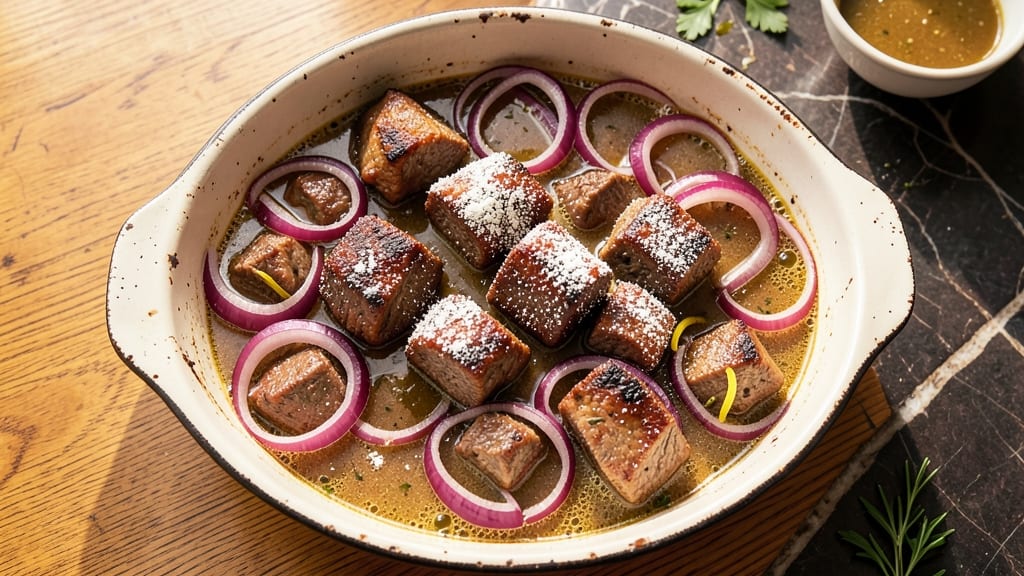
This beef and onion stew recipe delivers restaurant-quality depth with caramelized onions and melt-in-your-mouth beef—perfect for cozy weeknights or special gatherings. The secret lies in slow-cooking, which transforms tough cuts into tender morsels while developing rich, layered flavors.
Every bite combines sweet, golden onions with savory beef and aromatic herbs, creating a dish that feels both comforting and impressive.
What sets this stew apart is the balance of technique and simplicity. You'll start with searing beef for deep flavor, then layer in onions to caramelize slowly—a process that builds sweetness and complexity.
The right liquid ratio ensures the stew stays hearty yet tender, never watery. This method delivers professional results without requiring advanced skills, making it ideal for home cooks who want restaurant-quality meals.
The final result is a rich, velvety stew with perfectly tender beef and onions that caramelize to a deep golden brown. The aroma alone will draw everyone to the table, and the first bite delivers that satisfying combination of textures and flavors.
Serve with crusty bread to soak up every last drop, or pair with roasted potatoes for a complete meal.
Whether you're cooking for a crowd or meal prepping for the week, this stew scales beautifully while maintaining its depth of flavor. The slow-cooking process allows flavors to meld over time, ensuring each spoonful is packed with richness.
Ready to create a dish that feels like a warm embrace in a bowl?
Ingredients for beef and onion stew
Six ingredients transform into restaurant-quality beef and onion stew with deep caramelized flavors.
| Ingredient | Amount | Notes |
|---|---|---|
| Chuck Roast Beef 🥩 | 3 lb | Cut into 1.5-inch cubes |
| Yellow Onions 🧅 | 4 large | Peeled and sliced into 1/4-inch rounds |
| All-Purpose Flour 🌾 | 2 tbsp | For dredging beef |
| Olive Oil 🫒 | ½ cup | Extra-virgin for richness |
| Beef Broth 💧 | 4 cups | Low-sodium preferred |
| Red Wine 🍷 | 1 cup | Dry, bold variety |
| Tomato Paste 🍅 | 2 tbsp | Smooth texture preferred |
| Garlic Cloves 🧄 | 4 cloves | Minced for depth |
| Fresh Thyme 🌿 | ½ ounce | Or 2 tbsp dried thyme |
| Bay Leaves 🍃 | 2 whole | Removed before serving |
| Salt 🧂 | 1 ½ tsp | Kosher or sea salt |
| Black Pepper 🌶️ | 1 tsp | Freshly ground preferred |
| Worcestershire Sauce 🥫 | 1 tbsp | Vegan if needed |
The chuck roast is non-negotiable here—it's the secret to that melt-in-your-mouth texture. Look for well-marbled cuts at Costco or your local butcher shop, where you can often get it pre-cubed for convenience. Yellow onions should be firm and free of sprouts. Spanish or Vidalia varieties caramelize particularly well, but any yellow onion will work. The flour is just for dredging the beef before searing, so any all-purpose brand will do. For the red wine, grab whatever bold variety you enjoy drinking—Cabernet Sauvignon or Merlot are classic choices, but no need to splurge on expensive bottles.
No red wine? Beef broth with 1 tbsp balsamic vinegar works perfectly. Fresh thyme is ideal, but dried thyme at one-third the amount gets you close. The tomato paste can be substituted with 2 tbsp tomato sauce if you prefer. For extra richness, add 1 tbsp soy sauce to the broth. The Worcestershire sauce adds depth—if you're avoiding it, 1 tsp soy sauce plus 1 tsp apple cider vinegar mimics the umami punch. Bay leaves are essential for that classic stew aroma, but remove them before serving—they're not meant to be eaten.
This stew tastes even better the next day as flavors meld. Store in an airtight container in the fridge for up to 5 days or freeze for 3 months. I always double the batch—one pot for dinner, one for leftovers that become next-day lunches. The onions caramelize best when cooked low and slow, so resist the urge to rush. If you're short on time, use a pressure cooker—cut cooking time in half while keeping all the flavor.
Why You'll Love This Recipe
- One-Pot Magic: The chuck roast practically melts in its own juices while the onions caramelize right in the same pot—no extra pans, no fuss. Honestly, I dump everything in, walk away for an hour, and come back to something that smells like a hug in a bowl.
- Deep Umami Bomb: That flour-dusted beef? It browns into a crust that cracks open to release the most intense, savory flavor—like a slow-cooked secret. Between the rich broth and the onions’ sweetness, every bite is dangerously addictive.
- Leftovers That Save Me: Make a double batch, and you’ve got lunch for three days without thinking. The flavors only get better as it sits, and reheating it is just a microwave away—no sad, dry beef here.
- Budget-Friendly Feast: Chuck roast is cheap, onions are cheap, and a big pot means feeding a crowd for less than takeout. Between us, this is my go-to when I need to stretch a paycheck without sacrificing taste. (Yes, even on a Tuesday night.)
Step-by-step instructions for beef and onion stew
Here's how to transform tough chuck roast into melt-in-your-mouth beef with rich, caramelized onions.
Prepare the Beef for Maximum Tenderness
Pat the 3 lb chuck roast beef dry with paper towels—this ensures a better sear. Cut it into 1.5-inch cubes, trimming any excess fat but leaving about ¼ inch on each piece for flavor. Place the beef cubes in a large bowl and sprinkle with the 2 tbsp all-purpose flour, tossing to coat evenly. This creates a light barrier that will help develop a golden crust during searing.
I like to work in batches here—don't crowd the bowl or the flour won't adhere properly. If you're using dried thyme instead of fresh, measure out 2 tbsp now and set it aside for later. The flour coating will also help thicken the stew later, so don't skip this step even if you're impatient to start cooking.
Sear the Beef Until Deeply Browned
Heat a large Dutch oven over medium-high heat. Add ¼ cup of the 0.5 cup olive oil and swirl to coat the bottom evenly. Working in batches (don't overcrowd the pan), add the floured beef cubes and cook undisturbed for 3-4 minutes until deeply browned on all sides. This browning creates the rich, meaty foundation of your stew.
Transfer the browned beef to a plate as you work—you'll want to sear all the batches before proceeding. If the oil starts smoking excessively, reduce the heat slightly. The beef should release easily from the pan when ready to flip. Once all pieces are browned, remove them from the Dutch oven and set aside temporarily.
Caramelize the Onions Slowly
In the same Dutch oven, add the remaining ¼ cup olive oil and reduce heat to medium-low. Add the 4 large yellow onions (sliced into ¼-inch rounds) and cook them slowly, stirring occasionally, for 30-40 minutes. This is where patience pays off—the onions should turn deep golden brown and develop a sweet, jam-like texture.
Here's the thing—don't rush this step. You'll know they're ready when the onions are caramelized and the oil has mostly evaporated, leaving behind a rich, sticky fond at the bottom. If they start to stick, add a splash of water and scrape up the browned bits with a wooden spoon. These bits are packed with flavor.
Build the Flavor Base
Once the onions are caramelized, increase heat to medium and add the 4 minced garlic cloves. Cook for 30 seconds until fragrant—don't let them burn. Stir in the 2 tbsp tomato paste and cook for 1 minute, allowing it to darken slightly and blend with the onions.
Deglaze the pot by pouring in the 1 cup red wine, scraping up all the browned bits from the bottom. Let it simmer for 2-3 minutes until reduced by half. Add the 4 cups beef broth, the 0.5 ounce fresh thyme (or 2 tbsp dried thyme), 2 whole bay leaves, 1.5 tsp salt, 1 tsp black pepper, and 1 tbsp Worcestershire sauce. Bring to a gentle simmer.
Braise Until Fork-Tender
Return the browned beef to the Dutch oven, along with any accumulated juices from the plate. The liquid should come about halfway up the beef cubes. Cover and transfer to a preheated 325°F oven. Braise for 2.5-3 hours, or until the beef is fork-tender and easily pulls apart with minimal resistance.
Check the beef after 2 hours—if it's not quite tender, return it to the oven for another 30-60 minutes. The stew should reduce slightly as it cooks, creating a thick, rich sauce. Remove the bay leaves before serving. Each bite should deliver melt-in-your-mouth beef with sweet, caramelized onions in every spoonful.
Pro Tips For Making Beef And Onion Stew
- SEAR THE ROAST HARD: Chuck roast needs a deep, dark crust to hold up in broth. Use a heavy pot or skillet and walk away—high heat for 4-5 minutes per side until it’s browned like a shoe leather. I learned this the hard way when my stew tasted like it was simmered in water instead of flavor.
- SLICE ONIONS UNIFORM: Thin, even slices caramelize at the same rate and won’t turn to mush. Cut onions into ¼-inch half-moons (about 6 slices per onion) and pat them dry with a paper towel—wet onions steam instead of brown. This isn’t the prettiest method, but it’s the tastiest.
- DEGLAZE WITH BROTH, NOT WATER: After searing, splash in ½ cup beef broth (not water) to scrape up the browned bits. The residual fat and meat particles in broth make a richer base than plain water. I skip this when I’m lazy, but the dish is noticeably better when I don’t.
- LOW AND SLOW IS NON-NEGOTIABLE: Cover the pot and simmer at a gentle bubble—no rolling boil—until the beef falls apart (about 2.5–3 hours). If it’s too hot, the onions burn and the meat toughens. Sounds weird, but it works: check the heat every 15 minutes and adjust.
Dietary considerations for this recipe
Gluten-Free Adaptations
This stew is naturally gluten-free if you use a certified gluten-free flour blend for dredging instead of all-purpose flour. I recommend Bob's Red Mill 1-to-1 Gluten-Free Baking Flour, which works perfectly for coating the beef.
Just measure the same 2 tbsp and proceed with the recipe as written. Always check labels on Worcestershire sauce—some brands contain gluten, so opt for gluten-free versions like Annie's or Lea & Perrins Gluten-Free. 🌾
Dairy-Free Considerations
The classic recipe doesn't contain dairy, but always verify your beef broth for hidden dairy additives. Some store-bought broths use dairy-based thickeners. For extra richness, you can add 1 tbsp nutritional yeast when serving—it adds a cheesy flavor without dairy.
The caramelized onions and red wine provide plenty of depth without needing dairy components.
Low-Sodium Options
To reduce sodium, use low-sodium beef broth and skip the Worcestershire sauce entirely. Replace it with 1 tbsp soy sauce plus 1 tbsp apple cider vinegar for umami depth.
I also recommend reducing the salt to 1 tsp instead of 1.5 tsp—the caramelized onions and red wine already provide plenty of flavor. Taste as you go and adjust gradually. 🧂
Vegetarian Substitutions
For a vegetarian version, replace the beef with 1.5 lbs extra-firm tofu or mushrooms. Press the tofu to remove excess water, then cube and pan-fry until golden.
For mushrooms, use 8 oz cremini mushrooms sliced thickly and seared until browned. The caramelized onions and rich sauce will still shine through beautifully. 🍄
Allergen-Friendly Tips
This stew is naturally free from common allergens like nuts and shellfish, but always double-check ingredient labels. For soy allergies, avoid Worcestershire sauce and soy sauce substitutes. The recipe's depth comes from the beef, onions, and wine—no soy products are essential.
If you're avoiding wine, substitute with 1 cup beef broth plus 1 tbsp balsamic vinegar for acidity and depth. 🍷
Nutrition facts
Frequently asked questions
Can I use a different cut of beef for this stew?
Chuck roast is ideal because its fat marbling keeps the meat tender during long cooking. However, you can substitute with brisket (cut into cubes) or stew meat from the shoulder. Avoid lean cuts like sirloin—they'll dry out. If using brisket, trim excess fat to ¼ inch for cleaner flavor.
How do I know when the onions are perfectly caramelized?
Perfect caramelized onions should be deep golden brown with a jam-like texture. They'll stick slightly to the pan when stirred, and the oil should mostly evaporate, leaving a rich fond at the bottom. If they start browning too quickly, reduce heat to medium-low and add a splash of water to deglaze.
Can I make this stew in a slow cooker?
Brown the beef and caramelize the onions in a skillet first, then transfer everything to a 6-quart slow cooker. Add all remaining ingredients and cook on low for 7-8 hours or high for 4-5 hours. The slow cooker method is perfect for hands-off cooking, though the onions may be less caramelized than stovetop.
Why is my stew watery after cooking?
Watery stews usually happen from too much liquid or undercooking. For this recipe, the 4 cups broth should be just enough—the beef releases moisture as it cooks. If it's still too thin, simmer uncovered for 10-15 minutes to reduce. For future batches, check your beef's size—larger cubes need more liquid, but smaller ones release more juices.
What's the best way to reheat leftovers?
Reheat gently on the stovetop over low-medium heat until warmed through (10-15 minutes). Avoid microwaving—it can make the onions rubbery. For extra richness, add 1 tbsp beef broth or water while reheating. Store leftovers in an airtight container for up to 5 days or freeze for 3 months.