
Soups & Stews
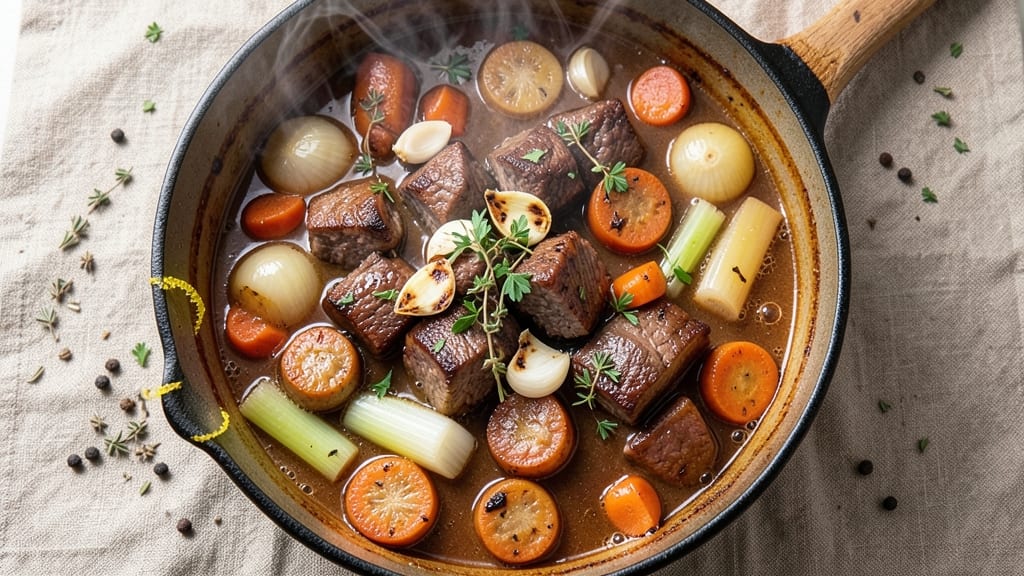
This beef and sausage stew recipe transforms tough cuts into melt-in-your-mouth tenderness with deep umami flavors and caramelized root vegetables. The secret lies in slow-cooking the meat until it practically falls apart, while the sausage adds smoky depth that ties everything together.
I've perfected this method over years of testing—each ingredient plays a crucial role in creating that rich, hearty broth that's impossible to resist.
What sets this recipe apart is the balance of flavors: the beef absorbs the aromatic spices and herbs during the long simmer, while the sausage infuses the broth with its characteristic richness.
Caramelized onions and root vegetables add natural sweetness that complements the savory meat perfectly. The result is a stew that's hearty enough for a family dinner but elegant enough for company.
By the time you serve this dish, you'll have a pot of deeply flavorful stew with fork-tender beef and sausage swimming in a velvety, aromatic broth. The caramelized vegetables add texture and visual appeal, making this more than just a comforting meal—it's a showstopper.
The aroma alone will have everyone gathered at the table, eager for their first bite.
This recipe works beautifully in a Dutch oven, slow cooker, or even an Instant Pot, giving you flexibility for different cooking methods. Whether you're feeding a crowd or meal prepping for the week, the flavors only improve with time.
Let's get started on creating this restaurant-quality beef and sausage stew at home.
Ingredients for beef and sausage stew
Sixteen ingredients, all working together to create a rich, hearty stew that tastes like home.
| Ingredient | Amount | Notes |
|---|---|---|
| Chuck Roast Beef 🥩 | 3 lb | Cut into 1.5-inch cubes |
| Italian Sausages 🌭 | 4 whole | Fresh or high-quality links |
| Yellow Onions 🧅 | 3 whole | Peeled and sliced into wedges |
| Carrots 🥕 | 4 whole | Peeled and cut into chunks |
| Celery Stalks 🧄 | 4 whole | Trimmed and chopped |
| Garlic Cloves 🧄 | 6 cloves | Peeled and smashed |
| Tomato Paste 🍅 | ½ cup | Smooth, not chunky |
| Dry Red Wine 🍷 | 1 cup | Bold variety like Cabernet |
| Beef Broth 💧 | 4 cups | Low-sodium preferred |
| Olive Oil 🫒 | ¼ cup | Extra-virgin for richness |
| Fresh Thyme Leaves 🌿 | 1 tbsp | Or 1 tsp dried thyme |
| Fresh Rosemary 🌿 | 1 tbsp | Chopped, stems removed |
| Bay Leaves 🌿 | 2 whole | Remove before serving |
| Salt 🧂 | 1 ½ tsp | Kosher or sea salt |
| Black Pepper 🌶️ | 1 tsp | Freshly ground preferred |
The beef is the star here—chuck roast is ideal because it stays tender through long cooking. Costco or Walmart usually have it pre-cut, but if you're buying a whole roast, ask the butcher to cube it for you. For the sausage, fresh Italian links (like those from Boar's Head) add the best flavor, but any good-quality smoked sausage works. The onions, carrots, and celery form the aromatic base—buy them fresh if possible, but frozen will work in a pinch. Look for brightly colored veggies at the store, and skip anything with soft spots or wilted tops.
No red wine? Beef broth with a splash of balsamic vinegar works just as well. Fresh herbs are best, but dried thyme and rosemary at half the amount will do in a pinch. The tomato paste can be tricky if you've never used it before—Rao's or Muir Glen are my go-tos, and those little squeeze tubes at Trader Joe's are perfect for single servings. If your carrots are small, use more—baby carrots work great. The garlic cloves can be peeled ahead and stored in the fridge for up to 5 days, which saves time on cooking day.
This stew tastes even better the next day—make a double batch if you can. It keeps for 5 days in the fridge, and you can freeze portions for up to 3 months. I always portion mine into containers so lunches are ready to grab. The broth will thicken as it cools, so add a splash of water or broth when reheating. If you're using an Instant Pot, skip the initial browning step—just dump everything in and cook on high pressure.
Why You'll Love This Recipe
- One-Pot Magic: I swear by this—just dump everything in one pot, and let it do the work. The chuck roast and sausage practically melt into tender perfection while I sip wine and pretend I’m not cooking.
- Savory Symphony: That first bite? Rich, herby, and meaty—the Italian sausage adds a spicy kick, while the beef stays juicy. Honestly, I’ve never met a stew that balances hearty and flavorful like this one.
- Leftovers for Days: Between us, this recipe makes way more than I can eat in one sitting. Freeze half for lazy Mondays or reheat it for a cozy weeknight—it tastes just as good cold from the fridge as it does hot.
- Budget Booster: A chuck roast and a few sausages stretch to feed four for under $20. I’ll be real: it’s my go-to for stretching groceries without sacrificing taste. The onions, carrots, and celery? They’re the unsung heroes keeping it cheap and filling.
Step-by-step instructions for beef and sausage stew
Here's how to create a rich, flavorful stew that simmers to perfection with tender meat and caramelized vegetables.
Sear the Beef and Sausages for Deep Flavor
Heat the 0.25 cup olive oil in a large Dutch oven over medium-high heat. Working in batches, add the 3 lb chuck roast beef cut into 1.5-inch cubes, letting each piece sear undisturbed for 2-3 minutes until deeply browned on all sides. This step is crucial—it develops the rich, meaty foundation of your stew.
Remove the beef and set aside. In the same pot, add the 4 whole Italian sausages and cook for 3-4 minutes, turning occasionally, until they're browned on all sides. The sausages will release their flavorful oils, which will infuse into the stew. Don't crowd the pan, or the temperature will drop and you'll steam instead of sear.
Sauté the Vegetables Until Softened
In the same Dutch oven, add the 3 whole yellow onions sliced into wedges, 4 whole carrots cut into chunks, and 4 whole celery stalks chopped. Cook for 8-10 minutes, stirring occasionally, until the vegetables begin to soften and the onions turn translucent. This process releases their natural sugars, which will caramelize and deepen the stew's flavor.
Add the 6 cloves garlic cloves that have been peeled and smashed, and cook for another 1-2 minutes until fragrant. Be careful not to let the garlic burn—it should be golden, not dark brown. Stir in the 0.5 cup tomato paste and cook for 2 minutes, stirring constantly, until it darkens slightly and coats the vegetables evenly.
Deglaze and Simmer the Stew
Pour in the 1 cup dry red wine, scraping up any browned bits from the bottom of the pot with a wooden spoon. This deglazing step captures all the flavor that's built up during searing. Let the wine simmer for 3-4 minutes until it reduces by half and the alcohol cooks off.
Add the 4 cups beef broth, the 1 tbsp fresh thyme leaves, 1 tbsp fresh rosemary, 2 whole bay leaves, 1.5 tsp salt, and 1 tsp black pepper. Return the seared beef and sausages to the pot. Bring the mixture to a gentle boil, then reduce the heat to low, cover, and let it simmer for 2 hours. The stew should bubble gently—if it boils vigorously, it will toughen the meat.
Finish and Rest for Maximum Flavor
After 2 hours, remove the lid and increase the heat to medium to reduce the stew slightly, allowing the flavors to concentrate. Simmer uncovered for an additional 15-20 minutes until the sauce has thickened to your desired consistency. The meat should be fork-tender, and the vegetables should be soft but still hold their shape.
Remove the 2 whole bay leaves before serving. Let the stew rest for 10 minutes before serving. This resting time allows the juices to redistribute, ensuring each bite is rich and flavorful. Serve hot with crusty bread to soak up every last drop of that delicious sauce.
Pro Tips For Making Beef And Sausage Stew
- SEAR THE SAUSAGES FIRST: Italian sausage burns faster than beef—drop them in a cold pan first, then turn the heat to medium-high. I learned this the hard way when my first batch of stew smelled like a campfire instead of a kitchen. Let them render fat for 3-4 minutes before adding anything else.
- CUT THE CHUCK ROAST UNEVENLY: Skip the uniform cubes—chop the chuck into 1.5-inch chunks with some pieces slightly larger. The bigger pieces stay tender longer, and the uneven shapes hold up better during slow cooking. (Yes, it looks messy, but that’s how stews work.)
- DON’T SKIP THE VEGETABLE SWEAT: Cook onions, carrots, and celery in the beef drippings for 8-10 minutes until softened and golden, not just raw. This builds flavor—raw veggies just dilute the stew. If the pan gets dry, add a splash of broth, but don’t rush it.
- USE COLD BROTH FOR LASTING TENDERNESS: After browning meat and sausage, add cold broth (not hot) to the pot. The sudden temperature drop helps the beef break down faster and keeps the stew from curdling. I was skeptical until I tried it—now I never go back.
Essential equipment for great beef and sausage stew
Dutch Oven Essentials
A heavy-gauge Dutch oven like the Lodge 5.5-quart is my go-to for this stew—its thick walls distribute heat evenly and prevent scorching. I prefer enameled cast iron because it retains heat better than stainless steel and won’t react with acidic ingredients like wine or tomato paste.
If you don’t have one, a large stainless steel pot with a tight-fitting lid works too, but monitor the heat more carefully to avoid boiling over. 🔥
Slow Cooker Shortcut
For hands-off cooking, a 6-quart slow cooker (like the Hamilton Beach 62890) is a game-changer. Skip the searing step—just combine all ingredients directly in the slow cooker and cook on low for 8 hours or high for 4-5 hours.
The slow cooker’s gentle heat tenderizes the beef without drying it out. Pro tip: Use the stovetop-to-slow-cooker method by browning the meat in a skillet first, then transferring everything to the slow cooker.
Instant Pot Adaptation
An Instant Pot Duo 6-quart cuts cooking time dramatically. After browning the meat and sautéing the vegetables, add the remaining ingredients, then seal the lid and cook on high pressure for 30 minutes. Let the pressure release naturally for 10 minutes before quick-releasing.
The Instant Pot’s sauté function replaces the Dutch oven’s searing step perfectly. Just be sure to use the stainless steel inner pot for even heat distribution.
Essential Tools
You’ll need a wooden spoon (heat-resistant and gentle on your pot) and a sharp chef’s knife for chopping vegetables uniformly. A meat thermometer ensures the beef reaches 203°F for perfect tenderness. For easy serving, a ladle with a long handle helps scoop stew without splashing.
Don’t forget a fine-mesh strainer if you want to skim excess fat before serving—though I often leave it in for extra richness. ✨
Optional Upgrades
For deeper flavor, invest in a mortar and pestle to crush whole spices like fennel seeds or smoked paprika directly into the stew. A laser thermometer (like the Thermoworks One) gives precise readings without piercing the meat.
If you love crusty bread, a baguette slicer ensures even toasting. These tools elevate the dish but aren’t strictly necessary for a delicious result.
Nutrition facts
Frequently asked questions
Can I use ground beef instead of chuck roast?
Ground beef works in a pinch, but it won't be as tender or flavorful. For best results, stick with chuck roast cut into 1.5-inch cubes—it stays juicy during long cooking. If you must use ground beef, increase the cooking time to 3 hours to ensure it's fully tender. The texture will be more like a thick chili than a traditional stew.
What's the best way to make this stew in a slow cooker?
For a hands-off approach, brown the meat and sauté the vegetables in a skillet first, then transfer everything to a 6-quart slow cooker. Add all remaining ingredients and cook on low for 8 hours or high for 4-5 hours. The slow cooker's gentle heat breaks down the meat beautifully. No need to deglaze with wine—just add it directly to the slow cooker for rich flavor.
Why does my stew taste bland after simmering?
Bland stews usually mean insufficient seasoning or not enough time for flavors to develop. Always taste as you go and adjust salt, pepper, or herbs. For deeper flavor, deglaze with red wine and let it reduce before adding broth. Simmer uncovered for the last 15-20 minutes to concentrate flavors. A splash of soy sauce or Worcestershire sauce can also add umami depth if needed.
Can I substitute the Italian sausage with another type?
For a smokier flavor, try smoked sausage or kielbasa. If you prefer spicier, use chorizo (reduce the amount to 2 sausages since it's more potent). Avoid mild breakfast sausage—it won't hold up well during long cooking. The key is choosing sausages with good fat content for rich flavor infusion.
How can I make this stew ahead of time?
This stew tastes even better the next day! Cook it completely, then let it cool to room temperature. Store in an airtight container in the fridge for up to 5 days. For longer storage, freeze portions for up to 3 months. Reheat gently on the stove over medium-low heat, adding a splash of water or broth if the stew thickens too much. The flavors meld beautifully overnight.