
Soups & Stews
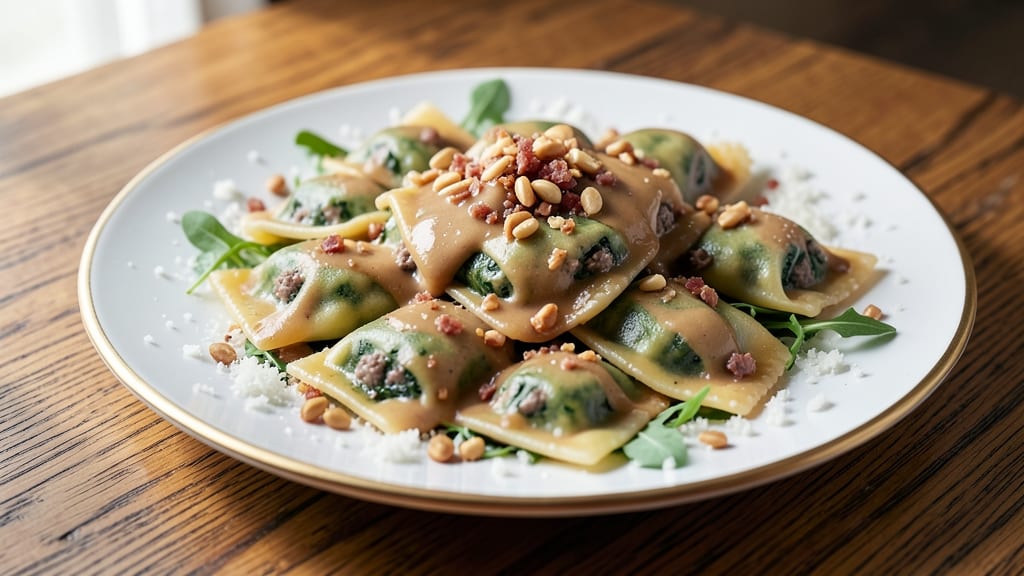
This beef and spinach ravioli recipe delivers restaurant-quality pillowy pasta with a rich, herb-infused filling that feels like a home-cooked hug. 💛 The secret lies in perfectly balanced dough—flour, eggs, and a touch of olive oil—that creates tender wrappers, while the filling combines finely ground beef, wilted spinach, and aromatic herbs for maximum flavor in every bite.
What sets this recipe apart is the attention to detail: you'll learn how to roll the dough paper-thin for delicate wrappers and fold the filling precisely to create classic half-moon shapes.
The cooking method gives you options—boil for classic al dente texture or pan-fry for crispy edges—while traditional Italian techniques ensure authentic results without shortcuts.
By the time you plate these ravioli with melted butter and fresh Parmesan, you'll have a dish that's impressive enough for dinner guests but simple enough for weeknight meals. The combination of tender pasta, savory beef, and vibrant spinach creates a balance that's both comforting and elegant.
Pair with a simple tomato sauce or garlic butter for the full Italian experience. This recipe transforms homemade pasta from intimidating project to rewarding accomplishment—perfect for anyone ready to elevate their cooking skills.
Ingredients for beef and spinach ravioli
Pantry staples meet Italian tradition for these handcrafted beef and spinach ravioli.
| Ingredient | Amount | Notes |
|---|---|---|
| All-Purpose Flour 🌾 | 3 cups | High-protein for elasticity |
| Large Eggs 🥚 | 3 whole | Room temperature for blending |
| Extra-Virgin Olive Oil 🫒 | ¼ cup | Light, fruity variety preferred |
| Diamond Crystal Kosher Salt 🧂 | 1 ½ tsp | Fine grain for even dissolving |
| Ground Black Pepper 🌶️ | ½ tsp | Freshly cracked for aroma |
| Lean Ground Beef 🥩 | 1 lb | 80/20 fat ratio ideal |
| Fresh Baby Spinach 🌿 | 4 oz | Wilted and drained thoroughly |
| Garlic Cloves 🧄 | 3 cloves | Minced for aromatic infusion |
| Fresh Parsley 🌿 | ¼ cup | Chopped, stems removed |
| Fresh Basil 🌿 | ¼ cup | Finely chopped for brightness |
| Parmesan Cheese 🧀 | ½ cup | Freshly grated, block form |
| Unsalted Butter 🧈 | ½ cup | Cold, cubed for dough |
| Heavy Cream 🥛 | ¼ cup | For filling richness |
| Nutritional Yeast 🌾 | 1 tbsp | For umami depth |
The flour-to-egg ratio is critical for tender wrappers. King Arthur or Caputo flour yields the best results due to their high protein content, but all-purpose works in a pinch. Eggs should be room temperature to blend seamlessly with the dough—no cold lumps. For the filling, ground beef with 20% fat balances lean protein with moisture retention, while fresh spinach should be wilted completely and drained to avoid soggy ravioli. Italian markets often carry pre-grated Parmesan, but grate your own from a wedge for optimal flavor and texture. The nutritional yeast adds that signature umami kick without dairy, making it a perfect vegetarian-friendly addition.
No fresh herbs? Dried parsley and basil at one-third the amount work in a bind, though fresh delivers superior aroma. Substituting ground turkey for beef requires adding 1 extra tbsp olive oil to maintain moisture. For gluten-free adaptation, swap the flour for a 1:1 gluten-free pasta blend but expect slightly firmer wrappers. The heavy cream in the filling can be replaced with Greek yogurt for tanginess or cashew cream for richness. When selecting spinach, avoid pre-washed bags—they oxidize faster. Instead, grab a bunch and wash it yourself for maximum freshness. For the dough, if you lack a pasta machine, a rolling pin and patience will suffice, though the results may be slightly thicker.
Store the dough between parchment paper in the fridge for up to 3 days or freeze wrapped in plastic for 3 months. The filling can be prepped ahead and kept in the fridge for 2 days before assembly. Once cooked, ravioli reheat beautifully—simmer in 1 cup pasta water with 1 tbsp butter for 2-3 minutes. For make-ahead convenience, freeze uncooked ravioli on a floured tray before transferring to a bag. They'll keep for 2 months and cook straight from frozen, adding 1-2 minutes to boiling time. Always reserve some pasta water when cooking—it's the secret to silky sauces.
Why You'll Love This Recipe
- Here’s the thing about ravioli: they reheat like a dream. Toss them in a pan with a little olive oil and salt, and they crisp up just enough to taste homemade again. I’ve had them for lunch the next day, frozen for a month, and even thrown into a skillet with leftover roasted veggies—no one ever guesses they’re not fresh.
- No Pasta Machine Needed: I’ll admit—rolling dough by hand feels a little old-school, but honestly? The ravioli turn out better that way. That thin, tender crust comes from just flour, eggs, and a pinch of salt, no shortcuts. Plus, the filling stays snug in those little pockets—no leaks, no fuss.
- Rich, Earthy, Can’t-Stop Eating: The beef and spinach filling is where the magic happens: finely ground beef (not too lean) simmers with garlic, spinach, and a splash of olive oil until it’s almost dry. That concentrated flavor? It’s the kind that makes you reach for another piece, even when you’re full.
- Weeknight Dinner or Date Night: Between us, this recipe works for both the "I’m too tired to think" nights and the "let’s impress someone" ones. Toss it with a simple brown butter sauce for casual, or drizzle with truffle oil and Parmesan for a restaurant vibe. Same effort, totally different energy.
Step-by-step instructions for beef and spinach ravioli
Mastering pillowy pasta wraps and rich, herby filling comes down to precision and technique.
👨🍳 Step 1: Prepare the Herb-Infused Beef Filling
In a large skillet, heat 1 tablespoon of the extra-virgin olive oil over medium-high heat. Add the 1 lb lean ground beef and cook, breaking it apart with a wooden spoon, until it loses its raw color and begins to brown—about 5-6 minutes. The meat should be fully cooked through but still retain some moisture.
Push the beef to one side of the pan and add the remaining 1 tablespoon olive oil. Toss in the 3 minced garlic cloves and sauté for 30 seconds until fragrant—you'll smell that unmistakable garlic aroma. Immediately add the 4 oz wilted and drained baby spinach and cook for 1-2 minutes until just wilted.
Return the beef to the pan and stir in the 0.25 cup chopped parsley, 0.25 cup chopped basil, 1 tbsp nutritional yeast, 0.5 tsp ground black pepper, and 0.5 cup freshly grated Parmesan cheese. Cook for another 2 minutes to meld the flavors. Remove from heat and let cool completely before filling—this prevents the dough from becoming too soft.
🍳 Step 2: Make the Pillowy Dough
On a clean work surface or in a large mixing bowl, combine the 3 cups all-purpose flour and 1.5 tsp Diamond Crystal kosher salt. Create a well in the center and pour in the 3 room-temperature large eggs and 0.25 cup extra-virgin olive oil. Using a fork, gradually incorporate the flour into the wet ingredients until a shaggy dough forms.
Turn the dough out onto the surface and knead vigorously for 8-10 minutes until smooth and elastic. The dough should be slightly tacky but not sticky—if it sticks to your hands, sprinkle a little more flour. Wrap tightly in plastic wrap and rest at room temperature for 30 minutes. This resting period relaxes the gluten, making the dough easier to roll and preventing cracks when filled.
🥘 Step 3: Roll and Fill the Ravioli
Divide the rested dough into 4 equal portions (about 8 oz each) and roll each portion into a thin sheet—about 1/16-inch thick. Use a pasta machine set to its widest setting and gradually decrease the thickness with each pass. If you don't have a machine, roll by hand using a rolling pin, re-rolling any thicker spots until even.
Cut the dough sheets into 3-inch squares using a sharp knife or ravioli cutter. Place 1 teaspoon of the cooled beef filling onto the center of each square, leaving a ½-inch border around the edges. Fold the dough over the filling to create a half-moon shape and press the edges firmly with your fingers to seal. If needed, use a fork to crimp the edges for extra security.
🔥 Step 4: Cook the Ravioli to Al Dente Perfection
Bring a large pot of water to a rolling boil and add 1 tablespoon salt. Gently drop the ravioli into the boiling water, stirring lightly to prevent sticking. Cook for 3-4 minutes until they float to the surface—this indicates they're al dente. Remove with a slotted spoon and drain well, reserving 1 cup of pasta water.
For the classic butter sauce, melt the 0.5 cup unsalted butter in a large skillet over medium heat. Add the cooked ravioli and toss to coat evenly. Pour in the 0.25 cup heavy cream and toss again, letting the sauce cling to each ravioli. If the sauce is too thick, add 2 tablespoons of reserved pasta water at a time until it reaches a silky consistency. Serve immediately, garnished with additional chopped parsley and a sprinkle of Parmesan cheese.
Pro Tips For Making Beef And Spinach Ravioli
- Use Cold Eggs: I learned this the hard way—room-temperature eggs make the dough sticky and chaotic. Pull them straight from the fridge, crack them gently into a bowl, and let them sit for exactly 10 minutes before mixing. That’s all it takes to avoid a gloppy mess when kneading.
- Salt the Dough Like You Mean It: Diamond Crystal kosher salt is fluffy—don’t eyeball it. Use 1½ teaspoons per 2 cups of flour, and mix it into the flour before adding eggs. The dough will taste bland if you skimp, and you’ll regret it when the ravioli needs more salt later. Trust me, I’ve eaten that sad, underseasoned batch.
- Rest the Dough Twice: This isn’t the prettiest method, but it’s the tastiest. After kneading, let the dough rest 30 minutes under a towel—then roll it out. If you’re making beef-spinach filling, rest the dough again for 10 minutes before cutting. The gluten relaxes, the layers stay tender, and the ravioli won’t shrink like a scared cat in boiling water.
- Brown the Beef First: Skip the urge to toss raw ground beef straight into the sauce. Brown it in olive oil over medium-high heat until it’s deeply browned—no pink left, just crispy edges. Deglaze the pan with a splash of wine (if using) or broth, and you’ll get flavor that cuts through the spinach’s bitterness. I was skeptical until I tried it—now it’s non-negotiable.
Perfect pairings for this beef and spinach ravioli
Classic Italian Sauces
Start with a simple brown butter sage sauce—melt 4 tablespoons unsalted butter in a pan over medium heat, add 6 fresh sage leaves, and cook until golden and fragrant. Toss with cooked ravioli and finish with ¼ cup grated Parmesan.
For extra richness, stir in 2 tablespoons heavy cream at the end. This sauce complements the beef filling beautifully while adding aromatic depth. 🍋
Creamy Tomato Options
For a lighter option, try a garlic tomato cream sauce: sauté 2 minced garlic cloves in 1 tablespoon olive oil, add 1 cup crushed San Marzano tomatoes, and simmer for 10 minutes.
Stir in ¼ cup heavy cream and 2 tablespoons fresh basil, then toss with ravioli. The acidity brightens the dish while balancing the richness of the beef. For a vegan twist, replace the cream with cashew cream.
Wine Pairings
An Italian Chianti Classico or Barbera pairs perfectly with beef and spinach ravioli. The medium-bodied reds with their bright acidity and dark fruit notes cut through the butter and cream, while their earthy undertones complement the spinach.
For white wine lovers, a crisp Vermentino from Sardinia offers citrusy freshness that refreshes the palate between bites. Avoid heavy, oaky whites that would overpower the delicate flavors.
Cheese Enhancements
Elevate your dish with a Parmesan crisp: sprinkle ¼ cup freshly grated Parmesan directly onto the ravioli as they finish cooking, then transfer to a baking sheet and broil for 1-2 minutes until the cheese melts and turns golden.
For a nutty finish, add 2 tablespoons toasted pine nuts or walnuts to the sauce. These additions add texture and visual appeal while enhancing the dish's umami profile.
Vegetable Sides
A simple roasted asparagus side brings freshness to the plate. Toss 1 bunch asparagus with 1 tablespoon olive oil, ½ teaspoon salt, and ¼ teaspoon black pepper, then roast at 425°F for 12-15 minutes until tender-crisp.
Alternatively, serve with garlic sautéed spinach—cook 4 cups fresh spinach in 1 tablespoon butter with 2 minced garlic cloves for 2 minutes until just wilted. Both sides complement the ravioli's richness without competing for attention.
Beverage Pairings
For non-alcoholic options, a sparkling lemonade made with fresh lemon juice, agave syrup, and chilled sparkling water provides refreshing contrast. The citrus notes cleanse the palate between bites of creamy ravioli.
If you prefer tea, a green tea with honey offers subtle sweetness and earthy undertones that harmonize with the dish's herbal elements. The key is to balance the richness of the ravioli with something light and invigorating.
Nutrition facts
Frequently asked questions
Can I make the ravioli dough ahead of time?
Wrap the completed dough tightly in plastic wrap and refrigerate for up to 3 days. For longer storage, freeze the dough (unfilled) between parchment paper for 3 months. Thaw overnight in the fridge before rolling. The filling should be made fresh or stored separately for 2 days in the fridge.
What if my dough cracks when rolling?
Cracking usually happens when the dough isn't rested long enough or is too dry. Let the dough rest 30 minutes after kneading, then cover it with a damp towel while rolling. If it still cracks, lightly dust with flour and work gently. For extra elasticity, add 1 teaspoon olive oil to the dough during kneading.
How do I prevent the filling from leaking?
Seal the edges tightly by pressing firmly with your fingers or using a fork to crimp them. Keep the filling portion small (1 teaspoon) and leave a ½-inch border around the edges. If using a pasta machine, set it to the thinnest setting for delicate wrappers that won't tear when folded.
Can I freeze cooked ravioli?
Yes! Cook the ravioli al dente, then plunge into ice water to stop cooking. Drain, spread on a floured tray to freeze individually, then transfer to a freezer bag. Reheat by simmering in 1 cup pasta water with 1 tablespoon butter for 2-3 minutes. They'll taste almost as fresh as day!
What's the best way to reheat leftover ravioli?
For best results, reheat in a skillet with 1 tablespoon butter and 2 tablespoons reserved pasta water over medium-low heat for 3-4 minutes, stirring occasionally. Avoid microwaving—it makes the pasta gummy. If reheating from frozen, add 1 extra minute to cooking time.