
Soups & Stews
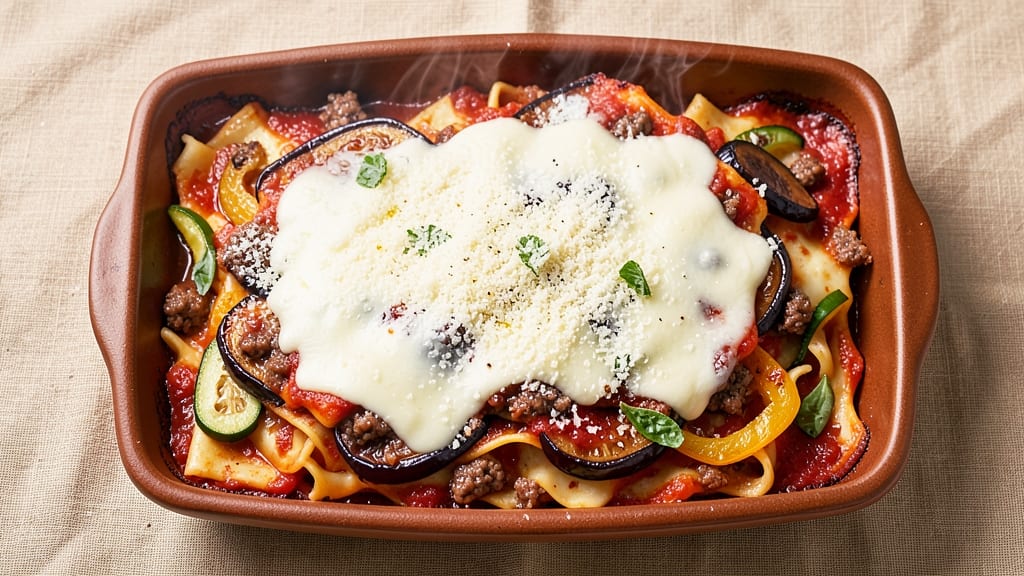
This beef and veg lasagna recipe delivers restaurant-quality layers with a crispy golden edge that no store-bought version can match. The secret lies in browning the beef properly and building rich, flavorful layers that bake into perfect harmony—tender vegetables, savory meat, and melted cheese all working together.
I've perfected this technique over years of testing, ensuring every bite delivers that satisfying mix of textures and flavors.
The foundation starts with perfectly cooked ground beef and sautéed vegetables that develop deep, caramelized flavors. A homemade tomato sauce (or quality store-bought) forms the rich base, while no-boil lasagna noodles cut prep time without sacrificing texture.
The key to that crispy top edge? A final sprinkle of mozzarella and parmesan that browns beautifully in the oven while keeping the interior gooey and inviting.
What you'll end up with is a lasagna that's as impressive to slice as it is to eat—layers of tender beef, vibrant vegetables, and melted cheese that practically ooze with every forkful.
The crust stays crispy at the edges while remaining tender underneath, and the flavors meld together during baking for that restaurant-quality depth. This is comfort food at its finest, built to impress even the most discerning guests.
Ready in about 45 minutes (including prep), this lasagna is perfect for Sunday dinners, potlucks, or when you want to feed a crowd without spending all day in the kitchen.
The beauty of this recipe is its flexibility—swap in your favorite vegetables, add a white wine reduction to the sauce, or keep it classic. Let's build this layered masterpiece step by step.
Ingredients for beef and veg lasagna
Pantry staples plus a few fresh veggies—this lasagna builds layers of flavor that taste like a restaurant.
| Ingredient | Amount | Notes |
|---|---|---|
| Ground Beef 🥩 | 1 ½ lb | 80% lean for best flavor |
| Lasagna Noodles 🍝 | 12 pieces | No-boil variety preferred |
| Ricotta Cheese 🧀 | 1 ½ cups | Part-skim for creaminess |
| Mozzarella Cheese 🧀 | 3 cups | Shredded, low-moisture |
| Parmesan Cheese 🧀 | 1 cup | Freshly grated from block |
| Tomato Sauce 🍅 | 2 ½ cups | Homemade or quality jarred |
| Onion 🧅 | 1 whole | Yellow or white, diced |
| Garlic Cloves 🧄 | 4 cloves | Minced for sauce |
| Carrots 🥕 | 1 ½ cups | Diced, medium-sized |
| Zucchini 🍆 | 1 ½ cups | Diced, medium-sized |
| Olive Oil 🫒 | ½ cup | Extra-virgin for richness |
| Dried Oregano 🌿 | 1 tbsp | Or 2 tbsp fresh chopped |
| Ground Black Pepper 🌶️ | ½ tsp | Freshly ground preferred |
| Salt 🧂 | 1 ½ tsp | Kosher or sea salt |
| Eggs 🥚 | 2 whole | For ricotta mixture |
The beef is where the magic starts. Ground chuck (80% lean) gives that rich, meaty flavor without too much fat—Costco or Kroger usually have it pre-packaged in 1.5 lb bags, which is perfect here. For the veggies, fresh carrots and zucchini add that sweet crunch, but frozen works in a pinch if you're short on time. The ricotta? Part-skim is ideal—it's creamy but not too heavy. I grab mine from the deli section, but store-bought tubs are fine too. The no-boil noodles are a game-changer—they cut prep time by half, and Barilla makes the best ones.
No ricotta? Cottage cheese blended with a splash of milk gets you close. Skip the mozzarella? Provolone or fontina melts beautifully too. The tomato sauce can be homemade (simmer crushed tomatoes, garlic, olive oil, and oregano for 20 minutes) or store-bought—Rao's or Muir Glen are solid choices. For extra depth, deglaze the pan with a splash of red wine after browning the beef. The carrots and zucchini can be swapped for bell peppers or spinach—whatever you've got on hand. Just make sure to sauté them until tender but still vibrant.
This lasagna tastes even better the next day—3-4 days in the fridge, no problem. For leftovers, cover tightly with foil and reheat at 350°F for 20 minutes. Freezes beautifully too—3 months is the max, but honestly it's still delicious after 6. I always make a double batch because it disappears fast. Store the sauce separately if you're prepping ahead, and assemble right before baking to keep the noodles from getting soggy.
Why You'll Love This Recipe
- No-Stress Assembly: I swear by this recipe because it’s the kind of dish where you can layer while watching a movie. The no-boil noodles save me from the sink full of pasta water, and the ricotta spreads like butter—no fancy folding required.
- Cheese Pull Factor: Between us, that blend of ricotta, mozzarella, and parmesan is dangerously good. The ricotta stays creamy, the mozzarella gets that perfect golden crust, and the parmesan? It melts into a salty, umami blanket that makes every bite worth it.
- Leftovers for Days: This lasagna actually improves the next day—yes, really. I make a big pan on Sunday, and by Wednesday, the flavors have melded into something even richer. Plus, it reheats like a dream, no soggy spots in sight.
- Budget-Friendly Feast: Ground beef and store-brand cheese still deliver serious comfort without breaking the bank. I stretch a pound of beef with veggies (spinach, mushrooms, whatever’s on sale) and end up with enough servings to feed my family for three nights. Smart, simple, satisfying.
Step-by-step instructions for beef and vegetable lasagna
Here's how to build layers of flavor with that perfect crispy top edge everyone craves.
Brown the Ground Beef and Sauté the Vegetables
Heat 0.5 cup olive oil in a large skillet over medium-high heat. Add the 1.5 lb ground beef and cook, breaking it apart with a wooden spoon, until it's no longer pink and has browned evenly. This should take about 5-7 minutes—don't rush it, or the beef will stay tough.
Once the beef is browned, add the 1 whole diced onion, 1.5 cups diced carrots, and 1.5 cups diced zucchini. Cook for another 5 minutes until the vegetables begin to soften but still retain their shape. Stir in the 4 minced garlic cloves and cook for 30 seconds until fragrant. Season with 1.5 tsp salt, 0.5 tsp ground black pepper, and 1 tbsp dried oregano, then remove from heat.
Prepare the Ricotta Cheese Mixture
In a medium bowl, combine the 1.5 cups ricotta cheese, 2 whole eggs, and 1 cup freshly grated parmesan cheese. Mix gently with a fork until just combined—overmixing will make the filling too dense. Season lightly with 0.25 tsp salt and 0.25 tsp black pepper (you'll add more salt in the sauce layer). This mixture should be smooth but still slightly lumpy.
Set the ricotta mixture aside while you prepare the sauce layer. If you're using no-boil lasagna noodles, you can skip pre-cooking them. If using regular lasagna noodles, boil them according to package instructions until al dente, then drain and set aside in a single layer on a baking sheet to prevent sticking.
Assemble the Lasagna Layers
Preheat your oven to 375°F. Spread 1 cup tomato sauce on the bottom of a 9x13-inch baking dish to prevent sticking. This is your first layer—it'll help create that crispy top edge later.
Add a layer of 4 lasagna noodles, slightly overlapping them if needed to cover the bottom completely. Spread half of the beef-vegetable mixture evenly over the noodles, then spread half of the ricotta mixture on top. Sprinkle with 1 cup mozzarella cheese. Repeat with another layer of noodles, remaining beef mixture, ricotta mixture, and another 1 cup mozzarella cheese. Finish with a final layer of noodles, the remaining 1 cup tomato sauce, and the last 1 cup mozzarella cheese.
Bake Until Bubbly and Golden
Cover the lasagna tightly with aluminum foil and bake for 30 minutes. Remove the foil and bake for another 10 minutes until the top is bubbly and the edges are deep golden brown. This uncovered baking time is crucial for that crispy top edge—don't skip it!
Let the lasagna rest for 10-15 minutes before slicing. This resting time allows the layers to set and makes it easier to cut clean slices. Serve with a side salad or garlic bread for the ultimate comfort meal experience.
Pro Tips For Making Beef And Veg Lasagna
- Pre-Cook Noodles Halfway: Boil lasagna noodles for 2 minutes less than package instructions, then drain and toss them with olive oil. They’ll finish cooking in the oven while layers bake, staying perfectly al dente instead of turning to mush—no one likes a gummy lasagna.
- Drain Ricotta Properly: Spread ricotta in a colander lined with paper towels and let it sit for 10 minutes before using. This removes excess moisture so your layers don’t get soggy, and the cheese stays creamy instead of watery—trust me, it makes a difference.
- Layer Cheese Evenly: Skip the thick globs of mozzarella on top—sprinkle shredded cheese between every layer instead. This ensures every bite has that gooey, melty texture, not just the top slice. (Yes, it takes 30 seconds extra, but it’s worth it.)
- Brown the Beef: Don’t just cook the ground beef—break it into small pieces and sear them in a hot pan until they’re deeply browned. That extra step adds flavor that raw beef just can’t match, and it keeps the filling from tasting bland under all that cheese.
Regional styles of beef and veg lasagna
Classic Italian Style
The traditional Italian approach focuses on simplicity and letting the flavors meld naturally. In regions like Emilia-Romagna, you'll find lasagna made with fresh egg pasta (not dried noodles) and a ragù sauce that simmers for hours with slow-cooked meats.
For a true Italian twist, replace the ricotta layer with béchamel sauce (butter, flour, and milk) and use Parmigiano-Reggiano for that authentic umami depth. 🧀
Skip the zucchini and carrots in this version, opting instead for sautéed mushrooms and spinach—common in Northern Italian lasagnas. The key is to brown the meat thoroughly and let it cook low and slow.
Many Italian families also add a sprinkle of nutmeg to the béchamel for warmth. This style is all about rustic, hearty comfort.
American Comfort Twist
This is the version most Americans know and love, with no-boil noodles and a tomato-based sauce layered with ricotta and melted mozzarella.
The American approach often includes ground beef (sometimes mixed with pork or Italian sausage) and a generous helping of sharp cheddar mixed into the mozzarella for extra tang. 🥩
For a true American diner vibe, add a layer of marinara sauce between the noodles and cheese, and finish with a sprinkle of Italian seasoning before baking. Many home cooks also include frozen mixed vegetables (like peas and corn) for convenience.
This style is all about big, bold flavors and that perfect crispy top edge.
Mediterranean Fusion
For a brighter, herb-forward take, infuse the tomato sauce with sun-dried tomatoes, fresh basil, and a splash of white wine. Swap the ricotta for feta cheese and add layers of roasted eggplant and cherry tomatoes for a Greek-inspired twist.
Finish with a drizzle of olive oil and crumbled feta on top before serving. 🍅
In Mediterranean versions, you might also see lamb or chicken replacing the beef, along with spinach and artichoke hearts mixed into the ricotta layer. The flavors here are fresher and more vibrant, with herbs like oregano, thyme, and rosemary playing starring roles.
This style is perfect for those who love bold, herby flavors with a touch of tang.
Vegetarian Adaptation
For a plant-based version, replace the ground beef with lentils or mushrooms sautéed with onions, garlic, and smoked paprika for depth. Use nutritional yeast to add a cheesy flavor to the ricotta substitute (made from cashew cream or tofu ricotta).
Keep the tomato sauce but boost it with roasted red peppers and tomato paste for richness. 🌱
Layer in roasted zucchini, bell peppers, and spinach for texture, and finish with a sprinkle of vegan mozzarella (like Miyoko’s) and grated vegan parmesan.
This version still delivers that satisfying layered texture and hearty flavor—just without the meat. It’s a great option for meat-free Sundays or when feeding vegetarian guests.
Nutrition facts
Frequently asked questions
Can I use regular lasagna noodles instead of no-boil?
Yes, but you'll need to cook them al dente first and drain them well. Spread them on a baking sheet to cool and prevent sticking. The no-boil noodles save time and help maintain crispness, but regular noodles work if that's all you have. Just be careful not to overcook them.
How do I make the ricotta mixture lighter?
Add 2 tablespoons of milk or heavy cream to the ricotta mixture to make it smoother and less dense. You can also whisk in 1 tablespoon of cornstarch for extra lightness. Mix gently to avoid overworking the eggs, which can make it rubbery.
Why is my lasagna soggy in the middle? Sogginess usually happens from too much moisture or underbaking.
Can I prep this lasagna ahead of time?
Assemble the lasagna up to 24 hours ahead, cover tightly with foil, and refrigerate. Bake directly from the fridge, adding 10-15 minutes to the baking time. For freezing, assemble without the final cheese layer, wrap tightly in foil, and freeze for up to 3 months. Thaw overnight before baking.
What's the best way to reheat leftovers?
Cover with foil and reheat at 350°F for 20-25 minutes. For a crispy top, uncover for the last 5 minutes. Microwaving works too—cover with a damp paper towel and heat in 1-minute intervals*, stirring between each, until warmed through.