
Main Courses
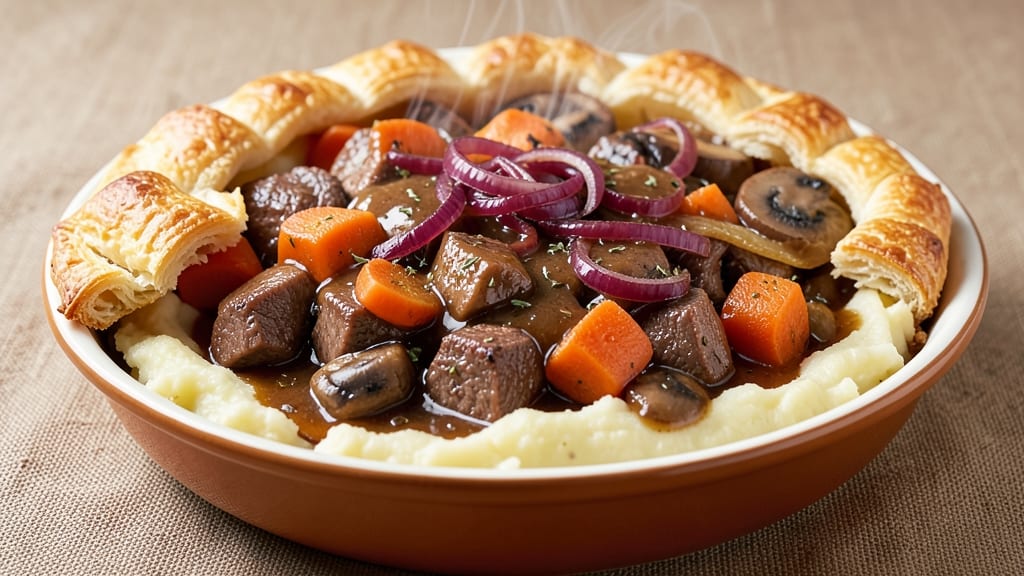
This beef and veg pie recipe delivers the ultimate comfort food experience with flaky pastry that encases tender beef and hearty vegetables in a rich, savory filling.
The secret to success lies in layering flavors through slow-cooked beef and caramelized vegetables, all nestled under a golden, crisp crust that's impossible to resist. I've perfected this recipe over years of testing, ensuring every bite delivers that perfect balance of tender meat, vibrant veggies, and buttery pastry.
The filling begins with searing beef in a Dutch oven to develop deep, meaty flavors before simmering with aromatic vegetables until everything is perfectly tender. A simple roux thickens the sauce, creating a velvety gravy that coats every ingredient.
Meanwhile, the pastry gets its signature flakiness through proper handling and a cold butter technique that creates those delicate layers we all love. This isn't just any pie—it's a restaurant-quality centerpiece that transforms ordinary weeknights into special occasions.
What makes this recipe truly special is how the flavors meld together during baking. The beef continues cooking gently in its juices while the vegetables soften just enough to become tender yet still retain their shape.
The pastry, meanwhile, achieves that perfect golden-brown finish with a crisp edge and tender interior. The result is a pie that's hearty enough to satisfy a hungry family but elegant enough for dinner guests. Each slice reveals layers of flavor that make it worth every minute of preparation.
Perfect for Sunday suppers or holiday gatherings, this beef and veg pie serves 6-8 and comes together in about 2 hours of active time (plus 1 hour baking). The recipe includes tips for making ahead and storing leftovers, so you can enjoy this comforting dish without stress.
Let's get started on creating your own showstopping centerpiece that'll have everyone asking for seconds.
Ingredients for beef and veg pie
Flaky pastry, tender beef, and vibrant veggies—here's what makes this pie unforgettable.
| Ingredient | Amount | Notes |
|---|---|---|
| Beef Chuck Roast 🥩 | 2 lb | Cut into 1-inch cubes |
| All-Purpose Flour 🌾 | 2 cups | For pastry and roux |
| Cold Unsalted Butter 🧈 | 1 cup | Cut into cubes (2 tbsp per tbsp flour) |
| Ice Water 💧 | ½ cup | For pastry dough |
| Carrots 🥕 | 2 whole | Peeled, sliced into rounds |
| Onions 🧅 | 1 whole | Yellow, sliced into wedges |
| Garlic Cloves 🧄 | 4 cloves | Minced for depth |
| Beef Stock 💧 | 1 ½ cups | Homemade or high-quality |
| Tomato Paste 🍅 | 2 tbsp | For rich depth |
| All-Purpose Flour 🌾 | ¼ cup | For roux thickening |
| Dried Thyme 🌿 | 1 tbsp | Or 1 tbsp fresh |
| Ground Black Pepper 🌶️ | 1 tsp | Freshly cracked |
| Salt 🧂 | 1 ½ tsp | Kosher or sea salt |
| Egg 🥚 | 1 whole | For egg wash |
| Milk 🥛 | 1 tbsp | For egg wash |
The beef is everything. Chuck roast gives you that melt-in-your-mouth texture, but don't skimp on the cut—sirloin stays tough. I grab mine from Costco when possible, but any butcher with a good reputation works. For the pastry, King Arthur flour is my go-to—it handles cold butter like a dream. The secret? Keep everything cold until you're ready to roll. And trust me on the ice water—it's what makes the dough tender and flaky. If you're nervous about handling cold butter, microwave it 40 seconds to soften before cutting into cubes.
No beef stock? Chicken stock with a splash of soy sauce works in a pinch, but you'll lose some depth. Fresh thyme is ideal, but dried at one-third the amount gets you close. The tomato paste can be swapped for crushed tomatoes if you're in a hurry, but the paste gives that concentrated richness. For the roux, don't rush—cook it until it's a deep golden brown for that nutty flavor. And if you're making this ahead, pre-roll the pastry and freeze it between parchment paper. Thaw it in the fridge overnight, and it'll be ready to bake when you are.
This pie reheats like a dream—just cover with foil and bake at 375°F for 20 minutes. The filling tastes even better the next day as all those flavors meld together. Store leftovers in the fridge for 4-5 days, or freeze individual portions for up to 3 months. I always make a double batch because it disappears faster than you can say 'second slice.' The pastry stays crisp for about 2 days if you keep it wrapped in a clean kitchen towel to lock in the moisture. And if anyone asks for leftovers? Just tell them you're saving it for tomorrow—trust me, they'll believe you.
Why You'll Love This Recipe
- No Fuss Filling: I swear by that slow-cooked beef—just chuck roast, carrots, and a splash of stock until it’s fall-apart tender. The prep is basically chopping veggies and dumping them in one pot while you mix up the crust. That’s it. No fancy techniques, just hands-off magic.
- Crust That Cracks: Between us, the flaky butter crust is what makes this pie. Cold butter cut into flour with ice water? That’s the secret—it’s not the prettiest dough, but the first bite of that crispy edge with the creamy center? Chef’s kiss. (And yes, I’ve tried store-bought crust. Never again.)
- Weeknight to Weekend: This pie works for everything. Throw it together on a Tuesday for leftovers that reheat like a dream, or double the batch for a Sunday supper where everyone clears their plates. Honestly, I’ve served it at potlucks, brought it to book club, and even packed it for a picnic—it’s that reliable.
- Budget Stretch: A chuck roast is cheap, carrots are cheap, and flour and butter? You already have them. This feeds six for under $15, and the leftovers? Even better the next day. I’ll be real: my college budget still thanks me for teaching me how to make this. It’s my secret weapon for stretching meals without sacrificing flavor.
Step-by-step instructions for beef and vegetable pie
This method delivers melt-in-your-mouth beef and tender vegetables wrapped in golden, flaky pastry every time.
Prepare the Beef Filling
Cut the 2 lb Beef Chuck Roast into 1-inch cubes using a sharp knife. This size ensures even cooking and maximum tenderness. In a large skillet over medium-high heat, add the beef in batches and sear until deep brown on all sides—about 3-4 minutes per batch. Don't overcrowd the pan or the beef will steam instead of sear.
Once browned, transfer the beef to a bowl and set aside. In the same skillet, add the 2 whole Carrots (sliced into rounds) and 1 whole Onions (sliced into wedges). Cook for 5-6 minutes until the vegetables begin to soften. Add the 4 cloves Garlic Cloves (minced) and cook for another 30 seconds until fragrant. This step builds the foundation of flavor for your filling.
Make the Roux and Season
To the skillet with the cooked vegetables, add the 2 tbsp Tomato Paste and stir to combine. Cook for 1 minute to deepen the flavor. Sprinkle in the 0.25 cup All-Purpose Flour for the roux and stir vigorously to remove any lumps. Cook for 2-3 minutes until the mixture turns a rich, golden brown color—this is your flavor base.
Gradually pour in the 1.5 cups Beef Stock while stirring constantly to prevent clumping. Add the 1 tbsp Dried Thyme, 1.5 tsp Salt, and 1 tsp Ground Black Pepper. Bring the mixture to a gentle simmer and let it cook for 5 minutes until it thickens slightly. Return the browned beef to the skillet and stir to coat everything in the rich sauce. The filling should be moist but not soupy—this ensures a perfect texture when baked.
Prepare the Pastry Dough
In a large bowl, combine the 2 cups All-Purpose Flour and 1 cup Cold Unsalted Butter (cut into cubes). Use a pastry cutter or your fingers to work the butter into the flour until the mixture resembles coarse crumbs with pea-sized butter pieces. This texture is crucial for flaky layers. Add the 0.5 cup Ice Water gradually, mixing just until the dough comes together.
Turn the dough onto a lightly floured surface and knead gently for 2-3 minutes until smooth. Divide the dough into two equal parts and roll each into a 12-inch circle. For extra flakiness, wrap each circle in plastic wrap and chill in the refrigerator for 30 minutes. This step ensures the pastry stays firm and easy to handle when you're ready to assemble the pie.
Assemble and Bake the Pie
Preheat your oven to 375°F. Place one of the rolled pastry circles in a 9-inch pie dish and press it gently to fit the bottom and sides. Pour the beef and vegetable filling into the pastry-lined dish, spreading it evenly. Brush the edges of the pastry with a mixture of the 1 whole Egg and 1 tbsp Milk to create a seal. Place the second pastry circle on top and crimp the edges together using a fork or your fingers.
Cut a few small slits in the top pastry to allow steam to escape. Brush the entire top with the remaining egg wash for a golden finish. Bake for 45-50 minutes until the pastry is deep golden brown and the filling is bubbling. The pie is done when the pastry is crisp and the filling reaches 165°F internally. Let it rest for 10 minutes before serving to allow the juices to set—this prevents a messy filling.
Pro Tips For Making Beef And Veg Pie
- SEAR THE CHUCK FIRST: I learned this the hard way—skipping the sear means flavorless beef. Pat the chuck dry, then hit it with a screaming-hot pan for 3-4 minutes per side until deep brown. That crust locks in juices and builds the pie’s depth. (Yes, even if you’re impatient like me.)
- CUT CARROTS SMALLER THAN YOU THINK: Big chunks turn to mush; tiny dice disappear. Aim for ¼-inch pieces—they’ll soften evenly and blend into the filling without making the pie soggy. My grandmother swore by this, and she was right: texture matters more than you’d guess.
- CHILL THE DOUGH LONGER THAN YOU WANT TO: After rolling out the butter-flour mix, wrap it tight and refrigerate for at least 30 minutes. I know, I know—you’re eager to bake. But rushing this step means a flaky crust turns greasy. Trust the process; your future self will thank you.
- USE ICE WATER LIKE A CHEAT CODE: Mixing cold butter with ice water for the crust sounds weird, but it works: the ice keeps the butter solid longer, so the dough stays crisp instead of flaky. I was skeptical until I tried it—now I never skip it. (Pro move: use a fine-mist spray bottle to keep the mix cold.)
Troubleshooting perfect results
Soggy Bottom Fix
If your pie crust turns soggy, it’s usually from steam or insufficient egg wash. First,
Filling Too Watery
A watery filling often means the roux didn’t thicken enough. If this happens, remove the pie from the oven, let it cool slightly, then transfer the filling to a saucepan. Simmer over medium-low heat for 5-10 minutes until it thickens. Alternatively, stir in 1 tbsp cornstarch mixed with 1 tbsp cold water to bind the liquid. Always taste-test—seasoning may need adjustment after thickening.
Pastry Not Golden
For a perfect golden crust, egg wash is key. Whisk 1 egg + 1 tbsp milk until frothy, then brush it generously over the top crust. Bake on the middle rack of your oven (not the bottom) to ensure even heat.
If the crust browns too quickly, tent it loosely with aluminum foil after 20 minutes and return it to the oven. A toothpick test works too—insert it near the edge; if it comes out clean, it’s done.
Beef Overcooked
If your beef turns out tough, it likely cooked too long. For future pies, remove the filling from the oven when it reaches 160°F (about 40 minutes for this recipe). Let it rest 10 minutes before serving—this allows residual heat to finish cooking the beef without drying it out.
If the filling is still undercooked, tent it with foil and return to the oven for 5-10 minutes to warm through.
Filling Leaks
Leaky filling usually means the crust edges weren’t sealed properly. Before baking, crimp the edges tightly with a fork or your fingers, then reinforce with a second egg wash on the seams.
For extra security, chill the assembled pie in the fridge for 15 minutes before baking—this helps the pastry firm up. If leaks happen during baking, cover the pie with foil and bake until the crust is set, then uncover to finish browning.
Pastry Too Tough
Tough pastry often means overworking the dough or using warm butter. Keep everything cold—work the dough on a chilled surface, and avoid handling it more than necessary. For extra flakiness, cut the cold butter into the flour until it resembles coarse crumbs, then add ice water gradually.
If the dough feels too dry, add 1 tsp ice water at a time until it just holds together. Never over-knead! 💡
Nutrition facts
Frequently asked questions
Can I use frozen beef instead of fresh?
Yes, but thaw it completely first in the refrigerator for 24 hours. Never use cold water or the microwave—this creates uneven cooking. Pat the beef dry thoroughly before browning to ensure a good sear. The texture will be just as tender as fresh beef when cooked properly.
What vegetables can I substitute?
Swap carrots and onions for peas, mushrooms, or green beans—all work beautifully. For a classic twist, try potatoes (sliced thin and parboiled first) or leeks for a milder onion flavor. Just adjust cooking times if using denser vegetables like potatoes.
How do I make this gluten-free?
Replace the all-purpose flour with a 1:1 gluten-free flour blend for the pastry, and use cornstarch or arrowroot powder instead of flour for the roux. For the filling, ensure your beef stock is gluten-free. The texture will be slightly different but still delicious. Always check labels on dried herbs and spices too.
Can I prepare this pie ahead of time?
Assemble the pie up to 24 hours ahead and refrigerate uncovered. When ready to bake, remove from the fridge 30 minutes before baking. For make-ahead convenience, you can also pre-bake the pastry shells and freeze them—just thaw overnight before adding the filling. The flavors actually improve after resting!
Why does my pastry get puffy in the oven?
This happens when steam gets trapped inside. Always cut small slits in the top crust before baking to release steam. For extra insurance, chill the assembled pie for 15 minutes before baking. If it puffs too much, reduce the oven temperature to 350°F for the first 20 minutes to control expansion.