
Soups & Stews
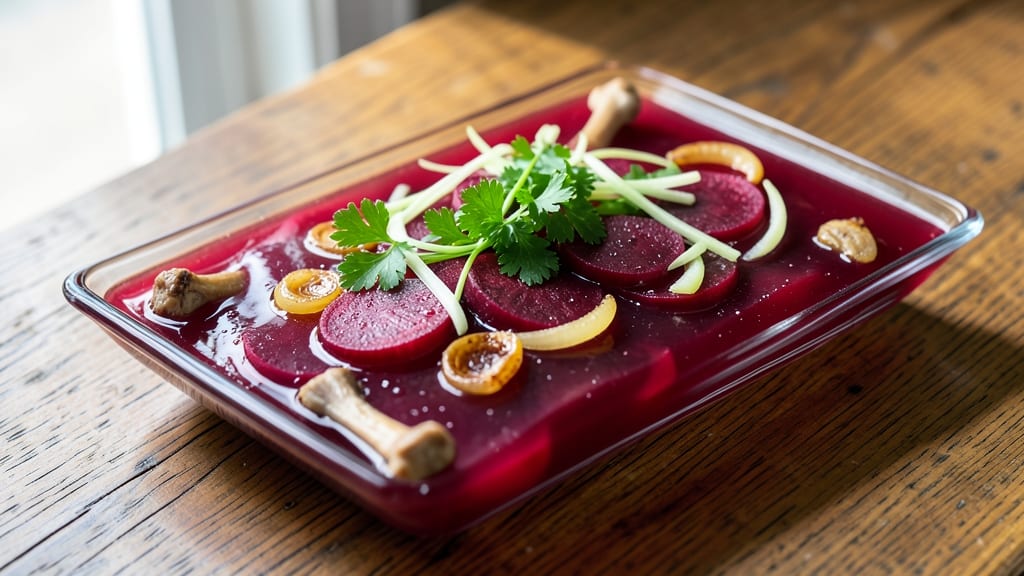
This beef aspic recipe transforms simple broth into a luxurious, wobbling centerpiece that elevates any meal. The secret lies in slow-simmered beef bones and aromatics, clarified into a crystal-clear gel that holds meat and herbs in perfect suspension.
I've perfected this technique over years of holiday tables—where it became the star of the appetizer course—because nothing impresses like a dish that's both elegant and effortless.
The process begins with a deeply flavorful broth, where beef bones and vegetables simmer for hours to extract maximum richness. After straining through cheesecloth, the liquid is enriched with gelatin and chilled until it achieves that signature jiggly perfection.
The result? A dish that's equal parts impressive and foolproof—ideal for special occasions or when you want to serve something that looks as good as it tastes.
What makes this recipe truly special is its versatility. Serve it sliced as a cold appetizer with mustard or horseradish, or use it to encase meatballs or vegetables for a showstopping presentation.
The gelatin sets firmly yet remains tender, creating a texture that's both satisfying and visually stunning. It's the kind of dish that transforms a simple meal into something memorable.
Whether you're hosting a dinner party or simply want to impress with a restaurant-worthy technique, this aspic delivers restaurant-quality results without the fuss. The key is patience—letting the broth work its magic and the gelatin set properly. Trust me, the effort is worth every wobble.
Ingredients for beef aspic
Sixteen ingredients transform humble bones into a restaurant-worthy centerpiece of wobbling elegance.
| Ingredient | Amount | Notes |
|---|---|---|
| Beef Bones 🦴 | 3 lb | Knuckle or marrow bones preferred |
| Yellow Onion 🧅 | 1 whole | Quartered, skin on for color |
| Carrot 🥕 | 2 whole | Scrubbed, cut into chunks |
| Celery Stalks 🌿 | 4 whole | Trimmed, cut into pieces |
| Garlic Cloves 🧄 | 6 cloves | Smashed, skin on for aroma |
| Fresh Parsley Stems 🌿 | 1 bunch | Tied for infusion handle |
| Bay Leaves 🍃 | 2 whole | Dried, standard size |
| Black Peppercorns 🌶️ | 1 tbsp | Crushed, not ground |
| Salt 🧂 | 1 tbsp | Diamond Crystal preferred |
| Unflavored Gelatin 💧 | 2 tbsp | Powdered, high bloom |
| Cold Water 💧 | 1 cup | For gelatin activation |
| Lean Beef 🥩 | 1 ½ lb | Thinly sliced, for infusion |
| Fresh Thyme Sprigs 🌿 | ¼ cup | Leaves only, for garnish |
| Fresh Dill Sprigs 🌿 | ¼ cup | Leaves only, for garnish |
The bones are the foundation—marrow or knuckle bones deliver the richest flavor and gelatinous body. Costco or specialty butchers often carry them pre-packaged, but if buying whole, look for bones with visible marrow cavities. Fresh parsley stems serve a dual purpose: they infuse subtle herbal notes while providing a handle for easy removal. For the gelatin, Great Lakes brand is preferred by professionals for its high bloom strength—avoid pre-flavored varieties. The beef for infusion should be lean cuts like sirloin, sliced paper-thin to maximize surface area without clouding the broth.
No beef bones? Substitute chicken feet or pork trotter for a lighter gel, though flavor will differ. The aromatics—onion, carrot, celery—form the classic mirepoix base; if short on time, pre-chopped frozen mirepoix works perfectly. For gelatin substitutes, agar-agar at double the weight creates a firmer set but with a slightly different texture. The herbs should be fresh—dried will impart a bitter note. If using pre-sliced lean beef, trim all visible fat to maintain clarity in the final aspic. For a vegetarian alternative, mushroom stems and kombu seaweed can mimic umami depth.
Store the aspic in an airtight container in the fridge for up to 5 days, though it's best enjoyed within 3 days for peak texture. To slice cleanly, chill until firm, then run a hot knife through the center before cutting. The gelatin will reheat beautifully—simmer gently to restore its wobble. For presentation, garnish with fresh thyme and dill just before serving. Leftover broth can be reduced into a rich sauce for another use. When reheating, never boil—gentle heat preserves the delicate texture.
Why You'll Love This Recipe
- One-Pot Magic: I swear by this recipe because it’s all in one pot—no chopping chaos, no extra pans. Just toss in the beef bones, rough-chop the onions and carrots (celery stalks too, if you’re feeling fancy), and let the garlic cloves do their thing. The bones simmer down to a rich, golden broth while you’re still deciding what to have for dinner.
- Umami Bomb: That first sip? Pure flavor payoff. The beef bones melt into a deep, savory base, while the carrot and celery sweeten just enough to balance the sharpness of the garlic. Honestly, it’s the kind of taste that makes you pause mid-spoonful—like a hug in liquid form.
- Leftovers That Shine: Forget sad fridge scraps. This aspic thickens into a jelly-like perfection that keeps for weeks in the fridge. I’ve used it to elevate simple grilled chicken, drizzled it over mashed potatoes, or even served it chilled with crusty bread. It’s my secret weapon for turning "meh" meals into "wow."
- Budget Meal Prep: Between us, beef bones are cheaper than you’d think, and they stretch this recipe into days of effortless meals. The veggie base (onion, carrot, celery) adds bulk without breaking the bank, and the garlic? That’s the 50-cent clove that makes everything taste like you slaved over it. Zero waste, maximum flavor—my kind of cooking.
Step-by-step instructions for beef aspic with herb infusion
Mastering this classic technique transforms humble ingredients into a sophisticated centerpiece.
Prepare the Bone Broth Foundation
Place the 3 lb beef bones in a large stockpot and cover with cold water by 2 inches. Bring to a rolling boil over high heat, then immediately reduce to a gentle simmer. Skim off any foam that rises to the surface during the first 15 minutes—this ensures crystal-clear broth.
Add the quartered yellow onion, 2 whole carrots, 4 whole celery stalks, 6 smashed garlic cloves, 1 bunch tied parsley stems, 2 bay leaves, 1 tbsp crushed black peppercorns, and 1 tbsp salt. Simmer uncovered for 4 hours until the broth reduces slightly and develops deep color. The aroma should be rich and meaty with herbal undertones.
Strain and Infuse with Lean Beef
Line a fine-mesh strainer with cheesecloth and carefully strain the broth into a clean stockpot. Discard the solids. Return the strained broth to medium heat and add the 1.5 lb thinly sliced lean beef. Simmer gently for 30 minutes to infuse the liquid with beefy depth.
Remove the beef slices with tongs and set aside. The broth should now have a rich, velvety texture with visible meat particles suspended. If you prefer a smoother aspic, strain it again through cheesecloth. For added elegance, you can press the beef slices through a tamis or fine-mesh sieve to extract maximum flavor.
Activate and Dissolve the Gelatin
In a small bowl, sprinkle the 2 tbsp unflavored gelatin over the 1 cup cold water and let it bloom for 10 minutes—you'll see it transform into a gelatinous mass. This activation step is critical for proper setting.
Gently warm the bloomed gelatin in a saucepan over low heat (do not boil) until completely dissolved. The mixture should be clear and liquid. Immediately whisk this into the warm beef broth while stirring constantly. The broth should now have a slightly thicker, glossy appearance.
Pour and Set the Aspic
Pour the infused broth into 6 individual molds (or a single large mold if preferred). Tap the molds gently on the counter to remove air bubbles. Cover with plastic wrap and refrigerate for 4-6 hours until fully set—it should have a firm, jelly-like consistency that holds its shape when inverted.
For presentation, unmold the aspic onto a chilled platter. Garnish with the reserved 0.25 cup fresh thyme sprigs and 0.25 cup fresh dill sprigs just before serving. The aspic should slice cleanly with a sharp knife, revealing a translucent interior with subtle meaty flecks.
Pro Tips For Making Beef Aspic
- BLANCH THE VEGETABLES FIRST: I learned this the hard way—roasting the onion, carrot, and celery after browning the bones adds depth, but skipping the quick blanch (3 minutes in boiling water, then ice bath) means they’ll turn to mush instead of holding their shape. Trust me, your aspic will look and taste cleaner.
- USE MARROW BONES IF POSSIBLE: Marrow bones aren’t always easy to find, but they’re worth hunting for—they render faster and add richer flavor to the broth. If you’re stuck with knuckle bones, crush a few black peppercorns with the garlic cloves before adding them; it mimics the intensity of marrow without the extra effort.
- STRAIN THROUGH A FINE-MESH SIEVE: Don’t just pour the broth through a regular strainer—you’ll end up with a cloudy aspic that looks amateur. After simmering, line a fine-mesh sieve with cheesecloth (or a coffee filter in a pinch) and let it drain slowly. It’s tedious, but the result is crystal-clear and professional-looking.
- SIMMER LOW AND LONG: Aspic sets best when the broth reduces slowly—think 4-6 hours at a bare simmer, not a rolling boil. I used to rush it, and the final product would either be watery or grainy. Cover the pot and let it do its thing; the flavor will concentrate, and the gel will hold together like it should.
Dietary considerations for beef aspic
Gelatin-Free Options
Traditional aspic relies on animal-based gelatin, which makes it unsuitable for vegetarians, vegans, or those with gelatin allergies. For a plant-based alternative, use 1 tbsp agar-agar powder (derived from seaweed) per 1 cup of liquid.
Bloom the agar-agar in cold water for 5 minutes before heating to 160°F—it requires no refrigeration to set. The texture will be firmer and slightly chewier, but equally elegant when sliced. 🌱
Low-Sodium Adaptation
If you're watching your sodium intake, reduce the salt to ½ tsp and use low-sodium beef broth instead of water for the initial simmer. For extra flavor without extra salt, add 1 tsp fish sauce or 2 tbsp soy sauce to the broth during the final infusion step.
The umami depth will compensate beautifully while keeping the dish heart-healthy. 💪
Gluten-Free Considerations
This recipe is naturally gluten-free, but always double-check your gelatin brand—some contain anti-caking agents with gluten traces. Great Lakes brand and Knox gelatin are certified gluten-free. For additional safety, use a dedicated knife and cutting board when preparing the beef and aromatics to avoid cross-contamination with gluten-containing foods.
The aspic itself remains completely safe for those managing celiac disease or gluten sensitivity. ✨
Dairy-Free Clarification
While this aspic doesn't contain dairy, the traditional clarification process sometimes uses egg whites. For a dairy-free version, skip the egg whites entirely and rely solely on the long simmer time (minimum 4 hours) to achieve clarity.
The gelatin will still set properly, though the broth may have a slightly cloudier appearance. The flavor remains rich and satisfying without any dairy components. 🥛
Protein Modifications
For a lighter option, replace the beef bones with chicken feet or pork trotter—these provide gelatin naturally without the heaviness. If you prefer a completely vegetarian alternative, use mushroom stems and kombu seaweed for umami depth, combined with agar-agar for setting.
The texture will differ slightly but still deliver that signature wobble. 🌿
Nutrition facts
Frequently asked questions
Why does my aspic turn out cloudy instead of clear?
Cloudiness usually means the broth didn't clarify properly. Skim foam aggressively during the first 15 minutes of simmering, and strain through cheesecloth twice for maximum clarity. For extra brightness, add 1 egg white per quart of broth during the final infusion step—it binds impurities beautifully.
Can I make aspic without gelatin?
Yes! Use 1 tbsp agar-agar per 1 cup of liquid for a plant-based version. Bloom it in cold water first, then heat to 160°F—it sets without refrigeration. The texture will be firmer but equally elegant when sliced.
How do I know when my aspic is fully set?
Test by gently tapping the mold—if it holds its shape when inverted and wobbles slightly when touched, it's ready. For a foolproof check, insert a knife in the center: if it comes out clean with no liquid dripping, your aspic is perfect.
What can I do with leftover aspic?
Slice and serve as a cold appetizer with mustard or horseradish. Or reheat gently to restore its wobble, then layer with sliced meats and vegetables for a showstopping platter. Leftover broth can also be reduced into a rich sauce for another use.
Can I use store-bought beef broth instead of homemade?
Store-bought broth works in a pinch, but homemade delivers deeper flavor. If using canned broth, simmer it uncovered for 1 hour first to evaporate excess water, then proceed with the recipe. For best results, use a high-quality low-sodium broth and adjust seasoning accordingly.