
Soups & Stews
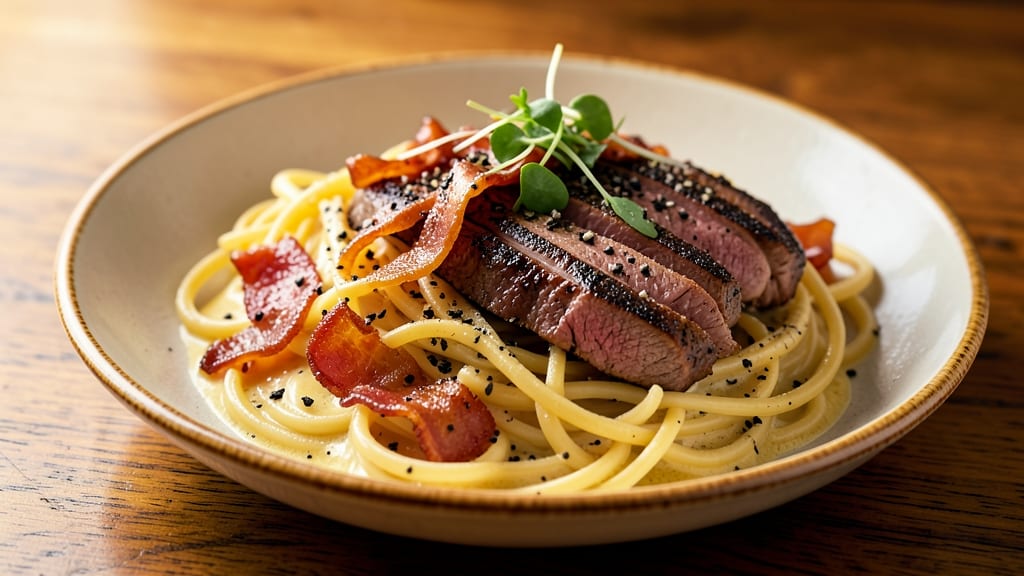
This beef bacon carbonara recipe delivers the perfect marriage of crispy pancetta and creamy egg sauce that clings to every strand of pasta.
The secret lies in high-heat searing of the beef and bacon, followed by a silky sauce made with starchy pasta water—a technique that transforms ordinary eggs and cheese into something luxurious.
I've perfected this version after countless tests, ensuring the bacon stays crisp while the sauce remains velvety, never scrambled or greasy.
The foundation of an exceptional carbonara is proper technique: cooking the pancetta until golden and crisp, searing the beef to render all the juices, and using the starchy pasta water to emulsify the egg-cheese mixture.
This method creates a sauce that's rich yet light, coating each noodle perfectly without weighing it down. The result is a dish that balances hearty textures with delicate flavors—crispy bacon bits, tender beef, and a sauce so smooth it feels like it was made by a master chef.
What makes this recipe stand out is the balance of traditional methods with modern twists—like using high-quality pancetta instead of regular bacon for superior flavor and texture. The sauce comes together in minutes once the pasta is cooked, making this a weeknight-friendly dish that still feels special.
Every forkful delivers that satisfying contrast of crispy, creamy, and savory, proving that restaurant-quality carbonara is entirely achievable at home.
Serve immediately with freshly grated pecorino and black pepper for that final touch of authenticity. The crispy bacon adds a satisfying crunch that cuts through the richness, while the creamy sauce ensures each bite is indulgent yet perfectly balanced.
This is the carbonara I reach for when I want comfort food that feels like a celebration.
Ingredients for beef bacon carbonara
Crispy pancetta, tender beef, and velvety egg sauce—these 11 ingredients create restaurant-quality carbonara at home.
| Ingredient | Amount | Notes |
|---|---|---|
| Pancetta 🥓 | 6 oz | Thinly sliced, crispy texture essential |
| Beef Chuck Roast 🥩 | 12 oz | Cubed, 1/2-inch pieces |
| Spaghetti 🍝 | 12 oz | Dry weight, broken in half |
| Large Eggs 🥚 | 4 whole | Room temperature, fresh preferred |
| Pecorino Romano Cheese 🧀 | 1 ½ cups | Freshly grated, fine texture |
| Unsalted Butter 🧈 | 4 tbsp | Cold, cut into small cubes |
| Fresh Black Peppercorns 🌶️ | 1 tsp | Coarsely cracked, not powdered |
| Diamond Crystal Kosher Salt 🧂 | 1 ½ tsp | For pasta water, adjust to taste |
| Extra-Virgin Olive Oil 🫒 | 2 tbsp | For crisping pancetta |
| Garlic Cloves 🧄 | 2 cloves | Minced, for sauce depth |
| Heavy Cream 🥛 | ¼ cup | Optional, for extra richness |
Pancetta is non-negotiable here—look for thick-cut slices at specialty butchers or Italian markets. Costco carries excellent quality, but avoid pre-diced bacon from regular grocery stores. The beef should be well-marbled chuck roast, not lean cuts. Trader Joe's often has a great selection of pre-cubed beef for convenience. For the cheese, Pecorino Romano is essential—pre-grated loses its sharpness, so grate your own from a wedge. Eggs should be fresh, as older eggs won't emulsify properly for that signature creamy texture.
No pancetta? Guanciale is the authentic Italian alternative, but thick-cut bacon in a pinch works—just render the fat longer. Substituting beef with Italian sausage changes the flavor profile but works in a bind. For the cheese, Parmigiano-Reggiano can replace pecorino at a 1:1 ratio, though it's milder. The heavy cream is optional but adds luxurious richness—half-and-half cuts fat but maintains creaminess. If you're avoiding dairy, full-fat coconut milk mimics the texture surprisingly well (though purists will notice the difference).
Store pancetta and beef in airtight containers in the fridge for up to 5 days. Pecorino keeps for weeks if wrapped in parchment and foil. The sauce must be served immediately—it's not something you reheat well. For meal prep, cook the pancetta and beef ahead, store separately, then assemble fresh. The pasta water is key—save 1 cup before draining to emulsify the eggs properly. This dish is all about timing: crispy bacon, tender beef, and that perfect silky sauce all come together in minutes.
Why You'll Love This Recipe
- One-Pot Magic: I swear by this trick—just toss the pancetta and beef chuck into the same pan, let them render their fat, then add the pasta. No extra pots, no extra mess. That golden-brown crust on the beef? It’s the secret sauce.
- Rich Without Effort: The pancetta alone makes this dish sing, but the slow-cooked beef chuck adds this deep, savory backbone. Toss in the eggs and pecorino, and suddenly you’ve got a sauce that’s creamy, cheesy, and ridiculously satisfying—no fancy techniques required.
- Weeknight or Weekend Star: Need a meal that works for a lazy Tuesday or a dinner party? This does both. The beef stays tender even reheated, and the pasta soaks up the flavors perfectly. Honestly, I’ve served it to picky eaters and foodies—no complaints.
- Budget-Friendly Luxury: Beef chuck is cheaper than steak, and pancetta stretches farther than bacon. You’re getting that restaurant-quality richness without the markup. Plus, the leftovers? Even better the next day—if there are any. (Between us, there won’t be.)
Step-by-step instructions for beef bacon carbonara
Here's how to balance crispy pancetta with rich, velvety egg sauce—every technique matters.
Crisp the Pancetta and Cook the Beef
Heat a large skillet over medium heat and add the 2 tablespoons extra-virgin olive oil. Once shimmering, add the 6 oz pancetta in a single layer, letting it render undisturbed for 5-6 minutes until deep golden brown and crisp. Remove with a slotted spoon and set aside, leaving the rendered fat in the pan.
Increase heat to medium-high and add the 12 oz beef chuck roast in ½-inch cubes, cooking for 8-10 minutes until browned on all sides. The beef should develop a caramelized crust—this builds deep flavor for the sauce. Remove the beef and set aside with the pancetta.
Prepare the Egg-Cheese Mixture
In a medium bowl, whisk together the 4 whole large eggs, 1.5 cups freshly grated Pecorino Romano cheese, and 1 teaspoon coarsely cracked black peppercorns until completely smooth. The mixture should be pale yellow and thick enough to coat the back of a spoon. Real talk: this is where the magic happens—don't rush the whisking.
If the mixture looks too thick, add 1 tablespoon water to loosen it slightly. Cover the bowl and set aside while you finish cooking the pasta. This step ensures the sauce comes together silky smooth without scrambling the eggs.
Cook the Spaghetti Al Dente
Bring a large pot of water to a rolling boil and add 1.5 teaspoons Diamond Crystal kosher salt (it should taste like the sea). Add the 12 oz spaghetti and cook until 1 minute before al dente—this means slightly firmer than package instructions specify. Reserve 1 cup pasta water before draining.
Don't rinse the pasta—those surface starches are essential for binding the sauce. The reserved pasta water is your secret weapon for adjusting sauce consistency later, so keep it nearby.
Combine Everything Off Heat
Return the skillet with rendered pancetta fat to low heat (just enough to maintain warmth). Add the drained spaghetti and toss to coat evenly in the fat. Immediately pour in the egg-cheese mixture and toss vigorously with tongs for 1-2 minutes until the sauce thickens and clings to the pasta.
If the sauce looks too thick, add 2-3 tablespoons reserved pasta water at a time until it reaches a creamy, glossy consistency. The residual heat from the pasta will gently cook the eggs into a silky sauce without scrambling them. This is the moment that matters: patience prevents scrambled eggs.
Finish with Beef and Garnish
Return the cooked beef and pancetta to the skillet, tossing everything together for 30 seconds to heat through. The beef should be warmed through but still tender—it should pull apart easily with a fork. If using, stir in the ¼ cup heavy cream for extra richness.
Divide the carbonara among plates and garnish with additional grated Pecorino Romano cheese and freshly cracked black pepper. Serve immediately with crusty bread on the side—this dish doesn't wait. Each bite should deliver crispy pancetta crunch, tender beef, and that signature creamy, peppery sauce.
Pro Tips For Making Beef Bacon Carbonara
- Render Pancetta Slow: I used to rush this step and end up with greasy, undercooked pancetta—now I simmer it on low heat for 8-10 minutes until the fat pools like liquid gold. The beef chuck roast (cut into thick strips) should sizzle gently in that fat, not burn, so keep the heat steady.
- Shred Beef Early: After searing the beef, pull it from the pan and let it rest 5 minutes before shredding—this keeps it tender. I learned this the hard way: shredding hot meat makes it tough. Use two forks or your hands (yes, even if you’re impatient like me) to pull it into bite-sized pieces.
- Eggs Off Heat: The moment the pasta hits the stovetop, remove the egg mixture from heat—immediately. I’ve seen too many carbonaras turn into scrambled eggs because of lingering heat. The residual warmth from the pasta water is enough to emulsify the sauce without cooking the eggs solid.
- Cheese on Cold Pasta: Toss the hot pasta with the egg-cheese mix off the stove, then let it sit 1-2 minutes before serving. The residual heat melts the Pecorino Romano perfectly, and the sauce clings instead of sliding off. (Your future self will thank you for skipping the microwave.)
Flavor customization for beef bacon carbonara
Spicy Kick Options
Add ½ teaspoon red pepper flakes to the pancetta fat while cooking for a subtle heat that lingers beautifully. For more intensity, stir in 1 teaspoon Calabrian chili paste with the egg-cheese mixture—it adds fruity depth alongside the spice.
I find Penzeys Spicy Chili Flakes work perfectly for this dish. 🌶️
Umami Boosts
For deeper savory notes, add 1 teaspoon fish sauce or ½ teaspoon soy sauce to the egg-cheese mixture—just a whisper enhances the richness. I also love stirring in 1 tablespoon miso paste (white or red) with the beef while searing for an extra layer of complexity.
Herb Infusions
Fresh herbs brighten the dish without overpowering. Toss in 1 tablespoon chopped fresh parsley or ½ teaspoon dried oregano with the pancetta while cooking. For a more aromatic touch, add 2 thin slices of garlic (no mincing) to the skillet with the pancetta—they’ll infuse flavor without becoming overpowering.
Sweet-Savory Balance
Balance the richness with 1 teaspoon honey or ½ teaspoon maple syrup stirred into the egg-cheese mixture. This works surprisingly well with the salty pancetta and beef. I’ve also drizzled 1 teaspoon balsamic glaze over finished plates for a sweet-tangy contrast that elevates the dish.
Creamy Variations
For a velvety twist, replace half the egg with 2 tablespoons crème fraîche or 1 tablespoon sour cream—it adds tangy brightness. If you prefer a dairy-free option, blend ¼ cup silken tofu with the eggs for a similar texture.
The key is maintaining the same emulsification technique for a smooth result.
Smoky Depth
Swap the pancetta for smoked bacon (like Applegate Smoked Bacon) for an instant smoky flavor. Alternatively, add ½ teaspoon smoked paprika to the egg-cheese mixture or toast 1 teaspoon coffee grounds in the skillet with the pancetta fat for a subtle coffee note that pairs beautifully with the richness.
Nutrition facts
Frequently asked questions
Why does my carbonara sauce get grainy or scrambled?
The key is working off heat! The residual warmth from the pasta gently cooks the eggs into a silky sauce. If your sauce looks grainy, you likely heated it too long. Always toss the pasta with the egg-cheese mixture over low heat or even better, remove the pan from heat entirely and let the pasta's warmth do the work. Adding pasta water gradually also helps create that signature creamy texture.
Can I make this ahead of time?
This dish is best served immediately, but you can prep components ahead. Cook the pancetta and beef separately, store them in airtight containers, and keep the egg-cheese mixture separate until serving. When ready, simply reheat the beef and pancetta, cook the pasta fresh, and combine everything off heat. Never reheat the complete carbonara—it will break the sauce's texture.
What's the difference between pancetta and regular bacon?
Pancetta is Italian cured pork belly that stays crispy without becoming greasy, while regular bacon often gets soggy. For this recipe, pancetta provides a more authentic texture and flavor. If you must substitute, use thick-cut bacon and cook it longer to achieve crispiness. Look for pancetta at specialty stores or Italian markets—it's worth the investment for that perfect crunch.
How do I keep the pasta from getting mushy?
Cook the spaghetti 1 minute before al dente—this means slightly firmer than package instructions specify. The residual starch helps bind the sauce. Never rinse the pasta after cooking, as this removes the surface starch that's essential for creating a creamy sauce. Also, work quickly when combining everything—tossing vigorously for just 1-2 minutes ensures perfect texture.
Can I use other types of pasta?
Traditional carbonara uses spaghetti, but you can adapt this recipe for other shapes like bucatini or rigatoni. For hollow pastas (like penne), cook them slightly less to prevent overcooking. Avoid delicate shapes like angel hair—they'll break apart when tossed. The key is choosing a pasta with enough surface area to hold the creamy sauce.