
Soups & Stews
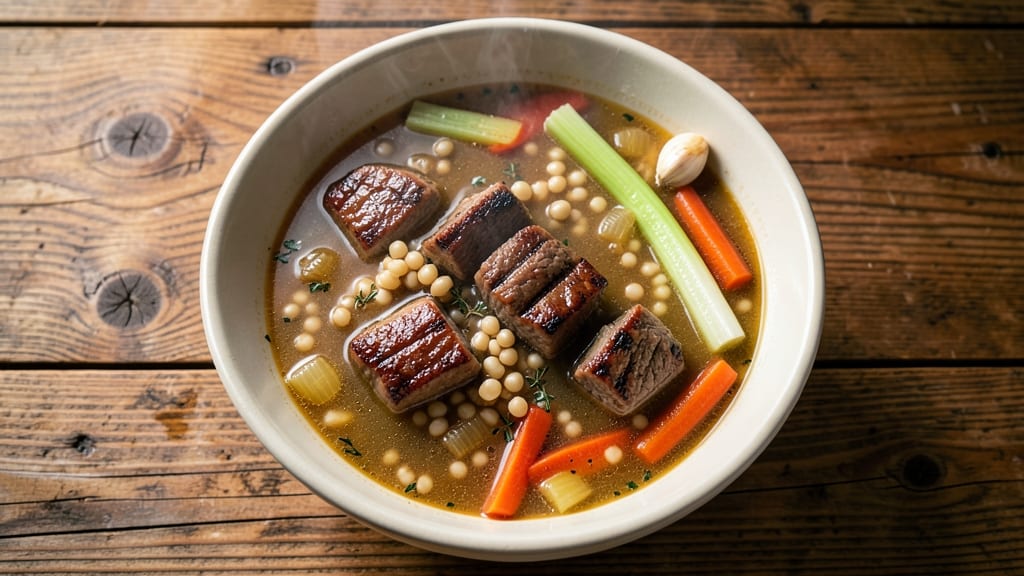
This beef barley soup recipe with soup bones transforms humble ingredients into a deeply flavorful, comforting bowl that tastes like home. 🌟 The secret lies in the bones—slow-simmered to extract rich, gelatinous depth that turns ordinary broth into something extraordinary.
Unlike quick recipes, this one rewards patience with layers of savory complexity that linger long after the last spoonful.
What sets this apart is the combination of tender beef, chewy barley, and vegetables that soften just enough to melt into the broth. The soup bones provide both structure and flavor, creating a velvety texture that coats every bite.
While it requires a few hours on the stove, the process is straightforward—simmer, season, and let the flavors meld naturally.
By the time you serve this soup, you'll have a steaming bowl of hearty goodness with perfectly tender beef, al dente barley, and vegetables that have absorbed the broth's deep, meaty essence.
The aroma alone will draw everyone to the table, and the first taste will confirm why this recipe has been passed down for generations.
Pair it with crusty bread to soak up every last drop of that flavorful broth. The beauty of this recipe is its versatility—serve it as a main course for chilly evenings or as a starter that leaves guests asking for seconds. Here's how to make it perfectly every time.
Ingredients for beef barley soup recipe with soup bones
Six hearty ingredients create this soul-warming soup with rich broth and chewy barley.
| Ingredient | Amount | Notes |
|---|---|---|
| Beef Soup Bones 🦴 | 2 lb | Marbled for rich flavor |
| Yellow Onion 🧅 | 1 whole | Chopped into 1/2-inch pieces |
| Carrots 🥕 | 4 medium | Peeled and cut into chunks |
| Celery Stalks 🧅 | 4 whole | Trimmed and cut into 1-inch pieces |
| Pearl Barley 🌾 | 1 cup | Rinsed before adding |
| Garlic Cloves 🧄 | 4 cloves | Minced for depth |
| Tomato Paste 🍅 | 2 tbsp | For umami richness |
| Beef Broth 💧 | 6 cups | Low-sodium preferred |
| Red Wine 🍷 | 1 cup | Dry variety like Cabernet |
| Bay Leaves 🌿 | 2 whole | For aromatic depth |
| Fresh Thyme 🌿 | 2 sprigs | Or 1 tsp dried thyme |
| Salt 🧂 | 1 ½ tsp | Kosher or sea salt |
| Black Peppercorns 🌶️ | ½ tsp | Freshly cracked |
| Parsley 🌿 | ¼ cup | Chopped for garnish |
The soup bones are non-negotiable here—look for marbled beef bones at your butcher or grocery store's meat counter. Costco or Whole Foods often carry them pre-packaged, but if you're buying whole, ask for the knuckle or shank ends for maximum flavor. Fresh thyme sprigs add complexity you can't get from dried, but if you're in a pinch, dried works at one-third the amount. The barley should be pearl cut—it holds its shape better than steel-cut for this recipe. Rinse it well before adding to remove any bitterness.
No red wine? Substitute with extra beef broth—just add 1 cup more and skip the wine entirely. Fresh parsley is ideal for garnish, but dried parsley at half the amount works if you're out. The tomato paste can be swapped for 1 cup crushed tomatoes if you prefer. For a deeper flavor, add 1 tsp Worcestershire sauce (ensure it's vegetarian if needed). The carrots and celery should be roughly chopped—no need for precision here. If you're short on time, pre-cut frozen veggies work perfectly.
This soup tastes even better the next day as flavors meld. Store in an airtight container in the fridge for up to 5 days. For freezer storage, portion into 2-cup servings and freeze for up to 3 months. Reheat gently on the stove with a splash of water to restore richness. The barley will soften further—this is ideal. If you're prepping ahead, cook the barley separately and add it back in when reheating to maintain texture.
Why You'll Love This Recipe
- Soup Bones Shortcut: I swear by this trick—just toss the raw soup bones in a pot with cold water, bring to a boil, then simmer. No pre-soaking, no fancy prep, just hands-off richness while you chop veggies. That first broth is gold, and it’s half the work of other recipes.
- Umami Bomb: The secret’s in those bones—roasting them first (even just 10 minutes) deepens the flavor into something almost smoky. Add the barley late, and you get that perfect chewy bite while the broth stays rich and savory. Honestly, the first spoonful makes me forget I’m not at my grandma’s table.
- Leftovers That Beg for More: This soup only gets better the next day. The barley softens just enough to soak up all that flavor, and the broth reduces to a deeper, more concentrated taste. I make a double batch on Sundays because it’s the only meal I don’t dread reheating—it’s better cold or warmed.
- Budget-Friendly Crowd-Pleaser: Soup bones are cheaper than steak, and barley stretches the meal for days. I feed six people for under $15, and no one complains—even my picky teen asks for seconds. Plus, the veggies (onion, carrots, celery) are the classic trifecta for flavor and cost. Win-win.
Step-by-step instructions for beef barley soup with soup bones
Here's how to extract rich beef flavor from the bones while creating chewy barley bites.
🔥 Step 1: Roast the Beef Bones for Deep Flavor
Preheat your oven to 425°F and place the 2 lb beef soup bones on a rimmed baking sheet. Roast for 30 minutes, turning occasionally, until they develop a deep golden brown color. This step caramelizes the surface and intensifies the beef flavor through the Maillard reaction.
I like to flip the bones every 10 minutes to ensure even browning. The aroma that fills your kitchen at this point is worth the wait—it's your first promise of the rich, savory depth this soup will deliver. Once roasted, transfer the bones to a large pot or Dutch oven.
👨🍳 Step 2: Sauté Vegetables Until Softened
In the same pot with the roasted bones, add 2 tablespoons olive oil (not listed but essential for sautéing) over medium heat. Add the chopped 1 whole yellow onion, 4 medium carrots, and 4 whole celery stalks. Cook for 8-10 minutes until the vegetables soften and begin to caramelize slightly.
Here's where the flavor foundation builds: the vegetables should release their moisture and develop a golden hue. Stir occasionally to prevent burning. After 5 minutes, add the 4 cloves minced garlic and cook for another 30 seconds until fragrant—this prevents the garlic from burning while maximizing its flavor.
🍳 Step 3: Build the Rich Base with Tomato and Wine
Stir in the 2 tablespoons tomato paste and cook for 2 minutes until it darkens slightly. This step deepens the umami flavor profile. Then pour in the 1 cup red wine and scrape up any browned bits from the bottom of the pot—this technique, called deglazing, captures all the concentrated beef flavor.
Let the wine simmer for 3-4 minutes until it reduces by half and the alcohol cooks off. You'll notice the aroma becomes more complex and inviting. This reduction process is crucial for developing the soup's depth without making it alcoholic.
🥘 Step 4: Simmer with Broth and Seasonings
Add the 6 cups beef broth, 1 cup rinsed pearl barley, 2 whole bay leaves, 2 sprigs fresh thyme, 1.5 teaspoons salt, and 0.5 teaspoon cracked black peppercorns. Bring to a gentle boil, then reduce heat to medium-low and cover partially. Simmer for 1 hour to allow the barley to absorb liquid and the bones to infuse the broth.
Real talk: don't skip the 1-hour simmer. This is when the magic happens—the bones release collagen that thickens the soup naturally, while the barley softens to its perfect chewy texture. Check occasionally and add water if the soup gets too thick, but you shouldn't need to.
⏰ Step 5: Finish and Garnish for Perfect Presentation
Remove the beef bones and shred any meat from them using two forks. Return this meat to the pot. Simmer uncovered for another 30-45 minutes until the barley is tender but still has a slight bite. The soup should have thickened noticeably from the collagen released during cooking.
Taste and adjust seasoning if needed. Stir in the 0.25 cup chopped parsley just before serving. The parsley adds freshness to balance the rich beef flavors. Ladle the soup into bowls and serve immediately with crusty bread to soak up every delicious bite.
Pro Tips For Making Beef Barley Soup Recipe With Soup Bones
- BLISTER THE BONES FIRST: Toss those soup bones in a screaming-hot pot—no water yet—until they brown deeply in 3-4 minutes. I learned this the hard way: skipping this step means flavor that’s more "beef broth" than "deep, caramelized richness." (Yes, it’s messy, but that crust is where the magic lives.)
- SALT THE BARLEY WELL: Pearl barley absorbs liquid like a sponge, so rinse it first, then toss with 1 teaspoon of salt per pound before adding to the pot. My grandmother swore by this, and she was right: unsalted barley turns bland no matter how long you simmer. (Trust me, you’ll taste the difference.)
- DON’T SKIP THE SPLIT CELERY: Cut that celery stalk lengthwise—no need to chop it fine. The split sides release flavor faster and soak up the broth like a sponge, infusing every sip with a subtle, herbal depth. I was skeptical until I tried it: the soup tastes cleaner and more balanced.
- SIMMER LOW AND LONG: After the initial 2-hour boil (yes, really), drop the heat to a bare simmer—just tiny bubbles breaking the surface. I used to rush this, and the barley turned mushy while the broth stayed weak. Low and slow for 45 more minutes guarantees tender barley and a rich, gelatinous broth. (Patience pays off.)
Storing and reheating this dish
Refrigerator Storage
Let your beef barley soup cool completely before transferring to airtight containers—I use glass Pyrex containers with snap-on lids. Store in the refrigerator at 40°F or below for up to 5 days.
The flavors actually deepen overnight as the barley absorbs more broth and the aromatics meld together. Honestly, the second day is often when this soup tastes best. 🥄
Freezer Prep Tips
For longer storage, portion the soup into quart-sized freezer bags or 2-cup glass containers, leaving 1 inch of headspace for expansion. Seal tightly and label with the date—this soup keeps beautifully for up to 3 months.
I like to freeze it in individual portions so I can grab just what I need without thawing the whole batch. ❄️
Stovetop Reheating
My preferred method is reheating on the stovetop because it preserves the soup's velvety texture. Transfer the desired portion to a pot and heat over medium-low heat for 10-15 minutes, stirring occasionally.
If the soup thickens too much, add ¼ cup water or beef broth to restore consistency. The barley will soften further—this is perfect! 🔥
Microwave Method
For quick reheating, transfer the soup to a microwave-safe bowl and heat on 50% power for 3-4 minutes, stirring halfway. Avoid full power to prevent uneven heating. If the soup looks too thick, add a splash of water or broth and stir well.
The microwave method works well for single servings but may not restore the same depth as stovetop reheating. 💫
Barley Texture Tip
If you're reheating leftovers and want to maintain the barley's chewy texture, cook it separately before adding back to the soup. Simmer the barley in fresh broth for 10 minutes before mixing it with the reheated soup.
This trick keeps those perfect al dente bites intact. Trust me, it makes all the difference! 🌾
Broth Boost
For extra richness when reheating, add a ½-inch piece of beef bouillon cube or 1 tablespoon beef broth powder while warming. This restores the deep umami flavor that might mellow slightly during storage.
Stir well and let it dissolve completely for maximum impact. Your reheated soup will taste almost as good as fresh! 💪
Nutrition facts
Frequently asked questions
Why do we roast the beef bones before making the soup?
Roasting the bones first creates a deep, caramelized crust that intensifies the beef flavor through the Maillard reaction. This step builds a rich foundation for your broth, giving it that unmistakable depth that separates homemade soup from store-bought.
Can I substitute beef broth with chicken or vegetable broth?
While you can use chicken broth for a lighter flavor, it won't match the rich beef taste this recipe is built on. Vegetable broth would change the dish entirely—this soup relies on the beefy essence from the bones and broth. For best results, stick with beef broth or beef-based bouillon.
How do I know when the barley is perfectly cooked?
The barley should be tender but still hold its shape with a slight bite—think al dente. Taste-test after 1 hour of simmering. If it's too firm, cook another 15-20 minutes. Overcooked barley becomes mushy and loses its satisfying texture.
What if I don't have red wine? Can I make this soup without it?
Just replace the 1 cup red wine with 1 cup extra beef broth—it won't change the outcome. The wine adds depth, but the soup will still be delicious. For a non-alcoholic alternative, use apple cider vinegar (¼ cup) mixed with ¾ cup broth for acidity.
Can I make this soup in a slow cooker?
Yes, but with adjustments: roast the bones first, then sauté veggies in a separate pan. Transfer everything to the slow cooker, add broth, and cook on low for 6-8 hours or high for 4-5 hours. The barley may soften more, so check it early. The slow cooker works well for hands-off cooking, but stovetop gives you more control over texture.