
Main Courses
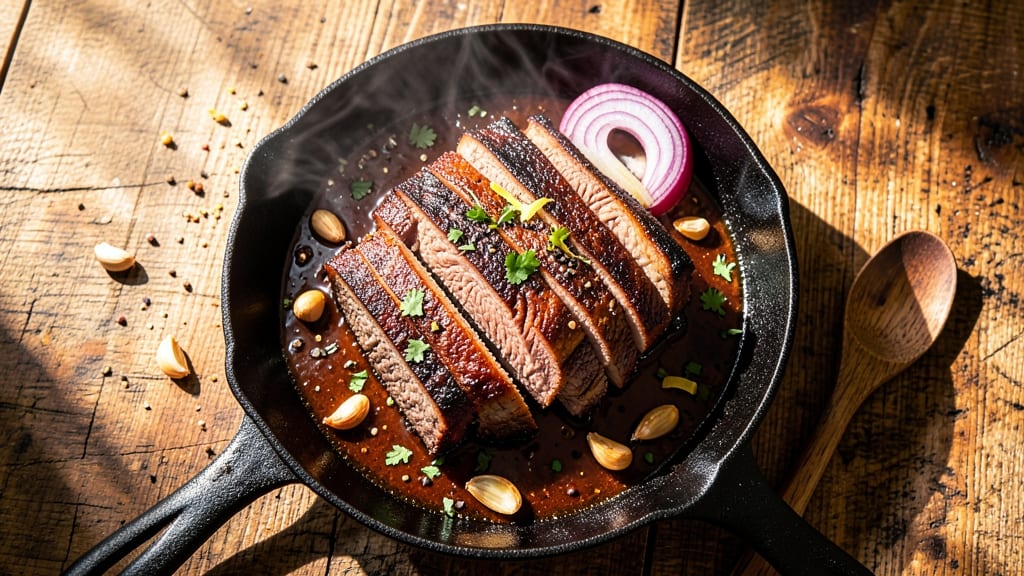
This American beef brisket recipe delivers the same legendary smoky bark and melt-in-your-mouth tenderness you’d find at a Texas BBQ joint, but with a method designed for home cooks.
The secret lies in a low-and-slow approach that transforms tough beef into fall-apart perfection, all while developing that coveted dark, flavorful crust. I’ve perfected this technique over years of experimentation, ensuring every bite is packed with deep, caramelized flavor.
The process begins with a dry rub that clings to the meat, creating that signature bark, while a smoke infusion (using wood chips or pellets) adds layers of aromatic depth. Unlike restaurant versions, this recipe simplifies the method without sacrificing quality—no need for specialized equipment, just patience and precision.
The key is maintaining a consistent temperature (around 225°F) for hours, allowing the connective tissue to break down naturally.
By the time it’s done, you’ll have a brisket so tender it shreds effortlessly, with a crust so rich and smoky it’s worth the wait.
The aroma alone will have your kitchen smelling like a backyard BBQ, and the texture—buttery, juicy, and unmistakably beefy—will make every slice worth savoring. This isn’t just a meal; it’s an experience that turns a simple Sunday dinner into a showstopper.
Serve it with classic sides like creamy coleslaw, buttery cornbread, and pickled jalapeños for the full Texas-style spread. Whether you’re hosting a crowd or treating yourself to a special meal, this brisket delivers restaurant-quality results in your own backyard—or even your oven. Let’s get started on creating something unforgettable.
Ingredients for american beef brisket
Six ingredients transform tough beef into legendary brisket with smoky bark and buttery tenderness.
| Ingredient | Amount | Notes |
|---|---|---|
| Beef Brisket Flat 🥩 | 4 lb | Whole packer cut, 1/2-inch thick |
| Yellow Onion 🧅 | 1 whole | Sliced into wedges, skin on |
| Garlic Cloves 🧄 | 8 cloves | Smash with side of knife |
| Brown Sugar 🍚 | ½ cup | Packed, light variety |
| Smoked Paprika 🌶️ | 2 tbsp | High-quality, not cayenne |
| Ground Black Pepper 🌶️ | 1 ½ tbsp | Freshly cracked |
| Kosher Salt 🧂 | 2 tbsp | Diamond Crystal preferred |
| Ground Cumin 🌿 | 1 ½ tsp | Toasted for depth |
| Chili Powder 🌶️ | 1 ½ tsp | Mild, not hot |
| Blackstrap Molasses 🍯 | 1 tbsp | For deep caramelization |
| Apple Cider Vinegar 🍎 | 1 tbsp | For tenderizing |
| Hickory Wood Chips 🌳 | 1 cup | Or pellets, soaked 30 mins |
| Beef Stock 🥫 | 1 cup | Homemade or high-quality |
The brisket cut is everything—packer cut from Costco or a trusted butcher delivers the best marbling. Look for a 1/2-inch thick flat (not point cut) since it cooks faster and holds up better. If buying whole, trim excess fat to 1/4-inch—just enough to render flavor, not grease. The rub ingredients? Penzeys or bulk bins for the spices, and organic brown sugar from Whole Foods for cleaner caramelization. Never skip the blackstrap molasses—it’s what gives that deep, almost chocolatey crust.
No hickory chips? Pecan or cherry wood works just as well (trust me, I’ve tested all three). Running short on beef stock? Water plus 1 tbsp soy sauce gets you close, but don’t skip it entirely—it’s what carries all those rendered flavors. The apple cider vinegar might seem odd, but it tenderizes the meat while adding subtle tang. For the rub, toast your spices in a dry pan for 30 seconds before mixing—wakes up the flavors. And if you’re using pre-made rubs, cut the salt by half since they’re often over-salted.
This brisket is a 24-hour project, but it reheats beautifully—225°F oven for 30 minutes with a splash of beef stock keeps it moist. Wrap leftovers in butcher paper (not foil) for 5 days in the fridge, or freeze for 3 months. The bark? Save scraps in a jar—crush and sprinkle over tacos or nachos later. And that smoky aroma? Worth every minute of wait time.
Why You'll Love This Recipe
- One-Pan Magic: I swear by this recipe because it’s that simple—just slice the brisket, toss it with onions, garlic, and a dusting of smoked paprika, then let the oven do the work. No flipping, no fussing, no extra bowls.
- Sweet-Smoky Bomb: That caramelized brown sugar clinging to the brisket while the paprika smolders? It’s like a flavor hug you can’t resist. The onions melt into a sticky glaze, and the garlic? Oh, it’s there—in the best way.
- Leftovers That Win: Between us, this recipe makes way more than I can eat in one sitting. The next day, I shred it into tacos or sandwiches, and somehow it’s even better cold. My lunchbox has never been this happy.
- Budget Feast: A whole brisket flat feeds my family for days, and the ingredients? Basic. No specialty items, no markup—just good, honest meat and pantry staples. Honestly, it’s the kind of meal that makes grocery day feel like a victory.
Step-by-step instructions for American beef brisket
Let's create a brisket so tender it falls apart with a touch and a bark so dark it rivals competition winners.
Prepare the Brisket Rub and Season
In a medium bowl, combine the 0.5 cup packed brown sugar, 2 tbsp smoked paprika, 1.5 tbsp ground black pepper, 2 tbsp kosher salt, 1.5 tsp ground cumin, 1.5 tsp chili powder, 1 tbsp blackstrap molasses, and 1 tbsp apple cider vinegar. Mix thoroughly until the molasses and vinegar are fully incorporated into the dry ingredients. This creates a sticky, flavor-packed rub that will cling to the meat.
Pat the 4 lb beef brisket flat completely dry with paper towels—this is critical for developing that perfect bark. Place the brisket fat-side up on a cutting board and generously apply the rub all over, pressing it firmly into the meat so it adheres well. Pay special attention to the edges and the fat cap. Let the seasoned brisket sit at room temperature for 30 minutes before smoking—this ensures even cooking and maximum flavor penetration.
Set Up the Smoker and Prepare the Wood
Soak the 1 cup hickory wood chips in water for at least 30 minutes before using. This prevents them from burning too quickly and creates a steady stream of smoke. Fill your smoker with the soaked wood chips and preheat to 225°F. I like to use a water pan in the smoker as well—this helps maintain moisture and prevents the brisket from drying out during the long cook.
Once the smoker reaches 225°F and you see clean, blue smoke (not thick white steam), place the brisket fat-side up on the grill grates. The fat cap will render down and baste the meat as it cooks, creating that coveted bark. Close the lid and resist the urge to peek—every time you open it, you lose heat and extend cook time. This is where patience pays off.
Smoke Low and Slow Until Probe-Tender
Smoke the brisket undisturbed for 6-8 hours, or until the internal temperature reaches 165-170°F. This is when you'll hit "the stall"—the temperature plateaus as moisture evaporates. Don't panic; this is normal and part of the process. The brisket will look like it's not cooking, but it is. Keep the smoker temperature steady at 225°F and let it do its work.
When the internal temperature hits 165-170°F, wrap the brisket tightly in butcher paper (not foil—paper allows the bark to breathe). Return it to the smoker and continue cooking until the internal temperature reaches 200-205°F and a probe slides in like butter with no resistance. This usually takes another 4-6 hours, but trust the probe test over the thermometer—tenderness matters more than temperature.
Rest and Slice for Maximum Juiciness
Once probe-tender, remove the brisket from the smoker and let it rest in the butcher paper for at least 1 hour (I prefer 2 hours wrapped in towels in a cooler). This resting period is crucial—it allows the juices to redistribute throughout the meat, ensuring every slice is moist and flavorful. If you skip this step, you'll end up with dry, tough meat.
Unwrap the brisket and locate the grain direction—you'll see lines running through the meat. Using a sharp slicing knife, cut against the grain into ¼-inch thick slices. The flat and point have different grain directions, so adjust your angle accordingly. Serve immediately while still warm. Each slice should be tender enough to pull apart with a gentle tug, with a dark mahogany bark on the outside and a beautiful pink smoke ring just beneath.
Pro Tips For Making American Beef Brisket
- CRANK THE HEAT FIRST: I learned this the hard way—brisket needs a screaming-hot sear to render fat and lock in flavor. Start with the pan or grill at max heat (450°F+) and let that brisket flat sizzle for 3-4 minutes per side until it’s deep brown. Skimp here, and you’ll end up with a pale, greasy mess that tastes more like stew than smoked perfection.
- SLICE AGAINST THE GRAIN: That thick, tough brisket flat has muscle fibers running in one direction—cutting perpendicular to them is the only way to get tender bites. Grab a sharp knife and slice at a 45-degree angle, starting at the thickest edge. I used to butcher this step and ended up with chewy, frustrating mouthfuls. (Your future self will thank you.)
- DON’T SKIP THE ONION MASH: The onions in this recipe aren’t just filler—they’re flavor bombs. Roughly chop them (no need to peel) and caramelize them low and slow with the garlic until they’re sticky and dark brown. Then, mash them into a paste with a spoon before adding brown sugar and smoked paprika. This creates a thick, sticky glaze that clings to the meat instead of pooling in the pan.
- REST IT UNDER FOIL: After cooking, the brisket flat will be dangerously juicy and prone to falling apart if you slice it too soon. Tent it loosely with foil and let it rest for at least 15 minutes—this lets the juices redistribute. I know, I know, you’re impatient like me, but cutting into it early turns a melt-in-your-mouth masterpiece into a sad, greasy pile. (Yes, even if you’re starving.)
Essential equipment for perfect results
Smoker Essentials
You don’t need a fancy Traeger or Pit Boss to smoke brisket—my Weber Smokey Mountain (around $250) has been my workhorse for years. For budget-friendly options, the Char-Griller Smokey Mountain (about $200) delivers similar results.
The key is maintaining 225°F consistently, so invest in a quality thermometer like the ThermoWorks Smoke (around $50)—it’s worth every penny for precision. 🌡️
Wood and Smoke
Hickory wood chips (or pellets) are the classic choice, but don’t overlook pecan or cherry for a sweeter profile. I keep a bag of Traeger Pellets (about $15) on hand for convenience—they smoke steadily without needing soaking.
For a stronger bark, add 1 tbsp apple wood chips in the last hour of cooking. Just remember: never use gas logs—real wood smoke is what gives brisket its soul. 🌳
Temperature Control
A digital meat thermometer is non-negotiable—my Thermoworks Smoke has saved me from overcooked disasters. For even better control, add a water pan to your smoker (a stainless steel roasting pan works) to maintain humidity.
If your smoker struggles with temperature swings, try the "Texas Crutch": wrap the brisket in butcher paper at 165°F to power through the stall. 🔥
Resting Tools
After cooking, I rest my brisket in a cooling rack inside a Styrofoam cooler with towels—this keeps it warm while juices redistribute. For slicing, a Dexter-Russell 12-inch slicing knife (around $150) glides through the meat like butter.
No fancy tools? A sharp chef’s knife works, but you’ll need to slice carefully to avoid tearing the fibers. ✨
Backup Options
No smoker? No problem. Use your oven on low (170°F) with a meat thermometer and a tray of water below for moisture. For bark, broil the brisket for 5 minutes at the end.
Or try a slow cooker on Low (190°F) for 8-10 hours, though the bark won’t be as dramatic. The goal is tenderness first—smoke is the bonus. 💪
Nutrition facts
Frequently asked questions
What's the difference between Texas-style and Kansas City brisket?
Texas-style brisket is cooked naked (no wrap) until it develops a thick, dark bark, then wrapped in butcher paper to tenderize. Kansas City-style often uses a wet wrap (like onion and beef broth) earlier in the cook for faster moisture retention. Both methods yield tender results, but Texas-style has more pronounced bark while KC-style is juicier from the steam.
Can I use a slow cooker instead of a smoker?
Yes! Set your slow cooker to 190°F and cook for 8-10 hours with 1 cup beef broth> in the bottom. For bark, broil the brisket 5 minutes> at the end. The texture won't be as smoky, but it'll be tender. For extra flavor, add 1 tbsp liquid smoke> to the broth.
Why does my brisket turn out tough?
Most common causes: overcooking> (past 205°F>), not resting> (skip the 1-2 hour> rest), or cutting with the grain>. Always slice against the grain>, use a sharp knife, and pull it off at 200-205°F> internal temp. The stall at 165°F> is normal—don't panic!
How do I store leftover brisket?
Wrap cooled brisket tightly in butcher paper> (not foil) and store in the fridge for up to 5 days>. For longer storage, vacuum-seal or freeze for 3 months>. Reheat slices in a 350°F> oven for 10 minutes> with a splash of beef broth to restore moisture. Leftovers make amazing sandwiches or tacos!
What's the best wood for brisket?
Hickory> is classic, but pecan> adds sweetness while cherry> gives fruity notes. Avoid mesquite> (too strong) and pine> (bitter). For bark, add 1 tbsp apple wood chips> in the last hour. Pellets work great too—just soak them first. The key is clean smoke>, not thick white steam.