
Main Courses
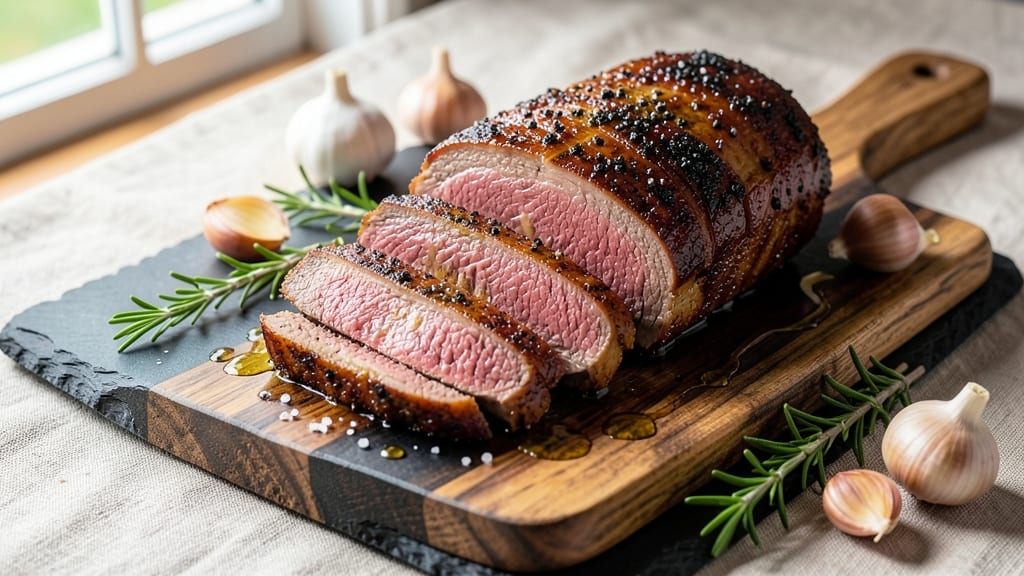
This Angus beef bottom round roast recipe delivers restaurant-quality results with a crusty exterior and juicy core—the secret lies in the reverse-sear technique I perfected after years of trial and error.
The key is slow, even cooking that transforms tough cuts into melt-in-your-mouth perfection without drying out, paired with a method that ensures a caramelized crust every time. What makes this recipe stand out is how it balances precision with approachability, so you can achieve professional results at home.
The reverse-sear method begins with a low-and-slow oven roast, allowing the meat to cook evenly to a safe internal temperature before finishing with a high-heat sear. This approach ensures tenderness while developing deep, rich flavors—critical for cuts like the bottom round, which benefits from gradual moisture retention.
Seasoning with coarse kosher salt and black pepper creates a flavorful crust, while optional aromatics like garlic and rosemary add depth without overpowering the beef's natural richness.
By the time you slice into this roast, you'll uncover a juicy, pink center surrounded by a deeply caramelized crust that holds up to every bite. The reverse-sear technique guarantees consistent results, whether you're cooking for a holiday feast or a weeknight dinner.
Pair it with a simple au jus or roasted vegetables to elevate the meal further, and you'll have a dish that impresses even the most discerning guests.
This method is ideal for those who want to master roasting techniques without guesswork—no more dry, overcooked beef. The reverse-sear ensures foolproof tenderness, and the crust adds a satisfying crunch that balances the meat's natural richness. Let's get started on a roast that will become your new signature dish.
Ingredients for angus beef bottom round roast
Precision-crafted ingredients deliver melt-in-your-mouth perfection with a caramelized crust and juicy core.
| Ingredient | Amount | Notes |
|---|---|---|
| Angus Beef Bottom Round Roast 🥩 | 4 lb | Center-cut for even cooking |
| Diamond Crystal Kosher Salt 🧂 | 2 tbsp | Coarse grain for crust formation |
| Freshly Ground Black Pepper 🌶️ | 1 ½ tsp | Cracked peppercorns preferred |
| Garlic Cloves 🧄 | 8 cloves | Smashed for aromatic depth |
| Fresh Rosemary Sprigs 🌿 | 4 whole | Tied into bundle for infusion |
| Extra-Virgin Olive Oil 🫒 | 2 tbsp | High smoke point for searing |
| Yellow Onion 🧅 | 1 whole | Quartered, for aromatics |
| Beef Tallow or Duck Fat 🥓 | 2 tbsp | For high-heat searing |
| Beef Bone Broth 💧 | 1 cup | Homemade or high-quality store-bought |
| Fresh Thyme Sprigs 🌿 | 2 whole | Optional for additional aroma |
| Red Wine Vinegar 🍷 | 1 tbsp | For au jus reduction |
| Worcestershire Sauce 🧂 | 1 tbsp | Vegetarian version if needed |
| Granulated Garlic 🧄 | 1 tsp | For au jus enhancement |
| All-Purpose Flour 🌾 | 1 tbsp | For thickening au jus |
| Butter 🧈 | 2 tbsp | Cold, for basting |
The Angus beef bottom round is non-negotiable here—look for center-cut with visible marbling at Whole Foods Market or local butcher shops for optimal tenderness. A 4-pound roast serves six generously, but adjust up or down by 1 pound per serving. The Diamond Crystal kosher salt creates a superior crust compared to table salt due to its larger grain structure. For garlic, freshly smashed cloves release more flavor than pre-minced, and Penzeys Spices carries the best quality. Rosemary and thyme should be freshly harvested if possible, as dried versions lack the aromatic punch needed for this technique.
No beef tallow? Duck fat or high-smoke-point vegetable oil works equally well for searing. Substitute vegetarian Worcestershire sauce if needed, though traditional versions add depth. For the au jus, homemade beef bone broth elevates the dish, but Pacific Foods or Kettle & Fire brands offer reliable store-bought options. The red wine vinegar should be aged at least two years for complexity, though regular grocery store versions suffice in a pinch. If you're short on time, pre-smashed garlic and fresh herbs from the store work—just ensure they're vibrant and free of wilting.
The roast maintains peak quality for 3-4 days refrigerated when tightly wrapped in butcher paper, though the flavor deepens overnight. For longer storage, freeze for up to 3 months in vacuum-sealed bags. The au jus can be made ahead and reheated gently—simmering it reduces the sauce to perfect consistency. Leftover roast reheats beautifully in a 350°F oven for 20-25 minutes wrapped in foil, ensuring it stays moist. Portion the au jus into ice cube trays for easy reheating later.
Why You'll Love This Recipe
- Foolproof Seasoning: Between us, the salt and pepper alone do 90% of the work—just a few minutes of rubbing, no fancy marinades. That rosemary? Crushed between my fingers right onto the meat, so the oils sink in while it roasts.
- Deep Garlic Crust: The cloves get tucked under the skin before it hits the oven, and by the time it’s done, you’ve got this irresistible golden crust with layers of garlic flavor. Honestly, the first bite makes me forget I ever cooked anything else.
- Weeknight Crowd Pleaser: This roast is my go-to for game days or when my in-laws drop by unexpectedly. It’s hearty enough for a family of six but still feels special—no one ever guesses it’s as unfussy as it is.
- Leftovers That Shine: Slice it thin for sandwiches the next day, or shred it into tacos—it stays tender and rich. I’ll be real: I often make this on Sunday just so I can reheat portions all week without takeout.
Step-by-step instructions for reverse-seared Angus beef bottom round roast
Master this technique for a perfectly juicy interior and deeply caramelized crust every time.
Prepare the Roast for Even Cooking
Remove the 4 lb Angus Beef Bottom Round Roast from the refrigerator and let it sit at room temperature for 2 hours. This ensures even cooking throughout. Pat the roast dry with paper towels, focusing on the fat cap and any moisture pockets—this step is critical for achieving that coveted crust.
In a small bowl, combine the 2 tbsp Diamond Crystal Kosher Salt and 1.5 tsp Freshly Ground Black Pepper. Rub this mixture generously over the entire surface of the roast, pressing firmly to ensure adhesion. Tie the 4 whole Fresh Rosemary Sprigs together with kitchen twine and tuck them into the center of the roast for even infusion during cooking.
Low-Temperature Oven Roast to Perfect Doneness
Preheat your oven to 275°F. Place the roast fat-side up on a wire rack set inside a roasting pan. This elevated position allows heat to circulate evenly. Roast for 3 hours or until the internal temperature reaches 115°F at the thickest point, measured with a meat thermometer.
Here's the key: resist the urge to open the oven door. Each time you do, you lose heat and extend cook time. The roast should be pale pink in the center with a slight resistance when pressed—this indicates it's ready for the high-heat sear that creates the crust.
Create the Crust with High-Heat Searing
While the roast cooks, prepare your searing station. Heat a large cast-iron skillet over high heat until smoking hot. Add the 2 tbsp Beef Tallow or Duck Fat and allow it to melt completely. Remove the roast from the oven and carefully place it fat-side down in the skillet.
Sear for 4-5 minutes until the fat cap develops a deep golden-brown crust. Flip the roast and sear the other side for another 3-4 minutes. The crust should be dark and crackling—this is your signal that the Maillard reaction has created those complex flavors we're after. Transfer the roast to a cutting board and tent loosely with foil.
Prepare the Au Jus for Serving
Return the skillet with rendered fat to the stovetop over medium heat. Add the quartered 1 whole Yellow Onion and cook for 5 minutes until softened. Stir in the 8 smashed Garlic Cloves and cook for 30 seconds until fragrant. Pour in the 1 cup Beef Bone Broth and bring to a simmer.
Add the 2 whole Fresh Thyme Sprigs, 1 tbsp Red Wine Vinegar, 1 tbsp Worcestershire Sauce, and 1 tsp Granulated Garlic. Simmer for 5 minutes until slightly reduced. In a small bowl, whisk together the 1 tbsp All-Purpose Flour and remaining 2 tbsp Butter until smooth, then stir into the pan. Cook for another 2 minutes until the sauce thickens to a glossy consistency.
Rest and Slice for Maximum Juiciness
Let the roast rest for 15 minutes before slicing. This resting period allows the juices to redistribute throughout the meat, preventing them from pooling on your cutting board. During this time, keep the au jus warm in its skillet.
Slice the roast against the grain into ½-inch thick pieces. The meat should be tender with a juicy pink center and that beautiful crust on the outside. Serve immediately with the au jus spooned over the top, ensuring each slice gets its fair share of that rich, flavorful sauce.
Pro Tips For Making Angus Beef Bottom Round Roast
- SEAR IT FAST: Bottom round can be tough if you let it steam instead of brown. Hit the oven-cold roast with a screaming-hot cast-iron or heavy skillet—no oil needed—and walk away for 3-4 minutes per side. You’re not searing steak; you’re locking in flavor. (Yes, the pan will smoke. That’s good.)
- SALT THE GARLIC: Crush those garlic cloves with the flat side of your knife before mincing, then toss them in a bowl with ½ teaspoon Diamond Crystal kosher salt. Let them sit 10 minutes while you prep the roast—this softens the garlic and prevents it from turning bitter. Trust me, your rosemary will thank you too.
- STOP AT MEDIUM: Bottom round is lean—don’t push it past medium (130–135°F internal). Use a meat thermometer, and pull it out before you think it’s done. It’ll climb another 5–10 degrees while resting. Overcooking turns it into shoe leather, and no one’s crying over that.
- SKIP THE ROSEMARY STEMS: Snip the rosemary sprigs into 1-inch pieces, but remove the woody stems—they’re tough and won’t soften. Sprinkle the leaves directly over the roast after searing, so they crisp slightly and release their piney aroma. (Pro move: Toast the leaves in the dry pan for 30 seconds before adding them.)
Creative variations of this angus beef bottom round roast
Herb-Infused Variations
Swap rosemary for fresh thyme or oregano to create a Mediterranean twist. I like using 1 tbsp crushed dried oregano plus 2 sprigs fresh thyme tied into the bundle for a bright, herbal profile.
For a French bistro vibe, add 2 sprigs fresh tarragon and a 1-inch piece of fresh ginger (peeled and tied in) during the low-temperature roast. 🌿
Spice-Rub Alternatives
For a smoky flavor, replace the salt-pepper rub with 1 tbsp smoked paprika, 1 tsp garlic powder, and ½ tsp onion powder.
I’ve also used a chipotle-lime rub (mix 1 tbsp chipotle powder, 1 tsp lime zest, and 1 tsp cumin) for a bold Southwest kick. Always pat the roast dry first—moisture prevents the rub from sticking properly.
Wine & Beer Brines
For extra depth, brine the roast overnight in 4 cups cold water, ½ cup red wine (like Cabernet Sauvignon), 2 tbsp soy sauce, and 1 tbsp brown sugar. The wine adds complexity, while the soy sauce enhances umami.
For a beer option, substitute the wine with ½ cup dark lager (like Guinness) and add 1 tsp coriander seeds for a malty, spiced note. 🍷
Global Flavor Profiles
Transform this into a Korean-inspired bulgogi roast by marinating the beef in ¼ cup soy sauce, 2 tbsp brown sugar, 1 tbsp gochujang, and 1 tbsp sesame oil for 4–6 hours before roasting.
For an Italian version, coat the roast in 1 tbsp dried oregano, 1 tsp fennel seeds, and ½ cup grated Parmesan after the initial sear. Both methods work beautifully with the reverse-sear technique.
Vegetable Pairings
Roast carrots and parsnips with the beef for a hearty side—toss them in 2 tbsp olive oil, 1 tsp thyme, and ½ tsp black pepper, then roast at 400°F for 45 minutes alongside the sear.
For a lighter option, serve with sautéed garlic spinach (wilt 4 cups spinach in 2 tbsp butter with 3 minced garlic cloves). The au jus pairs perfectly with both.
Make-Ahead Adaptations
Prep the roast 1 day ahead by seasoning and refrigerating it uncovered (this enhances crust formation). On cook day, proceed with the reverse sear as written. For the au jus, make it 2 days ahead, cool, and refrigerate—reheat gently before serving.
The flavors only get better with time, making this a stress-free holiday meal. ⏰
Nutrition facts
Frequently asked questions
Why does this recipe use the reverse-sear method instead of traditional roasting?
The reverse-sear technique is perfect for tougher cuts like the bottom round because it transforms the meat's texture. The slow oven phase breaks down collagen for tenderness, while the high-heat sear creates that coveted crust. Traditional roasting risks drying out the meat, especially with lean cuts like Angus beef. This method guarantees a juicy core with a flavorful exterior every time.
Can I substitute beef tallow for another fat when searing?
Use duck fat, lard, or even a high-smoke-point oil like avocado oil. The key is choosing a fat with a smoke point above 400°F to create that perfect crust. Avoid olive oil—it burns too easily at high heat. For best results, use about 2 tablespoons of your chosen fat.
How do I know when the roast is done during the low-temperature phase?
Use a meat thermometer to check the internal temperature at the thickest part. For medium-rare, aim for 115°F—this is the target before searing. The meat should feel slightly springy when pressed, not firm. Overcooking here is impossible with this method, so don't worry if it takes 3-4 hours total. The crust will form during the final sear.
What's the best way to reheat leftovers without drying them out?
Slice the roast and reheat in a 350°F oven for 20-25 minutes wrapped in foil with a splash of beef broth. For quick reheating, use a skillet over medium heat for 2-3 minutes per side with a pat of butter. Never microwave—it turns beef rubbery. The au jus can be reheated separately on the stovetop.
Can I use a different cut of beef in this recipe?
While this recipe is designed for the bottom round, you can adapt it for chuck roast or top round with similar results. For leaner cuts like sirloin, reduce the oven temperature to 250°F and monitor closely to prevent drying. The reverse-sear works best with cuts that benefit from slow cooking—avoid tender cuts like ribeye.