
Main Courses
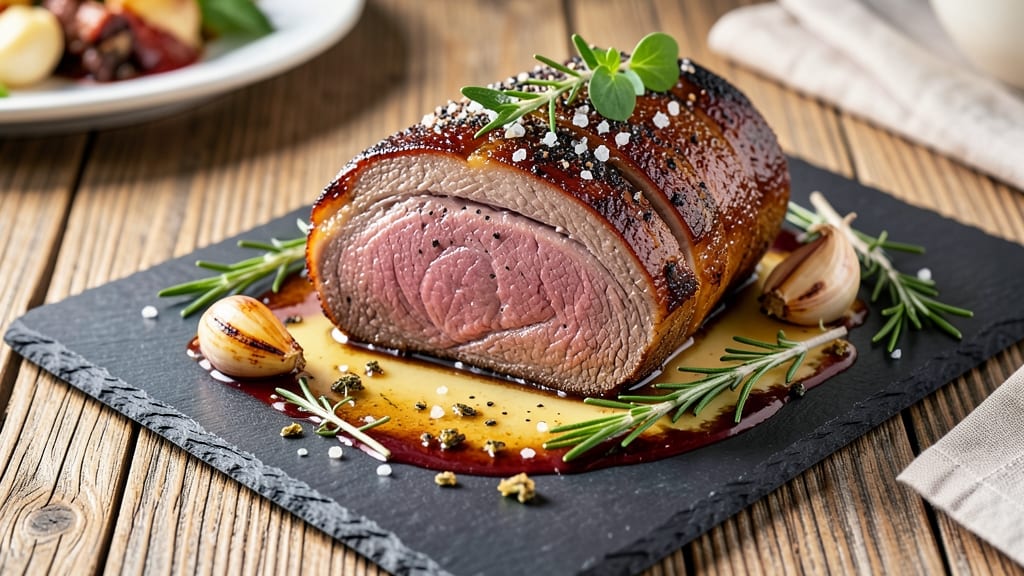
This Angus beef ribeye roast recipe delivers the perfect balance of a buttery crust and melt-in-your-mouth tenderness—exactly what you want from a premium cut. The secret lies in precise temperature control and a simple seasoning approach that enhances the beef's natural richness without overpowering it.
I've perfected this method over countless holiday dinners, ensuring every slice is juicy and flavorful.
What sets this recipe apart is the reverse sear technique, which guarantees a perfectly cooked roast with a golden-brown crust. You'll start with a low oven temperature to cook the beef evenly, then finish with a high-heat sear to lock in those flavors and create that coveted crust.
The process is straightforward but requires patience—something that pays off in every bite.
By the time you're done, you'll have a roast that's so tender it practically falls apart, with a crust that's crispy enough to hold its own against any side dish. The beef will be rich, beefy, and deeply satisfying, making it the centerpiece of any meal.
Pair it with roasted vegetables or a red wine reduction for a restaurant-quality dinner at home.
This method works equally well for special occasions or a cozy weeknight dinner, and the leftovers reheat beautifully. Whether you're cooking for a crowd or treating yourself to a luxurious meal, this recipe delivers results that will impress even the most discerning guests.
Let's get started on creating the perfect roast.
Ingredients for angus beef ribeye roast
Six ingredients, one premium cut—this roast delivers restaurant-quality beef at home.
| Ingredient | Amount | Notes |
|---|---|---|
| Angus Beef Ribeye Roast 🥩 | 4 lb | Bone-in, 1.5-2 inches thick |
| Kosher Salt 🧂 | 1 ½ tbsp | Diamond Crystal preferred |
| Freshly Ground Black Pepper 🌶️ | 1 tbsp | Coarse grind for texture |
| Unsalted Butter 🧈 | ½ cup | Cold, cubed for crust |
| Garlic Cloves 🧄 | 6 cloves | Minced, fresh preferred |
| Fresh Rosemary 🌿 | ¼ cup | Chopped, stems removed |
| Fresh Thyme 🌿 | ¼ cup | Leaves only, chopped |
| Extra-Virgin Olive Oil 🫒 | 2 tbsp | For basting |
| Yellow Onion 🧅 | 1 whole | Cut into wedges |
| Red Wine 🍷 | 1 cup | Dry, like Cabernet |
| Beef Broth 💧 | 1 cup | Low-sodium preferred |
| Flour 🌾 | 2 tbsp | All-purpose, for dredging |
The beef is everything. Angus ribeye with good marbling is non-negotiable—look for cuts labeled 'USDA Prime' if you can find them. Costco or local butcher shops usually have the best selection, and buying whole roasts lets you trim excess fat yourself. Aim for about 1.5-2 inches thick—thinner cuts cook faster and risk drying out. If your roast has a bone, leave it in; it adds flavor and helps retain moisture. Fresh herbs matter too—Trader Joe's often has great bundles, but even grocery store herbs work if they're bright green and not wilted. The butter? Plugrá or Land O'Lakes unsalted is my go-to, but any high-fat butter works.
No red wine? Beef broth plus a splash of balsamic vinegar mimics the depth. Fresh herbs wilted? Dried thyme at one-third the amount gets you close. The flour is just for that final dredge—King Arthur or Gold Medal all-purpose is fine, but if you've got cornstarch, use that instead for extra crispiness. For the garlic, roasted garlic adds sweetness if you're feeling fancy. And that onion? Yellow or red both work, but red stays pretty when roasted. Pro tip: Pat the beef dry before seasoning—it helps the crust form better. Trust me on this.
This roast reheats like a dream—200°F in the oven for 30 minutes brings it back to juicy perfection. Leftovers keep 3-4 days in the fridge, or freeze for up to 3 months if you're planning ahead. I like to slice it against the grain for maximum tenderness, then store portions in airtight containers. The crust? Eat it first—it's the best part. If you're serving a crowd, double the recipe; the reverse sear method scales perfectly.
Why You'll Love This Recipe
- Minimal Prep Magic: I swear by this one—just salt, pepper, butter, and garlic. No fancy marinades, no chopping vegetables, no stress. The beef practically cooks itself while you sip wine and pretend you’re not technically working.
- Butter-Basted Bliss: That crispy crust? All thanks to basting with melted butter and garlic. The first bite—juicy, caramelized, with garlic notes that linger—makes every slice worth the wait. (Yes, even on a Tuesday night.)
- Leftovers That Shine: Slice the roast thin, toss with a little pan sauce, and you’ve got sandwiches for days. My kids beg for it cold on lunchboxes, and I secretly love that it’s the only meat they’ll eat.
- Weekend Showstopper: No one suspects how easy it is. Serve it at a dinner party, and they’ll ask for seconds before dessert even arrives. (Between us, it’s my go-to for birthdays and holidays—zero fuss, maximum wow.)
Step-by-step instructions for Angus beef ribeye roast
Here's how to transform that beautiful ribeye into a showstopping centerpiece with a buttery crust and melt-in-your-mouth tenderness.
Season and Sear the Roast
Start by patting the 4 lb Angus Beef Ribeye Roast completely dry with paper towels—this is non-negotiable for crispy crust. Spread the 1.5 tbsp kosher salt evenly over all sides, pressing it into the meat so it adheres. Add the 1 tbsp freshly ground black pepper, grinding it directly onto the roast for maximum flavor impact.
Place the seasoned roast in a cold, heavy-bottomed roasting pan. I like to use a Dutch oven for this recipe because it helps trap moisture. Let it sit at room temperature for 30 minutes while you preheat your oven to 400°F. This ensures even cooking from edge to center.
Once preheated, carefully transfer the roast to the oven. After 20 minutes, you'll hear a satisfying sizzle as the fat begins to render. This is when you'll develop that golden crust. Don't open the oven during this time—resist the temptation! The temperature fluctuations will ruin your perfect sear.
Build the Buttery Crust
After the initial 20 minutes, remove the roast from the oven and reduce the heat to 325°F. Here's where the magic happens: spread the 0.5 cup cold unsalted butter evenly over the top of the roast. The cold butter will melt and baste the meat as it continues cooking, creating that luscious crust.
Return the roast to the oven and cook for another 45 minutes. The butter should be bubbling and golden brown by now. If you notice the crust browning too quickly, tent loosely with aluminum foil to prevent burning while still allowing steam to escape.
During this time, prepare the aromatics. In a small bowl, combine the 6 minced garlic cloves, 0.25 cup chopped fresh rosemary, and 0.25 cup chopped fresh thyme. This herb blend will infuse the pan with incredible flavor as we finish the roast.
Deglaze and Braise
After the 45 minutes, remove the roast from the oven and let it rest on a cutting board for 10 minutes. This resting period is crucial—it allows the juices to redistribute, ensuring each slice stays juicy. While it rests, increase your oven temperature to 425°F for the final step.
Return the roast to the oven, fat-side up, for the final 15-20 minutes. This high-heat finish will render the remaining fat and create that beautiful caramelized crust. The roast is done when an instant-read thermometer inserted into the thickest part (not touching bone) reads 130-135°F for medium-rare.
While the roast finishes, prepare the pan sauce. Place the roasting pan on the stovetop over medium heat. Add the 1 whole yellow onion wedges and let them caramelize for 5 minutes. Then pour in the 1 cup red wine and scrape up all those delicious browned bits from the bottom of the pan.
Create the Sauce and Rest
Simmer the wine mixture for 3-4 minutes until reduced by half. Add the 1 cup beef broth and bring to a gentle simmer. In a small bowl, whisk together the 2 tbsp flour with 1 tablespoon cold water to make a slurry. Slowly whisk this into the pan sauce, stirring constantly until it thickens to a glossy consistency—about 2 minutes. The sauce should coat the back of a spoon.
Return the roast to the pan, spooning the sauce generously over the top. Let it sit for 5 minutes to absorb those incredible flavors. Then transfer the roast to a cutting board and tent loosely with foil. Let it rest for another 15 minutes before slicing—this final rest is what ensures maximum juiciness in every bite.
Slice and Serve
Slice the roast against the grain into ½-inch thick slices. The grain direction will be visible in the meat—cut perpendicular to these lines for the most tender texture. Arrange the slices on a warm platter and ladle the reduced sauce over the top. Garnish with additional fresh rosemary and thyme if desired.
Serve immediately with your favorite sides. The crust should be rich and golden, the interior perfectly pink and juicy, and each bite should deliver that incredible buttery flavor we worked so hard to create. The sauce should cling beautifully to each slice, tying all the flavors together in every mouthful.
Pro Tips For Making Angus Beef Ribeye Roast
- USE A MEAT THERMOMETER: I learned this the hard way—ribeye roasts hide their doneness. Stick the probe in the thickest part (avoid fat) and aim for 125°F (52°C) for medium-rare—Angus stays juicy at lower temps than you’d think. Pull it out early; it’ll climb another 5°F while resting.
- DRY THE ROAST LIKE IT’S SNOWING: Pat that roast aggressively with paper towels—this isn’t the time to be gentle. A dry surface = better crust. I used to skip this, and my butter wouldn’t brown right, no matter the heat. Do it 30 minutes before cooking (yes, even if you’re impatient like me).
- DON’T SKIP THE GARLIC CRUSH: Whole cloves? Nope. Smash them flat with the side of your knife first—this releases more flavor and prevents them from burning. Tuck them under the butter cap, not on top, so they baste in the juices instead of turning to ash.
- REST IT UNDER FOIL: I know, resting meat feels like waiting for nothing. But tent that roast with foil for 10-15 minutes after pulling it from the oven—this traps heat and keeps it tender. Slice too soon, and you’ll end up with a sad, stringy mess. (Your future self will thank you.)
Make-ahead tips for this dish
Prep Ahead Strategy
Season your 4 lb ribeye roast up to 24 hours ahead and store it uncovered in the fridge. The cold air helps the salt penetrate deeper, enhancing flavor without over-salting.
I place mine on a wire rack over a baking sheet to catch any excess moisture. This step alone makes a noticeable difference in crust development. 🧂
Butter Prep Shortcut
Cube the ½ cup unsalted butter and freeze it overnight. When you're ready to cook, the butter will be perfectly cold and spreadable. I like to portion it into 1-inch cubes in a small container for easy handling during the roasting process. This ensures even distribution without melting prematurely.
Sauce Components
Make the sauce base 1 day ahead by combining the 1 cup red wine, 1 cup beef broth, and 2 tbsp flour in a jar. Refrigerate until ready to use.
When cooking day arrives, simply reduce the mixture on the stovetop for a quick, flavorful sauce. The flour slurry can be pre-mixed separately in a small container for even easier assembly.
Herb Infusion
Chop all your fresh herbs (rosemary, thyme) and store them in a sealed container with a paper towel to absorb moisture. Keep them refrigerated until ready to use. Fresh herbs lose potency quickly, so I recommend prepping them no more than 2 days ahead.
The minced garlic cloves can be refrigerated for up to 3 days in a sealed container.
Roast Timing
For maximum convenience, start the roast in the oven 3 hours before serving**. The reverse sear method allows you to prepare other components (like sides or appetizers) while the meat cooks low and slow.
The final 15-20 minutes at high heat can be timed to finish just before serving for perfect doneness and crust.
Storage Solutions
After cooking, store leftovers in airtight containers with a thin layer of sauce to prevent drying. The roast reheats beautifully at 200°F for 30 minutes—just add a splash of beef broth to maintain moisture.
I like to portion the meat into individual serving sizes for easy grab-and-go meals during the week.
Nutrition facts
Frequently asked questions
What's the ideal internal temperature for medium-rare ribeye roast?
For a perfect medium-rare finish, aim for 130-135°F in the thickest part of the roast. Use an instant-read thermometer to check—insert it horizontally to avoid hitting the bone. The reverse sear method makes this range easy to achieve while maintaining juiciness throughout.
Can I use a different cut of beef instead of ribeye?
While ribeye is ideal for its marbling, you can substitute with strip loin or New York strip—both work well with this method. Avoid leaner cuts like sirloin, as they lack the fat needed for a rich crust. If using a different cut, reduce cooking time by 5-10 minutes since they cook faster.
How do I prevent the roast from drying out?
Never skip the resting period—this is key to retaining moisture. Also, avoid cutting into the roast until it's fully rested. Use a meat thermometer to pull it at 130-135°F for medium-rare, and keep the oven temperature stable. The butter basting during cooking helps lock in juices too.
What's the best way to reheat leftovers?
Reheat slices in a 200°F oven for 30 minutes with a splash of beef broth to maintain moisture. For quick reheating, pan-sear slices over medium heat for 1-2 minutes per side—this recreates the crust while warming through. Never microwave ribeye leftovers.
Can I make this recipe in a smoker instead of oven?
Smoke the roast at 225°F until it reaches 120°F internal temp, then finish with a 15-minute sear in a hot skillet or broiler. Use fruitwood like cherry or pecan for subtle sweetness. The butter crust will still form beautifully during the final sear step.