
Main Courses
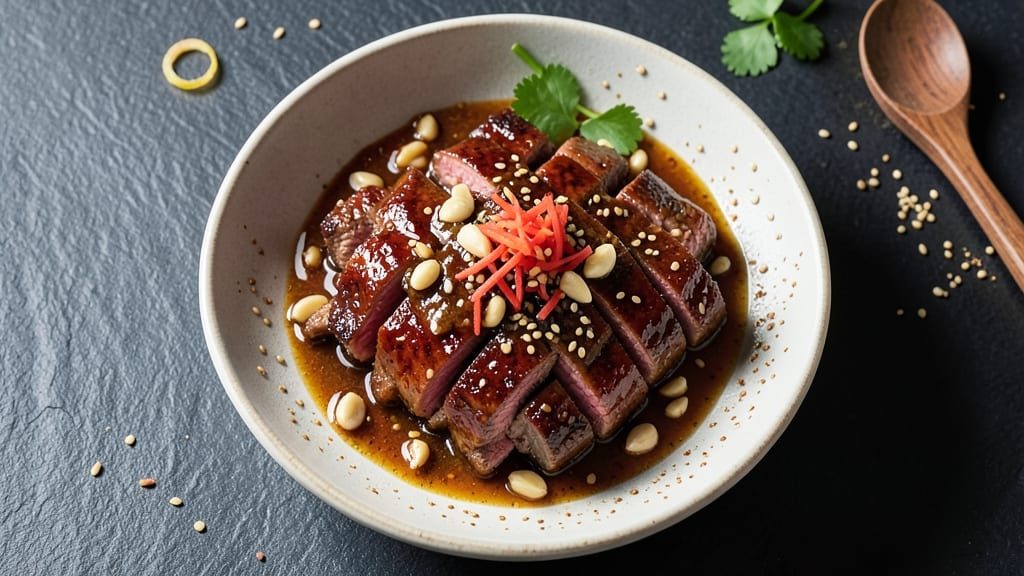
This quick marinate Asian beef flank recipe delivers restaurant-quality results in under 30 minutes—no fancy equipment needed. The secret lies in a bold soy-ginger marinade that tenderizes the meat while adding layers of umami and brightness.
I developed this technique after years of perfecting stir-fry timing, ensuring that every bite has that signature wok-seared crunch and melt-in-your-mouth tenderness.
The process starts with a simple yet transformative marinade of soy sauce, garlic, ginger, and a touch of brown sugar, which caramelizes beautifully during cooking. After just 15 minutes of resting, the beef develops deep flavor without overpowering its natural richness.
The real magic happens when you sear it in a hot wok or skillet—high heat creates those coveted crispy edges while keeping the inside perfectly tender.
What you’ll end up with is a dish that’s equally at home on a weeknight dinner table or a weekend spread. The beef slices effortlessly, making it perfect for stir-fry bowls, rice platters, or fresh spring rolls.
The aromas alone—smoky, sweet, and savory—will have everyone asking for seconds, and the texture contrast between the crispy exterior and tender interior is pure satisfaction.
Pair it with steamed jasmine rice, quick-pickled vegetables, or a simple cucumber salad to round out the meal. This recipe proves that authentic Asian flavors aren’t just for takeout—they’re easily mastered at home with the right technique. Let’s get started!
Ingredients for asian beef flank
Twelve ingredients transform simple beef flank into restaurant-quality wok-seared perfection in minutes.
| Ingredient | Amount | Notes |
|---|---|---|
| Beef Flank Steak 🥩 | 1 ½ lb | Thinly sliced against grain |
| Low-Sodium Soy Sauce 🍶 | ⅓ cup | High-quality, preferably Japanese |
| Fresh Ginger 🌿 | 2 tbsp | Finely grated, aromatic |
| Garlic Cloves 🧄 | 6 cloves | Minced, fresh preferred |
| Brown Sugar 🍚 | 2 tbsp | Light or dark variety |
| Sesame Oil 🫒 | 1 tbsp | Toasted, for aroma |
| Neutral Oil 🫒 | 1 tbsp | Avocado or vegetable oil |
| Green Onions 🧅 | 4 whole | Thinly sliced, white and green |
| Sesame Seeds 🌾 | 1 tbsp | Toasted, for garnish |
| Diamond Crystal Kosher Salt 🧂 | 1 tsp | Fine grain, for seasoning |
| Black Pepper 🌶️ | ½ tsp | Freshly ground, for heat |
| Cornstarch 🌾 | 1 tbsp | For crispy sear |
The beef flank is the star—look for a cut with good marbling at Whole Foods or your local butcher. Japanese-style soy sauce like Kikkoman delivers authentic umami depth, while fresh ginger and garlic ensure vibrant flavor. Toasting the sesame seeds in a dry pan until fragrant (about 2 minutes) amplifies their nutty aroma, which is essential for that authentic Asian touch. For the brown sugar, light brown works best—it caramelizes beautifully without overpowering the dish. If you can't find low-sodium soy sauce, reduce regular soy sauce by half and add a pinch of salt to balance.
No sesame oil? Toasted peanut oil works as a substitute, though it has a slightly different profile. Fresh ginger too fibrous? Ginger powder at half the amount suffices, but toast it lightly in the pan first to wake up its flavor. For the cornstarch, arrowroot powder is a 1:1 substitute if you prefer. The green onions can be swapped for scallions or chives, though green onions provide the best balance of sharpness and mild sweetness. If you're short on time, pre-minced garlic and ginger from a jar work in a pinch—just drain them well to avoid excess moisture in the marinade.
Marinate the beef for no longer than 30 minutes—any longer and the acidity in the soy sauce will start breaking down the fibers. Store the marinade in an airtight container in the fridge for up to 3 days, though it's best used fresh. The cooked beef reheats beautifully—2-3 minutes in a hot skillet with a splash of water or broth restores its crispy exterior. For meal prep, slice the beef thinly and store it in portions with a drizzle of reserved marinade to keep it moist. The sesame seeds and green onions can be toasted and stored separately for up to 1 week in a sealed container.
Why You'll Love This Recipe
- Here’s what sold me: this tastes even better the next day. I’ll make a big batch on Sunday, slice it thin, and pack it for lunches. The flavors meld even more overnight, and it’s way cheaper than takeout. My kids don’t even realize they’re eating "healthy" because it’s that good.
- Pan in 20: I swear, this is the kind of recipe that makes me feel like a chef without the fuss. Slice the flank, toss it in a bowl with soy sauce, ginger, and garlic—no fancy marinating overnight. The brown sugar caramelizes in minutes while you’re still chopping veggies, and boom, dinner’s ready.
- Sweet-Savory Magic: That balance of salty soy, zesty ginger, and just enough sweetness from brown sugar? It’s like a flavor explosion in your mouth. The garlic cloves get crispy on the edges, and the flank stays juicy—no dry steak here, just pure satisfaction.
- Lunchbox Hero: Here’s what sold me: this tastes even better the next day. I’ll make a big batch on Sunday, slice it thin, and pack it for lunches. The flavors meld even more overnight, and it’s way cheaper than takeout. My kids don’t even realize they’re eating "healthy" because it’s that good.
Step-by-step instructions for Asian beef flank recipe
Master this quick technique for tender, wok-seared beef with restaurant-quality crunch in under 30 minutes.
Prepare the Marinate for Maximum Flavor
In a medium bowl, combine the 0.33 cup low-sodium soy sauce, 2 tbsp finely grated fresh ginger, 6 minced garlic cloves, 2 tbsp brown sugar, and 1 tbsp toasted sesame oil. Mix thoroughly until the brown sugar dissolves completely—this ensures even distribution of sweetness and umami throughout the beef. The ginger and garlic should be completely incorporated, with no visible chunks remaining.
Place the 1.5 lb beef flank steak in a resealable plastic bag and pour the marinade over it. Seal the bag tightly, pressing out any air pockets to ensure full contact between the beef and marinade. Gently massage the bag to coat the beef evenly, then refrigerate for at least 15 minutes (up to 2 hours for deeper flavor penetration). The steak should absorb the marinade completely, with visible color changes indicating flavor infusion.
Slice and Tenderize the Beef
Remove the beef from the refrigerator and let it sit at room temperature for 10 minutes to ensure even cooking. Using a sharp knife, slice the beef thinly against the grain into ¼-inch thick strips. This cutting technique is critical—it shortens the muscle fibers, resulting in tender bites. Place the sliced beef in a clean bowl and discard any excess marinade.
In a small bowl, whisk together 1 tbsp neutral oil and 1 tbsp cornstarch until fully combined. This mixture creates a crispy sear when cooked. Add the beef strips to the oil-cornstarch mixture and toss gently to coat evenly. Let the beef sit for 5 minutes while you prepare your wok or skillet—this allows the cornstarch to adhere properly for that coveted crunch.
Wok-Sear for Perfect Texture
Heat a 14-inch wok or large skillet over high heat until it's smoking hot. Add the beef in a single layer, spreading it out evenly to avoid overcrowding. Cook undisturbed for 1-2 minutes until the bottoms develop a deep golden brown crust. This initial sear is crucial—it locks in juices and creates that signature wok-seared texture.
Use tongs to stir the beef and cook for an additional 1-2 minutes until 85% cooked through. The beef should still have a slight pink center—it will finish cooking from residual heat. Remove the beef from the wok and set aside on a plate. The high heat ensures the beef cooks quickly while maintaining tenderness, preventing it from becoming tough.
Finish with Aromatics and Garnish
In the same wok, reduce the heat to medium-high and add 4 thinly sliced green onions, white and green parts separated. Stir-fry for 30 seconds until the whites are softened but still vibrant. Add the 1 tbsp toasted sesame seeds and cook for an additional 10 seconds, just until fragrant. Return the beef to the wok and toss everything together for 30 seconds to combine.
Season with 1 tsp diamond crystal kosher salt and 0.5 tsp freshly ground black pepper, tossing gently to distribute evenly. The dish should now have a balance of sweet, savory, and slightly spicy flavors with a crispy texture. Serve immediately over steamed rice or noodles, garnished with additional green onions if desired. The beef should be tender with a crispy exterior, and the sauce should coat each bite perfectly.
Pro Tips For Making Asian Beef Flank
- Slice Against the Grain: Flank steak’s fibers run long—if you cut with the grain, you’ll end up with chewy, tough slices. Grab your knife and angle it diagonally across the grain before slicing, or you’ll spend 10 minutes sawing through rubbery strips instead of tender, ribbon-like bites. (Yes, even if you’re impatient like me.)
- Mince Ginger Like It’s 1995: Fresh ginger loses its bite fast—so don’t wait until the last second. Use a microplane or the smallest holes on a grater, then mix it into the sauce immediately after grating. If you let it sit, it’ll turn mushy and dull, and your dish will taste like it’s missing something. (Trust me, I’ve burned this bridge.)
- Don’t Rush the Caramelization: The brown sugar isn’t just for sweetness—it’s for depth. Let the garlic and ginger sizzle in the pan for 2–3 minutes until they’re golden, then add the sugar. Stir constantly and resist the urge to walk away; it’ll burn before you know it. A few minutes of patience = a sauce that’s rich, not cloying.
- Rest the Steak Before Slicing: Cutting into flank steak the second it hits the plate is a fast track to dry, stringy meat. Tent it with foil and let it rest for at least 10 minutes—the juices redistribute, and your slices stay juicy. (I learned this the hard way after serving a sad, dry pile of meat at Thanksgiving.)
Flavor customization for this dish
Sweet and Tangy Twist
Swap the brown sugar for 2 tbsp honey and add 1 tbsp rice vinegar to the marinade for a bright, sweet-tangy profile. The honey caramelizes beautifully during searing, while the vinegar adds a refreshing contrast. I love this version with a sprinkle of red pepper flakes for subtle heat. 🌶️
Spicy Sichuan Style
Infuse the marinade with 1 tbsp Sichuan peppercorns (toasted and ground) and 1 tsp chili bean paste for that signature numbing-spicy kick. Add 1 tbsp doubanjiang (fermented chili bean paste) to deepen the umami.
Serve with pickled vegetables to balance the intense flavors. Trust me, this takes your beef to another level!
Creamy Garlic Ginger
After searing, stir in 2 tbsp coconut milk and 1 tbsp hoisin sauce to create a silky-smooth finish. The coconut milk adds richness while hoisin brings that perfect balance of sweet and salty.
Garnish with extra toasted sesame seeds and cilantro for freshness. This version feels luxurious but stays quick to prepare.
Smoky BBQ Fusion
Replace the soy sauce with ¼ cup BBQ sauce (I recommend Sweet Baby Ray's) and add 1 tsp smoked paprika to the marinade. After searing, finish with a drizzle of chipotle sauce for smoky depth.
This fusion is perfect for tacos or over cornbread—it’s a crowd-pleaser with a modern twist. 🔥
Herb-Infused Brightness
Add 1 tbsp fresh cilantro and 1 tbsp Thai basil to the marinade for a fragrant, herbaceous twist. After cooking, toss with 1 tsp lime zest and a splash of lime juice for zesty brightness. This version pairs beautifully with mint and cucumber salad for a refreshing contrast.
Umami Bomb
Boost the marinade with 1 tbsp fish sauce and 1 tsp oyster sauce for an extra layer of umami richness. After searing, stir in 1 tsp miso paste for depth. This version is especially satisfying when served with steamed bok choy or shitake mushrooms to complement the savory flavors. 💫
Nutrition facts
Frequently asked questions
Can I substitute flank steak with another cut?
Flank steak works perfectly because of its lean texture and flavor, but you can use skirt steak or sirloin as substitutes. Slice all cuts thinly against the grain for tenderness. For thicker cuts like ribeye, reduce marinating time to 10 minutes to avoid over-tenderizing.
Why is my beef tough after cooking?
Toughness usually happens when the beef isn't sliced against the grain or overcooked. Always slice perpendicular to the muscle fibers, and remove the beef from heat when it reaches 145°F internally (slight pink center). The cornstarch coating helps create a crispy exterior without drying the meat.
How do I make this recipe gluten-free?
Replace the soy sauce with tamari (gluten-free soy sauce) or coconut aminos for a 1:1 swap. Ensure your cornstarch is certified gluten-free, and check sesame oil labels—some brands process in gluten-containing facilities. The flavor remains rich and savory with these adjustments.
Can I prep the marinade ahead of time?
Yes! Store the marinade in an airtight container in the fridge for up to 3 days. For best results, marinate the beef for 15-30 minutes maximum—longer marinating can make the meat mushy. If prepping ahead, keep the beef and marinade separate until ready to combine.
What's the best way to reheat leftovers?
Reheat in a hot skillet for 2-3 minutes with a splash of water or beef broth to restore moisture. Avoid microwaving—it ruins the crispy texture. For extra flavor, toss reheated beef with a little fresh garlic, ginger, and a drizzle of soy sauce before serving.