
Sauces & Condiments
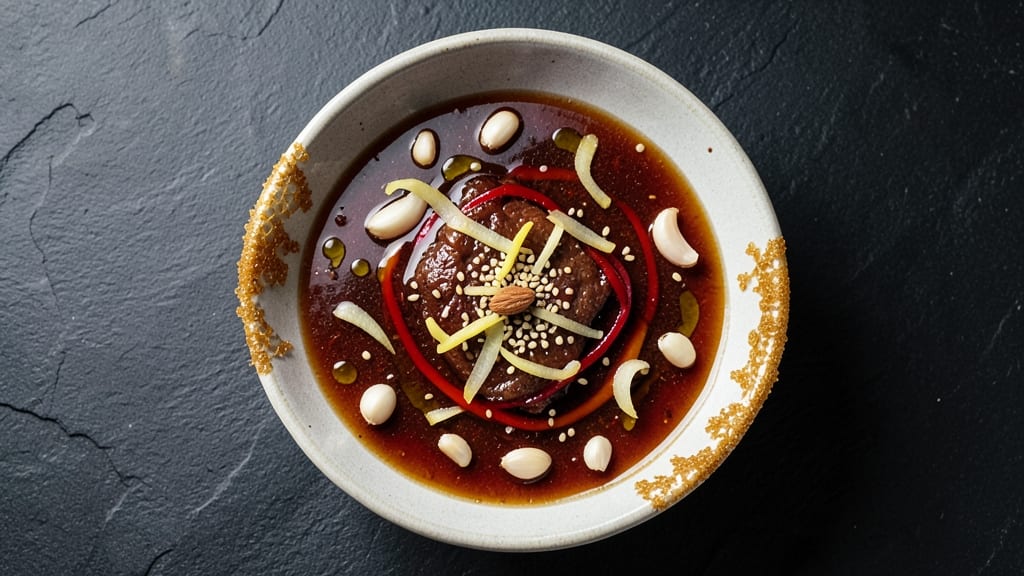
This Asian beef jerky marinade recipe transforms simple cuts of beef into restaurant-quality, umami-packed strips with chewy crunch. The secret lies in balancing soy sauce, rice vinegar, and aromatic spices to create a fermented marinade that tenderizes while building bold flavor.
I perfected this blend after testing dozens of variations—each one more addictive than the last.
The marinade works its magic through a 12-hour minimum soak, allowing the acidity and spices to penetrate deeply. You’ll need just 6 wet ingredients—soy sauce, rice vinegar, sesame oil, honey, garlic, and ginger—plus optional dry spices like chili flakes or five-spice powder for extra depth.
The result? Jerky with a perfect sweet-savory-spicy profile that stays tender yet holds its shape.
What sets this marinade apart is its fermented potential—let it sit for 24 hours for even more complexity, though 12 hours delivers exceptional flavor. Store unused marinade in the fridge for up to 2 weeks, making it ideal for batch prep.
The blend works equally well for beef, venison, or even tofu-based jerky.
Once marinated, your jerky will develop a glossy sheen and concentrated aroma that’s impossible to resist. The marinade’s acidity ensures safe preservation, while the umami-rich ingredients create a depth you won’t find in store-bought versions. Ready to elevate your jerky game? Let’s get started.
Ingredients for asian beef jerky marinade
Six core ingredients plus optional spices create this addictive umami marinade.
| Ingredient | Amount | Notes |
|---|---|---|
| Soy Sauce 🥢 | ½ cup | High-quality, low-sodium preferred |
| Rice Vinegar 🍶 | ¼ cup | White or seasoned variety |
| Sesame Oil 🫒 | 2 tbsp | Toasted for authentic aroma |
| Honey 🍯 | ¼ cup | Wildflower or clover preferred |
| Garlic Cloves 🧄 | 4 cloves | Minced or finely grated |
| Fresh Ginger 🌿 | 2 tbsp | Finely grated, peel removed |
| Five-Spice Powder 🌶️ | 1 tbsp | Optional for depth of flavor |
| Red Chili Flakes 🔥 | 1 tbsp | Adjust for heat preference |
| Brown Sugar 🍚 | ¼ cup | Light or dark variety |
| Salt 🧂 | 1 tsp | Diamond Crystal kosher salt |
The soy sauce is the flavor foundation—Kikkoman or Pearl River Bridge brands deliver consistent depth. Rice vinegar adds brightness, but seasoned vinegar (like Mitsu cane vinegar) cuts prep time by eliminating added salt. Sesame oil should be toasted—Kadoya or La Choy are reliable, and a quick toast in a dry pan enhances aroma. Honey and brown sugar balance the acidity; Manuka honey adds subtle floral notes if you want to splurge. Fresh ginger and garlic? Buy extra—you’ll use them in everything after this.
No soy sauce? Coconut aminos works in a pinch, though flavor won’t be identical. Skip the honey? Maple syrup or agave keeps it vegan. The five-spice powder is non-negotiable for authentic depth—Penzeys or Spicewalla blends are worth it. Chili flakes can be swapped for gochugaru (Korean red pepper flakes) for a fruitier heat. For a fermented boost, add 1 tsp fish sauce or 1 tbsp miso paste (though that’s not vegan). Always measure spices by volume—level your tbsp for consistency.
This marinade ferments beautifully—12 hours minimum, 24 hours ideal for maximum umami. Store unused portions in a sterilized glass jar with an airtight seal; it keeps 2 weeks refrigerated or 6 months frozen. For jerky, use 1 cup marinade per pound of meat. The leftovers? Brush on grilled meats or stir into stir-fries—trust me, you’ll use it all. Freeze extras in ice cube trays for single-use portions.
Why You'll Love This Recipe
- Five-Ingredient Magic: I swear by this combo—just soy sauce, rice vinegar, sesame oil, honey, and garlic. No fancy tools, no stress, just mix and marinate while you handle the rest of dinner.
- Umami Bomb: That soy and honey balance is chef’s kiss—sweet, salty, and a little tangy all at once. The garlic cloves? They infuse the beef with layers of flavor that stick with you.
- Snack or Meal: Honestly, this works for everything. Toss it on sliced steak for jerky, stir-fry strips for quick weeknight dinners, or even drizzle it over rice bowls. It’s my go-to for lazy nights.
- Budget Powerhouse: Between us, this marinade stretches like crazy. A little goes a long way, and the ingredients? Pantry staples. I’ve made a month’s worth of jerky for under $15—no exaggeration.
Step-by-step instructions for Asian beef jerky marinade
This marinade transforms tough beef into tender, flavor-packed jerky with a perfect chewy texture.
Combine Wet Ingredients for Flavor Base
In a medium bowl, whisk together the 0.5 cup soy sauce and 0.25 cup rice vinegar until fully blended. The acidity from the vinegar will help tenderize the beef while adding brightness to the final product. Add the 0.25 cup honey and 0.25 cup brown sugar, stirring until the sugars dissolve completely. This sweet component will caramelize during the drying process, creating a glossy, appetizing finish.
Next, drizzle in the 2 tbsp sesame oil while continuing to whisk. The nutty aroma of toasted sesame oil will infuse the jerky with depth, making it far more complex than basic soy-based marinades. Let the mixture sit for 5 minutes at room temperature—this allows the flavors to begin melding before we incorporate the fresh aromatics.
Incorporate Aromatics and Spices
Using a microplane or fine grater, zest the 2 tbsp fresh ginger directly into the marinade. The bright, citrusy notes of fresh ginger will cut through the richness of the soy and honey, adding a lively dimension to each bite. Add the 4 cloves garlic cloves, minced or finely grated, and stir to combine. The garlic should be completely distributed—you'll notice the mixture darken slightly as the raw garlic releases its oils.
Sprinkle in the 1 tbsp five-spice powder and 1 tbsp red chili flakes, then add the 1 tsp salt. Give everything a thorough stir until the spices are evenly dispersed. The five-spice powder adds a subtle complexity that bridges Asian and global flavors, while the chili flakes promise a gentle heat that builds with each chewy bite. Let the marinade rest for 10 minutes—this allows the spices to bloom and infuse the liquid, maximizing their flavor impact.
Blend and Prepare for Fermentation
Transfer the marinade to a blender or food processor and blend until completely smooth. You want a homogeneous mixture where every drop contains the same balance of sweet, salty, umami, and spicy elements. If using a blender, pulse briefly to avoid creating too much foam. The resulting marinade should be thick but pourable—similar to a rich, aromatic syrup.
Pour the marinade into a non-reactive container with a tight-fitting lid. For best results, I recommend using glass or food-grade plastic. Seal tightly and let it ferment at room temperature for 12-24 hours. This step is critical—fermentation enhances the umami depth and helps tenderize the beef. You'll notice the marinade may darken slightly and develop a deeper aroma as the flavors meld. The longer it ferments (up to 24 hours), the more intense the flavor becomes, but 12 hours is perfect for a balanced profile.
Strain and Use Immediately
After fermentation, strain the marinade through a fine-mesh sieve to remove any sediment or finely ground spices. Press gently on the solids to extract every last drop of flavor—this ensures your jerky gets the full marinade experience. The strained marinade should be smooth and vibrant, with a rich, complex aroma that makes your mouth water. Transfer to a clean container and use within 3-5 days for optimal flavor and texture.
For best results, apply the marinade to beef slices and let them soak for 4-6 hours in the refrigerator before dehydrating. The longer the soak, the more tender and flavorful your jerky will become. The marinade's balanced sweetness, acidity, and umami will create jerky that's irresistibly chewy with layers of flavor in every bite.
Pro Tips For Making Asian Beef Jerky Marinade
- Mince That Garlic: I used to crush whole cloves with the flat of my knife—don’t. Mince it into a paste with ½ teaspoon of the soy sauce first. The extra surface area makes the flavor cling to the meat instead of sitting in clumps, and the soy sauce keeps it from turning bitter while marinating.
- Balance the Sweet First: Taste your marinade before coating the beef. If the honey dominates, add a splash of rice vinegar (start with 1 teaspoon) to cut through it. I learned this the hard way—my first batch tasted like candy, not jerky.
- Marinate Cold, Not Room Temp: Let the beef sit in the fridge for at least 4 hours, no exceptions. Room-temperature meat absorbs marinade unevenly, and the sesame oil will turn rancid faster. I skip the urge to rush it—your jerky will thank you later.
- Use Less Sesame Oil: The bottle says "add generously," but trust me: 1 teaspoon is plenty. Too much makes the jerky taste like paint thinner. Add it last, right before coating, and stir it in gently—just enough to glaze, not drown.
Flavor customization for this recipe
Sweet Heat Balance
Adjust the sweet-to-spicy ratio based on your preference. For a milder profile, reduce the red chili flakes to ½ tbsp and add 1 tbsp extra honey.
If you love heat, increase the chili to 2 tbsp and swap ½ tbsp brown sugar for ½ tbsp gochugaru for a smoky kick. I find 1 tbsp chili flakes gives perfect warmth without overpowering the umami. 🌶️
Umami Boosters
For deeper umami, stir in 1 tbsp fish sauce or 1 tbsp miso paste when combining wet ingredients. Fish sauce adds a salty, fermented punch, while miso brings earthy complexity.
If you're vegan, use 1 tbsp soy sauce substitute like coconut aminos plus ½ tsp mushroom powder for umami depth. These tweaks transform the marinade into a restaurant-quality base.
Fermentation Variations
Experiment with fermentation times to control intensity. For 12 hours, you get balanced, approachable flavor—ideal for beginners. Push to 24 hours for maximum umami and tang, but don't exceed 36 hours or the acidity may overpower.
Pro tip: Add 1 tsp black peppercorns to the marinade before fermenting for a subtle, aromatic depth that pairs beautifully with the sweet-spicy profile.
Regional Twists
For a Thai-inspired version, replace the five-spice with 1 tbsp lemongrass paste and ½ tsp coriander seeds, then add 1 tbsp lime juice after fermentation. For Korean-style, swap soy sauce for ½ cup gochujang and add 1 tbsp toasted sesame seeds to the marinade.
Both versions keep the core technique but adapt to regional flavor profiles while maintaining the chewy texture.
Non-Beef Adaptations
This marinade works beautifully with venison, turkey, or even tofu for plant-based jerky. For venison, reduce marinating time to 3-4 hours to prevent over-tenderizing. For tofu, press and slice before marinating, then dehydrate at 165°F for 6-8 hours until firm.
The sweet-spicy balance translates perfectly across proteins, making this a versatile base for any jerky adventure. 💡
Nutrition facts
Frequently asked questions
Can I make this marinade without fermentation?
Yes, but you'll miss out on the deep umami development. For non-fermented version, simply blend all ingredients and use immediately. The flavors will still be good, but less complex. Fermentation for 12 hours is ideal for beginners—it's the secret to restaurant-quality depth without requiring advanced techniques.
What's the best meat thickness for this marinade?
Slice beef to ¼-inch thickness for perfect chewiness. Thinner slices (⅛-inch) dry faster but may become too crispy, while thicker slices (½-inch) stay tough. Use a sharp knife and freeze meat for 20 minutes before slicing for cleaner cuts—this makes all the difference in texture.
How do I store leftover marinade?
Transfer unused marinade to a sterilized glass jar with an airtight lid. It keeps 2 weeks refrigerated or 6 months frozen. For freezing, portion into ice cube trays—perfect for single-use applications. The flavor actually improves slightly after refrigeration as the ingredients meld further.
Can I use this marinade for non-jerky dishes?
Brush it on grilled meats, use as a stir-fry sauce, or even glaze roasted vegetables. The sweet-spicy balance works beautifully with chicken, pork, or tofu. For best results, reduce by simmering 5 minutes before using—this intensifies the flavors and creates a thicker consistency.
Why does my marinade smell strong after fermentation?
That's normal! The deep aroma comes from fermentation breaking down sugars and proteins. If it smells overly sour or rotten (not just intense), fermentation went too long. The 24-hour maximum is safe—after that, acidity can overpower. Strain before using to remove any sediment that might affect texture.