
Main Courses
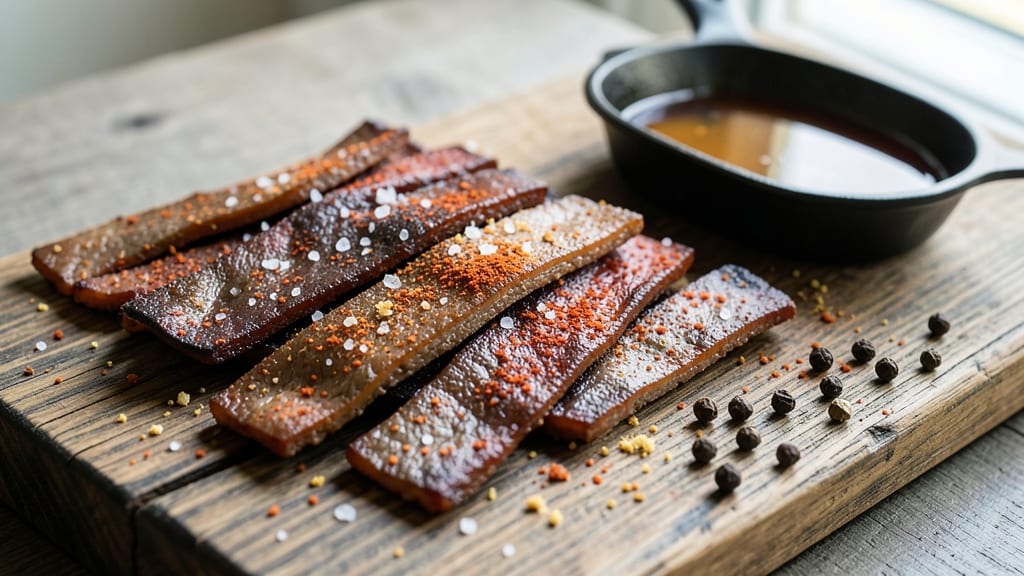
Australian beef jerky delivers that perfect balance of smoky depth, chewy texture, and bold spices that make it a travel-friendly staple. This recipe transforms tough cuts of beef into tender, flavor-packed strips using traditional curing methods and precise drying techniques. The key lies in the marinade—where salt, sugar, and native spices like wattleseed or smoked paprika create that signature Australian taste.
Unlike store-bought versions, this method ensures restaurant-quality results with a perfect chew and intense flavor. You’ll start with a simple brine to tenderize the meat, then coat it in a spice blend that caramelizes beautifully during drying.
Whether you use a dehydrator, oven, or even a smoker, the process is straightforward but requires patience for that ideal texture.
The result? Jerky that’s chewy yet tender, with a smoky aroma that fills your kitchen and a flavor profile that’s both savory and slightly sweet. It’s the kind of snack that’s perfect for hiking trips, lunchboxes, or satisfying cravings between meals.
Plus, making it from scratch means you control the quality—no artificial additives or preservatives.
Once dried to perfection, this jerky stays fresh for weeks when stored properly, making it a cost-effective way to enjoy high-quality protein anytime. Ready to master the art of Australian-style jerky? Let’s get started with the ingredients and techniques that make this recipe a standout.
Ingredients for australian beef jerky
These bold flavors and precise measurements transform tough beef into restaurant-quality jerky.
| Ingredient | Amount | Notes |
|---|---|---|
| Beef Top Round Roast 🥩 | 2 lb | Tough cut, sliced thin against grain |
| Kosher Salt 🧂 | ½ cup | Diamond Crystal preferred |
| Granulated Sugar 🍚 | ¼ cup | White or brown works |
| Smoked Paprika 🌶️ | 2 tbsp | High-quality for smoky depth |
| Ground Black Pepper 🌶️ | 1 tbsp | Freshly cracked preferred |
| Garlic Powder 🧄 | 1 tbsp | Freshly ground if possible |
| Onion Powder 🧅 | 1 tbsp | For subtle depth |
| Worcestershire Sauce 🍶 | 2 tbsp | Vegan version if needed |
| Liquid Smoke 🔥 | 1 tbsp | Authentic smoky flavor |
| Apple Cider Vinegar 🍎 | 2 tbsp | For tangy brightness |
| Extra-Virgin Olive Oil 🫒 | 1 tbsp | For moisture balance |
| Wattleseed Powder 🌿 | 1 tsp | Australian native spice (optional) |
The beef cut matters—top round roast is ideal for its lean texture and affordable price. Look for grass-fed beef if possible, as it has better flavor and natural tenderness. Slice the meat thin against the grain (about 1/4-inch thick) for that perfect chewy texture. Most butchers will slice it for you if you ask. For the spices, Penzeys or bulk bins at specialty stores offer the freshest, most flavorful options. Smoked paprika is non-negotiable here—it's what gives Australian jerky its signature depth. If you can't find wattleseed, ground coriander makes a decent substitute, though it won't be authentic.
No Worcestershire sauce? A mix of soy sauce and a pinch of sugar works in a pinch, though the flavor won't be identical. Liquid smoke can be tricky—too much makes it taste like a campfire. Start with 1 tablespoon and adjust to taste. The apple cider vinegar adds that tangy brightness that cuts through the richness. For a sweeter profile, honey or maple syrup can replace sugar, though traditional recipes use granulated. If you're using a dehydrator, parchment paper prevents sticking—don't skip this step. And trust me on the olive oil—it helps the spices adhere and keeps the jerky from drying out too quickly.
Store your jerky in an airtight container with parchment paper between layers to prevent sticking. It keeps for up to 2 weeks at room temperature or 3 months in the freezer. The flavor actually improves over time as the spices meld. For best results, reheat in a dry skillet for 10 seconds per side before serving—it revives the texture beautifully. This makes about 4 servings (16 oz total), but double the batch if you're planning for road trips or gifts—it disappears fast.
Why You'll Love This Recipe
- Four-Hour Magic: That’s right—just slice, marinate, and dehydrate. No oven babysitting, no flipping, no stress. The beef stays tender while the sugar and smoked paprika work their smoky-sweet spell over hours, hands-off.
- Smoky-Sweet Obsession: The sugar caramelizes into a sticky glaze that clings to every bite, while the smoked paprika gives it that deep, campfire-like warmth. Honestly? It’s the kind of flavor that makes you reach for seconds without thinking.
- Snack Attack Ready: Stash it in your gym bag, toss it in lunchboxes, or keep a stash at your desk. It’s my go-to for road trips, hiking, or when I’m too tired to cook. (Yes, even on a Tuesday night.)
- Budget-Friendly Protein: Top round roast is cheap, and a single batch stretches for days. Freeze extras for later—perfect for when you need a filling, no-fuss protein boost without breaking the bank. My wallet thanks me every time.
Step-by-step instructions for Australian beef jerky
This method delivers authentic Aussie-style jerky with perfect chew and bold smoky flavor every time.
Freeze and Slice the Beef Top Round Roast
First, freeze the 2 lb Beef Top Round Roast for 24 hours before slicing. This makes the meat easier to cut into thin strips against the grain. Remove it from the freezer and use a very sharp boning knife to slice each piece into ¼-inch thick strips—about ½-inch wide. You're aiming for uniform thickness so everything cooks evenly.
As you slice, keep the strips in a single layer on a baking sheet lined with parchment paper. Don't stack them yet—this prevents freezing and ensures they dry properly. If you notice any strips thicker than ⅛ inch, slice them again. Thick pieces won't dry completely, leaving you with chewy spots instead of that perfect jerky texture.
Prepare the Dry Rub and Marinade
In a large bowl, combine the 0.5 cup Kosher Salt, 0.25 cup Granulated Sugar, 2 tbsp Smoked Paprika, 1 tbsp Ground Black Pepper, 1 tbsp Garlic Powder, 1 tbsp Onion Powder, and 1 tsp Wattleseed Powder. Mix these dry ingredients thoroughly with your hands or a fork until evenly distributed—this ensures every strip gets that signature Australian spice blend.
In a separate bowl, whisk together the 2 tbsp Worcestershire Sauce, 1 tbsp Liquid Smoke, 2 tbsp Apple Cider Vinegar, and 1 tbsp Extra-Virgin Olive Oil. This marinade adds moisture balance and that unmistakable smoky tang. Pour this liquid mixture over the dry rub and stir until you have a coarse, damp mixture that clings to your fingers when you squeeze it.
Coat the Beef Strips Thoroughly
Add the sliced beef strips to the spice mixture and toss them gently but completely to coat every surface. Work in batches if needed—you want each strip covered in the rub, not just the ends. Let them sit for 10 minutes at room temperature while the flavors begin to penetrate. This short marinating time is key; longer doesn't improve the result but can make the jerky too soft.
After marinating, spread the strips out again in a single layer on a clean baking sheet. This prevents them from sticking together during the drying process. If any strips look particularly dry or clumpy, give them a quick toss with a fresh pinch of the rub mixture to restore even coverage.
Dry the Jerky Using the Dehydrator Method
Set your dehydrator to 160°F—this low temperature ensures even drying without cooking the meat. Arrange the beef strips on the dehydrator trays, leaving at least ½ inch between each piece for proper airflow. Place a small wire rack underneath if your dehydrator has one to catch any drippings.
Run the dehydrator for 4-6 hours, checking the jerky after 4 hours. It's done when the strips are completely dry to the touch, with no moisture remaining when you press them gently. The edges should be slightly darker than the centers, but don't worry if they're not perfectly brown yet—this comes from the final step. If you notice any strips drying faster than others, rotate the trays for even exposure.
Finish with a Smoky Glaze (Optional but Recommended)
For that extra-authentic Australian touch, brush the fully dried jerky with a mixture of 1 tbsp Liquid Smoke and 1 tbsp Apple Cider Vinegar (whisked together). This step adds a deep, smoky flavor without making the jerky soggy. Let the jerky sit for 10 minutes to absorb the glaze, then transfer it to an airtight container.
Store in the fridge for up to 2 weeks or freeze for 3 months to preserve freshness. When ready to serve, let the jerky come to room temperature for 10 minutes before eating—this enhances the texture and makes every bite perfectly chewy. The result? Jerky with that signature Australian boldness, smoky depth, and satisfying chew you'd find in an Outback kitchen.
Pro Tips For Making Australian Beef Jerky
- Freeze the Meat First: I learned this the hard way—skipping the freeze step means uneven slicing and jerky that cooks at different rates. Pop the Top Round in the freezer for 30 minutes before slicing; it’ll hold the knife better and give you those clean, paper-thin strips every time.
- Mix Wet and Dry Early: Don’t just toss the sugar and paprika on top—work them into the meat with your hands. After salting the beef, rub the sugar and spices into every strip while it’s still cold. This guarantees even flavor distribution instead of just a dusting on the surface.
- Skip the Crowding in the Dryer: Overloading the dehydrator trays means uneven drying and jerky that stays chewy. Leave at least an inch between strips, and if you’re short on space, do two batches. Trust me, the extra 30 minutes waiting is worth the crispy, restaurant-quality result.
- Check Internal Temp, Not Just Time: The dehydrator’s timer is a guess. Use a meat thermometer—jerky’s done at 160°F (71°C). I used to pull mine out based on hours, only to end up with either raw centers or brittle, overdone edges. A quick check at the thickest part guarantees perfect texture every time.
Essential equipment for australian beef jerky
Dehydrator Essentials
Your dehydrator is the star of this recipe—look for models with adjustable temperature settings like the Nesco FD-75A or Cosori Premium. These units maintain 160°F consistently, which is critical for even drying.
Avoid cheap dehydrators that struggle below 165°F, as higher temps can cook the jerky instead of dehydrating it properly. 🌡️
Oven Drying Setup
If you don’t have a dehydrator, your oven can work with the right setup. Preheat to 175°F (the lowest setting) and prop the door open with a wooden spoon to allow moisture to escape.
Line a baking sheet with parchment paper and place a wire rack on top for airflow. Rotate trays every 2 hours for even drying.
Smoker Conversion
For smoked jerky, use a pellet smoker set to 160°F with hickory or applewood pellets for that authentic Aussie smokiness. Arrange strips on the smoker grates with 1-inch spacing and smoke for 3-4 hours, checking frequently. The smoke adds depth without over-drying the meat.
Essential Knives
A sharp boning knife (like the Wüsthof Classic) is non-negotiable for slicing beef against the grain. Dull knives crush the meat, leading to uneven drying. Keep your knife honed—a Whetstone like the King 1000/3000 works perfectly. Slice strips ¼-inch thick for consistent texture.
Storage Containers
Use airtight containers with parchment paper between layers to prevent sticking. I recommend mason jars or BPA-free plastic containers for short-term fridge storage. For long-term freezer storage, vacuum-seal bags (like FoodSaver) preserve freshness for 3 months without freezer burn. 💪
Nutrition facts
Frequently asked questions
Can I use a different cut of beef for Australian jerky?
Yes, but top round roast is ideal for its lean texture and affordability. You can also use bottom round or sirloin tip, but avoid fatty cuts like ribeye—they won't dry properly. For extra tenderness, marinate for 12 hours if using tougher cuts, but don't exceed 24 hours or the meat may become mushy.
Why does my jerky turn out rubbery instead of chewy?
Rubbery jerky usually means it was either over-dried or the strips were cut too thin. Aim for ¼-inch thickness and check at 4 hours—it should be dry but still pliable. If using a dehydrator, 160°F is perfect; ovens should never exceed 175°F. For extra chew, add ½ tsp xanthan gum to the marinade.
What's the best substitute for wattleseed?
If you can't find wattleseed, try ground coriander (1 tsp) for a nutty depth or smoked sea salt (1 tsp) for a coastal Australian vibe. For a sweeter profile, add ½ tsp cinnamon or ½ tsp allspice. These substitutes won't be identical, but they'll enhance the smoky-sweet balance of the jerky.
How do I know when jerky is fully dried?
Test for doneness by pressing a strip gently—it should feel dry and leathery, with no moisture when you touch it. The edges should be slightly darker than the center, but don't worry if it's not perfectly brown yet. If in doubt, dry for 10 more minutes—under-dried jerky spoils faster. For extra assurance, check the internal temperature with a meat thermometer (145°F is ideal).
Can I make Australian jerky without a dehydrator?
Use your oven at 175°F with the door propped open slightly for airflow. Place strips on a wire rack over a baking sheet and rotate every 2 hours. Alternatively, try a smoker at 160°F with hickory pellets for that authentic Aussie smokiness. Just monitor closely—oven drying takes 6-8 hours vs. 4-6 hours in a dehydrator.