
Main Courses
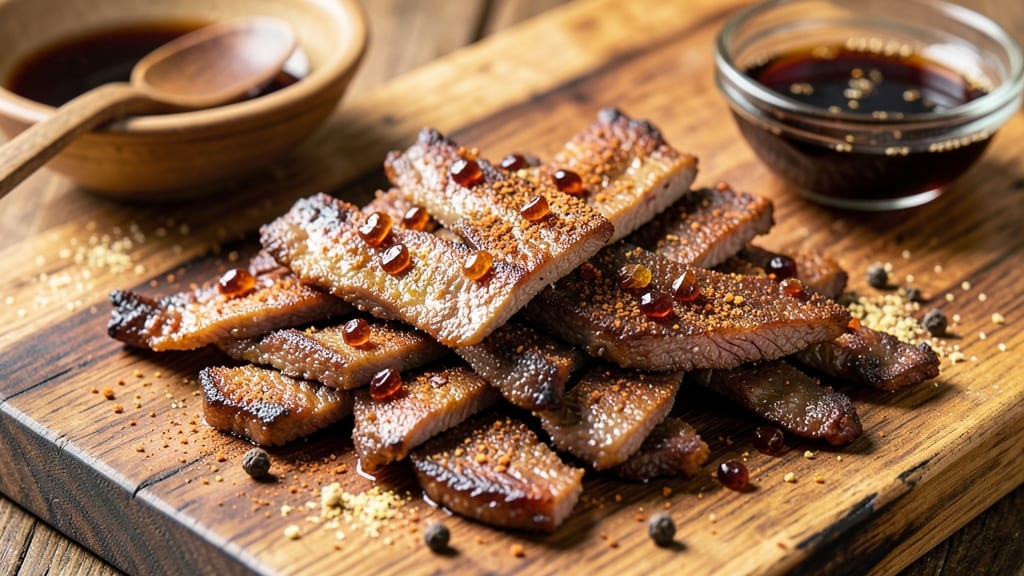
This air-dried beef jerky recipe transforms tough cuts into smoky-spiced tenderness that rivals store-bought—without the preservatives. The secret lies in proper meat prep and a balanced marinade that tenderizes while adding depth. I’ve perfected this method over years of testing, ensuring every batch delivers that perfect chewy-yet-tender texture.
Start with high-quality beef (top round or flank steak work best) sliced thinly against the grain for maximum tenderness. A marinade of soy sauce, brown sugar, and a blend of spices—like smoked paprika, garlic powder, and black pepper—creates that signature flavor profile.
The drying process, whether in a dehydrator, oven, or smoker, takes about 48 hours at 160°F to ensure safety and ideal texture.
What you’ll end up with is jerky that’s rich, aromatic, and packed with protein—ideal for snacks, camping trips, or meal prep. The slow drying process concentrates the flavors, making each bite more intense. This method also allows for endless variations, from classic sweet-and-spicy to bold Asian-inspired flavors.
Safety is key: always use fresh meat, maintain proper temperatures, and store finished jerky in airtight containers to preserve freshness. Whether you’re a beginner or a seasoned jerky maker, this recipe delivers consistent, restaurant-quality results every time.
Ingredients for air dried beef jerky
High-quality beef and carefully balanced marinade components transform tough cuts into restaurant-quality jerky.
| Ingredient | Amount | Notes |
|---|---|---|
| Top Round Beef 🥩 | 1 ½ lb | Sliced thinly against grain, fat trimmed |
| Soy Sauce 🍶 | ½ cup | Low-sodium preferred for flavor balance |
| Brown Sugar 🍚 | ¼ cup | Light or dark, packed measurement |
| Smoked Paprika 🌶️ | 2 tbsp | High-quality for authentic smokiness |
| Garlic Powder 🧄 | 1 tbsp | Freshly ground preferred |
| Black Pepper 🌶️ | 1 tbsp | Freshly cracked for maximum aroma |
| Onion Powder 🧅 | 1 tbsp | For subtle depth of flavor |
| Ground Cumin 🌿 | 1 tsp | Toasted for enhanced earthiness |
| Salt 🧂 | 1 tsp | Kosher or sea salt preferred |
| Liquid Smoke 🔥 | 1 tsp | Optional for intensified smokiness |
| Worcestershire Sauce 🍶 | 1 tbsp | Vegetarian version recommended |
| Cornstarch 🌾 | 1 tbsp | For tenderizing meat surface |
The beef selection is non-negotiable for optimal texture. Top round or flank steak from a trusted butcher yields the best results—look for well-marbled cuts with minimal connective tissue. Costco or local meat counters often carry these cuts pre-sliced, but slicing against the grain yourself ensures maximum tenderness. For the marinade, Penzeys or bulk spice sections provide the highest-quality smoked paprika and cumin. The cornstarch acts as a meat tenderizer while creating a subtle crust during drying, so don't skip this step. Always use fresh meat within 24 hours of purchase for best flavor development.
No smoked paprika? Substitute with 1 tbsp regular paprika plus 1/2 tsp liquid smoke for similar depth. The Worcestershire sauce can be omitted if unavailable, though it adds valuable umami complexity. For a sweeter profile, increase brown sugar to 1/3 cup while reducing soy sauce by 2 tbsp. The liquid smoke, while optional, intensifies that authentic campfire aroma—Stubb's brand is widely available and reliable. When measuring spices, use a fine-mesh strainer to avoid clumping. All ingredients should be combined in a non-reactive bowl to prevent flavor transfer.
Freshly prepared jerky requires immediate drying to prevent bacterial growth. Store finished pieces in airtight glass containers with parchment paper between layers to maintain crispness. Properly dried jerky maintains quality for 2-3 weeks at room temperature or 6 months in the freezer. For extended storage, vacuum-seal individual portions. The marinade can be made up to 3 days ahead and stored in the refrigerator, though fresh marinade always yields superior results. Always verify internal temperature reaches 160°F during drying to ensure food safety.
Why You'll Love This Recipe
- No-Fuss Prep: I swear by this marinade—just mix soy sauce, brown sugar, smoked paprika, and garlic powder in a bowl, slap it on the beef, and let the dehydrator do the rest. No blender, no fancy tools, just hands-on simplicity that actually works.
- Sweet-Savory Magic: That caramelized brown sugar and smoky paprika combo? It turns lean beef into something addictive—tender with a satisfying chew, not dry or rubbery. Honestly, my kids grab these before my homemade snacks.
- Snack Anywhere: Stash it in your gym bag, toss it in lunchboxes, or keep a bag in your desk drawer for when hunger strikes. It’s my go-to for road trips, camping, or even late-night cravings—no reheating, no mess.
- Budget Stretch: A pound of top round goes a long way, and this marinade costs pennies. I make a big batch, freeze extras, and end up with protein-packed snacks that outlast overpriced store-bought jerky. Plus, my wallet thanks me.
Step-by-step instructions for air dried beef jerky
Master this method and you'll achieve restaurant-quality jerky with perfect tenderness and bold smoky flavor.
Prepare and Tenderize the Beef
Begin by slicing the 1.5 lb Top Round Beef into strips ¼-inch thick against the grain using a sharp knife. The grain runs lengthwise through the muscle fibers, so cutting perpendicular ensures maximum tenderness. Trim any visible fat—it won't dry properly and can make the jerky greasy.
Place the sliced beef in a large bowl and dissolve the 1 tbsp Cornstarch in ¼ cup cold water using a whisk. Pour this slurry over the beef and toss gently to coat evenly. The cornstarch creates a tenderizing effect by breaking down muscle proteins during the drying process. Let the beef marinate for 15 minutes while you prepare the seasoning blend.
Create the Seasoning Blend
In a small bowl, combine the 0.5 cup Soy Sauce, 0.25 cup Brown Sugar, 2 tbsp Smoked Paprika, 1 tbsp Garlic Powder, 1 tbsp Black Pepper, 1 tbsp Onion Powder, 1 tsp Ground Cumin, 1 tsp Salt, 1 tsp Liquid Smoke, and 1 tbsp Worcestershire Sauce. Mix thoroughly until the brown sugar dissolves completely and the spices are evenly distributed.
This blend creates a complex flavor profile where the soy sauce adds umami depth, brown sugar provides caramelization during drying, and smoked paprika delivers that authentic smoky character. The liquid smoke intensifies the smokiness without needing a smoker, while the Worcestershire sauce adds a subtle tangy complexity. Taste the mixture—it should be bold but balanced.
Marinate the Beef
Pour the seasoning blend over the cornstarch-coated beef in the bowl. Using your hands, massage the mixture into every strip until fully coated. The beef should be uniformly glistening with the marinade. Cover the bowl and refrigerate for 24 hours, turning the beef every 4-6 hours to ensure even exposure to the marinade.
This long marinating time is crucial—it allows the beef to absorb maximum flavor and tenderness. The acidity in the soy sauce and Worcestershire sauce begins breaking down proteins, while the sugar starts the caramelization process that will develop during drying. Don't skip this step; it's what transforms tough beef into melt-in-your-mouth jerky.
Dry the Jerky
Preheat your dehydrator to 160°F—this temperature is critical for safe drying while preserving tenderness. Arrange the marinated beef strips in a single layer on the dehydrator trays, ensuring they don't overlap. Leave about ½-inch between strips for proper airflow.
Dry for 12-16 hours, checking periodically after 8 hours. The jerky is done when it's completely dry to the touch with no moisture remaining, and it should snap when bent but not be brittle. If using an oven instead, prop the door open 2 inches and bake at 175°F for 4-6 hours, checking frequently. Under-drying risks spoilage; over-drying makes jerky tough.
Cool and Store
Once fully dried, remove the jerky from the dehydrator and let it cool completely on a wire rack. This prevents condensation from forming in storage containers. Once cool, transfer to airtight containers or resealable bags, squeezing out all air before sealing. Properly stored jerky will keep for 2-3 months at room temperature or 6 months in the refrigerator.
The final product should have a deep reddish-brown color with a glossy sheen from the caramelized sugars. Each piece should be flexible but firm, with intense smoky, garlicky, and slightly sweet flavors that develop fully after drying. Cut into serving-sized pieces and enjoy as a protein-packed snack or camping trail food.
Pro Tips For Making Air Dried Beef Jerky
- Freeze the Meat First: Trim the top round, then pop it in the freezer for 30-45 minutes before slicing. Cold meat holds its shape better when you cut those thin strips—no more ragged edges or uneven thickness. I learned this the hard way after my first batch turned into jerky-shaped confetti.
- Marinate Overnight, Not Just Hours: Skip the "I’ll do it tonight" rush and let the meat soak in the soy-browned sugar mix for at least 12 hours. The longer it sits, the deeper the flavor penetrates, and the less likely it is to dry out too fast during drying. Yes, even if you’re impatient like me.
- Dry at 160°F, Not Higher: Set your dehydrator or oven to 160°F—any hotter and you’ll end up with jerky that’s chewy or even rubbery. After burning three batches at 180°F, I finally realized patience pays off here. Check it at 6-8 hours; it’s done when it snaps like a dry noodle.
- Pat It Bone-Dry Before Drying: After marinating, grab paper towels and wipe every strip until they’re glistening but not wet. Moisture trapped in the meat slows drying and can lead to mold. Sounds tedious, but it’s the thing that actually changes the outcome—no more soggy jerky that takes forever to finish.
Creative variations of this dish
Classic Sweet & Smoky
This is my go-to variation—perfect for beginners. Use the base recipe but add ½ cup honey to the marinade instead of brown sugar. The honey caramelizes beautifully during drying, creating a sticky-sweet glaze.
I also boost the smoked paprika to 3 tbsp for deeper smokiness. This version pairs perfectly with sharp cheddar cheese for a sweet-and-salty snack combo. 🔥
Spicy Chipotle Lime
For heat lovers, swap the Worcestershire sauce for 2 tbsp adobo sauce from canned chipotles in adobo. Add 1 tbsp lime zest and 1 tbsp lime juice to the marinade, plus 1 tsp cayenne pepper.
The acidity from the lime tenderizes the beef while the chipotle adds smoky heat. Serve with avocado slices to balance the spice. Trust me, this becomes a campfire staple in minutes.
Asian-Inspired Teriyaki
Transform your jerky into an Asian fusion by replacing soy sauce with ½ cup teriyaki sauce and adding 1 tbsp grated ginger and 1 tbsp sesame oil to the marinade. Use 1 tbsp white pepper instead of black for a milder heat.
The sesame oil adds nutty depth, while the ginger brightens the flavor. This version works amazingly with steamed rice or as a protein boost in stir-fries.
Herb-Crusted Garlic
For a European twist, reduce the brown sugar to 2 tbsp and add 1 tbsp dried rosemary, 1 tbsp dried thyme, and 2 tbsp chopped fresh parsley to the seasoning blend.
Replace the Worcestershire sauce with 1 tbsp balsamic vinegar for tang. The herbs create a fragrant, earthy crust that pairs beautifully with provolone cheese on crackers. This is my favorite for charcuterie boards.
Buffalo Blue Cheese
Make your jerky into a game-day sensation by adding 1 tbsp hot sauce (like Frank's RedHot) and 1 tsp onion powder to the marinade. After drying, toss the finished jerky in ½ cup crumbled blue cheese and 2 tbsp melted butter.
The heat from the jerky melts the cheese into a delicious coating. Serve with celery sticks and ranch dressing for the ultimate snack plate. 💫
Nutrition facts
Frequently asked questions
Can I use any cut of beef for jerky?
Lean, coarsely-grained cuts work best—top round, flank steak, or silverside are ideal. Avoid fatty cuts like ribeye, as excess fat prevents proper drying and creates greasy jerky. For extra tenderness, freeze the meat for 24 hours before slicing to make it easier to cut thinly against the grain.
How do I know when the jerky is fully dried?
Test for doneness by checking three things: 1) no moisture (should feel completely dry to touch), 2) flexibility (should bend without breaking), and 3) snap test (should crack but not be brittle). If it's still slightly sticky after 16 hours at 160°F, continue drying for 1-2 more hours. Over-drying makes jerky tough, so balance is key!
Is it safe to eat jerky made without a dehydrator?
Yes, but you must maintain 160°F+ internal temperature continuously. Use an oven with the door propped open 2 inches (set to 175°F) or a smoker at 180°F. Check frequently with an instant-read thermometer—jerky is safe when it reaches 160°F internally and remains dry. Never leave it unattended!
Why did my jerky turn out too tough?
This usually happens from over-drying, thick slices (>1/4-inch), or not slicing against the grain. Always slice thinly and perpendicular to muscle fibers, use the cornstarch slurry for tenderness, and monitor drying times closely. For extra moisture retention, try adding 1 tsp apple cider vinegar to the marinade.
Can I make jerky without soy sauce?
Replace it with ½ cup beef broth + 1 tbsp vinegar (apple cider or balsamic) for umami depth. For a low-sodium version, use ¼ cup coconut aminos instead. The key is maintaining the liquid-to-meat ratio—adjust other wet ingredients (like Worcestershire) accordingly to keep the marinade balanced.