
Main Courses
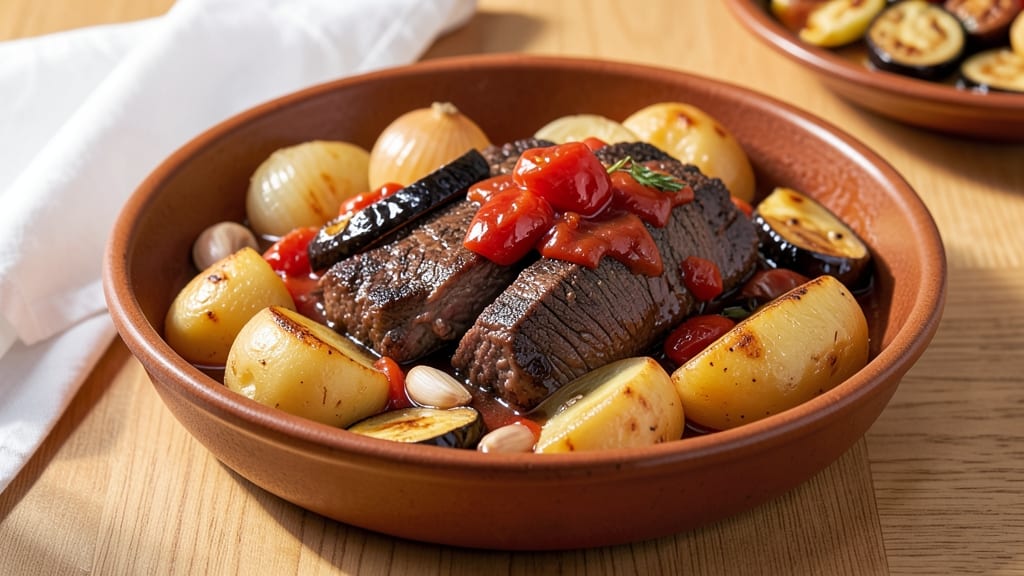
This authentic beef caldereta recipe brings the rich, comforting flavors of Filipino home cooking to your table—slow-braised beef, tender vegetables, and poached eggs in a thick, savory tomato sauce. 💛 The secret lies in proper beef preparation and slow simmering, which transforms tough cuts into melt-in-your-mouth tenderness while developing deep, caramelized flavors.
Unlike many adaptations, this recipe stays true to Filipino traditions by using a blend of tomatoes, vinegar, and spices that create the signature tangy-sweet balance. The potatoes and eggplant soak up the rich sauce, while the poached eggs add a silky finish that makes every bite satisfying.
It’s the kind of dish that tastes even better the next day as flavors meld.
What sets this caldereta apart is the foolproof braising technique—sealing the beef first to lock in juices, then simmering low and slow until the sauce thickens to a velvety consistency. The result is restaurant-quality comfort food that’s hearty enough for a family dinner but elegant enough for gatherings.
Serve with steamed rice to soak up every last drop of that flavorful sauce. The recipe includes optional variations for regional preferences, ensuring you can tailor it to your taste. Let’s get cooking!
Ingredients for authentic beef caldereta
Sixteen ingredients transform into restaurant-quality Filipino comfort food.
| Ingredient | Amount | Notes |
|---|---|---|
| Chuck Roast 🥩 | 2 ½ lb | Cut into 2-inch cubes |
| Russet Potatoes 🥔 | 4 medium | Peeled and cut into chunks |
| Japanese Eggplant 🍆 | 1 whole | Sliced into 1-inch rounds |
| Large Onions 🧅 | 2 whole | Quartered, skin on |
| Garlic Cloves 🧄 | 8 cloves | Minced |
| Canned Tomatoes 🍅 | 1 28-oz can | San Marzano preferred |
| Tomato Paste 🍅 | 2 tbsp | Smooth, not chunky |
| Cane Vinegar 🍶 | ½ cup | White or apple cider |
| Bay Leaves 🌿 | 2 whole | Fresh preferred |
| Black Peppercorns 🌶️ | 1 tsp | Crushed |
| Large Eggs 🥚 | 4 whole | Fresh, for poaching |
| Unsalted Butter 🧈 | 2 tbsp | Cold, for sealing beef |
| Olive Oil 🫒 | ¼ cup | Extra-virgin for richness |
| Salt 🧂 | 1 ½ tsp | Kosher or sea salt |
The chuck roast is non-negotiable for authentic texture—Costco or your local butcher will have it pre-cut, but if buying whole, look for good marbling. The potatoes should be firm and starchy; Russets or Yukon Golds work best. Japanese eggplant (also called long eggplant) has a milder flavor than Italian varieties, but either works in a pinch. For the tomatoes, San Marzano cans are worth the investment—they're sweeter and less acidic, which balances the vinegar perfectly. If you can't find cane vinegar, white vinegar or apple cider vinegar are fine substitutes, though the flavor will be slightly different.
No San Marzano tomatoes? Crushed tomatoes in a 15-oz can work, but you'll need to add an extra tablespoon of sugar to balance the acidity. The vinegar can be swapped for lemon juice at half the amount, but it won't have the same depth of flavor. For the eggplant, if you can't find Japanese eggplant, Italian eggplant or zucchini will work, though the texture will differ slightly. The butter used for sealing the beef should be cold—take it out of the fridge 10 minutes before using so it's firm but not rock-hard. And for the eggs, freshness matters—they should be no older than a week for perfect poaching.
This dish tastes even better the next day as flavors meld, so make it ahead and reheat gently. Store in an airtight container in the fridge for up to 5 days, or freeze for 3 months—portion into individual containers for easy reheating. The sauce thickens as it cools, so you may need to add a splash of water or broth when reheating. For serving, keep the poached eggs separate until ready to eat to prevent overcooking. The leftovers reheat beautifully—just warm over medium-low heat with a splash of water to loosen the sauce.
Why You'll Love This Recipe
- One-Pot Magic: I swear by this—just brown the chuck roast, toss in the potatoes and eggplant whole (yes, really), and let the garlic and onions caramelize. No chopping mountains of veggies, no extra pans, and the sauce thickens itself while you’re doing something else.
- Deep, Rich Comfort: That slow-cooked chuck roast falls apart in the creamy tomato sauce, while the eggplant soaks up all the flavor like a sponge. Honestly, it’s the kind of dish that makes your kitchen smell like a home-cooked hug—especially when the onions and garlic start sizzling.
- Leftovers That Don’t Suck: Between us, most stews turn into sad, watery meals the next day. Not this one. The potatoes stay firm, the beef stays tender, and the sauce? Still velvety. I portion it out for lunches all week—just reheat and serve, no fuss.
- Budget Feast for Crowds: A single chuck roast feeds six, and the potatoes and eggplant stretch the filling factor without breaking the bank. I’ll be real: this is my go-to for game nights or when my in-laws drop by unannounced. Everyone leaves happy, and I don’t have to stress.
Step-by-Step instructions for authentic beef caldereta
This Filipino classic transforms humble ingredients into a deeply flavorful stew. Follow these steps to achieve that perfect balance of tangy, savory, and rich textures.
🔥 Step 1: Sear the Chuck Roast for Deep Flavor
Heat the 0.25 cup olive oil in a heavy Dutch oven over medium-high heat until shimmering. Pat the 2.5 lb chuck roast dry with paper towels and season generously with 1 tsp salt and ½ tsp black peppercorns (crush them between your palms first for maximum aroma).
Working in batches if needed, sear the beef cubes until they develop a deep mahogany crust on all sides—about 3-4 minutes per batch. Don't crowd the pan or the temperature will drop. Remove the beef and set aside, leaving the rendered fat in the pot. This fat forms the flavor foundation of your caldereta.
🍳 Step 2: Build the Rich Tomato Base
Reduce heat to medium and add the 2 tbsp unsalted butter to the Dutch oven. Once melted, add the 2 whole large onions (quartered) and cook for 5 minutes until softened and golden. Stir in the 8 cloves minced garlic and cook for 30 seconds until fragrant—don't let it burn.
Pour in the 1 28-oz can canned tomatoes (crush them by hand if not already crushed) and 2 tbsp tomato paste. Stir well to combine, then add the 0.5 cup cane vinegar and 2 whole bay leaves. Bring to a gentle simmer and let cook uncovered for 10 minutes to develop the tomato flavors. This step is crucial for building the stew's signature tangy depth.
🥘 Step 3: Braise the Beef and Vegetables Together
Return the seared beef to the pot along with the 4 medium russet potatoes (cut into chunks) and 1 whole Japanese eggplant (sliced into 1-inch rounds). Add ½ tsp remaining salt and ½ tsp black peppercorns. Pour in enough water to just cover the ingredients—about 2 cups—then bring to a gentle boil.
Once boiling, reduce heat to low and cover partially with a lid. Let simmer for 1 hour until the beef is fork-tender and the potatoes are easily pierced with a knife. The vegetables should be soft but still hold their shape. This slow cooking transforms tough chuck into melt-in-your-mouth beef while developing the stew's rich, complex flavor.
⏰ Step 4: Poach the Eggs for the Perfect Finish
Remove the Dutch oven from heat and carefully transfer the stew to a serving dish. In the same pot (now clean), bring 4 cups water to a gentle simmer. Crack the 4 whole large eggs into a small bowl, then gently slide each egg into the simmering water using a slotted spoon. Poach for 3-4 minutes for runny yolks or 5 minutes for firmer yolks.
Using a slotted spoon, transfer the poached eggs to the stew. The heat from the caldereta will gently warm them through without cooking completely. Serve immediately with the eggs nestled among the beef, potatoes, and eggplant. Each bite should deliver that perfect harmony of tender beef, creamy eggs, and rich tomato-pepper sauce.
Pro Tips For Making Authentic Beef Caldereta
- SEAR THE CHUCK ROAST: After browning the onions and garlic, pull the pan off heat, add the chuck roast, and let it sit for 2 minutes—this prevents steam from ruining your crust. High heat. Seriously, crank it up until you get deep brown spots, not just light golden. I learned this the hard way when my first batch ended up gray and tough.
- SALVAGE THE EGGPLANT: Japanese eggplant has thin skin, but if you’re using regular eggplant, slice it lengthwise into ½-inch planks and salt them for 10 minutes before rinsing. This draws out bitterness and keeps them from turning to mush. (Yes, even if you’re impatient like me.)
- DON’T BOIL THE POTATOES: Add potatoes after the beef has simmered for 30 minutes—this lets them absorb flavor instead of turning to waterlogged mush. If they’re too big, halve them; if they’re too small, they’ll disappear faster than you think. I skip this when I’m lazy, but the dish is noticeably better when I don’t.
- SIMMER LOW AND LONG: After everything’s in the pot, reduce to a gentle simmer—you shouldn’t see bubbles breaking the surface. Cover and let it cook for at least 2 hours (3 if using a tougher cut). Sounds weird, but it works: slow cooking turns chuck roast into melt-in-your-mouth shreds without drying it out.
Troubleshooting this recipe
Sauce Too Thin?
If your sauce looks watery after braising, don’t panic—this happens when the beef and vegetables release too much moisture. Simmer uncovered for an extra 10-15 minutes to reduce it naturally.
For faster results, mix 1 tbsp cornstarch with 2 tbsp cold water, stir into the sauce, and simmer for 3-5 minutes until thickened. The key is patience: Filipino caldereta should coat the back of a spoon. 🥄
Beef Still Tough?
Overcooking is the #1 reason beef stays chewy. If your chuck roast isn’t tender after 1 hour of braising, extend the time to 1.5 hours at a gentle simmer. For extra insurance, sear the beef longer in Step 1—a deep crust helps break down collagen during braising.
If you’re short on time, try short ribs instead; they’re more forgiving for quicker cook times. 💪
Eggplant Too Bitter?
Japanese eggplant has a milder flavor, but if you’re using Italian varieties, the bitterness comes from undercooked flesh. Slice eggplant ¼-inch thick and salt generously before adding to the pot—let it sit for 10 minutes to draw out bitterness, then rinse and pat dry.
For extra insurance, add 1 tsp sugar to the sauce during Step 2 to balance flavors. 🍆
Vinegar Overpowering?
The tang from cane vinegar should complement, not dominate. If your sauce tastes too sharp, balance it with 1 tsp sugar or ½ tsp brown sugar during Step 2.
For a smoother profile, reduce the vinegar to ¼ cup and add 2 tbsp tomato paste to deepen the sauce’s richness. Taste as you go—Filipino caldereta should have a bright acidity, not a pucker. 🍶
Potatoes Mushy?
Potatoes absorb liquid quickly, turning to mush if overcooked. Add them to the pot 20 minutes before the beef is done to ensure they’re tender but still hold their shape.
For firmer potatoes, parboil them for 5 minutes in salted water before adding to the stew. Yukon Golds stay creamier than Russets when reheated, so they’re a great alternative. 🥔
Poached Eggs Break?
Eggs poach best in gentle, rolling simmers—not boiling water. Use a slotted spoon to lower them in, and avoid stirring the water. If your eggs break, try adding 1 tbsp white vinegar to the poaching water to help coagulate the whites.
For foolproof results, poach eggs in the caldereta itself (off heat) for 2-3 minutes—the residual heat will cook them gently. 🥚
Nutrition facts
Frequently asked questions
What cut of beef works best for caldereta?
Chuck roast is the traditional choice for its rich flavor and fat content, which keeps the beef tender during slow cooking. If you can't find chuck, short ribs or beef shank work beautifully—they're more forgiving for quicker cook times while still delivering that melt-in-your-mouth texture. Avoid lean cuts like sirloin, as they can dry out.
Can I make caldereta without vinegar?
The vinegar is essential for that signature tangy-sweet balance, but you can substitute with lemon juice or white wine if needed. Use half the amount (about ¼ cup) and add 1 tsp sugar to compensate for the reduced acidity. The sauce will be slightly milder, but still delicious—just less authentically Filipino!
How do I know when the beef is perfectly tender?
The beef should easily pull apart with a fork and have no resistance when pierced. For chuck roast, this typically takes 1 hour of braising at a gentle simmer. If you're unsure, cut into a small piece—the juices should run clear, not pink. Short ribs will be done when they separate cleanly at the bone joints.
Can I prepare caldereta ahead of time?
This dish tastes even better the next day as flavors meld together! Store in an airtight container in the fridge for up to 5 days. When reheating, warm gently over low heat with a splash of water or broth to loosen the sauce. For longer storage, freeze for 3 months—just keep the eggs separate until ready to serve.
What vegetables can I add to make it more filling?
For a heartier version, add green beans or carrots during the last 20 minutes of cooking. You could also include bell peppers (they hold up well) or mushrooms for extra umami. Just avoid adding anything too watery that might dilute the rich sauce—stick to vegetables that soak up flavor!