
Main Courses
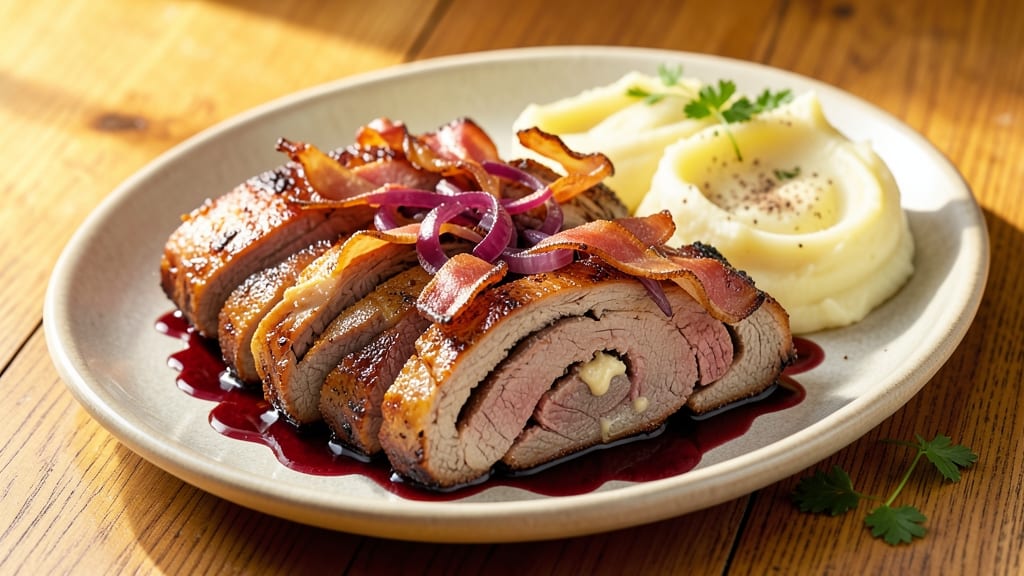
This authentic German beef rouladen recipe brings hearty Bavarian tradition to your dinner table with tender beef rolls stuffed with mustard, pickled onions, and bacon—then braised to perfection. The secret lies in slow cooking that transforms tough cuts into melt-in-your-mouth layers, while crispy edges form from proper browning before braising. I've perfected this recipe after years of testing, ensuring every bite delivers that classic German restaurant experience at home.
The magic starts with thinly sliced beef tenderloin, carefully rolled around a filling of tangy mustard, sweet pickled onions, and smoky bacon. Each roll is seared in a hot pan to lock in juices and create that coveted crispy exterior before being braised in a rich gravy until fork-tender.
This method preserves all the flavors while developing deep, savory notes that define authentic German comfort food.
What you'll end up with is restaurant-quality rouladen—juicy, flavorful beef with perfectly balanced stuffing, all smothered in a velvety brown gravy. The crispy edges contrast beautifully with the tender meat inside, creating a satisfying texture in every bite.
This dish is traditionally served with buttery spaetzle or fluffy potato dumplings to soak up every last drop of that delicious sauce.
Whether you're hosting a German-themed dinner or simply craving a comforting classic, this recipe delivers authentic flavor with professional results. The technique might seem intimidating at first, but following these precise steps will give you confidence to recreate this Bavarian favorite in your own kitchen.
Let's get started on this timeless dish that's been feeding families for generations.
Ingredients for authentic german beef rouladen
Fourteen ingredients transform simple beef slices into restaurant-quality Bavarian rouladen with crispy edges and tender layers.
| Ingredient | Amount | Notes |
|---|---|---|
| Beef Tenderloin 🥩 | 1 ½ lb | Thinly sliced against grain, 1/4-inch thick |
| Dijon Mustard 🍯 | ¼ cup | High-quality, tangy variety preferred |
| Pickled Onions 🧅 | 1 cup | Homemade or high-quality jarred, drained |
| Bacon 🥓 | 8 oz | Thinly sliced, smoked variety recommended |
| All-Purpose Flour 🌾 | ½ cup | For dredging beef slices |
| Unsalted Butter 🧈 | 4 tbsp | European-style preferred for flavor |
| Yellow Onion 🧅 | 1 whole | Finely diced for gravy |
| Garlic Cloves 🧄 | 4 cloves | Minced for aromatic base |
| Beef Broth 💧 | 2 cups | Homemade or high-quality low-sodium |
| Red Wine 🍷 | ½ cup | Dry, full-bodied like Merlot or Cabernet |
| Tomato Paste 🍅 | 2 tbsp | High-quality, no sugar added |
| Fresh Thyme 🌿 | ¼ cup | Leaves only, finely chopped |
| Fresh Bay Leaves 🍃 | 2 whole | For authentic German flavor |
| Kosher Salt 🧂 | 1 ½ tsp | Diamond Crystal preferred |
| Freshly Ground Black Pepper 🌶️ | 1 tsp | Cracked peppercorns preferred |
The beef tenderloin is non-negotiable—it's the only cut that delivers that melt-in-your-mouth texture. Ask your butcher for the center-cut portion and have them slice it against the grain to 1/4-inch thickness. If you can't find fresh tenderloin, top round works in a pinch but won't be as tender. For the mustard, Maille or Amora are my go-to brands—they've got that perfect tang without being too sweet. The pickled onions should be sweet and tangy, not vinegary. Homemade is ideal, but if using jarred, look for brands with minimal additives like Bertolli or Heinz.
No bacon? Smoked turkey bacon or pancetta works just as well—just don't skip the smoky element. The flour is for that crispy exterior—King Arthur or Gold Medal brands work best for dredging. For the gravy base, homemade beef broth makes all the difference, but Swanson or Pacific Foods low-sodium options are solid shortcuts. The red wine should be dry and full-bodied—Merlot or Cabernet are classic choices, but whatever's open in your fridge works too. Fresh thyme and bay leaves are essential for that authentic German flavor—don't substitute with dried unless you triple the amount.
The beef needs to be used within 2 days of purchase for best texture. Store it wrapped in paper towels in the fridge. The bacon can be prepped ahead and kept in the freezer for up to 3 months. Once assembled, rouladen can be refrigerated for 24 hours before cooking—this actually enhances the flavor. The gravy reheats beautifully, so make extra for leftovers. I always double the recipe because it freezes wonderfully for up to 3 months—perfect for lazy weeknights.
Why You'll Love This Recipe
- I’ll be real: this isn’t the prettiest dish, but it’s my go-to when I’m wiped after work. Thinly sliced tenderloin means less time waiting, and the flour-dusted edges give that satisfying crunch without extra effort. Dinner in under an hour? Yes, please.
- One-Pan Magic: I swear by this—just sear the beef, stuff with mustard and onions, roll it up, and let the bacon and pan drippings do the work. No extra pots, no fuss, and the smell alone makes the kitchen feel like a German beer hall.
- Smoky-Sweet Crunch: That crispy bacon wrapped around tender beef? Absolute perfection. The Dijon mustard adds a tangy kick, while the pickled onions cut through the richness—every bite balances hearty, salty, and just a little sharp.
- Leftovers That Shine: Between us, this dish tastes better the next day. The flavors meld into something even richer, and it reheats like a dream. Pack a few for lunch, or freeze portions—no one will guess it’s last night’s dinner.
Step-by-step instructions for authentic German beef rouladen
Here's how to create restaurant-quality German rouladen with perfectly crispy edges and tender beef.
Prepare the Beef Filling and Roll
Begin by spreading ¼ cup Dijon mustard evenly over each of the 1.5 lb beef tenderloin slices. Then layer 1 cup pickled onions (drained) and 8 oz bacon slices across the center of each slice. The onions should be evenly distributed to ensure flavor in every bite.
Roll each slice tightly starting from one long side, using toothpicks to secure them. I press down gently on the filling during the first minute—this prevents it from curling and ensures even contact with the pan. Place the completed rouladen on a plate and set aside while you prepare the dredge.
Create the Crispy Flour Dredge
In a shallow dish, combine ½ cup all-purpose flour, 1½ tsp kosher salt, and 1 tsp freshly ground black pepper. Gently coat each rouladen in the flour mixture, pressing lightly to adhere. The flour creates that signature crispy crust while helping the rouladen hold their shape during cooking.
Don't skip this step—it's what gives authentic rouladen their characteristic crunch. I like to double-dip each piece for extra crispiness, but be careful not to overcoat or the filling will leak out during cooking.
Sear for Maximum Crispiness
Heat 2 tbsp unsalted butter in a large oven-safe skillet over medium-high heat until foaming. Working in batches if needed, add the rouladen and sear for 2-3 minutes per side until they develop a deep golden-brown crust. This initial searing creates the crispy edges that define authentic rouladen.
Don't crowd the pan—leave space between pieces so they can brown properly. If the butter starts to smoke excessively, reduce heat slightly. Transfer the seared rouladen to a plate and set aside.
Build the German Gravy
In the same skillet, melt the remaining 2 tbsp unsalted butter over medium heat. Add the 1 whole yellow onion and cook for 5 minutes until softened. Stir in the 4 cloves minced garlic and cook for 30 seconds until fragrant.
Pour in the ½ cup red wine and scrape up any browned bits from the bottom of the pan. Let it simmer for 2 minutes until reduced by half. Add 2 tbsp tomato paste, 2 cups beef broth, ¼ cup fresh thyme, and 2 whole bay leaves, then bring to a gentle simmer.
Braise to Perfection
Return the rouladen to the skillet, spooning the gravy over them. Cover and transfer to a 350°F oven for 45-50 minutes until the beef is fork-tender and the gravy has thickened. The rouladen should be cooked through with a deep, rich sauce that clings beautifully.
Remove from oven and let rest for 10 minutes before serving. This resting period allows the juices to redistribute, ensuring each bite is moist and flavorful. Serve with buttered egg noodles and a simple green salad for an authentic German meal.
Pro Tips For Making Authentic German Beef Rouladen
- Trim Thin, Not Thick: Slice your beef tenderloin against the grain into ¼-inch strips—thinner than you’d think. Thick slices fight back when rolling, and you’ll end up with chewy centers. I used to eyeball it and regretted it every time.
- Salt the Meat First: Season the beef strips generously with salt and pepper at least 30 minutes before rolling—no, don’t skip this. The salt breaks down the fibers, so the mustard and bacon stick better when you roll. (Yes, even if you’re impatient like me.)
- Crisp the Bacon Separately: Cook the bacon until fully crisp, then drain almost all the fat—just leave a teaspoon or two to coat the pan. That fat is what makes the onions caramelize later, and it’s the difference between good and really good.
- Roll Tight, Not Loose: Pack those fillings (mustard, onions, bacon) snugly into the beef strips before rolling—no lazy gaps. If they unravel while cooking, your rouladen will taste like a sad, underfilled sandwich. A tight roll holds its shape and soaks up flavors better.
Best sauces and condiments for these flavors
Classic German Gravy
The rich, velvety gravy in this recipe is the soul of authentic rouladen. I start by building a deep flavor base with 2 tbsp tomato paste and ½ cup red wine (like a dry Merlot), which reduces to create a glossy, slightly tangy sauce.
The key is to deglaze the pan thoroughly after searing—those browned bits contain flavor magic. For extra depth, I add 2 cups homemade beef broth and a splash of ¼ cup fresh thyme, which gives that classic German aroma. 🍷
Mustard Cream Sauce
For a lighter alternative, try a mustard cream sauce that still honors German tradition. After braising, remove the rouladen and reduce the gravy by half. Then whisk in ½ cup heavy cream and 2 tbsp Dijon mustard until smooth.
Return the rouladen to the pan and simmer for 5 minutes to let the flavors meld. This sauce is perfect for those who prefer a less heavy option but still want that signature tang.
Spätzle Pairing
No German rouladen meal is complete without homemade spaetzle to soak up the sauce. I make mine with 2 cups all-purpose flour, 3 eggs, 1 cup water, and 1 tsp salt, pressing through a spaetzle maker or colander into boiling water.
For extra richness, stir in 2 tbsp butter and a pinch of nutmeg while cooking. The eggy, chewy texture contrasts beautifully with the crispy rouladen. 💛
Pickled Red Cabbage
Add a tangy crunch with classic German red cabbage. Thinly slice 1 small red cabbage, then cook with 2 tbsp butter, 2 tbsp apple cider vinegar, 1 tbsp sugar, and 1 tsp caraway seeds for 45 minutes until tender.
The sweet-sour balance cuts through the richness of the rouladen beautifully. I often make a double batch—it keeps well in the fridge for 5 days and reheats perfectly.
Braunschweig Sauce
For adventurous cooks, try a Braunschweig sauce, a creamy mushroom sauce that elevates rouladen to restaurant-level sophistication. Sauté 1 lb mushrooms in butter, then deglaze with ½ cup white wine and add 1 cup heavy cream and 2 tbsp flour to thicken.
Finish with a pinch of nutmeg. This sauce pairs wonderfully with the crispy rouladen and adds an earthy depth that balances the dish. ⚡
Final Touches
Don't forget the finishing touches that make rouladen feel truly special. A sprinkle of fresh parsley before serving adds brightness, while a drizzle of hot honey (mix ¼ cup honey with 1 tsp cayenne) brings a subtle heat that complements the rich flavors.
For presentation, arrange the rouladen on a platter with sauce spooned over the top—this makes the dish look as impressive as it tastes. 🌟
Nutrition facts
Frequently asked questions
What's the best cut of beef for authentic rouladen?
Beef tenderloin is ideal for its tenderness, but top round works too if you prefer a leaner option. The slices should be ¼-inch thick and cut against the grain for maximum tenderness. Ask your butcher to slice it properly—this makes all the difference in texture!
Can I make rouladen ahead of time?
Yes! Assemble the rouladen and refrigerate them uncooked for up to 24 hours before searing and braising. This actually enhances the flavors. For leftovers, store cooked rouladen in the fridge for 3-4 days or freeze for 3 months. Reheat gently in the sauce to maintain moisture.
Why did my rouladen fall apart when rolling?
This usually happens if the beef slices are too thick or not properly secured. Use ¼-inch thick slices and press firmly when rolling to keep the filling contained. Chill the assembled rouladen for 30 minutes before cooking to help them hold their shape. Toothpicks are your best friend for keeping them intact during searing!
What's the secret to crispy edges?
The crispy crust comes from proper searing and flour dredging. Coat each rouladen thoroughly in flour and sear in a hot pan with butter until golden brown (2-3 minutes per side). Don't skip the flour—it creates that signature crunch while helping the rolls maintain their shape during braising.
What sides pair best with rouladen?
Traditional pairings include buttered egg noodles, spaetzle, or potato dumplings to soak up the rich sauce. For a complete German meal, add pickled red cabbage and a simple green salad. The tangy cabbage cuts through the richness beautifully while the noodles make every bite more satisfying.