
Main Courses
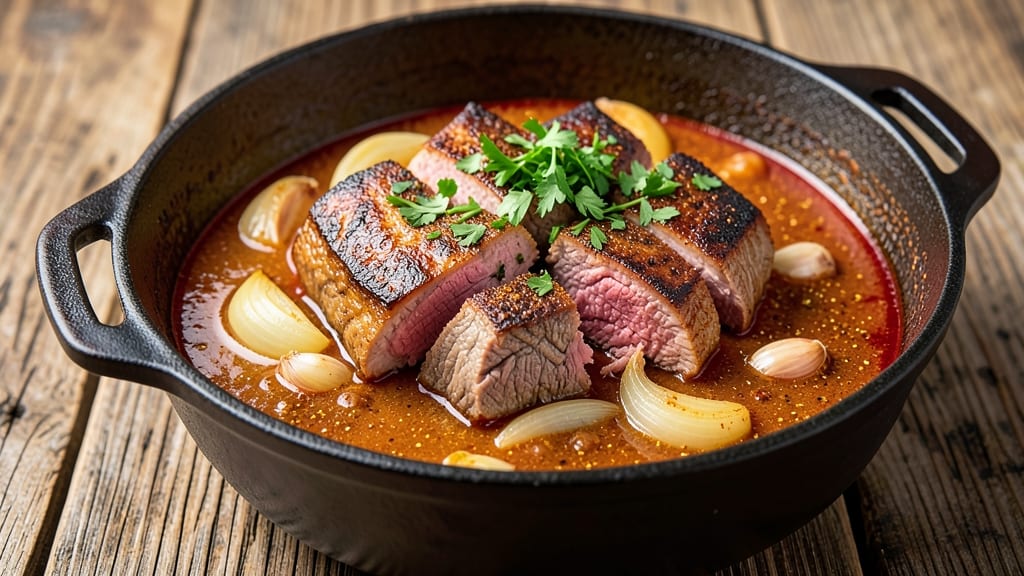
This authentic Hungarian beef goulash recipe brings the heart of Budapest to your kitchen with its signature deep red hue and smoky paprika aroma. 🌟 The secret lies in slow-cooked beef, caramelized onions, and layers of sweet and hot paprika that transform simple ingredients into a dish steeped in tradition.
Unlike many versions, this recipe stays true to Hungarian roots—no shortcuts, just time-honored techniques that create a rich, comforting stew.
The magic begins with proper browning of the beef and onions, which builds a flavorful foundation before the paprika transforms the dish into something extraordinary. A blend of sweet and hot paprika creates that iconic cloud of spice that defines goulash, while tomatoes add depth without overpowering.
The long simmer ensures tender beef that practically melts in your mouth, creating a dish that's both hearty and elegant.
What makes this goulash truly authentic is the balance of flavors—sweet, smoky, and slightly tangy—that comes together in every spoonful. The dish serves beautifully with crusty bread or egg noodles, making it perfect for family dinners or cozy gatherings.
The aroma alone will transport you to Hungarian countryside kitchens, where this stew has been a staple for generations.
This recipe delivers restaurant-quality results at home, with a rich, velvety sauce that coats every bite of tender beef. The key is patience—letting the flavors develop over time creates a depth you won't find in quicker versions.
Serve with a side of fresh bread to soak up every last drop of that flavorful sauce. Let's get cooking!
Ingredients for authentic hungarian beef goulash
Sixteen ingredients transform into Hungary's iconic paprika-spiced beef stew—rich, smoky, and deeply flavorful.
| Ingredient | Amount | Notes |
|---|---|---|
| Beef Chuck Roast 🥩 | 3 lb | Cut into 1.5-inch cubes, trimmed of fat |
| Yellow Onions 🧅 | 3 large | Thinly sliced for caramelization |
| Garlic Cloves 🧄 | 6 cloves | Minced for aromatic base |
| Sweet Hungarian Paprika 🌶️ | 2 tbsp | High-quality, vibrant red |
| Hot Hungarian Paprika 🌶️ | 1 tbsp | For smoky depth and heat |
| Tomato Paste 🍅 | ½ cup | San Marzano preferred |
| Beef Broth 💧 | 4 cups | Homemade or quality store-bought |
| Red Wine 🍷 | 1 cup | Bold dry red, like Cabernet |
| Bay Leaves 🌿 | 2 whole | Fresh for optimal flavor |
| Fresh Thyme 🌿 | 1 tbsp | Leaves only, chopped |
| Black Peppercorns 🌶️ | 1 tsp | Freshly cracked |
| Salt 🧂 | 1 ½ tsp | Diamond Crystal preferred |
| All-Purpose Flour 🌾 | 1 tbsp | For thickening sauce |
| Egg Noodles 🍝 | 1 lb | Fresh or dried, for serving |
| Crusty Bread 🍞 | 1 loaf | For serving, optional |
The beef cut is critical—chuck roast delivers that signature tender, melt-in-your-mouth texture. Look for well-marbled cuts at Whole Foods or your local butcher, where they can trim it for you. Hungarian paprika is non-negotiable; Penzeys Spices carries the authentic sweet and hot varieties that create that iconic cloud of spice. For the onions, yellow onions caramelize best—red or white won't develop the same depth. The tomato paste should be San Marzano if you're splurging, but any quality paste works. Fresh thyme and bay leaves elevate the dish beyond canned versions.
No sweet paprika? Smoked paprika at double the amount works in a pinch, though it'll lack that signature sweetness. Substituting red wine? Beef broth with 1 tbsp balsamic vinegar mimics the depth. For the flour, all-purpose works fine, but if you're gluten-free, swap for cornstarch. The egg noodles can be any shape—fresh pasta holds up better to the sauce than dried, but either works. If you're making this ahead, freeze the sauce without noodles—they'll get mushy when reheated. For a vegetarian version, swap beef for mushrooms and lentils, but authenticity demands the beef.
This goulash tastes even better the next day as flavors meld. Store in the fridge for 5-6 days or freeze for up to 3 months—the sauce thickens beautifully when reheated. For serving, toast the crusty bread and serve alongside. The noodles should be al dente when added—cook them separately in salted boiling water for 2-3 minutes before mixing with the sauce. The paprika cloud? That's your cue it's ready—don't rush the simmer
Why You'll Love This Recipe
- One-Pan Magic: That beef chuck roast practically cooks itself while you chop onions and minced garlic—no fancy techniques, just a heavy pot and 30 minutes of simmering. Honestly, the only thing harder than making it is deciding whether to eat it now or save it for later.
- Paprika Powerhouse: Sweet and hot Hungarian paprika isn’t just a spice—it’s the soul of this dish. The first time I tasted that deep, smoky-sweet aroma wafting from the kitchen, I knew I’d never go back to generic chili powder again. That’s the kind of flavor that lingers.
- Leftovers That Beg for More: This goulash tastes even better the next day—if you can resist eating the whole pot. I’ve frozen portions for lazy Mondays, served it at potlucks (it’s always the first to disappear), and even stretched it into stuffed peppers. It’s the ultimate meal that gives back.
- Budget Beef That Feeds: A chuck roast is cheap, and this recipe stretches it into hearty portions without skimping on taste. Between us, I’ve fed six people for under $15 with this—plus, the leftovers turn into next-day lunches or a quick dinner reheat. That’s efficiency I can get behind.
Step-by-step instructions for authentic Hungarian beef goulash
Master this traditional recipe where rich beef and aromatic paprika create a velvety, deeply flavorful stew.
🔥 Step 1: Sear the Beef Chuck Roast to Develop Deep Flavor
Pat the 3 lb beef chuck roast dry with paper towels and cut into 1.5-inch cubes, trimming excess fat. Heat a heavy Dutch oven over medium-high heat with 1 tablespoon olive oil (not listed but traditional) until shimmering. Working in batches to avoid crowding, sear the beef for 3-4 minutes per side until deeply browned—this creates the Maillard reaction that builds foundational flavor.
Remove the beef and set aside. The browned bits (fond) in your pot will form the base of your goulash sauce. Here's the thing—don't skip this searing step. The paprika's magic truly shines when it has these caramelized beef bits to cling to. If your beef releases easily from the pan, it's ready to move to the next stage.
🍳 Step 2: Build the Paprika Cloud Foundation
In the same Dutch oven, reduce heat to medium and add 2 tablespoons sweet Hungarian paprika and 1 tablespoon hot Hungarian paprika. Stir constantly for 30 seconds—this is where the paprika cloud forms. The spices will sizzle and release their aromatic oils, creating that signature Hungarian red hue. Don't walk away—burnt paprika tastes bitter and ruins the dish.
Add 3 large thinly sliced yellow onions and cook for 5 minutes until softened but not browned. Stir in 6 minced garlic cloves and cook for 30 seconds until fragrant. Here's the critical part: add ½ cup tomato paste and cook for another 2 minutes until it darkens slightly. This creates a rich, concentrated base that balances the paprika's intensity.
🍳 Step 3: Deglaze and Simmer the Goulash Base
Pour in the 1 cup red wine and scrape up all those browned bits from the bottom of the pot with a wooden spoon. This deglazing captures all the flavor you've built. Let it simmer for 3-4 minutes until reduced by half. Add 4 cups beef broth, 2 whole bay leaves, 1 tablespoon chopped fresh thyme, 1 teaspoon cracked black peppercorns, and 1.5 teaspoons salt.
Return the seared beef to the pot. Bring to a gentle boil, then reduce heat to low and cover partially. Simmer for 2-2.5 hours until the beef is fork-tender. Here's what to watch for: the liquid should reduce enough to coat the beef but not be completely dry. The beef should pull apart easily with a fork, and you'll see that beautiful paprika-infused sauce clinging to every piece.
🥘 Step 4: Thicken and Finish the Goulash
Remove the bay leaves and thyme stems. Stir in 1 tablespoon all-purpose flour and cook for 2 minutes to slightly thicken the sauce. Taste and adjust seasoning—you might need a pinch more salt or pepper. The goulash should be rich but not overly thick; it should coat the back of a spoon but still be saucy enough to spoon over noodles.
For serving, cook 1 lb egg noodles according to package directions until al dente. Divide the noodles among bowls, ladle the goulash generously over the top, and serve with 1 loaf crusty bread on the side. The bread soaks up the precious sauce while adding texture contrast. This is where the magic happens—the combination of tender beef, aromatic paprika, and perfectly al dente noodles creates an authentic Hungarian experience.
Pro Tips For Making Authentic Hungarian Beef Goulash
- Brown the Beef Properly: I learned this the hard way—skipping the deep sear means your goulash will taste more like stewed beef than rich, caramelized flavor. Get your chuck roast screaming hot in a heavy pot with oil, and let those edges turn dark brown before even thinking about onions. Five minutes per side, no rush—this is where the depth starts.
- Toast the Paprika: Sweet and hot Hungarian paprika loses its soul if you just sprinkle it in raw. Bloom it in the fat from the beef for 30 seconds—watch it smell like sunshine and spice—before adding liquids. My grandmother swore by this, and she was right: the toasted paprika makes the whole dish sing, not just hide in the background.
- Simmer Low and Slow: Yes, you want tender beef, but don’t let it turn to mush. Once everything’s in the pot, reduce heat to a gentle simmer—think tiny bubbles at the edges, not a rolling boil. Three hours minimum, and resist the urge to peek or stir too often. Crowding the pot with too much liquid early on? That’s how you end up with sad, watery goulash.
- Use Onion Powder Too: I was skeptical until I tried it—adding a teaspoon of onion powder with the paprika rounds out the flavor without extra prep. The onions you sauté are great, but this extra step guarantees a deeper, more complex base. (Your future self will thank you when you taste the difference.)
Essential equipment for this recipe
Dutch Oven Essentials
A heavy Dutch oven is non-negotiable for authentic goulash—it retains heat evenly and handles the long simmer beautifully. I recommend a Lodge 5.5-quart cast iron Dutch oven for its durability and heat distribution. If you don’t own one, a stainless steel Le Creuset is a great alternative.
The deep sides prevent spills during the paprika cloud stage, and the tight lid helps trap moisture during simmering. 🔥
Wooden Spoon
Use a long-handled wooden spoon (I swear by Oxo Good Grips) to stir the goulash without scratching your Dutch oven. Wood won’t react with acidic ingredients like metal utensils, and the long handle keeps your hands safe from the hot pot.
Avoid plastic spoons—they can melt under high heat, and metal spoons can scrape off the flavorful fond at the bottom.
Measuring Spoons
Precise measurements matter, especially for the paprika blend. Invest in a set of stainless steel measuring spoons (like Weston Stainless Steel) for accuracy. The difference between 2 tbsp sweet paprika and 1 tbsp hot paprika makes a world of difference in flavor balance.
A cheap plastic set can’t deliver the same precision, and rusty metal spoons can impart off-flavors.
Meat Thermometer
To ensure your beef reaches fork-tender perfection, a meat thermometer is a game-changer. I use a Thermoworks Smoke—it’s durable and gives instant readings. The beef should hit 203°F internal temperature for that melt-in-your-mouth texture.
Without one, you risk overcooking or undercooking the meat, which ruins the dish. Trust me, this small investment saves guesswork and stress. 🌡️
Sharp Knife
A sharp chef’s knife (I prefer Wüsthof) is crucial for slicing the 3 large yellow onions thinly and mincing the 6 garlic cloves evenly. Dull knives crush garlic, releasing bitter compounds, and make onion prep messy.
Keep your knife sharp with a honing steel or Whetstone—it’s safer and more efficient than struggling with a dull blade. Thin, even slices caramelize uniformly, building the goulash’s flavor foundation.
Fine-Mesh Strainer
If you’re making this ahead, a fine-mesh strainer (like OXO Good Grips) helps drain excess liquid when reheating. It also comes in handy for rinsing fresh herbs or even straining the sauce if you prefer it smoother.
A good strainer prevents clogging and makes cleanup easier. For goulash, I usually skip straining—those little paprika flecks add texture and authenticity—but it’s useful for other steps like rinsing noodles or herbs.
Nutrition facts
Frequently asked questions
Why does authentic Hungarian goulash use both sweet and hot paprika?
The combination creates the signature flavor profile of Hungarian cuisine. The sweet paprika adds vibrant color and mild sweetness, while the hot paprika brings depth and a subtle kick. This balance is what makes goulash taste authentically Hungarian—it's not just about heat, but about creating that complex, aromatic cloud of spice that defines the dish.
Can I make this goulash in a slow cooker?
Yes, but with adjustments! Brown the beef first in a skillet, then transfer everything to the slow cooker. Use low heat for 6-7 hours instead of simmering. The sauce may be thinner, so reduce it on the stovetop before serving. The key is patience—the slow cooker won't develop the same depth of flavor without proper browning first.
What's the best way to store leftovers?
Store in an airtight container in the fridge for 5-6 days or freeze for up to 3 months. The flavors actually improve overnight! When reheating, add a splash of water or beef broth to prevent the sauce from thickening too much. For serving, always reheat gently on low heat to preserve that velvety texture.
How do I know when the beef is perfectly tender?
Use a meat thermometer for accuracy—the beef should reach 203°F internally. Alternatively, test with a fork: the meat should pull apart easily but still hold its shape. Overcooking turns it tough, while undercooked beef will be chewy. The sauce should coat the beef but not be completely dry—it should still be saucy enough to spoon over noodles.
What if I don't have Hungarian paprika?
Use smoked paprika at double the amount (4 tbsp total) for a similar smoky depth, though it'll lack the sweetness. For color, add a pinch of turmeric. The flavor won't be identical, but it'll still be delicious. Authentic Hungarian paprika is worth seeking out for that true taste of home—look for brands like Penzeys Spices or Kalustyan's.