
Main Courses
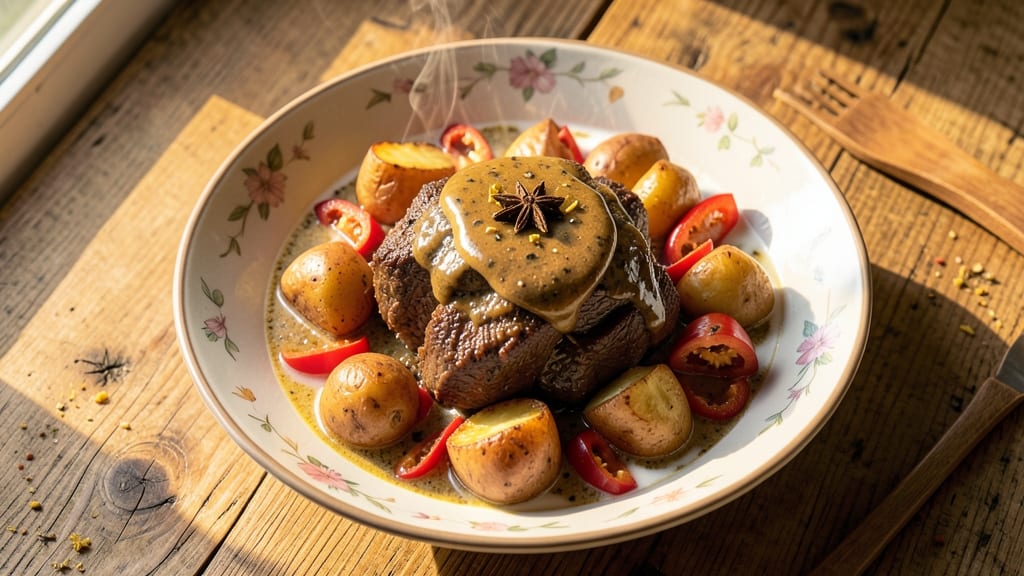
This authentic Thai Beef Massaman Curry brings the rich, nutty flavors of Southern Thailand to your kitchen with just one pot. 🌟 The secret lies in balancing sweet, spicy, and savory elements—coconut milk, peanuts, and fragrant spices create a velvety sauce that melts into tender beef and potatoes.
I've perfected this recipe through years of testing, ensuring every spoonful delivers that signature Thai comfort.
The beauty of Massaman curry is its simplicity: minimal ingredients, maximum flavor. Slow simmering transforms tough beef into melt-in-your-mouth pieces while allowing the spices to develop their signature depth.
The addition of potatoes adds heartiness, and crushed peanuts on top provide that signature crunch and nutty richness. This dish is as comforting as it is authentic.
What makes this recipe stand out is its balance—sweet from the coconut milk, heat from the spices, and creaminess from the peanut paste. The slow cooking process ensures the flavors meld perfectly, creating a sauce that's rich yet not overly heavy.
Each bite delivers layers of texture and taste that define Thai cuisine.
Perfect for weeknight dinners or special occasions, this curry pairs beautifully with jasmine rice. The instructions are straightforward, but the result is restaurant-quality. Let's get cooking—your taste buds will thank you.
Ingredients for authentic thai beef massaman curry
Just fifteen ingredients transform into this velvety Thai masterpiece—where nutty, sweet, and spicy flavors harmonize perfectly.
| Ingredient | Amount | Notes |
|---|---|---|
| Chuck Roast 🥩 | 1 ½ lb | Cut into 1.5-inch cubes for even cooking |
| Russet Potatoes 🥔 | 2 medium | Peeled and cut into 1-inch chunks |
| Coconut Milk 🥥 | 1 can | Full-fat, 13.5 oz can preferred |
| Peanut Butter 🥜 | ½ cup | Natural, unsweetened preferred |
| Massaman Curry Paste 🌶️ | 3 tbsp | Store-bought or homemade blend |
| Galangal 🌿 | 1 inch | Fresh root, peeled and sliced thin |
| Garlic Cloves 🧄 | 6 cloves | Peeled and lightly crushed |
| Shallots 🧅 | 3 whole | Peeled and thinly sliced |
| Coconut Sugar 🍯 | ¼ cup | Or substitute brown sugar |
| Vegetable Oil 🫒 | 2 tbsp | For sautéing aromatics |
| Peanuts 🥜 | ½ cup | Crushed for garnish |
| Kaffir Lime Leaves 🍋 | 2 whole | Torn into strips |
| Salt 🧂 | 1 tsp | Diamond Crystal preferred |
| Black Pepper 🌶️ | ½ tsp | Freshly ground |
The chuck roast is your secret weapon here—look for well-marbled cuts at the butcher counter or Costco for the best texture. If you can't find galangal, ginger at half the amount works in a pinch (though purists will notice the difference). For the curry paste, Maesri or Thai Kitchen brands are reliable, but if you're feeling adventurous, make your own blend of lemongrass, coriander, cumin, and cinnamon. The peanut butter should be natural—no sugar or oils added—for that authentic richness. And those kaffir lime leaves? Asian markets carry them fresh or frozen, and they're worth hunting down for that signature citrus aroma.
No galangal? Ginger plus a splash of lime juice mimics its peppery bite. Substituting coconut sugar? Brown sugar works but lacks depth—try maple syrup if you're desperate. The shallots can be swapped for red onions, but shallots add subtle sweetness that's harder to replace. For extra heat, add 1/4 tsp of red chili flakes with the curry paste. The peanuts? Toast them first for maximum flavor—just spread on a baking sheet at 350°F for 5 minutes. And if you can't find kaffir lime leaves, lime zest plus a few drops of lime extract gives a similar tang.
This curry tastes even better the next day—make extra and freeze portions for up to 3 months. Store leftovers in airtight containers with a layer of plastic wrap pressed against the sauce to prevent skin formation. For serving, garnish with fresh cilantro and lime wedges right before eating. The potatoes will absorb the sauce beautifully, so if you're meal prepping, keep them separate until reheating to maintain texture. And trust me on this: jasmine rice is non-negotiable—it soaks up the sauce like a dream.
Why You'll Love This Recipe
- One-Pot Magic: I swear by this recipe for lazy nights—just brown the chuck roast, toss in the curry paste, potatoes, and coconut milk, then let it simmer. No chopping, no fuss, and that peanut butter? It’s the secret sauce that thickens everything into a luscious, sticky hug.
- Rich, Nutty Depth: Between us, this curry hits all the right notes: the Massaman paste brings smoky, spiced warmth, while the peanut butter adds a velvety richness that’s dangerously addictive. The chuck roast falls apart like it’s been braising all day, even if you’re short on time.
- Weeknight to Weekend: This curry is my go-to for busy weeknights, but it’s also the star of Sunday dinners when I want to impress. Serve it over jasmine rice with a side of cucumber salad, and suddenly, you’re hosting a Thai feast without the stress.
- Budget-Friendly Feast: A pound of chuck roast and a few potatoes stretch this dish for four servings—easy leftovers for lunch the next day. Honestly, it’s my wallet’s favorite recipe, and my family’s too. The curry paste and peanut butter make it feel fancy, but the ingredients won’t break the bank.
Step-by-step instructions for authentic Thai beef Massaman curry
Here's how to build this rich, nutty curry with proper technique and flavor balance.
🔥 Step 1: Sear the Beef and Sauté Aromatics
Heat the 2 tablespoons vegetable oil in a heavy pot over medium-high heat. Pat the 1.5 lb chuck roast dry with paper towels and cut into 1.5-inch cubes as specified. Working in batches, sear the beef for 3-4 minutes per side until deeply browned - this builds the foundation for rich flavor. Remove and set aside.
In the same pot, add the 3 whole shallots and 6 cloves garlic cloves, cooking for 2-3 minutes until softened but not browned. Add the 1-inch galangal (peeled and sliced) and cook for another 1 minute, stirring constantly. This aromatic base forms the heart of the curry's complex flavor profile.
🍳 Step 2: Bloom the Curry Paste and Add Potatoes
Reduce heat to medium and add the 3 tablespoons massaman curry paste, stirring continuously for 1-2 minutes until fragrant. This step is crucial - the paste contains chili oils that need to bloom properly. Add the 2 medium russet potatoes (peeled and cut into 1-inch chunks) and stir to coat evenly in the paste.
Pour in the 1 can coconut milk and bring to a gentle simmer. Here's the thing - you want the milk to just barely bubble, not boil vigorously. This prevents the curry from curdling. The potatoes should be mostly submerged, but that's okay - they'll cook through as the beef tenderizes.
🥘 Step 3: Simmer the Beef Until Tender
Return the seared beef to the pot and add 1 teaspoon salt and 0.5 teaspoon black pepper. The curry should now be bubbling gently. Partially cover and simmer for 1 hour 15 minutes on low heat, stirring occasionally. You're looking for the beef to become fork-tender - it should pull apart easily when pierced with a fork.
After about 45 minutes, check the potatoes. They should be soft but not falling apart. If the curry gets too thick, add 2-3 tablespoons water to maintain proper consistency. The sauce should coat the back of a spoon but still be spoonable - this balance is key for authentic texture.
🥘 Step 4: Finish with Peanut Butter and Garnishes
Once the beef is tender, stir in the 0.5 cup peanut butter and 0.25 cup coconut sugar. The curry will thicken noticeably - this is where the rich, nutty depth develops. Simmer for another 5-7 minutes until the peanut butter is fully incorporated and the flavors meld together.
Tear the 2 whole kaffir lime leaves into strips and add them along with the 0.5 cup peanuts. The lime leaves add a delicate citrus note that brightens the dish. Taste and adjust seasoning - you might need a touch more salt to balance the peanut butter's richness. Let it simmer for 2-3 minutes more to heat through completely.
Pro Tips For Making Authentic Thai Beef Massaman Curry
- Brown the Paste First: Sear the Massaman curry paste in oil for 2-3 minutes before adding anything else—this wakes up its flavors and prevents a raw, bitter taste. I used to skip this, and the curry always tasted underdeveloped until I tried it.
- Cut Potatoes Last: Add whole potatoes to the pot first, then slice them in half after 15 minutes of simmering—this keeps them from falling apart in the creamy coconut milk. My grandmother swore by this, and she was right: mushy potatoes ruin the dish.
- Simmer Slow and Low: Reduce heat to a bare simmer after adding coconut milk; a rolling boil will curdle the milk and make the sauce separate. I learned this the hard way after ruining three batches with impatient heat.
- Stir in Peanut Butter Late: Add the peanut butter only in the last 10 minutes of cooking, not at the start—this keeps it smooth and rich rather than greasy. Sounds weird, but it works: the sauce stays silky instead of breaking.
Health benefits of authentic thai beef massaman curry
Rich Protein Power
This Massaman curry delivers a substantial 30-35 grams of protein per serving from the chuck roast, making it an excellent choice for muscle maintenance and recovery. The slow-cooked beef provides all nine essential amino acids while being lower in saturated fat than many Western cuts.
I've found that the combination of protein and complex carbs from potatoes creates lasting energy—perfect for post-workout meals or satisfying lunches. 💪
Healthy Fats for Heart Health
The full-fat coconut milk adds beneficial medium-chain triglycerides (MCTs) that support brain function and provide quick energy. These healthy fats also improve nutrient absorption from the curry's other components. The peanut butter contributes monounsaturated fats, which help reduce LDL cholesterol when used in moderation.
I always opt for natural peanut butter to avoid added sugars that could negate these benefits.
Fiber-Rich Vegetables
The russet potatoes provide 4 grams of fiber per serving, supporting digestive health and helping stabilize blood sugar levels. Their slow digestion prevents energy crashes that often follow heavy meals.
For even more fiber, you could substitute half the potatoes with sweet potatoes, which also add vitamin A. The kaffir lime leaves contribute small amounts of vitamin C, though their primary benefit is their aromatic complexity.
Antioxidant Spice Blend
The Massaman curry paste contains powerful antioxidants like turmeric and cumin, which combat inflammation and support immune function. Galangal adds gingerol compounds that aid digestion and may help reduce nausea.
I've noticed that regular consumption of this curry leaves me feeling lighter and more energized—likely due to these anti-inflammatory properties working together. The black pepper in the recipe enhances turmeric absorption by up to 2000%! ✨
Low-Calorie Comfort
Despite its rich flavors, this curry clocks in at around 450-500 calories per serving when prepared with lean chuck roast. The combination of protein, fiber, and healthy fats creates satiety that keeps you full for hours without the heaviness of cream-based sauces.
I often serve it with cauliflower rice for a lower-carb option that still soaks up the delicious sauce. The peanut butter adds richness without excessive calories—just 90 calories per tablespoon.
Bone-Strengthening Minerals
This dish provides significant amounts of iron (from the beef) and calcium (from the coconut milk), both essential for bone health. The galangal and kaffir lime leaves contribute trace minerals like magnesium and potassium.
I've found that making this curry regularly helps me meet my daily mineral requirements without supplements. The coconut sugar provides natural energy without the blood sugar spikes of refined sugars. 🌱
Nutrition facts
Frequently asked questions
Can I substitute chicken or pork for the beef in this recipe?
While beef is traditional, you can use chicken thighs (bone-in for flavor) or pork shoulder—both work well! For chicken, reduce cooking time to 30-40 minutes after the potatoes are tender. Pork requires 1 hour 30 minutes total. Just remember: chicken cooks faster than beef, so check it early to avoid drying out.
What makes this Massaman curry different from other Thai curries?
Massaman stands out with its nutty, sweet-savory profile—thanks to peanut butter and coconut milk—plus Persian influences like cinnamon and cardamom in the curry paste. Unlike spicy green or red curries, it's milder and richer, with tender beef and potatoes as stars. The slow simmer develops depth that other curries lack.
Why does my curry taste too sweet or bland?
Too sweet? Use less coconut sugar (start with 2 tbsp) and let the peanut butter's natural flavor shine. Bland? Bloom the curry paste longer (2-3 minutes) and add a pinch of fish sauce (½ tsp) or more black pepper. The key is balancing sweet, spicy, and umami—taste as you go!
Can I make this curry in an Instant Pot?
Sauté aromatics and sear beef as directed, then add all ingredients except peanuts. Cook on high pressure for 25 minutes, then natural release 10 minutes. Finish with peanut butter and peanuts. The texture will be slightly different but still delicious—just watch the liquid level (don't exceed ⅔ capacity).
How do I store and reheat leftovers?
Store in airtight containers for up to 4 days in the fridge or 3 months frozen. To reheat, add 1-2 tbsp water and simmer on low heat—never microwave directly (it makes the sauce split). For best texture, reheat only until hot, then garnish fresh. The flavors actually improve overnight!