
Soups & Stews
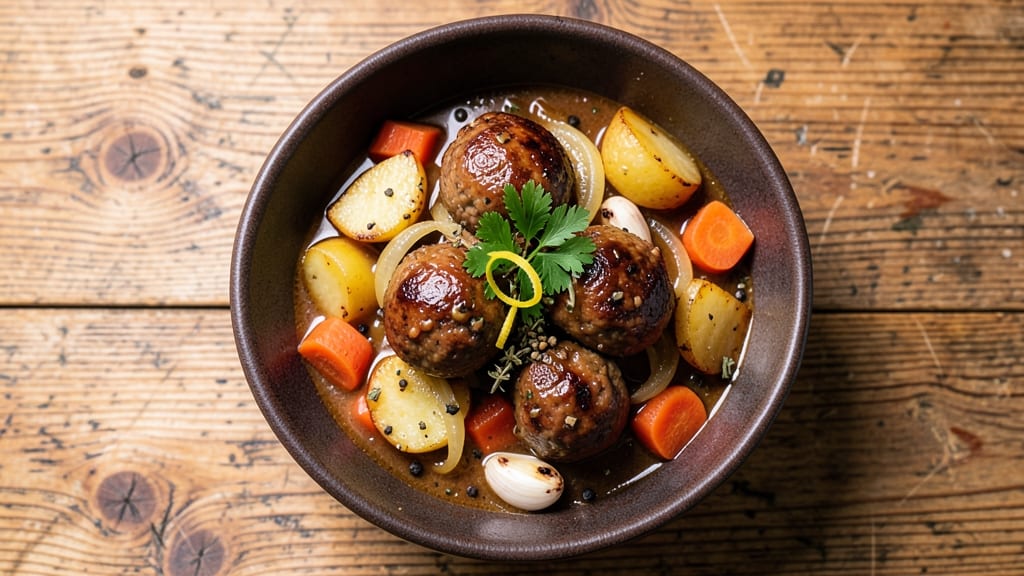
This ball beef stew recipe delivers hearty, slow-cooked comfort that transforms tough cuts into melt-in-your-mouth beef balls swimming in rich, caramelized broth.
The secret lies in proper meat selection—chuck roast or round roast—and a carefully balanced blend of herbs, garlic, and root vegetables that develop deep, complex flavors over hours of simmering.
What sets this apart is the two-stage cooking process: first forming the beef balls with precise seasoning, then letting them tenderize in a flavorful broth until they're fork-tender and bursting with juices.
What makes this stew truly special is the caramelization of root vegetables like carrots, potatoes, and onions, which creates natural sweetness that complements the savory beef.
The slow cooking method (3-4 hours) ensures the beef remains tender while the vegetables develop that perfect balance of softness and slight crispness around the edges. This isn't just a stew—it's a complete meal that warms both body and soul during colder months.
The result is a deeply flavorful stew where each element plays its part: beef balls that dissolve slightly with each bite, vegetables that have absorbed the rich broth, and a sauce that's thickened just enough to coat every spoonful without being gluey.
The aroma alone will have everyone gathering around the table, and the first taste will confirm why this becomes an annual tradition. Serve with crusty bread to soak up every last drop of that velvety broth.
Perfect for family dinners, holiday gatherings, or meal prepping for the week ahead, this recipe scales beautifully while maintaining its rich, satisfying qualities. The key to success lies in patience—letting the flavors develop gradually—and attention to detail in the seasoning and cooking process.
Once you try this version, store-bought stews will never measure up again.
Ingredients for ball beef stew
The heart of this ball beef stew lies in its rich, caramelized root vegetables and perfectly seasoned beef balls.
| Ingredient | Amount | Notes |
|---|---|---|
| Chuck Roast 🥩 | 1 ½ lb | Pre-cut into 1-inch cubes |
| Yellow Onions 🧅 | 2 whole | Medium size, chopped |
| Carrots 🥕 | 4 whole | Large, peeled and cut into chunks |
| Russet Potatoes 🥔 | 2 lb | Cut into 1-inch cubes |
| Garlic Cloves 🧄 | 6 cloves | Minced for depth |
| Tomato Paste 🍅 | ½ cup | High-quality for richness |
| Beef Broth 💧 | 4 cups | Homemade or premium store-bought |
| Red Wine 🍷 | ½ cup | Dry, bold variety |
| All-Purpose Flour 🌾 | ¼ cup | For beef ball binding |
| Fresh Thyme 🌿 | 2 tbsp | Leaves only, chopped |
| Fresh Rosemary 🌿 | 1 tbsp | Chopped, woody stems removed |
| Bay Leaves 🍃 | 2 whole | Dried, for subtle depth |
| Salt 🧂 | 1 ½ tsp | Kosher or sea salt |
| Black Pepper 🌶️ | 1 tsp | Freshly ground |
| Olive Oil 🫒 | 2 tbsp | Extra-virgin for richness |
The chuck roast is non-negotiable for this recipe—its marbling ensures tender, flavorful beef balls. Costco or Whole Foods often carry high-quality cuts, but any reputable butcher will do. Look for good marbling (white fat streaks) and avoid anything with grayish hues. For the root vegetables, organic carrots and potatoes from the grocery store's produce section work perfectly, but farmers' market finds often have better flavor. The onions should be firm and free of sprouts—yellow onions add sweetness, while red onions bring a touch of brightness.
No red wine? Beef broth with a splash of balsamic vinegar works beautifully. Fresh herbs like thyme and rosemary can be swapped for dried at one-third the amount, but fresh is ideal if you've got it. The tomato paste is key for depth—San Marzano is my go-to for its sweet, rich flavor. If you're short on time, a squeeze tube from Trader Joe's is a great shortcut. For the beef balls, the flour acts as a binder, but if you're gluten-sensitive, cornstarch or arrowroot powder works just as well. The beef broth should be rich and flavorful—homemade is best, but Swanson or Pacific Foods are solid store-bought options.
This stew tastes even better the next day as the flavors meld further. Store leftovers in an airtight container in the fridge for up to 5 days, or freeze portions for 3 months. I like to portion it into individual containers for easy lunches—just reheat with a splash of water or broth. The beef balls will hold up beautifully, and the vegetables will absorb even more of that rich, savory broth. For extra flavor, add a pat of butter to each serving when reheating.
Why You'll Love This Recipe
- One-Pot Magic: I swear by this—dump everything in a heavy pot, turn it on, and walk away. The chuck roast breaks down into tender, pull-apart perfection while the potatoes soften just enough to soak up that rich beefy broth. No fancy techniques, no stress.
- Garlic Bomb Flavor: That first whiff of garlic and onions caramelizing? Instant craving. The slow simmer lets the flavors meld into something deeper than takeout—especially when the potatoes get that buttery, crispy edge from the sear. Honestly, my kids now ask for seconds before I even finish serving.
- Leftovers That Save Me: This stew tastes better the next day. I make a double batch on Sundays, freeze half, and pull it out for lazy nights when I’d otherwise order in. The potatoes hold their shape, the meat stays juicy, and reheating takes all of 3 minutes.
- Budget-Friendly Crowd-Pleaser: Chuck roast is cheap, but it feels like a splurge. A single roast feeds four for under $15, and the veggies stretch the meal further. Plus, it’s the kind of dish that makes guests linger—no one leaves hungry, and no one judges the leftovers. (Yes, even on a Tuesday night.)
Step-by-step instructions for ball beef stew
Transform tough chuck roast into tender beef balls with deep flavor through precise technique and slow cooking.
Create the Beef Balls with Perfect Texture
In a large bowl, combine the 1.5 lb chuck roast cut into 1-inch cubes, the 0.25 cup all-purpose flour, 1.5 tsp salt, and 1 tsp black pepper. Use your hands to gently toss until each piece is lightly coated—this creates a thin barrier that helps the meat retain moisture during cooking.
Here's the thing—don't overwork the meat. Press each cube firmly between your palms to form 1-inch balls (about 12-15 total). The pressure helps the flour adhere and develops the surface for better browning later. Place the formed balls on a plate and let them sit at room temperature for 15 minutes while you prepare the vegetables.
Build Rich Flavor with Caramelized Vegetables
Heat the 2 tbsp olive oil in a 6-quart Dutch oven over medium-high heat until shimmering. Add the 2 whole yellow onions and 4 whole carrots cut into chunks, cooking for 8-10 minutes until the onions soften and the carrots begin to caramelize at the edges. This step develops deep sweetness that forms the stew's foundation.
Add the 6 cloves minced garlic, 2 tbsp fresh thyme, and 1 tbsp fresh rosemary, stirring for 30 seconds until fragrant. Immediately pour in the 0.5 cup red wine and scrape up any browned bits from the bottom—this releases concentrated flavor. Let it simmer for 2 minutes until the wine reduces by half.
Brown the Beef Balls for Maximum Flavor
Working in batches, add the beef balls to the Dutch oven in a single layer. Cook undisturbed for 2-3 minutes per side until they develop a deep golden-brown crust. This browning creates the Maillard reaction that gives the stew its rich, meaty depth. Once all balls are browned, remove them and set aside.
I know it seems counterintuitive to remove them early, but this prevents steaming and ensures proper browning. The beef will finish cooking later, and the crust will remain intact. If your pan gets crowded, work in two batches without letting the vegetables sit uncovered.
Develop the Velvety Stew Base
Return the browned beef balls to the Dutch oven. Stir in the 0.5 cup tomato paste and cook for 1 minute until it darkens slightly. Pour in the 4 cups beef broth and add the 2 whole bay leaves. Bring to a gentle boil, then reduce heat to low and cover partially, leaving a 1-inch gap for steam to escape.
Simmer for 1.5 hours, stirring occasionally. You'll notice the beef balls begin to break down slightly—this is normal and indicates the collagen is converting to gelatin, which creates that signature stew texture. The liquid should reduce to coat the back of a spoon but still be saucy.
Finish with Potatoes and Rest for Perfect Texture
Add the 2 lb russet potatoes cut into 1-inch cubes and continue simmering for another 30-40 minutes until the potatoes are fork-tender and the beef shreds easily. The potatoes should absorb the stew's rich flavors while maintaining their structure—this is the moment that matters.
Remove the bay leaves and let the stew rest for 10 minutes before serving. This resting period allows the flavors to meld completely and the potatoes to finish absorbing the liquid. Serve with crusty bread to soak up every last drop of that caramelized vegetable and tender beef goodness.
Pro Tips For Making Ball Beef Stew
- SEAR THE ROAST FIRST: Chuck roast needs a deep, dark crust to hold up in hours of simmering. Heat your Dutch oven until it’s smoking hot—yes, even if you’re nervous about burning it—and sear the beef for 4-5 minutes per side until it’s golden brown. I used to skip this, and the stew always tasted softer than it should have.
- CUT POTATOES LARGE: Russets break apart in stews, but you want chunks that hold their shape. Aim for 2-inch pieces—big enough to bite into but small enough to cook through. Smaller pieces? They’ll turn to mush before the beef is tender. (And yes, this means less mashing later.)
- DON’T DROWN THE BEAN BALLS: If you’re making the classic hardtack-style bean balls (like in traditional ball beef stew), resist the urge to add extra liquid. The balls should sit just below the surface—if they’re submerged, they’ll turn to paste. A splash of broth for moisture is fine, but don’t submerge them completely.
- SALT THE POTATOES BEFORE ADDING: Toss your chopped Russets with a pinch of salt and let them sit for 10 minutes before going into the stew. This keeps them from absorbing all the flavor later. I learned this the hard way—my first few batches had bland potatoes no matter how much seasoning I added at the end.
Perfect pairings for these flavors
Bread Pairings
Crusty sourdough or baguette is my go-to for soaking up the rich stew—its open crumb structure traps every drop of caramelized broth while adding a delightful chew. Warm the bread in the oven for 5 minutes at 350°F to enhance its flavor and texture.
For a heartier option, try rustic whole wheat or rye bread—their dense crumb holds up beautifully to the stew's heartiness. 🥖
Wine Complements
A bold Cabernet Sauvignon from Napa Valley pairs perfectly with this stew, its dark fruit and tannins complementing the beef's richness. For something lighter, a Merlot with its softer tannins and plum notes works beautifully.
I also love a Syrah for its spicy undertones that cut through the stew's depth. Avoid overly oaky whites—they'll clash with the stew's robust flavors. 🍷
Beer Recommendations
For beer lovers, a dark ale or stout like Guinness adds a malty sweetness that enhances the stew's caramelized notes. A Belgian dubbel with its caramel and spice profile creates a wonderful contrast.
If you prefer lagers, a German Märzen (amber ale) provides just enough malt sweetness without overpowering. Skip hoppy IPAs—they'll compete with the stew's complex flavors. 🍺
Cheese Additions
Stir in ½ cup shredded Gruyère during the final 10 minutes of cooking for a creamy, nutty finish that melts beautifully into the broth. For a sharper contrast, add ¼ cup crumbled blue cheese at the table—its tang cuts through the richness.
A sprinkle of Parmesan on top adds a salty crunch that elevates every bite. 🧀
Herb Garnishes
Fresh parsley or chives brighten the stew's flavors with their clean, herbal notes. I like to add 1 tbsp chopped parsley just before serving, along with a pinch of fresh thyme for continuity. For a pop of color, try microgreens or baby arugula—they add freshness and visual appeal. 🌿
Dipping Sauces
Serve with a side of horseradish cream (mix ¼ cup sour cream with 1 tsp prepared horseradish) for a sharp, tangy contrast. A red wine reduction (simmer ½ cup red wine with 1 tbsp butter until syrupy) adds another layer of depth.
For a lighter option, a garlic yogurt dip (mix ½ cup Greek yogurt with 1 minced garlic clove and ½ tsp lemon juice) works wonderfully. 🍽️
Nutrition facts
Frequently asked questions
Why do the beef balls need to rest before cooking?
Letting the beef balls sit at room temperature for 15 minutes ensures even cooking and prevents them from releasing juices too quickly. This step helps develop a better crust when searing and keeps the meat tender throughout the long simmer. Cold meat releases moisture unevenly, which can dilute your stew's flavors.
Can I use ground beef instead of chuck roast?
While possible, ground beef won't give you the same rich, meaty texture. Chuck roast's marbling creates deep flavor and tender beef balls. If you must use ground beef, mix it with 10% beef broth to improve texture, but expect a different eating experience. The stew will still be delicious, just with a softer beef component.
How do I fix beef balls that fall apart when browning?
Overworking the meat or using too much flour causes this. For next time, handle the meat gently when forming balls and use just enough flour to lightly coat. If it happens, try this fix: Pat the beef balls dry before browning, and work in smaller batches. The flour acts as a binder, so if they're falling apart, the meat needs more surface tension—try adding 1 extra tbsp flour next time.
Can I make this stew in an Instant Pot?
Yes! Brown the beef balls first, then add all ingredients and cook on high pressure for 40 minutes, followed by a 10-minute natural release. The potatoes may need an additional 5 minutes on high pressure. The Instant Pot version will be faster but may have slightly less caramelization. For best results, use the sauté function for browning and follow the same flavor-building steps.
What's the best way to reheat leftovers?
Gently reheat on the stovetop over low heat with a splash of beef broth or water to prevent drying. Avoid microwaving—it can make the potatoes rubbery. For extra richness, add a pat of butter or a drizzle of olive oil while reheating. Leftovers taste even better the next day as flavors meld further!