
Soups & Stews
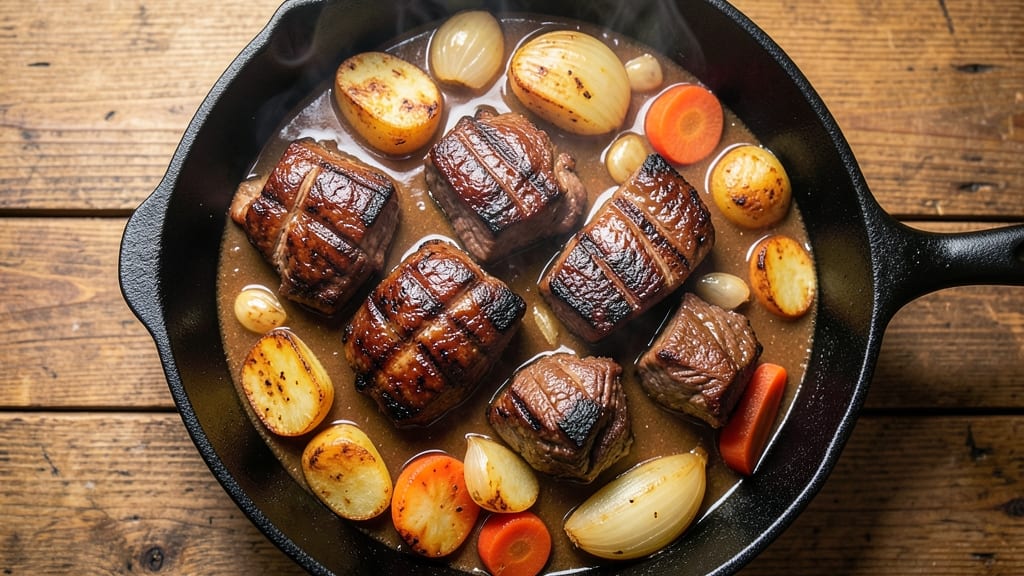
This barbecue beef stew recipe transforms tough cuts into melt-in-your-mouth tenderness with deep smoky flavors and caramelized vegetables. I developed it after years of perfecting slow-cooked meats, blending my French technique training with classic BBQ traditions.
The secret lies in proper browning and slow braising—creating a rich, velvety sauce that clings to every bite.
The foundation begins with a deep sear of beef chuck roast, locking in juices while building flavor through the Maillard reaction. We then slow-cook with aromatic vegetables—carrots, potatoes, and onions—until they become tender and caramelized.
A touch of liquid smoke and BBQ seasoning infuses that signature smoky depth without overpowering the natural beef flavor.
What you'll end up with is a hearty stew that's perfect for cold evenings, game day gatherings, or family meals. The beef falls apart easily, the vegetables are perfectly tender, and the sauce is rich enough to coat every spoonful.
Serve with crusty bread or over buttery mashed potatoes to soak up every last drop of that flavorful liquid gold.
This recipe delivers restaurant-quality results in a single pot, making it ideal for busy weeknights or special occasions. The long cooking time transforms simple ingredients into something extraordinary—proof that patience and proper technique always pay off in the kitchen. Let's get to work on this comforting classic.
Ingredients for barbecue beef stew
Sixteen ingredients transform tough beef into restaurant-quality BBQ stew with deep smoky richness.
| Ingredient | Amount | Notes |
|---|---|---|
| Beef Chuck Roast 🥩 | 3 lb | Well-marbled, cut into 1.5-inch cubes |
| Yellow Onions 🧅 | 2 whole | Chopped into 0.5-inch pieces |
| Carrots 🥕 | 4 whole | Peeled, cut into 1-inch chunks |
| Russet Potatoes 🥔 | 3 lb | Peeled, cut into 1-inch cubes |
| Garlic Cloves 🧄 | 6 cloves | Minced for depth of flavor |
| Liquid Smoke 🔥 | 1 tbsp | For authentic BBQ smokiness |
| BBQ Seasoning Blend 🌶️ | 2 tbsp | Homemade or store-bought |
| Beef Broth 💧 | 4 cups | Low-sodium preferred |
| Tomato Paste 🍅 | 2 tbsp | For concentrated umami |
| Worcestershire Sauce 🍶 | 1 tbsp | For savory depth |
| Apple Cider Vinegar 🍎 | 1 tbsp | Balances richness |
| Olive Oil 🫒 | 2 tbsp | For initial searing |
| Kosher Salt 🧂 | 1 ½ tsp | Diamond Crystal preferred |
| Fresh Thyme 🌿 | ¼ cup | Stems removed, chopped |
| Black Peppercorns 🌶️ | ½ tsp | Freshly cracked |
The beef chuck roast is non-negotiable—its marbling delivers melt-in-your-mouth texture. Costco or Whole Foods carry the best cuts, but any well-marbled chuck works. Cube it yourself for even cooking; pre-cut pieces often vary in size. For the vegetables, organic carrots and potatoes from the grocery store's fresh produce section ensure vibrant flavor. The key is even cutting—1-inch chunks guarantee consistent doneness. Fresh thyme from the market's herb section adds aromatic complexity that dried can't replicate, though dried thyme at one-third the amount works in a pinch.
No liquid smoke? Smoked paprika at double the amount mimics the smoky depth, though it lacks the authentic char. Worcestershire sauce contains anchovies—use vegetarian Worcestershire if avoiding fish. The tomato paste should be San Marzano if available—its sweetness elevates the stew. For the broth, low-sodium options prevent over-salting; homemade beef broth with bone marrow delivers superior richness. Substituting potatoes? Sweet potatoes or parsnips work equally well, though russets hold their shape best during long cooking. The apple cider vinegar brightens the dish—red wine vinegar is a direct swap.
This stew rewards patience—reheating actually improves flavor as the sauce thickens. Store in an airtight container for 5-6 days in the fridge or 3 months frozen. For make-ahead convenience, freeze portions in single-serving containers. The vegetables soften further when reheated, so plan to add fresh carrots or potatoes when serving. A splash of broth or water revives the sauce if it thickens too much during storage. The beef stays tender when properly braised, but avoid overcooking—it should fall apart with a fork, not turn mushy.
Why You'll Love This Recipe
- One-Pot Magic: The beef chuck roast practically cooks itself while you chop onions and garlic—no fancy techniques, just a big pot and simmer time. Honestly, I’ve made this while scrolling through my phone; the slow braising does all the work.
- Smoky Depth Bomb: That barbecue sauce caramelizing on the beef? It’s where the magic happens—rich, smoky, and just sweet enough to balance the hearty beef and earthy potatoes. (Yes, even on a Tuesday night.)
- Leftover Goldmine: This stew only gets better the next day—tender beef falls apart, potatoes soak up all the flavor, and you’ll find yourself reheating it for lunch. My freezer’s always stocked with portions because it reheats like a dream.
- Budget Crowd-Pleaser: A single chuck roast feeds six for under $20, and the veggies stretch the meal further without sacrificing taste. Between us, this is the dish I make when friends drop by unannounced—no one leaves hungry.
Step-by-step instructions for smoky-braised beef stew
Transform tough beef into tender, flavorful bites through precise technique and layered seasoning.
Sear the Beef Chuck for Deep Flavor
Heat a large Dutch oven over medium-high heat and add the 2 tablespoons olive oil. Once shimmering, add the 3 lb beef chuck roast cut into 1.5-inch cubes in a single layer. Let them sear undisturbed for 3-4 minutes until deep golden brown on all sides—this creates the Maillard reaction that builds rich flavor.
Work in batches if needed to avoid crowding the pan. As each batch browns, transfer the beef to a plate and set aside. Don't skip this step—proper searing develops the stew's depth of flavor that simmering alone can't achieve. The beef should be well-browned but not charred.
Build the Aromatic Base
In the same Dutch oven, add the 2 whole yellow onions chopped into 0.5-inch pieces and the 4 whole carrots cut into 1-inch chunks. Cook for 5-6 minutes until the onions soften and begin to caramelize, stirring occasionally. Add the 3 lb russet potatoes cut into 1-inch cubes and cook for another 2 minutes to lightly coat them in the fond.
Stir in the 6 cloves minced garlic, 2 tablespoons BBQ seasoning blend, and 1.5 teaspoons kosher salt. Cook for 1 minute until fragrant—this aromatic base forms the flavor foundation for your stew. The garlic should be cooked just until its raw bite disappears but still retains its sweetness.
Develop the Smoky Sauce
Pour in the 4 cups beef broth, scraping up all the browned bits from the bottom of the pot. Add the 2 tablespoons tomato paste, 1 tablespoon Worcestershire sauce, 1 tablespoon apple cider vinegar, and 1 tablespoon liquid smoke. Stir well to combine, then bring to a gentle simmer over medium heat. The mixture should bubble softly but not vigorously.
Return the browned beef to the pot along with the 0.25 cup chopped fresh thyme and 0.5 teaspoon cracked black peppercorns. The liquid should come about halfway up the sides of the beef cubes. If it's too shallow, add ½ cup water to maintain proper braising liquid levels. This balance ensures tender beef without making the stew watery.
Braise Until Tender Perfection
Cover the Dutch oven and transfer to a 325°F oven. Braise for 3 hours, then carefully flip each beef cube and stir the vegetables. Return to the oven and cook for another 1-2 hours until the beef is fork-tender and easily pulls apart. The internal temperature should reach 203°F—this is the perfect doneness for braised beef.
Check periodically after the initial 3 hours, as ovens vary. The potatoes should be tender and falling apart when pierced with a fork, while the carrots should be soft throughout. The stew should have reduced slightly, creating a rich, concentrated sauce that coats everything beautifully. The aroma should be deeply smoky and savory—this is your signal that the flavors have melded perfectly.
Final Adjustments and Serving
Remove the stew from the oven and let it rest for 15 minutes before serving. This resting period allows the juices to redistribute throughout the beef and vegetables, ensuring each bite is moist and flavorful. Taste and adjust seasoning if needed—add a pinch more salt or a splash of vinegar if the stew needs balancing.
Serve the stew hot, ladling the beef and vegetables along with the rich, smoky sauce. The beef should be tender enough to pull apart with a fork, while the vegetables should be perfectly caramelized. The sauce should coat the back of a spoon with a velvety texture that carries all the smoky, savory flavors. This is where all your careful preparation comes together in a deeply satisfying dish.
Pro Tips For Making Barbecue Beef Stew
- SEAR THE CHUCK FIRST: After burning three batches of stew where the beef just simmered into gray mush, I learned this: Sear the chuck roast in two batches—don’t crowd the pan. High heat for 3-4 minutes per side until deep brown, then pull it out. That crust locks in flavor and keeps the meat tender, not chewy. (Yes, even if you’re impatient like me.)
- CUT POTATOES UNEVENLY: Russets break apart when they’re uniform, so rough up those edges—cut some sides thicker, others thinner. They’ll soften at different rates, but the stew will stay cohesive and every bite will have that perfect mix of tender and firm. I used to slice them like a pro; now I hack at them like I’m chopping firewood.
- ADD POTATOES LATE: Tossing potatoes in at the start turns them to mush by the time the beef is done. Wait until the last 30 minutes—when the beef is fork-tender but still has a little bite. They’ll soak up the rich broth without falling apart, and you won’t end up with a gluey mess. (Your future self will thank you.)
- BROWN ONIONS LOW AND SLOW: Onions caramelize best when they’re not rushed. After the initial sear, drop the heat to medium-low and let them cook for 15-20 minutes, stirring occasionally. They’ll turn deep amber, not burnt, and add a sweet, complex depth that cuts through the richness of the beef. Sounds weird, but it works.
Make-ahead tips for this barbecue beef stew
Prep Ahead Like a Pro
I always start by prepping all my ingredients the night before—this stew rewards advance work. Chop your onions, carrots, and potatoes into even 1-inch cubes and store them in airtight containers in the fridge.
The beef can wait until morning, but having the veggies ready means you can start searing immediately. Trust me, this saves 30 minutes of prep time when you're ready to cook. 💪
Slow-Cooker Shortcut
For busy weeknights, I use a 6-quart slow cooker with the same ingredients. After searing the beef, transfer everything to the slow cooker and cook on low for 8 hours or high for 5 hours.
The texture comes out slightly different but still incredibly tender. This method is perfect for when you want to set it and forget it while you handle other tasks. The flavors develop just as deeply!
Freezer-Friendly Components
Make this stew even more convenient by freezing components separately. The seared beef cubes freeze beautifully for up to 3 months—just thaw overnight in the fridge before braising. You can also freeze the prepped vegetables in a single layer on a baking sheet before transferring to a bag.
When ready to cook, simply add them straight from frozen to the pot with the broth. The extra cooking time will render any ice crystals harmless. ✨
Make-Ahead Sauce Base
For an extra time-saver, prepare the sauce base ahead of time. Sauté your onions, garlic, tomato paste, and spices, then mix with the beef broth, Worcestershire, vinegar, and liquid smoke. Store this mixture in the fridge for up to 3 days or freeze for 2 months.
When ready to cook, simply add the thawed beef and vegetables to the pre-made sauce and braise as directed. This cuts your active cooking time by nearly half!
Portion Control for Meal Prep
Divide the finished stew into quart-sized freezer bags for easy portioning. Each bag makes a perfect single serving or lunchbox meal. The stew actually improves overnight as the flavors meld further. When reheating, add 1-2 tablespoons of water or broth to each portion to restore moisture if needed.
I always keep a few bags in the freezer for those days when I'm too tired to cook. 🍲
Vegetable Refresh
If you're serving the stew after it's been refrigerated or reheated, add fresh steamed green beans or sautéed mushrooms to brighten the plate. The vegetables in the stew soften further during storage, so this adds a nice textural contrast.
I also like to garnish with fresh parsley or thyme right before serving to wake up the flavors. A squeeze of lemon adds brightness too!
Nutrition facts
Frequently asked questions
Can I use a different cut of beef for this recipe?
While beef chuck roast is ideal for its marbling and tenderness, you can substitute with brisket or short ribs. These cuts have more connective tissue, so they'll need an extra 30-60 minutes of braising time. Avoid lean cuts like sirloin—they'll dry out during the long cooking process. If using brisket, cut it against the grain for maximum tenderness.
How do I know when the beef is fully tender?
The beef is perfectly tender when it reaches an internal temperature of 203°F and easily pulls apart with a fork. For the most reliable test, use a meat thermometer inserted into the thickest piece. The beef should have a fork-tender but still slightly resistant texture—this indicates the collagen has broken down while retaining moisture. If it's falling apart too much, it's overcooked.
Can I make this stew on the grill instead of the oven?
Transfer your seared ingredients to a cast-iron Dutch oven and place it directly on grill grates over indirect heat. Maintain a temperature of 275-300°F and cook for 3-4 hours, checking occasionally. The grill imparts subtle smoky notes that complement the liquid smoke. Keep the lid closed as much as possible to maintain even heat distribution. This works especially well for outdoor gatherings.
What if my stew turns out too thick or too thin?
For a thicker stew, simmer uncovered for 10-15 minutes to reduce the sauce. If it's too thin, mix 1 tablespoon cornstarch with 2 tablespoons cold water and stir it into the stew until thickened. For extra richness, add 1-2 tablespoons beef broth to thin it out. The ideal consistency should coat the back of a spoon but still be spoonable. Remember that stews thicken as they cool and reheat.
How can I make this recipe more flavorful?
Elevate your stew with these pro tips: Add 1 bay leaf during braising for aromatic depth, or incorporate ½ cup red wine when deglazing the pan. For extra umami, stir in 1 teaspoon fish sauce or 1 tablespoon soy sauce with the Worcestershire. Fresh herbs like parsley or cilantro added at the end brighten the dish. The key is balancing these enhancements—start with small amounts and adjust to taste.