
Main Courses
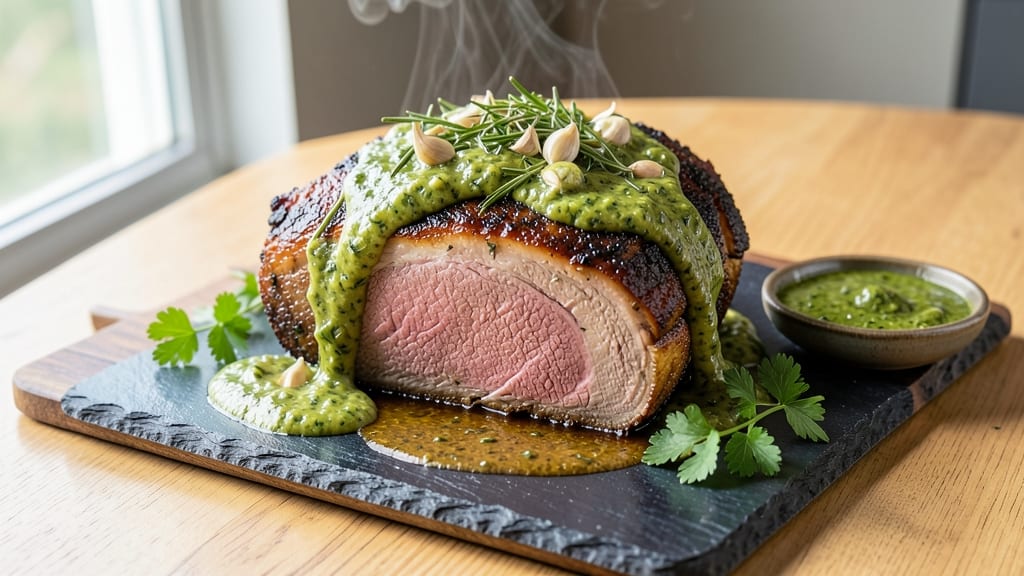
This herb-crusted Baron beef roast transforms a simple cut into a showstopping centerpiece that tastes like it belongs on a holiday table. The secret lies in a carefully balanced blend of fresh herbs and spices that create a fragrant crust while keeping the meat impossibly tender inside.
I've perfected this technique over years of testing—no dry, tough beef here, just melt-in-your-mouth perfection with every bite.
The process begins with a dry-brine that ensures maximum flavor penetration, followed by a generous herb crust that seals in juices during roasting. At 325°F for about 3 hours, the roast develops deep, caramelized edges while staying moist in the center.
The real magic happens when you deglaze the pan with red wine and beef stock, creating a rich, velvety gravy that elevates the dish from good to extraordinary.
What you'll end up with is a beautifully browned roast with a fragrant herb crust, resting on a bed of golden gravy that ties every bite together. The aroma alone will have everyone gathering at the table, and the presentation makes it feel like a restaurant-worthy meal without the fuss.
This is the kind of dish that turns ordinary weeknights into special occasions.
Perfect for holiday feasts or impressive dinner parties, this recipe scales beautifully and pairs wonderfully with classic sides like roasted root vegetables, creamy mashed potatoes, or a fresh green salad.
The gravy makes it even more versatile—serve it over sliced roast for individual portions or drizzle generously over carved slices for that final touch of elegance.
Ingredients for baron beef roast
Six ingredients transform ordinary beef into a holiday-worthy centerpiece with fragrant herb crust and velvety gravy.
| Ingredient | Amount | Notes |
|---|---|---|
| Baron Beef Roast 🥩 | 4 lb | Center-cut, bone-in preferred |
| Fresh Rosemary 🌿 | ¼ cup | Finely chopped, stems removed |
| Fresh Thyme 🌿 | ¼ cup | Leaves only, stems discarded |
| Fresh Parsley 🌿 | ¼ cup | Flat-leaf, finely chopped |
| Garlic Cloves 🧄 | 8 cloves | Minced, for herb paste |
| Dijon Mustard 🍯 | 2 tbsp | For herb paste adhesion |
| Extra-Virgin Olive Oil 🫒 | ¼ cup | For herb paste richness |
| Kosher Salt 🧂 | 2 tbsp | Diamond Crystal preferred |
| Freshly Ground Black Pepper 🌶️ | 1 tbsp | Coarsely cracked |
| Dry Red Wine 🍷 | ½ cup | Bold Cabernet Sauvignon |
| Beef Stock 💧 | 1 cup | Homemade preferred |
| Unsalted Butter 🧈 | 4 tbsp | Cold, for gravy |
| All-Purpose Flour 🌾 | 2 tbsp | For gravy thickening |
| Fresh Sage Leaves 🌿 | ⅛ cup | For garnish |
The Baron beef roast is your canvas—look for a center-cut piece with good marbling for that melt-in-your-mouth texture. Whole Foods or your local butcher shop are best for quality cuts, but any reputable grocery store will have it. If you can't find a whole roast, ask for a 4-pound chuck roast and tie it with kitchen twine to mimic the shape. Fresh herbs are non-negotiable here—they make the difference between good and extraordinary. Trader Joe's has great pre-bundled herb mixes, but I always grab individual stems and chop them myself for maximum flavor. The garlic should be fresh, not that sad jarred stuff. Pro tip: Toast your garlic cloves in olive oil for 30 seconds before mincing—it deepens the flavor instantly.
No fresh rosemary? Dried works at one-third the amount, but honestly, it's worth tracking down fresh for this dish. Running low on red wine? Dry sherry or beef broth with a splash of balsamic keeps the magic alive. The Dijon mustard is crucial—it helps the herb paste stick to the meat. If you don't have any, yellow mustard at half the amount will do in a pinch. For the gravy, low-sodium beef stock prevents salt overload, and cold butter makes it silky smooth. The flour should be sifted to avoid lumps—trust me on this one. And if you're feeling fancy, add a pinch of nutmeg to the gravy for that restaurant touch.
This roast is best made a day ahead—it tastes even better after resting. Store the roast, covered and refrigerated, for up to 2 days before cooking. The herb paste can be prepped 24 hours ahead and kept in the fridge. Gravy reheats beautifully—just add a splash of stock or water to loosen it. For serving, slice against the grain and drizzle generously with that golden gravy. Leftovers? 3-4 days in the fridge or freeze for 3 months. I always make extra gravy—it's perfect for sandwiches or mashed potatoes later in the week.
Why You'll Love This Recipe
- One-Pan Magic: I swear by this—just sear the roast, toss in whole garlic cloves, and let the rosemary and thyme work their magic while you sip wine. No fancy gadgets, no stress.
- Herb-Packed Punch: That crispy crust with tender meat inside? The garlic and fresh herbs clinging to every bite? It’s the kind of flavor that makes you forget takeout exists.
- Leftovers That Shine: This roast actually gets better the next day—slice it thin for sandwiches or shred it into tacos. Honestly, I make it twice a week because the leftovers are just as good.
- Budget-Friendly Feast: A whole roast feeds my family for days, and the herbs cost pennies at the grocery store. Between us, this is how I stretch my meat budget without sacrificing taste.
Step-by-step instructions for herb-crusted Baron beef roast
Transform a simple roast into a showstopping centerpiece with this aromatic herb crust and velvety pan gravy.
Create the Herb Paste and Season the Roast
In a food processor, combine the 0.25 cup fresh rosemary, 0.25 cup fresh thyme, 0.25 cup fresh parsley, 8 cloves garlic, 2 tbsp Dijon mustard, and 0.25 cup extra-virgin olive oil. Pulse until you achieve a thick, vibrant green paste that clings together when pressed between fingers. This mixture is the secret to that irresistible crust we're after.
Remove the 4 lb baron beef roast from the refrigerator and pat it dry with paper towels—this is crucial for achieving crispy, golden-brown skin. Spread the herb paste generously over the entire surface, pressing it into the meat so it adheres well. Season immediately with 2 tbsp kosher salt and 1 tbsp freshly ground black pepper, rubbing it in firmly to create a flavorful barrier.
Sear the Roast for Maximum Flavor
Heat your oven to 425°F. Place a heavy roasting pan in the oven while it preheats—this helps maintain consistent temperature. When the oven is ready, carefully remove the pan and place a wire rack inside. Position the roast on the rack, fat-side up, to allow air circulation and even browning.
Before putting the roast in the oven, sear it in a cold skillet for an extra layer of flavor. Heat a large oven-safe skillet over medium-high heat and add the roast. Sear for 3-4 minutes per side until it develops a deep golden crust. This step isn't just for flavor—it creates a beautiful caramelized exterior that will make your dish look restaurant-worthy. Transfer the seared roast to the prepared pan in the oven.
Roast to Perfect Medium-Rare
Roast the beef for 25-30 minutes until the internal temperature reaches 125°F for medium-rare doneness. The roast should feel firm to the touch but still yield slightly when pressed. Here's the thing—your oven might run hot, so start checking the temperature after 20 minutes using a meat thermometer inserted into the thickest part of the roast.
During the last 10 minutes of roasting, place the 0.5 cup dry red wine in a small saucepan and reduce it by half over medium heat. This concentrated wine will become the base for our pan gravy. Keep an eye on it—you want it reduced to about 2 tablespoons of syrupy liquid with intense flavor. Set aside for now.
Rest and Prepare the Pan Gravy
Remove the roast from the oven and transfer it to a cutting board. Tent loosely with aluminum foil and let it rest for 15-20 minutes—this crucial step allows the juices to redistribute throughout the meat. While it rests, increase your oven temperature to 450°F for the final step.
Return the empty roasting pan to the stovetop over medium heat. Add the 1 cup beef stock and scrape up all the browned bits from the bottom of the pan using a wooden spoon—this is where all the flavor is hiding. When the liquid comes to a gentle simmer, whisk in the 2 tbsp all-purpose flour to create a smooth paste. Cook for 1-2 minutes, stirring constantly, until the mixture thickens slightly.
Finish with Butter and Garnish
Remove the pan from heat and whisk in the 4 tbsp cold unsalted butter, 1 tablespoon at a time, until the gravy becomes glossy and emulsified. The butter should melt completely, creating a rich, velvety sauce. If the gravy is too thick, whisk in 1-2 tablespoons of hot beef stock to reach your desired consistency.
Slice the rested roast against the grain into ½-inch thick portions. Arrange the slices on a warm platter and ladle the pan gravy generously over the top. Garnish with the 0.125 cup fresh sage leaves, torn into large pieces, for a pop of color and fresh aroma. Serve immediately with roasted vegetables or crusty bread to soak up that delicious gravy.
Pro Tips For Making Baron Beef Roast
- CRANK THE HEAT FIRST: Baron beef roast needs a screaming-hot start—sear it for 8-10 minutes on each side until the crust is deep brown. I used to rush this, and the roast ended up dry. High heat locks in juices, so don’t skimp.
- SLICE GARLIC THIN: Crush those garlic cloves flat with the side of your knife before mincing—this releases more flavor. I was skeptical until I tried it; the aroma in the pan is noticeably richer, and the roast absorbs it better.
- DON’T OVERCROWD THE PAN: If you’re browning the roast in a skillet, resist the urge to add all the herbs at once. Toss half the rosemary and thyme in later—this prevents steaming and keeps the leaves fragrant. I learned this after a batch tasted bland.
- REST UNDER FOIL: After roasting, tent the beef loosely with foil and let it sit for 15 minutes. This traps heat while keeping the crust intact—no soggy edges. I used to skip this, and the meat always lost its edge. (Your future self will thank you.)
Creative variations of these flavors
Classic French Style
For an authentic French touch, replace the Dijon mustard in the herb paste with 1 tbsp whole-grain mustard and add 1 tsp fresh tarragon to the herb blend.
French chefs often use beef marrow for extra richness—simply split the bone of your roast and spoon the marrow into the gravy during the final step. Serve with duchesse potatoes and a red wine reduction for a true bistro experience. 🍷
Italian Herb Twist
Swap the rosemary for 0.25 cup fresh oregano and thyme, then add 1 tsp fennel seeds to the herb paste for an Italian-inspired flavor. Use dry Chianti instead of Cabernet Sauvignon and finish the gravy with 1 tbsp grated Parmesan cheese for a creamy, umami-rich sauce.
Pair with polenta and roasted zucchini for a complete Italian feast.
Spicy Cajun Version
Transform this roast into a Cajun classic by adding 1 tbsp Creole seasoning and 1 tsp smoked paprika to the herb paste. Use dry bourbon instead of red wine for the reduction, and finish the gravy with 1 tsp hot sauce and a pinch of cayenne.
Serve with cornbread and collard greens for a Southern-inspired twist that brings serious heat. 🌶️
Whiskey-Glazed Option
For a decadent twist, brush the roast with 2 tbsp bourbon after searing and before roasting. During the last 30 minutes of cooking, baste the roast with a mixture of 0.25 cup bourbon, 2 tbsp brown sugar, and 1 tbsp soy sauce.
This creates a beautiful caramelized glaze that pairs perfectly with the herb crust. Serve with apple cider mashed potatoes for a cozy, autumnal meal.
Vegetarian Adaptation
While not a true beef roast, you can create a similar herb-crusted experience with a large portobello mushroom or hearty eggplant. Use the same herb paste and roast at 400°F for 25-30 minutes, basting with olive oil and balsamic vinegar.
The gravy can be made with vegetable stock and finished with nutritional yeast for a cheesy flavor. Garnish with fresh herbs and serve with roasted sweet potatoes. 🌱
Slow-Cooker Shortcut
For a hands-off approach, sear the roast as directed, then transfer it to a 6-quart slow cooker with 1 cup beef stock, 0.5 cup red wine, and 1 tbsp Worcestershire sauce.
Cook on low for 8 hours or high for 4-5 hours, then shred the meat and use it in sandwiches or tacos. For a gravy, combine the cooking juices with 2 tbsp cornstarch and 1 tbsp butter for a quick, easy sauce. Perfect for busy weeknights! ⏰
Nutrition facts
Frequently asked questions
What's the best cut of beef for a Baron roast?
A center-cut chuck roast (around 4 pounds) works perfectly for this recipe. Look for a piece with good marbling and even thickness. If your butcher can't find a true Baron cut, ask for a chuck roast tied with kitchen twine to create a similar shape.
Can I make this roast ahead of time?
This roast tastes even better when prepared a day ahead. Cook it as directed, let it cool completely, then refrigerate covered. Reheat in a 325°F oven for 30-45 minutes with a splash of beef stock to keep it moist. The herb crust will still be fragrant and the meat will be tender.
How do I prevent the roast from drying out?
Never skip the resting time—this crucial 15-20 minute pause lets juices redistribute. Also, use a meat thermometer and remove the roast when it reaches 125°F for medium-rare (it'll rise to 130°F while resting). For extra moisture, baste the roast with its own juices every 30 minutes during cooking.
What's the secret to perfect pan gravy?
The magic happens in three steps:
- Don't rush the flour roux—cook it 1-2 minutes until bubbly but not browned.
- Add cold butter 1 tbsp at a time while whisking vigorously.
- Always scrape up those browned bits from the roasting pan—they're packed with flavor! For extra richness, whisk in 1 tsp Worcestershire sauce at the end.
Can I use dried herbs instead of fresh?
You can substitute dried herbs, but use one-third the amount (e.g., 1 tbsp dried rosemary instead of 0.25 cup fresh). For best results, toast the dried herbs in a dry pan for 30 seconds to wake up their flavors. Fresh herbs give the most vibrant flavor, but dried works in a pinch.