
Main Courses
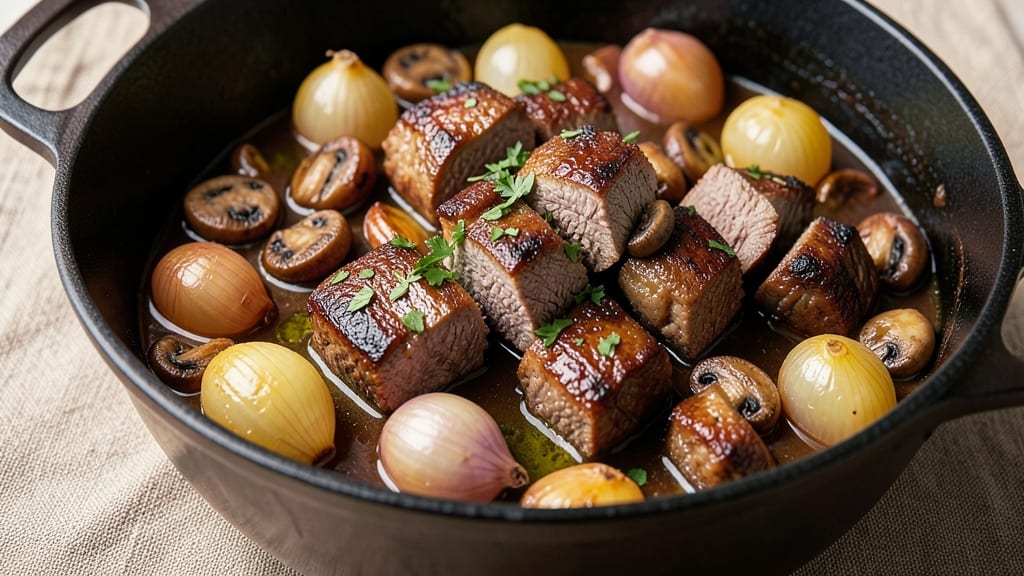
This basic beef bourguignon recipe transforms humble beef and mushrooms into a restaurant-worthy masterpiece through slow braising and rich wine reduction. The secret lies in proper searing and deglazing—techniques that unlock deep, caramelized flavors from the beef and vegetables.
What starts as simple ingredients becomes a velvety sauce with tender meat and caramelized mushrooms, all simmered to perfection in red wine.
Unlike quick weeknight meals, beef bourguignon rewards patience with its complex layers of flavor. You'll begin by browning beef chuck in batches, then deglazing the pan to create a flavorful foundation.
The mushrooms caramelize beautifully while onions and garlic build aromatic depth. After adding wine and stock, the dish braises until the beef is fork-tender and the sauce thickens into luxurious richness.
The result is a dish that feels equally at home on a romantic dinner table or family gathering. Each bite delivers tender beef, earthy mushrooms, and a sauce so rich it coats every forkful.
The wine reduction brings balance—acidic yet sweet, with just enough depth to complement the beef's natural richness. This is comfort food elevated to gourmet status without requiring advanced skills.
Perfect for meal prepping or serving immediately, this recipe scales beautifully for any occasion. The flavors only improve with time, making it ideal for preparing ahead. Whether you're a home cook looking to impress or a seasoned chef refining techniques, this beef bourguignon delivers restaurant-quality results with traditional methods.
Let's get started with the full instructions.
Ingredients for basic beef bourguignon
Transform humble ingredients into restaurant-worthy beef bourguignon with these quality components.
| Ingredient | Amount | Notes |
|---|---|---|
| Beef Chuck Roast 🥩 | 2 lb | Cut into 1.5-inch cubes, trimmed of fat |
| Pearl Onions 🧅 | 12 whole | Peeled, halved lengthwise |
| Cremini Mushrooms 🍄 | 16 whole | Stemmed, quartered |
| Yellow Onion 🧅 | 1 whole | Diced, medium size |
| Garlic Cloves 🧄 | 4 cloves | Minced, fresh preferred |
| All-Purpose Flour 🌾 | 2 tbsp | Diamond Crystal preferred |
| Dry Red Wine 🍷 | 2 cups | Bold, full-bodied like Cabernet Sauvignon |
| Beef Stock 🥄 | 2 cups | Homemade or high-quality store-bought |
| Tomato Paste 🍅 | 2 tbsp | San Marzano preferred |
| Fresh Thyme 🌿 | 2 sprigs | Leaves only, stems removed |
| Fresh Bay Leaves 🌿 | 2 whole | Dried substitute at 1/3 amount |
| Olive Oil 🫒 | 2 tbsp | Extra-virgin for richness |
| Kosher Salt 🧂 | 1 ½ tsp | Diamond Crystal preferred |
| Freshly Ground Black Pepper 🌶️ | ½ tsp | Coarsely ground |
| Fresh Parsley 🌿 | ¼ cup | Chopped, for garnish |
The beef chuck is non-negotiable here—its marbled fat renders during braising for unmatched richness. Grab a well-marbled roast from your butcher or pre-cut chuck from the meat department; avoid lean cuts like sirloin. For mushrooms, cremini or baby bella caramelize beautifully, but wild mushrooms add earthy depth if you're feeling adventurous. Pearl onions should be firm and evenly sized for consistent cooking. Whole Foods and Trader Joe's carry excellent pre-peeled options, saving you time. The red wine? Cabernet Sauvignon or Merlot work best—avoid sweet varieties that'll throw off the balance.
No red wine? Beef stock with 1 tbsp balsamic vinegar mimics the acidity and depth, though purists will notice the difference. Fresh thyme and bay leaves are ideal, but dried substitutes at one-third the amount work in a pinch. The tomato paste can be swapped for 1 cup crushed tomatoes if you prefer, though paste delivers more concentrated flavor. For the flour, Diamond Crystal kosher salt dissolves more easily than table salt—trust me on this. If you're prepping ahead, deglaze the pan after browning the beef and freeze the sauce base separately; thaw and add the beef later.
This dish tastes even better the next day as flavors meld. Store leftovers in an airtight container for up to 5 days in the fridge, or freeze for 3 months. The sauce thickens further upon reheating, so add a splash of stock if it seems too stiff. For meal prep, portion the beef and sauce separately—reheat the sauce first, then add the beef to prevent drying. Garnish with fresh parsley just before serving to brighten the dish's rich flavors.
Why You'll Love This Recipe
- One-Pot Simplicity: I swear by this recipe when I’m too tired to dirty multiple pans—just sear the chuck roast, toss in the onions and mushrooms, and let the red wine do the work. The pearl onions stay intact, the mushrooms melt into the sauce, and the garlic infuses everything without extra effort.
- Rich Without Fuss: That deep, slow-cooked flavor? It’s all in the beef and the wine reduction. The chuck roast gets tender enough to fall apart, while the cremini mushrooms add an earthy punch—no fancy techniques, just time and patience. Honestly, the first bite makes it worth the wait.
- Leftovers That Shine: This dish actually improves the next day. The flavors meld even more, and I often repurpose it into sandwiches or pasta—my kids beg for it long after dinner. (Yes, even when I’m sick of it.)
- Budget-Friendly Feast: A chuck roast stretches for a crowd, and the veggies are cheap but pack serious flavor. I’ve fed six people for under $20, and no one complains about the cost—just the taste. Between us, this is my go-to for potlucks or when I need to impress without breaking the bank.
Step-by-step instructions for beef bourguignon with caramelized mushrooms
This classic French technique transforms tough beef into tender, wine-braised perfection.
Sear the Beef Chuck Roast for Deep Flavor
Heat a heavy Dutch oven over medium-high heat until hot. Add the 2 tablespoons olive oil and swirl to coat the bottom evenly. Working in batches to avoid crowding, add the 2 lb beef chuck roast cut into 1.5-inch cubes and sear for 2-3 minutes per side until deeply browned with a crust forming.
Don't rush this step—the Maillard reaction happening now creates the rich, caramelized foundation for your sauce. Press down gently on the beef with a spoon to ensure even browning. Transfer the seared beef to a plate and set aside, leaving all the browned bits in the pot.
Develop the Aromatic Base with Onions and Mushrooms
In the same Dutch oven, add the 1 whole yellow onion and 12 whole pearl onions (halved lengthwise). Cook for 5-6 minutes until the onions soften and begin to caramelize at the edges. Add the 16 whole cremini mushrooms (quartered) and cook for another 5 minutes until they release their moisture and develop golden spots.
Here's where the magic happens: the onions should be soft but still holding their shape, with deep golden brown edges. If they're sticking, add a splash of the 2 cups dry red wine to deglaze. Remove the vegetables and set aside with the beef, leaving all the flavorful bits in your pot.
Build the Wine Reduction Sauce
Pour in the 2 cups dry red wine and scrape up all the browned bits from the bottom of the pot using a wooden spoon. Bring to a simmer over medium-high heat and reduce by half (5-7 minutes) until the liquid coats the back of a spoon. Stir in the 2 tablespoons tomato paste and cook for 1 minute to develop its sweet, umami depth.
This reduction process concentrates the wine's flavors and forms the velvety base of your sauce. The sauce should now be thick enough to coat the back of a spoon but still pour easily. If it's too thick, add 1-2 tablespoons beef stock to reach your desired consistency.
Braise the Beef Until Tender
Return all the beef and vegetables to the pot. Sprinkle the 2 tablespoons all-purpose flour over the mixture and stir to coat everything evenly. Pour in the 2 cups beef stock, then add the 2 sprigs fresh thyme, 2 whole fresh bay leaves, 1.5 teaspoons kosher salt, and 0.5 teaspoon freshly ground black pepper.
Bring to a gentle simmer, then cover and transfer to a 325°F oven. Braise for 2.5-3 hours until the beef is fork-tender and easily pulls apart. The sauce should be thick and glossy, coating the beef and vegetables completely. If the sauce reduces too much, add 1-2 tablespoons beef stock during cooking to maintain moisture.
Finish and Garnish for Presentation
Remove the pot from the oven and discard the thyme sprigs and bay leaves. Taste and adjust seasoning if needed—this is your final chance to balance the flavors. The sauce should be rich, slightly tangy from the wine, and well-seasoned.
Ladle the bourguignon into a warmed serving dish and garnish with the 0.25 cup chopped fresh parsley. Serve immediately with crusty bread or mashed potatoes to soak up every last bit of that luxurious sauce. The beef should be tender enough to pull apart with a fork, with deep flavor from the wine reduction and caramelized mushrooms.
Pro Tips For Making Basic Beef Bourguignon
- SEAR THE ROAST LONG: I used to rush this step, but beef chuck needs 8-10 minutes per side in a screaming-hot pan with 2 tablespoons of oil—until it’s deep brown, not just pink. The crust locks in flavor and prevents dryness later. (Yes, even if you’re impatient like me.)
- PEEL PEARL ONIONS HALFWAY: Skip peeling them completely—just slice off the top and bottom, then halve them lengthwise. The papery skin stays intact while cooking, keeping them from falling apart in the wine. My grandmother swore by this, and she was right: they hold together perfectly.
- DEGLAZE WITH RED WINE IMMEDIATELY: As soon as you remove the roast, pour in the wine right away—no waiting. The residual heat will help lift those browned bits from the pan, giving the sauce depth. Scrape aggressively with a wooden spoon; that’s where the flavor hides.
- ADD MUSHROOMS LAST: Toss cremini mushrooms in halfway through cooking, but save a handful for the final 10 minutes. They soak up liquid like sponges—adding them too early turns them to mush. A quick sear at the end keeps them tender but still hold their shape. (Your future self will thank you.)
Serving suggestions for this recipe
Classic Bread Pairings
Nothing beats serving beef bourguignon with a warm, crusty baguette for dipping into that rich sauce. I always reach for a French-style baguette from my local bakery—look for one with a crisp exterior and soft interior.
For extra flair, slice the baguette diagonally and lightly toast it in the oven until golden. If you want something heartier, try sourdough bread or a ciabatta roll for more surface area to soak up the sauce. 🥖
Starchy Sides
Mashed potatoes add a creamy contrast to the hearty beef and wine sauce. I like using Yukon Gold potatoes boiled until tender, then mashed with butter and cream until smooth.
For a lighter option, try roasted baby potatoes tossed in olive oil, garlic, and rosemary. Both sides help balance the richness of the bourguignon while complementing its deep flavors.
Vegetable Accompaniments
A simple green vegetable adds freshness to the dish. Sautéed green beans with garlic and almonds work beautifully—their crisp texture cuts through the richness. For something more substantial, try roasted Brussels sprouts with balsamic glaze—their caramelized edges pair wonderfully with the wine sauce.
I often serve these on the side so guests can customize their plates.
Wine Pairing
The same red wine you used in the recipe makes an excellent pairing. A Cabernet Sauvignon or Merlot complements the dish's depth without overpowering it. For a lighter option, try a Pinot Noir—its bright acidity balances the richness.
If you prefer white wine, a Chardonnay with good acidity works surprisingly well. Always serve the wine slightly chilled to enhance its aromas.
Cheese Course
End the meal with a simple cheese board featuring complementary cheeses. I like pairing aged Gouda with its nutty depth, creamy Brie for richness, and sharp cheddar for contrast. Add some dried fruits like apricots or figs, and a few nuts for crunch.
The cheese board lets guests enjoy the flavors of the bourguignon in a different format while satisfying their sweet tooth.
Dessert Pairing
For a classic finish, serve a simple crème brûlée or chocolate mousse—both complement the wine flavors without competing. If you want something lighter, try vanilla bean ice cream** with a drizzle of caramel.
The cool, creamy dessert helps cleanse the palate after the rich bourguignon, leaving guests satisfied and happy. 🍫
Nutrition facts
Frequently asked questions
Can I substitute red wine with something else if I don't have any?
Yes! For the same depth of flavor, use 2 cups beef stock plus 1 tablespoon balsamic vinegar or 1 tablespoon red wine vinegar. The vinegar adds acidity to mimic wine's tang, while the stock provides umami richness. If you're avoiding alcohol entirely, try grape juice or cranberry juice for color and acidity.
Why does my beef bourguignon sauce turn out watery?
Watery sauce usually means the liquid wasn't reduced enough or the beef wasn't properly seared. First, ensure you reduce the wine by half before adding stock. Second, always sear the beef in batches to maximize browning—those fond bits thicken the sauce. If needed, simmer uncovered for 10-15 minutes at the end to thicken further.
How do I make this dish ahead of time for a party?
Beef bourguignon actually tastes better the next day! Cook it completely, then store in an airtight container in the fridge for up to 5 days. Reheat gently on the stove with a splash of stock to restore moisture. For serving, you can reheat the sauce separately and add the beef just before plating to keep it tender.
What's the best cut of beef for bourguignon?
Beef chuck roast is ideal because its marbling and connective tissue break down beautifully during braising. Avoid lean cuts like sirloin—they won't become tender. If chuck isn't available, chuck shoulder or stew beef work well too. Just ask your butcher for a well-marbled cut designed for slow cooking.
Can I use dried herbs instead of fresh?
Yes, but use one-third the amount of dried herbs compared to fresh. For example, 1/2 teaspoon dried thyme instead of 2 sprigs fresh thyme. Dried herbs work best when added during the braising stage. Avoid substituting fresh bay leaves—dried ones are much stronger and should be used sparingly (or omitted entirely if you're sensitive to their flavor).