
Soups & Stews
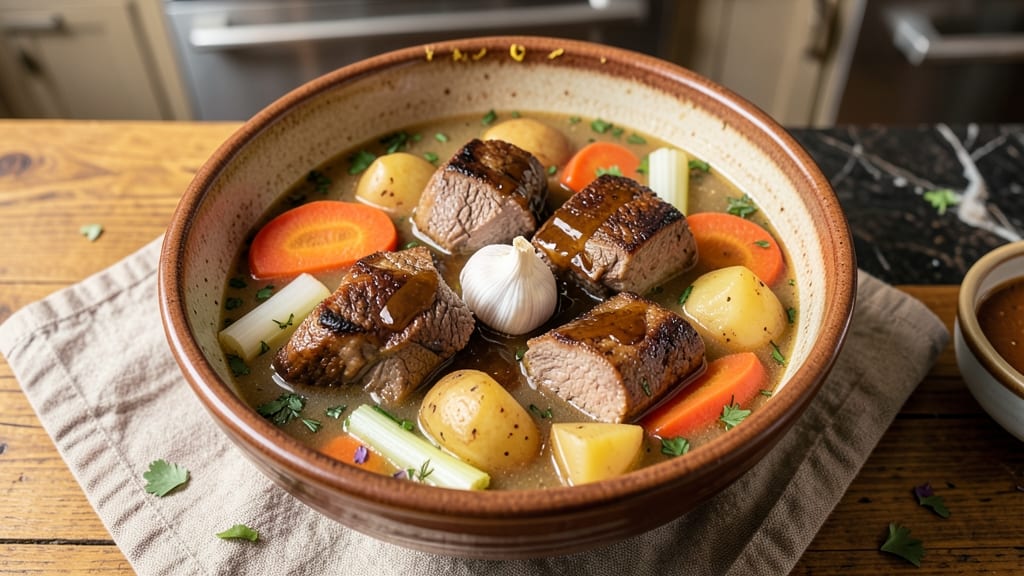
This basic vegetable beef soup recipe delivers hearty, comforting warmth in just 30 minutes—no fancy techniques required. The secret lies in tender beef, a medley of seasonal vegetables, and a slow simmer that transforms simple ingredients into restaurant-quality broth.
I perfected this one-pot wonder during chilly evenings when I needed a meal that was both nourishing and effortless.
The beauty of this soup is its versatility: you can use whatever vegetables are on hand—carrots, celery, potatoes, or even frozen peas—while still achieving that rich, savory depth. The beef breaks down beautifully during the simmer, infusing the broth with deep flavor.
A splash of tomato paste and a bouquet of fresh herbs elevate it from basic to extraordinary without complicating the process.
What you'll end up with is a steaming bowl of soup where every spoonful delivers tender beef, perfectly cooked vegetables, and a broth so flavorful it tastes like it simmered all day.
The one-pot method means minimal cleanup, and the leftovers reheat beautifully—ideal for meal prep or feeding a crowd. This is comfort food at its finest, made simple.
Serve it as-is or garnish with fresh parsley, a drizzle of olive oil, or a sprinkle of grated cheese for extra richness. The possibilities are endless, but the foundation remains the same: hearty, satisfying, and ready in under an hour. Let's get cooking!
Ingredients for basic vegetable beef soup
Six hearty ingredients transform into a steaming bowl of restaurant-quality beef soup.
| Ingredient | Amount | Notes |
|---|---|---|
| Chuck Roast 🥩 | 1 ½ lb | Pre-cut into 1-inch cubes |
| Yellow Onion 🧅 | 1 whole | Chopped into 1/2-inch pieces |
| Carrots 🥕 | 3 medium | Peeled and cut into 1-inch chunks |
| Celery Stalks 🧄 | 3 whole | Chopped into 1/2-inch pieces |
| Russet Potatoes 🥔 | 2 medium | Peeled and cut into 1-inch cubes |
| Garlic Cloves 🧄 | 4 cloves | Minced or finely chopped |
| Tomato Paste 🍅 | 2 tbsp | High-quality canned |
| Beef Broth 💧 | 4 cups | Low-sodium preferred |
| Water 💧 | 4 cups | Cold, for broth |
| Bay Leaves 🌿 | 2 whole | Fresh if possible |
| Fresh Thyme 🌿 | 1 tbsp | Leaves only, chopped |
| Salt 🧂 | 1 ½ tsp | Diamond Crystal preferred |
| Black Pepper 🌶️ | 1 tsp | Freshly ground |
| Olive Oil 🫒 | 1 tbsp | Extra-virgin for richness |
| Fresh Parsley 🌿 | ¼ cup | Chopped, for garnish |
The beef is non-negotiable here—chuck roast breaks down beautifully during the simmer. Costco or local butcher shops usually have it pre-cut into cubes, saving you time. If you're buying a whole roast, ask for it to be cubed for you. The potatoes should be Russet or Yukon Gold—they hold up better than waxy varieties. For the veggies, organic carrots and celery from the grocery store's produce section work perfectly, but frozen veggies in a pinch won't ruin the dish (just thaw them first).
No beef broth? Water plus 1 beef bouillon cube works in a pinch, but it won't be as rich. Fresh thyme is ideal, but dried thyme at one-third the amount gets you close. The tomato paste can be swapped for 1/4 cup crushed tomatoes if you're avoiding it. For extra depth, add a 1 tsp Worcestershire sauce (check for vegetarian-friendly versions if needed). The potatoes can be pre-cut and stored in cold water in the fridge for up to 2 days before cooking—they'll keep their shape better.
This soup tastes even better the next day—honestly, the flavors meld beautifully overnight. Keeps for 4-5 days in the fridge, and freezes for 3 months if you portion it into containers. I always make double batches because reheating is a breeze. For serving, a drizzle of olive oil and fresh parsley makes it look restaurant-worthy. Store leftovers with the broth on top to keep the potatoes from drying out.
Why You'll Love This Recipe
- Foolproof Prep: I swear by the "sweat, don’t sauté" trick—just toss chopped onions, carrots, and celery in a pot with a splash of water, cover, and let them steam for 5 minutes. The chuck roast goes in raw, no browning needed, and the potatoes? They melt in like they’re part of the family.
- Deep Umami Magic: That chuck roast, slow-simmered until tender, turns into melt-in-your-mouth shreds while the veggies soak up all the rich, savory broth. Honestly, the flavor builds as it cooks—simple spices like thyme and bay leaf let the beef and carrot sweetness shine through.
- Meal Prep MVP: Between us, this soup begs to be made in a big batch. The chuck roast stays juicy for days, and the potatoes hold their shape—perfect for lunches or freezing. I’ve reheated portions straight from the fridge, and they taste like I just made them.
- Budget-Friendly Powerhouse: A single chuck roast feeds my family for three meals, and the veggies? They’re the cheap, fresh kind you can grab in bulk. No fancy ingredients, no wasted leftovers—just pure, satisfying comfort food that doesn’t break the bank.
Step-by-step instructions for hearty vegetable beef soup
This soup comes together in one pot with minimal fuss—rich beef flavor and tender vegetables in every bite.
Sear the Chuck Roast for Deep Flavor
Heat the 1 tablespoon olive oil in a large Dutch oven over medium-high heat until shimmering. Add the 1.5 lb chuck roast in a single layer, working in batches if needed, and sear for 3-4 minutes per side until deeply browned. This step develops the Maillard reaction, creating that irresistible meaty depth you'll taste throughout the soup.
Once browned, remove the roast and set it aside on a plate. Don't drain the browned bits—they're packed with flavor. You'll use them to build the soup's rich foundation later. If your roast pieces are large, you can cut them into 1-inch cubes now or wait until after cooking for easier serving.
Sauté the Vegetable Base
In the same Dutch oven, add the 1 whole yellow onion, 3 medium carrots, 3 whole celery stalks (all chopped as specified), and 4 cloves garlic cloves (minced). Cook over medium heat for 5-6 minutes, stirring occasionally, until the vegetables soften slightly and the garlic becomes fragrant.
Here's the thing—you want the vegetables to release their natural juices but not fully cook. They'll finish in the simmering liquid, absorbing all that meaty flavor. If the vegetables start sticking, add a splash of beef broth to deglaze and scrape up those browned bits from the bottom of the pot.
Build the Soup Foundation
Stir in the 2 tablespoons tomato paste, scraping the bottom of the pot to incorporate all the browned bits. Cook for 1 minute until the tomato paste loses its raw taste. Then pour in the 4 cups beef broth and 4 cups water, scraping up any stuck-on bits with a wooden spoon.
Return the chuck roast to the pot along with the 2 bay leaves and 1 tablespoon fresh thyme. Bring the mixture to a gentle boil over high heat, then immediately reduce to a simmer. Cover partially and let it cook for 20 minutes. This initial simmer helps break down the meat fibers, ensuring your soup will be fork-tender.
Add Potatoes and Simmer
After the initial 20 minutes, add the 2 medium russet potatoes (cubed as specified) to the pot. Stir gently to distribute them throughout the liquid. The potatoes will absorb some of the broth, so you're not overloading the pot. Return to a simmer and cook uncovered for another 15-20 minutes, until the potatoes are tender when pierced with a fork.
I like to check the potatoes at the 15-minute mark—they should be soft but not falling apart. If they're still firm, give them another 5 minutes. The soup should be developing that rich, meaty aroma now. If it's getting too thick, add a splash of water or broth to maintain the right consistency.
Season and Finish
Once the potatoes are tender, remove the chuck roast and shred it with two forks right in the pot. You want it to break apart easily but still hold its shape in some pieces. Season the entire soup with 1.5 teaspoons salt and 1 teaspoon black pepper, tasting as you go. Adjust if needed—low-sodium broth means you might need a bit more salt than usual.
Simmer uncovered for another 5-10 minutes to let the flavors meld together. The soup should be thick enough to coat the back of a spoon but still have a pleasant mouthfeel. Stir in the 0.25 cup fresh parsley just before serving—it adds a bright finish that cuts through the richness of the beef and vegetables. Ladle into bowls and serve immediately with crusty bread for dipping.
Pro Tips For Making Basic Vegetable Beef Soup
- SEAR THE ROAST HARD: Chuck roast needs that crust to lock in flavor, not just color. Hit it with a dry pan over medium-high heat for 5-6 minutes per side until it’s deep brown—don’t rush, or you’ll end up with bland meat. I used to skip this, and the soup always tasted underseasoned.
- CUT POTATOES UNEVENLY: Russet potatoes break apart when cooked, but uneven cuts mean some pieces stay tough while others turn to mush. Cut them into 1.5-inch chunks, then slice a few sides deeper—this guarantees some bite in every spoonful. (Yes, it looks messy, but it works.)
- SALT THE WATER LIKE THE OCEAN: Vegetables need time to absorb flavor, and underseasoned broth ruins everything. Add 2 tablespoons of salt (or more if you’re salty-handed) to the pot before the potatoes go in—this ensures they soak up the seasoning, not just the water.
- STIR THE SOUP ONCE: After the initial simmer, resist the urge to poke or stir the soup. Letting it cook undisturbed for the first 20 minutes builds deeper flavor—no need to break up the foam or check the meat. I learned this the hard way when my soup always tasted flat.
Flavor customization for basic vegetable beef soup
Spice Level Boost
For a kick of heat, add ½ teaspoon smoked paprika and ¼ teaspoon cayenne pepper when searing the beef. If you prefer mild heat, stir in 1 teaspoon mild chili powder after the potatoes are tender.
For a smoky depth, swap the thyme for 1 teaspoon dried oregano and add ½ teaspoon ground cumin with the tomato paste. 🌶️
Umami Enhancers
Deepening the savory notes is easy! Stir in 1 teaspoon soy sauce or 1 tablespoon Worcestershire sauce during the final simmer. For extra richness, add 1 tablespoon fish sauce (just a splash) or 2 slices of cooked bacon, crumbled, when searing the beef.
Mushroom lovers can swap ½ cup sliced mushrooms for some of the celery—they’ll absorb all that meaty flavor.
Herb Variations
Swap or add fresh herbs for different profiles: Replace thyme with 1 tablespoon fresh rosemary for piney notes, or add 1 tablespoon fresh basil at the end for brightness. For a Mediterranean twist, stir in 1 teaspoon dried oregano and ½ teaspoon dried marjoram when building the soup base.
A pinch of fresh tarragon (about ½ teaspoon) adds an anise-like aroma that pairs beautifully with beef.
Cheesy Finish
Top each bowl with ¼ cup shredded sharp cheddar or Parmesan cheese before serving—it melts beautifully into the broth. For a creamy texture without dairy, stir in ¼ cup coconut milk or 2 tablespoons Greek yogurt during the final simmer.
A sprinkle of nutritional yeast adds a cheesy, umami kick for vegan versions. 🧀
Acidic Brightness
Balance richness with acidity: Add 1 tablespoon lemon juice or ½ teaspoon apple cider vinegar at the end for brightness. For a tangy twist, stir in 2 tablespoons tomato juice with the tomato paste.
A splash of white wine (about ¼ cup) when deglazing adds depth and complexity—just reduce it by half before adding the broth.
Texture Contrast
Add crunch with 2 tablespoons toasted breadcrumbs or crushed croutons on top. For extra texture, stir in ½ cup cooked lentils or 1 cup chopped kale during the final simmer.
A handful of fresh peas or corn kernels adds sweetness and color—just add them in the last 5 minutes of cooking to keep them vibrant. ✨
Nutrition facts
Frequently asked questions
Can I use ground beef instead of chuck roast?
Yes, but the texture will be different. Ground beef will make the soup thicker and more like a stew. Use 1 lb ground beef instead of the chuck roast, brown it thoroughly, then proceed with the recipe. For best results, choose 80/20 lean-to-fat ratio ground beef to maintain richness in the broth.
How do I make this soup in a slow cooker?
Simply combine all ingredients except fresh parsley in your slow cooker. Cook on low for 6-7 hours or high for 3-4 hours. The slow cooking time will make the beef extra tender. Stir in parsley just before serving. The broth will be even more flavorful from the extended simmering time.
What vegetables can I substitute if I don't have carrots or celery?
You can swap them with equal amounts of other root vegetables like parsnips or turnips, or use zucchini or bell peppers for a lighter option. For a heartier soup, add green beans or broccoli florets—just cook them separately and add them in the last 5 minutes of simmering to keep them crisp.
Why does my soup taste bland?
Most likely, you're using low-sodium broth or didn't season enough. Boost flavor by adding 1 teaspoon soy sauce or 1 tablespoon Worcestershire sauce during the final simmer. A pinch of black pepper and salt adjustment will help too. For extra depth, add 1 teaspoon fish sauce or a splash of white wine when building the soup base.
Can I make this soup ahead of time?
This soup tastes even better the next day as flavors meld together. Store in an airtight container in the fridge for 4-5 days. For freezing, portion into containers and freeze for up to 3 months. Reheat gently on the stove over medium-low heat, stirring occasionally, until warmed through.