
Main Courses
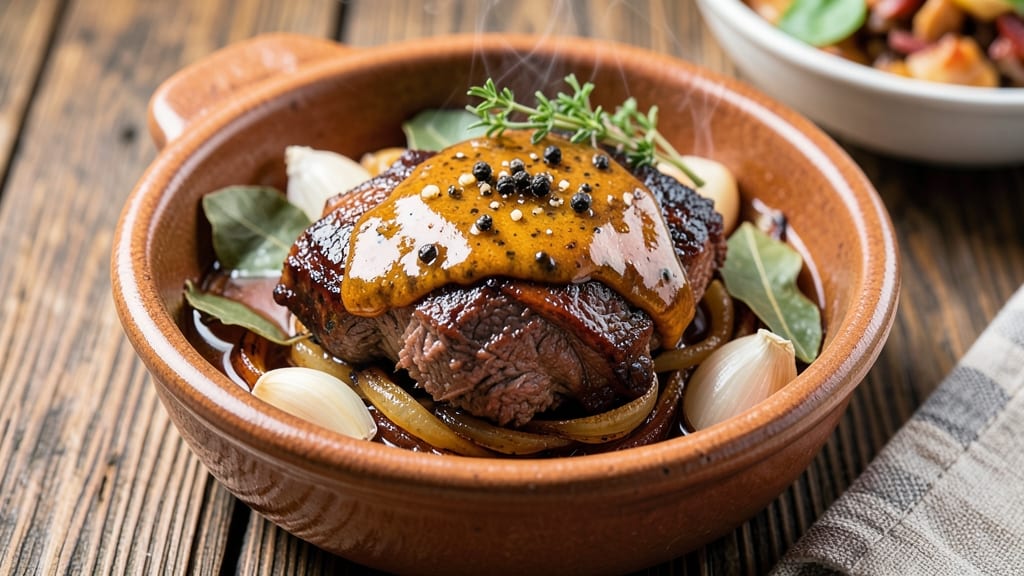
This beef adobada recipe transforms tough cuts into melt-in-your-mouth perfection using a simple soy-vinegar marinade that works like culinary magic. 🌟 The Filipino classic relies on just a few ingredients—soy sauce, vinegar, garlic, and black pepper—to break down meat fibers while infusing rich umami flavor.
What makes this dish special is how the marinade tenderizes the beef overnight, resulting in fork-tender slices that practically fall apart.
The process is straightforward but requires patience: marinate the beef for at least 8 hours (or overnight for best results), then braise it slowly in the same marinade until the liquid reduces to a glossy, caramelized sauce.
This method ensures deep flavor penetration and a sauce that clings beautifully to every bite. The dish pairs perfectly with steamed rice and atchara (pickled papaya) for a complete Filipino meal experience.
By the time you serve this dish, you'll have a restaurant-quality meal that's rich, savory, and impossibly tender. The soy-vinegar marinade creates a perfect balance of sweet, salty, and tangy flavors that elevate simple ingredients into something extraordinary.
This recipe delivers comfort food at its finest—warm, hearty, and full of nostalgic flavors.
Whether you're serving a family dinner or hosting a gathering, beef adobada is sure to impress. The leftovers reheat beautifully, making it an excellent meal prep option for busy weeks. Let's get started on this flavorful journey to tender, saucy perfection.
Ingredients for beef adobada
The magic happens with these twelve ingredients—simple yet transformative for restaurant-quality beef adobada.
| Ingredient | Amount | Notes |
|---|---|---|
| Beef Chuck Roast 🥩 | 2 lb | Cut into 1-inch cubes, marbling preferred |
| Soy Sauce 🥄 | ½ cup | High-quality, light or dark variety |
| White Vinegar 💧 | ½ cup | Distilled white vinegar preferred |
| Garlic Cloves 🧄 | 8 cloves | Minced, fresh preferred |
| Black Peppercorns 🌶️ | 1 tsp | Freshly cracked, coarse grind |
| Bay Leaves 🌿 | 2 whole | Dried, standard size |
| Onion 🧅 | 1 whole | Yellow or white, sliced |
| Olive Oil 🫒 | 2 tbsp | Extra-virgin, for searing |
| Water 💧 | ½ cup | For braising liquid |
| Brown Sugar 🍯 | 1 tbsp | Light or dark, optional |
| Salt 🧂 | 1 ½ tsp | Diamond Crystal kosher salt |
| Green Onions 🧅 | 3 whole | Sliced, for garnish |
The beef is non-negotiable—chuck roast delivers the best texture, with its natural fat breaking down into silky sauce. Filipino markets or specialty Asian grocers often carry pre-cut adobada beef, but you can cube your own at home. Look for cuts with visible marbling; this ensures tenderness. Fresh garlic and black peppercorns elevate the umami profile, so Penzeys or local spice shops are ideal for quality. The vinegar should be distilled white—avoid apple cider or balsamic, as they alter the classic flavor balance. Soy sauce matters too: Kikkoman or Silver Swan provide that authentic Filipino depth.
No chuck roast? Flank steak or sirloin work in a pinch, but expect slightly less tenderness. Substitute white vinegar with rice vinegar or apple cider vinegar**>, though the flavor will shift slightly. Fresh garlic is ideal, but garlic powder at half the amount works if you're short on time. The brown sugar is optional but adds a subtle caramel note—coconut sugar is a great alternative for a more pronounced sweetness. For extra richness, swap 2 tbsp of the soy sauce for oyster sauce, though this alters the traditional profile. The onions can be red or yellow, but yellow provides a milder base flavor.
Marinated beef keeps in the fridge for up to 2 days before braising, though overnight is ideal. The finished dish reheats beautifully—simmer on low heat with a splash of water to restore moisture. Store leftovers in an airtight container for 4-5 days or freeze for 3 months. For meal prep, portion the sauce separately so you can reheat just the beef when needed. The sauce thickens as it cools, so thin with a splash of water or vinegar before serving if needed.
Why You'll Love This Recipe
- One-Pot Magic: The beef simmers right in the sauce—no extra pans, no fuss. Just dump everything in, let it work its flavor, and walk away while it gets tender.
- Umami Bomb: That soy-vinegar combo? It’s like a flavor grenade—bright, tangy, and deep all at once. The garlic and peppercorns add a little bite that makes every bite irresistible.
- Leftovers That Don’t Suck: Between us, this tastes better the next day. Slice it thin, toss it in rice, or pile it on toast—it’s my go-to for lazy lunches when I’m too tired to cook.
- Budget Beef Boost: A chuck roast stretches for days, and the pantry staples (soy, vinegar, garlic) won’t break the bank. Honestly, it’s the kind of meal that makes grocery day feel like a win.
Step-by-step instructions for beef adobada
This soy-vinegar marinade transforms tough chuck roast into melt-in-your-mouth perfection.
👨🍳 Step 1: Create the Marinade and Tenderize the Beef
In a large bowl, combine the 0.5 cup soy sauce, 0.5 cup white vinegar, 1 tbsp brown sugar, 1.5 tsp salt, 8 cloves minced garlic, 1 tsp cracked black peppercorns, and 2 whole bay leaves. Whisk vigorously until the brown sugar dissolves completely—this creates a balanced marinade where the acidity tenderizes while the sugar adds depth.
Cut the 2 lb beef chuck roast into 1-inch cubes, ensuring each piece has visible marbling. Add the beef to the marinade, turning to coat evenly. Cover and refrigerate for at least 4 hours (overnight yields best results). The vinegar will break down tough fibers, while the soy sauce infuses rich umami flavor. You'll notice the marinade darken slightly as it works its magic.
🔥 Step 2: Sear the Beef for Maximum Flavor
Remove the beef from the marinade (reserve the liquid) and pat dry with paper towels. Heat 2 tbsp olive oil in a large Dutch oven over medium-high heat until shimmering. Working in batches, add the beef and sear for 2-3 minutes per side until deep golden brown—this creates a flavorful crust that locks in juices.
Don't overcrowd the pan; sear in batches if needed. The beef should release easily from the pan when ready. Transfer the seared beef to a plate and set aside—you're building layers of flavor that will meld beautifully during braising.
🍳 Step 3: Braise Until Fork-Tender
Return the Dutch oven to medium heat and add the reserved marinade along with the 1 whole sliced onion and 0.5 cup water. Bring to a gentle simmer, scraping up any browned bits from the bottom—this releases caramelized flavor. Add the seared beef back to the pot, ensuring it's mostly submerged in the liquid.
Cover tightly and transfer to a 325°F oven for 2.5-3 hours, until the beef is fork-tender with no resistance. The liquid should reduce to a thick, glossy sauce that coats the beef. If it evaporates too quickly, add 1-2 tablespoons water as needed. The slow cook transforms tough muscle fibers into silky texture—this is where the magic happens.
🥘 Step 4: Finish and Garnish
Once tender, remove the beef and strain the braising liquid through a fine-mesh sieve into a saucepan. Skim off any excess fat, then return the liquid to medium heat. Simmer uncovered for 5-7 minutes until slightly thickened—this intensifies the flavors. Taste and adjust seasoning with additional salt or soy sauce if needed.
Slice the beef against the grain for maximum tenderness. Spoon the reduced sauce over the top and garnish with 3 whole sliced green onions. The dish should have a perfect balance of sweet, salty, tangy, and umami flavors with melt-in-your-mouth texture. Serve immediately with steamed rice to soak up every delicious bite.
Pro Tips For Making Beef Adobada
- Sear the Roast First: The vinegar and soy sauce will do their magic later, but a deep sear on the chuck roast—high heat, 3-4 minutes per side—builds flavor that braising alone can’t match. I used to skip this and wondered why my adobada tasted more like sauce than beef.
- Use Aged Soy Sauce: That cheap bottle of soy sauce? It’s got a lot of water and not enough umami. Switch to aged soy (like Japanese tamari or a good Chinese light soy) for richer depth—half the amount goes a long way. Yes, it’s pricier, but your sauce won’t taste like it’s watered down.
- Don’t Rush the Vinegar: Adding white vinegar too early turns your beef mushy. Wait until the meat is halfway braised—about 1.5 hours in—then stir it in with the garlic. The acid needs time to mellow, not shock the meat.
- Crush Those Peppercorns: Whole peppercorns? Skip it. Toast and crush them first—they’ll bloom into the sauce, giving it real bite. I used to just toss them in whole, and they’d sit like decorative rocks at the bottom. Now? Every bite has that little peppery punch.
Serving suggestions for leftovers
Steamed Rice Pairing
Filipino meals aren't complete without steamed jasmine rice—its delicate floral aroma complements the rich, savory beef adobada perfectly. Use a 1:1.5 rice-to-water ratio (for 2 cups uncooked rice, add 3 cups water) and cook in a rice cooker or pot with a tight lid.
The rice should be light and fluffy, not sticky, to balance the sauce's depth. 🌟
For extra authenticity, try garlic fried rice as a side—sauté 2 cups day-old rice with 1 tbsp oil, 3 minced garlic cloves, and a splash of soy sauce. The garlic's aroma bridges the main dish and rice beautifully.
Pickled Vegetable Contrast
Atchara (Filipino pickled papaya) adds a bright, tangy contrast to the rich beef. Thinly slice 1 ripe papaya into matchsticks, pack into a jar, and cover with a mix of ½ cup vinegar, 1 tbsp sugar, 1 tsp salt, and 1 tsp mustard seeds. Let sit for 24 hours before serving—it cuts through the sauce's richness like magic. 💫
No papaya? Try pickled carrots or cucumber slices with the same vinegar-sugar brine. The acidity refreshes your palate between bites of tender beef.
Crusty Bread for Sauce Soaking
Serve with crusty Filipino pandesal (sweet bread rolls) or garlic bread to soak up every last drop of sauce. Toast slices lightly in butter with minced garlic and black pepper for a simple but elevated touch. The bread's texture contrasts the beef's tenderness while absorbing the umami-rich sauce. ✨
For a heartier option, include garlic fried rice or sinangag (garlic fried rice) as a side—both pair beautifully with the adobada's depth.
Garnish Like a Pro
Finish your plate with sliced green onions and a drizzle of extra soy-vinegar sauce for color and freshness. The green onions add a subtle sharpness that brightens each bite. For a restaurant-worthy touch, sprinkle toasted sesame seeds or crushed black pepper on top. 💛
Serve family-style in a large ceramic dish with extra sauce on the side—Filipino meals are all about sharing, and this dish deserves to be passed around.
Nutrition facts
Frequently asked questions
Can I use a slow cooker for this beef adobada recipe?
After searing the beef, transfer everything to a slow cooker on low heat for 6-8 hours or high heat for 4-5 hours. The slow cooker's gentle heat mimics the oven's braising effect, creating tender beef with a rich sauce. Just add 0.5 cup water to the marinade before cooking to prevent drying out.
What beef cut works best if I don't have chuck roast?
For the most tender results, use flank steak or sirloin cut into 1-inch cubes. These leaner cuts benefit from the marinade's acidity but may need 10-15 minutes extra braising time to reach full tenderness. If using flank steak, slice against the grain for maximum tenderness. Avoid tougher cuts like shank unless marinated for 24 hours.
How do I fix beef that's still tough after cooking?
If the beef feels undercooked, return it to the pot with 0.5 cup water, cover, and simmer on low heat for 30-60 more minutes. The extra liquid helps break down fibers. For extra tenderness, mash the beef slightly with a fork before serving—this mimics the texture of properly braised meat. If the sauce is too thin, reduce it on high heat for 5 minutes to thicken.
Can I make beef adobada without soy sauce?
You can substitute with oyster sauce (¼ cup) + ¼ cup water for umami depth, but the flavor profile will differ. For a traditional alternative, use ½ cup tamari (gluten-free soy sauce) or coconut aminos. The vinegar and garlic remain essential—they create the signature tangy-sweet balance. If avoiding soy entirely, increase the garlic to 10 cloves and add 1 tsp fish sauce for umami.
Why does my adobada sauce turn watery?
This happens when the braising liquid doesn't reduce enough. Always simmer uncovered for the final 5-7 minutes to thicken the sauce. If it's still too thin, mix 1 tbsp cornstarch with 2 tbsp water, stir into the sauce, and cook for 2 more minutes until glossy. Avoid adding too much water during braising—stick to the 0.5 cup called for in the recipe.