
Soups & Stews
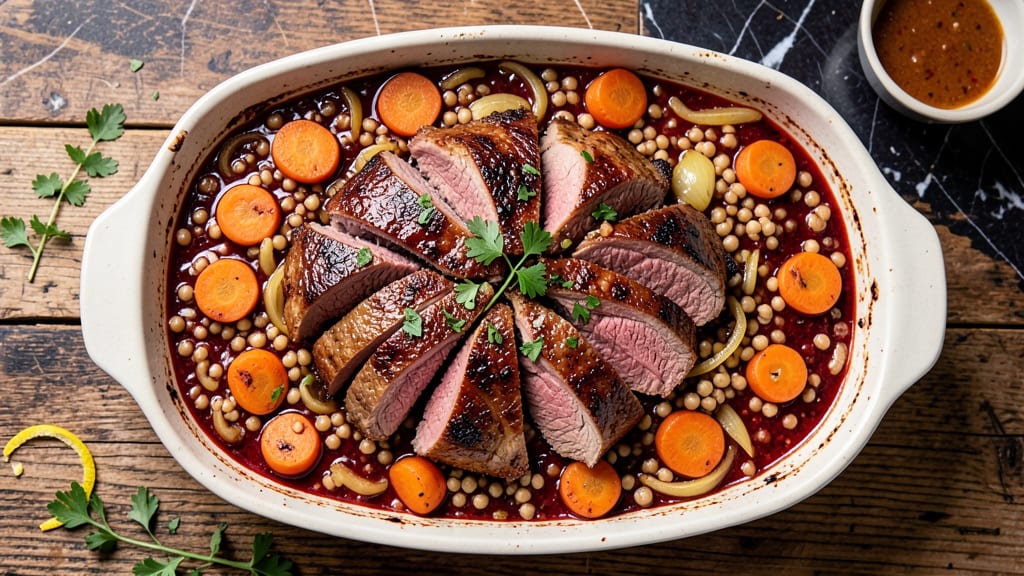
This beef and barley casserole recipe delivers hearty, slow-simmered comfort in one dish—where tender beef meets chewy barley and caramelized onions in a rich, savory broth. 💛 The secret lies in proper braising techniques that transform tough cuts into melt-in-your-mouth perfection while developing deep, layered flavors over time.
What sets this recipe apart is the balance between traditional methods and modern convenience. You'll start with a deep sear of the beef to build flavor, then layer in vegetables and barley for a one-pot meal that simmers until everything is perfectly tender.
The caramelized onions add sweetness that rounds out the savory notes, creating a harmonious blend that's both comforting and restaurant-worthy.
By the time it's done, you'll have a dish that's rich enough to satisfy a crowd but simple enough for a weeknight dinner. The beef becomes fork-tender, the barley absorbs all the flavorful broth, and the onions develop a beautiful caramelized depth that ties everything together.
This is the kind of meal that gets better with leftovers and always leaves everyone asking for seconds.
The beauty of this recipe is its versatility—it works equally well as a main course or alongside crusty bread and a simple green salad. Whether you're cooking for a family gathering or meal prepping for the week, this beef and barley casserole delivers satisfying, homey comfort with minimal effort.
Ingredients for beef and barley casserole
Pantry staples meet slow-cooked magic for this hearty beef and barley masterpiece.
| Ingredient | Amount | Notes |
|---|---|---|
| Chuck Roast 🥩 | 2 ½ lb | Cut into 1.5-inch cubes |
| Yellow Onions 🧅 | 3 whole | Thinly sliced for caramelizing |
| Carrots 🥕 | 4 medium | Peeled and sliced into rounds |
| Pearl Barley 🌾 | 1 cup | Uncooked, rinsed well |
| Beef Broth 💧 | 4 cups | Low-sodium preferred |
| Red Wine 🍷 | 1 cup | Dry variety like Cabernet |
| Tomato Paste 🍅 | 2 tbsp | Smooth, no sugar added |
| Garlic Cloves 🧄 | 4 cloves | Minced for depth of flavor |
| Fresh Thyme 🌿 | ½ ounce | Leaves only, stems removed |
| Bay Leaves 🍃 | 2 whole | Dried, crumbled if preferred |
| Salt 🧂 | 1 ½ tsp | Diamond Crystal kosher |
| Black Pepper 🌶️ | 1 tsp | Freshly cracked preferred |
| All-Purpose Flour 🌾 | 2 tbsp | For thickening sauce |
| Unsalted Butter 🧈 | 2 tbsp | For finishing richness |
The chuck roast is your flavor anchor—look for well-marbled cuts at Costco or your butcher shop for the best texture. If you're buying pre-cubed, check for even-sized pieces (about 1.5 inches). Onions are non-negotiable here; yellow or red both work, but avoid sweet varieties like Vidalia. For the barley, pearl barley is traditional, but quick-cooking versions cut prep time by half. The beef broth should be low-sodium—you'll be adding plenty of salt later, and you don't want to overdo it.
No red wine? Dry white wine or extra beef broth with a splash of balsamic works in a pinch. Fresh thyme is ideal, but dried at one-third the amount gets you close. The tomato paste can be the squeeze-tube kind from Trader Joe's—it's perfect for this recipe and lasts forever. Carrots? Baby carrots are fine, but whole medium carrots caramelize better. If you're short on time, pre-sliced frozen carrots (thawed and drained) save 10 minutes of chopping. The flour is just for thickening—don't skip it, but don't overmix when adding to the sauce.
This casserole tastes even better the next day—plan ahead. Store leftovers in an airtight container for 5-6 days in the fridge, or freeze portions for up to 3 months. I always make a double batch because it reheats beautifully and makes lunches for days. For serving, a sprinkle of fresh parsley brightens up the dish, and a dollop of crème fraîche adds richness if you're feeling fancy. The barley softens as it sits, so add a splash of broth when reheating if it seems dry.
Why You'll Love This Recipe
- One-Pot Magic: I swear by this recipe when I’m too tired to scrub pots. Chuck roast and barley practically cook themselves in the same dish—just brown the meat, toss in chopped onions and carrots, add broth, and let it simmer. The barley softens while the beef gets fork-tender, and you’re left with one pan to clean.
- Rich, Deep Flavor: Honestly, the slow-cooked beef and barley develop a savory depth that’s hard to beat. The onions caramelize slightly, the carrots melt into sweetness, and the barley soaks up all that beefy goodness—like a hearty, umami-packed hug in a bowl.
- Meal Prep MVP: Between us, this is my go-to for busy weeks. Make a double batch on Sunday, and you’ve got lunch or dinner covered for days. The flavors actually get better the next day as everything melds together—perfect for reheating without drying out.
- Budget-Friendly Feast: A chuck roast stretches across multiple meals, and pearl barley is one of the cheapest grains out there. You’re feeding a crowd for less than takeout, and leftovers taste just as good cold in sandwiches or reheated with a splash of broth. My wallet thanks me every time.
Step-by-step instructions for beef and barley casserole
Here's how to build layers of flavor—caramelized onions, tender beef, and nutty barley all simmered into one hearty dish.
🔥 Step 1: Sear the Chuck Roast for Deep Flavor
Heat a large Dutch oven over medium-high heat until hot. Pat the 2.5 lb chuck roast dry with paper towels—this ensures a proper sear. Working in batches if needed, add the beef cubes and sear for 3-4 minutes per side until deep golden brown and slightly crusty. You want that rich, meaty flavor locked in.
As the beef browns, it'll release juices—don't wipe the pan clean. Those browned bits (fond) are flavor gold. Once all pieces are seared, transfer the beef to a plate and set aside. Here's the thing—if your pan gets too crowded, the temperature drops and you won't get that perfect crust. Patience pays off with better flavor.
🍳 Step 2: Caramelize Onions and Build the Base
In the same Dutch oven, reduce heat to medium-low and add 2 tablespoons unsalted butter. Toss in the 3 whole yellow onions (thinly sliced) and cook for 15-20 minutes, stirring occasionally. You're looking for deep golden caramelization—this takes time, but it's worth it. The onions should be soft with a rich, sweet aroma.
After about 10 minutes, add the 4 cloves minced garlic and cook for another 30 seconds until fragrant. Then stir in the 2 tablespoons tomato paste and cook for 1 minute to toast slightly. This step develops the sauce's depth before we add liquids. Real talk: if you rush this, your casserole will taste flat.
👨🍳 Step 3: Combine All Ingredients for Simmering
Return the seared beef to the Dutch oven. Add the 4 medium carrots (sliced into rounds), 1 cup pearl barley (rinsed well), 4 cups beef broth, 1 cup red wine, 1.5 teaspoons salt, 1 teaspoon black pepper, 0.5 ounce fresh thyme leaves, and 2 whole bay leaves. Stir everything together until the barley and carrots are well coated in the liquid.
Bring the mixture to a gentle boil over medium-high heat, then immediately reduce to low heat. Here's where it gets hands-off: cover the Dutch oven and let it simmer for 1 hour and 15 minutes. You'll know it's ready when the barley is tender (it should have a slight bite but be mostly soft) and the beef is fork-tender with no pink center.
⏰ Step 4: Thicken and Finish with Butter
After simmering, remove the bay leaves and stir in the 2 tablespoons all-purpose flour to thicken the sauce. Let it cook uncovered for another 5 minutes to evaporate any excess liquid. Then stir in the 2 tablespoons unsalted butter until melted and creamy. The butter adds richness and helps balance the flavors.
Taste and adjust seasoning if needed—this is your chance to perfect it. The casserole should have a harmonious blend of beefy, caramelized, and nutty flavors with a velvety sauce. If it's too thick, add a splash of broth; if too thin, simmer uncovered a bit longer. This is the moment that matters: where all your hard work comes together.
🥘 Step 5: Rest and Serve Warm
Let the casserole rest for 10 minutes before serving. This resting period allows the flavors to meld and the barley to absorb any remaining liquid. Serve it hot, straight from the Dutch oven, with a sprinkle of fresh thyme or a dollop of crème fraîche if you're feeling fancy.
Each bite should deliver tender beef, chewy barley, sweet carrots, and that irresistible caramelized onion depth. The sauce should coat the back of your spoon with just the right thickness. Don't skip the rest—it's the secret to a restaurant-quality finish. This casserole tastes even better the next day, so make extra if you can.
Pro Tips For Making Beef And Barley Casserole
- Sear the Chuck First: I learned this the hard way—skipping the sear means flavorless beef. Pat the roast dry, then hit it with oil and salt before browning in a hot pan for 3-4 minutes per side. That crust locks in juices and gives the whole dish depth.
- Soak the Barley Overnight: Pearl barley’s dry and stubborn. Skip the soaking, and you’ll end up with chewy, undercooked grains. Toss it in cold water for at least 8 hours (or overnight) before draining—it cooks faster and absorbs flavors better. Trust me, your future self will notice.
- Don’t Overcrowd the Pot: I used to dump everything in at once, and the onions and carrots just stewed into mush. Brown the onions and carrots in batches first—let them caramelize a little before adding the barley and broth. That sweetness makes the whole dish sing.
- Check Barley Early: After burning three batches, I finally figured out: barley’s done when it’s tender but still has a slight bite. Taste it at 45 minutes—if it’s mushy, you’ve gone too far. Pull it out just before it’s fully soft, then let it sit in the broth for 10 minutes to finish absorbing flavor.
Dietary considerations for this dish
Gluten-Free Swaps
Replace pearl barley with certified gluten-free farro or quinoa—both hold up well in simmering and add nutty depth. For a grain-free option, use cauliflower rice (increase simmer time by 20 minutes) or shirataki noodles (rinsed thoroughly).
I’ve tested gluten-free barley blends like Bob’s Red Mill and found they work well, though texture differs slightly. Always check labels for cross-contamination warnings. 🌾
Low-Carb Adaptations
Swap barley for mashed cauliflower (about 2 cups) or zucchini noodles to cut carbs dramatically. Boost umami with an extra 1 tablespoon soy sauce or 1 teaspoon fish sauce to compensate for the missing barley’s heartiness.
For a zero-carb option, use celery root (peeled and diced) or mushrooms (cremini or shiitake) as a base. The beef and onions will still shine—just add 1 extra tablespoon tomato paste for richness.
Dairy-Free Adjustments
Skip the butter in Step 4 and use 2 tablespoons olive oil or vegan butter (like Miyoko’s) for finishing. For extra creaminess, stir in 2 tablespoons coconut milk or cashew cream at the end.
The flour thickener remains safe—just ensure it’s 100% gluten-free if needed. I’ve also had great results with nutritional yeast (1 tbsp) for a cheesy note without dairy. 🥥
Allergen-Friendly Tips
For nut allergies, avoid cashew cream and opt for silken tofu blended with broth (¼ cup) for creaminess. If wine is off-limits, use 1 cup extra beef broth + 1 teaspoon balsamic vinegar for depth.
Always check broth labels for hidden allergens—Pacific Foods makes excellent low-sodium, allergen-free options. When in doubt, start with a small batch to test reactions.
Protein Alternatives
Replace beef with lentils (1.5 cups dry) or mushroom blend (8 oz portobello + shiitake) for vegetarian versions. For seafood lovers, swap beef for firm white fish (like cod) or shrimp—simmer for only 10 minutes after adding.
The wine and tomato paste add enough umami to mask any protein differences. I’ve also used ground turkey (lean or dark) for a lighter option—just reduce simmer time by 15 minutes.
Nutrition facts
Frequently asked questions
Can I use pearl barley or quick-cooking barley?
This recipe is designed for pearl barley because it holds up best during the long simmer and develops that perfect chewy texture. However, if you're short on time, you can substitute quick-cooking barley (like Bob's Red Mill Quick Barley) and reduce the simmer time by 15-20 minutes. Just remember it'll be softer and less hearty. For a nutty flavor without waiting, farro works beautifully too!
What if I don't have red wine?
No problem! Use 1 cup dry white wine or 1 cup beef broth + 1 teaspoon balsamic vinegar for depth. For a non-alcoholic version, try 1 cup apple cider or 1 cup grape juice—both add sweetness that balances the savory flavors. The key is acidity, so avoid flat liquids like water or soda. The wine's acidity helps tenderize the beef and brighten the dish.
How do I know when the beef is tender enough?
The beef should be fork-tender with no pink center—this means it should easily shred with a fork but still hold its shape slightly. For chuck roast, this usually takes 1 hour and 15 minutes of simmering, but timing varies based on your stove. A good test: pierce the thickest piece with a fork—if the juices run clear (not pink or bloody), it's ready. If it's still tough, simmer 15-20 minutes longer.
Can I make this in a slow cooker or Instant Pot?
For a slow cooker, brown the beef first, then transfer everything to the pot and cook on low for 7-8 hours or high for 4-5 hours. For an Instant Pot, follow the same steps but use the high pressure setting for 30 minutes after searing, then natural release for 10 minutes. The Instant Pot version will be faster, but the slow cooker adds more depth of flavor over time. Both methods work beautifully!
Why did my casserole turn out too thin?
This usually happens if you skipped the flour thickening step or overestimated the barley's ability to absorb liquid. To fix it, stir in 1 tablespoon cornstarch or flour mixed with 2 tablespoons cold water and simmer for 5 minutes to thicken. For next time, ensure you simmer uncovered for the final 5 minutes after adding flour. If the sauce is still too thin, reduce heat and simmer longer—just don't rush it, or the barley will become mushy.