
Soups & Stews
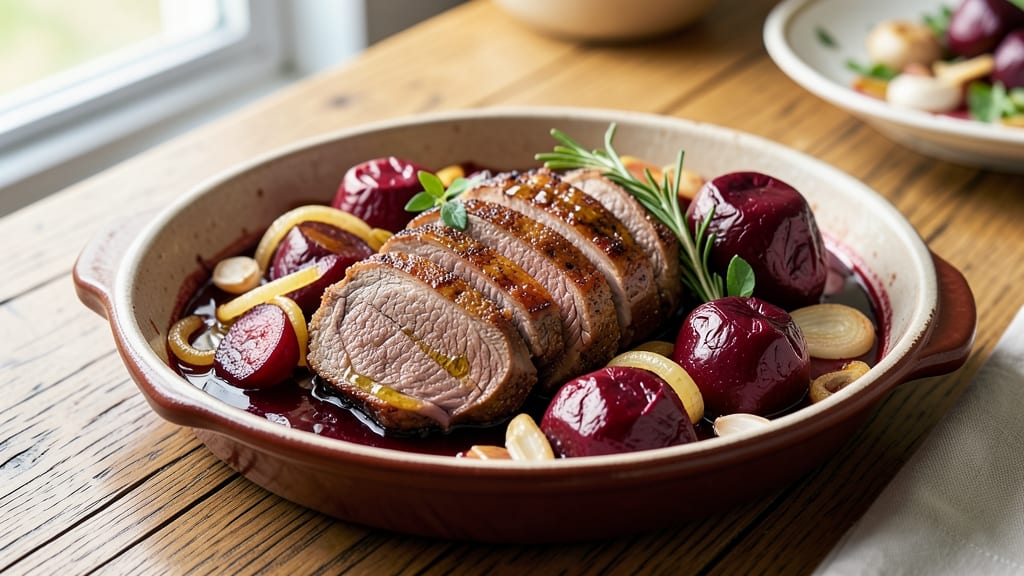
This beef and beets recipe transforms humble ingredients into a rich, deep red wine braise where tender beef and naturally sweet beets create a harmonious balance of earthy and savory flavors.
The secret lies in slow-cooking the beef until fork-tender while roasting the beets to enhance their natural sweetness—both bathed in a velvety red wine reduction that ties everything together. What starts as simple ingredients becomes a restaurant-worthy dish that feels equally at home on a weeknight table or holiday spread.
The beauty of this recipe is its versatility—the beef absorbs the wine's depth while the beets add a subtle sweetness that cuts through the richness. We begin by searing the beef to lock in flavors, then braise it low and slow until it practically melts in your mouth.
Meanwhile, the beets roast until their edges caramelize, intensifying their natural sweetness. The result? A dish where every bite delivers tender beef, caramelized beets, and a sauce so rich it feels like a hug in a bowl.
What makes this recipe stand out is how the components elevate each other—the wine's acidity brightens the beef, while the beets' earthiness grounds the dish. The braising process infuses the meat with layers of flavor without requiring constant attention, making it a foolproof method for busy cooks.
Serve it over creamy mashed potatoes or crusty bread to soak up every last drop of that luscious sauce. This isn't just a stew; it's a showstopper that proves comfort food can be elegant.
The best part? The flavors only deepen as it sits, making it perfect for meal prep or leftovers. The red wine adds complexity without overpowering, and the beets bring a vibrant color and subtle sweetness that makes the dish visually stunning.
Whether you're feeding a crowd or treating yourself to a special meal, this beef and beets recipe delivers restaurant-quality results with minimal effort. Let's get cooking!
Ingredients for beef and beets
Fourteen ingredients elevate humble beef and beets into a restaurant-worthy red wine braise.
| Ingredient | Amount | Notes |
|---|---|---|
| Chuck Roast 🥩 | 2 lb | Pre-cubed for even cooking |
| Medium Beets 🍠 | 4 whole | With tops trimmed, peeled |
| Dry Red Wine 🍷 | 2 cups | Bold variety like Cabernet |
| Beef Broth 💧 | 2 cups | Low-sodium preferred |
| Yellow Onion 🧅 | 1 whole | Diced, medium size |
| Garlic Cloves 🧄 | 6 cloves | Minced, fresh preferred |
| Tomato Paste 🍅 | 2 tbsp | Smooth, no sugar added |
| Fresh Thyme 🌿 | 2 sprigs | Or 1 tsp dried thyme |
| Fresh Rosemary 🌿 | 1 sprig | Wooden spoon for crushing |
| Olive Oil 🫒 | 2 tbsp | Extra-virgin for richness |
| Salt 🧂 | 1 ½ tsp | Diamond Crystal preferred |
| Black Peppercorns 🌶️ | 1 tsp | Freshly cracked |
| Balsamic Vinegar 🍶 | 1 tbsp | For finishing sauce |
| All-Purpose Flour 🌾 | 1 tbsp | For thickening sauce |
The chuck roast is non-negotiable—its marbling ensures fork-tender results. Costco or Whole Foods carry the best cuts with even fat distribution. For the beets, organic from Trader Joe's delivers vibrant color and sweetness, but any medium-sized beets work. The red wine should be dry and bold—Cabernet Sauvignon or Merlot work perfectly. Fresh thyme and rosemary from the grocery store's produce section add depth, but dried spices in a pinch won't ruin the dish. Pre-cubing the beef and trimming beet tops ahead saves time during cooking.
No red wine? Substitute with beef broth plus 1 tbsp balsamic vinegar—it mimics the acidity. Fresh herbs unavailable? Dried thyme and rosemary at one-third the amount suffice. Pre-shredded beets? Skip the peeling and trim—they'll soften beautifully. The tomato paste can be replaced with 1/4 cup crushed tomatoes if needed. For extra richness, swap 1/2 cup of the wine for beef stock. The flour is purely for thickening—if avoiding gluten, cornstarch works equally well.
Store the braised beef and sauce in an airtight container for 4-5 days in the fridge, where flavors deepen. The roasted beets keep 3-4 days separately. For longer storage, freeze portions for up to 3 months. Reheat gently on the stove with a splash of broth to restore moisture. This dish tastes even better the next day—double the recipe for easy leftovers.
Why You'll Love This Recipe
- One-Pot Magic: I swear by this—just toss everything in a Dutch oven and let it slow-simmer. No chopping finesse required, and that chuck roast practically melts into tender perfection while you sip your wine.
- Earthy Wine Kiss: The red wine and beets turn this into something special—sweet, rich, and just a little sophisticated. That deep, caramelized onion and beef broth base makes it taste like a restaurant dish, but honestly? It’s my lazy Sunday secret.
- Weeknight Workhorse: This feeds a crowd or stretches into lunches for days. I’ll make a double batch on Sundays and freeze half—because reheated, it’s even better with a sprinkle of fresh thyme.
- Budget Stretch: Chuck roast is cheap, beets last forever, and a bottle of wine makes it feel fancy. For what you get—deep flavor, hearty portions, and zero waste—I’d call this the most practical beef recipe ever.
Step-by-step instructions for deep red wine braised beef and beets
This method delivers tender beef and caramelized beets in a rich, velvety wine sauce.
Sear the Chuck Roast for Deep Flavor
Heat a heavy Dutch oven over medium-high heat until hot. Add the 2 lb chuck roast and sear on all sides until deeply browned, about 8-10 minutes. This step develops the meat's flavor through the Maillard reaction—don't rush it. If needed, work in batches to avoid crowding the pan. Remove the beef and set aside.
In the same Dutch oven, add the 2 tbsp olive oil and heat until shimmering. Add the diced yellow onion and cook for 5-6 minutes until softened and golden. Stir in the 6 cloves minced garlic and cook for 30 seconds until fragrant. This aromatic base will infuse the braising liquid with depth.
Build the Braising Liquid
Reduce heat to medium and stir in the 2 tbsp tomato paste, scraping up any browned bits from the bottom of the pan. This step ensures maximum flavor extraction. Pour in the 2 cups dry red wine and let it simmer for 3-4 minutes until reduced by half, deepening its intensity.
Add the 2 cups beef broth, 1.5 tsp salt, and 1 tsp freshly cracked black peppercorns. Stir in the 2 sprigs fresh thyme and 1 sprig fresh rosemary, crushing the rosemary slightly with a wooden spoon to release its oils. Return the seared beef to the pot, along with any accumulated juices.
Braise the Beef Until Tender
Bring the liquid to a simmer, then cover the Dutch oven and transfer it to a preheated 325°F oven. Braise the beef for 2.5-3 hours until fork-tender. The meat should easily pull apart with minimal resistance. If the liquid reduces too quickly, add a splash of water or broth to maintain moisture.
About 30 minutes before the beef is done, add the 4 whole medium beets to the braising liquid. They'll cook through and absorb the rich flavors of the sauce. The beets should be tender when pierced with a fork, though they'll continue softening as they rest.
Finish with Balsamic and Thicken the Sauce
Remove the beef and beets from the braising liquid and set them aside on a plate. Strain the cooking liquid through a fine-mesh sieve into a clean saucepan, discarding the herbs. Return the liquid to medium-high heat and whisk in the 1 tbsp all-purpose flour to thicken the sauce.
Simmer for 3-4 minutes until the sauce coats the back of a spoon. Stir in the 1 tbsp balsamic vinegar and taste for seasoning, adjusting with additional salt or pepper if needed. The sauce should be velvety and balanced—sweet from the beets, rich from the wine, and tangy from the vinegar.
Serve with Rich, Caramelized Beets
Slice the beef against the grain into ¼-inch thick slices and arrange on a platter. Quarter the beets and place them alongside the beef. Ladle the thickened sauce over the top, ensuring each piece is coated. The beets should be tender with a hint of caramelization from the braising process.
Serve immediately with crusty bread or over polenta to soak up the luxurious sauce. The contrast of tender beef, sweet beets, and bold wine sauce creates a harmonious balance of textures and flavors that will impress any dinner guest.
Pro Tips For Making Beef And Beets
- Sear the Chuck Roast First: I learned this the hard way—skipping the sear means flavorless beef. Pat the roast dry, then hit it with high heat in a Dutch oven until deep brown on all sides. That crust locks in juices and makes the wine reduction taste like it belongs there.
- Peel Beets After Cooking: Raw beets are stubborn, but cooked ones peel like butter. Roast them whole with the roast, then plunge into ice water for 2 minutes before peeling. The skins slide off effortlessly—no scrubbing or peeling battles.
- Deglaze with Wine Early: Don’t wait until the end to add the red wine. Right after searing the onions and beef, pour in the wine and let it bubble for 2 minutes. This builds flavor depth before the broth even goes in—your sauce will taste richer without extra effort.
- Simmer Low and Slow: Chuck roast needs patience. After adding broth, reduce heat to a bare simmer (tiny bubbles, not rolling) and cover. If you rush it, the meat turns tough. I’ve seen this fail twice—trust the 3-hour minimum, even if it’s tempting to walk away sooner.
Regional styles of this recipe
French Classic Approach
In France, this dish transforms into a bœuf bourguignon-inspired braise where beets join the beef in a red wine reduction with pearl onions and mushrooms.
The French technique calls for searing the beef in duck fat (or olive oil) before braising in Burgundy wine for 3-4 hours until the meat is fall-apart tender.
I love adding 1 cup sliced mushrooms and ½ cup pearl onions to the braising liquid about 45 minutes before the beef finishes. The beets are often roasted separately with thyme and honey for a caramelized finish, then arranged alongside the beef for a visually stunning presentation. 🍷
Italian Rustic Style
Italian cooks elevate this dish by infusing it with tomato and herb richness, creating what they call "Bistecca e Barbabietole al Vino Rosso." Here, the beef is braised with San Marzano tomatoes, rosemary, and a splash of white wine before adding the beets.
The Italians often finish the dish with a sprinkle of fresh parsley and a drizzle of extra-virgin olive oil for brightness.
I recommend adding 1 cup crushed tomatoes and 1 bay leaf to the braising liquid, then simmering the beets in the sauce for the final 20 minutes to let them absorb the tomato depth. Serve with crusty ciabatta to soak up the sauce. 🌿
German Hearty Twist
German cuisine takes this dish in a sweet-and-savory direction, often calling it "Rindfleisch mit Rote Bete"—a nod to their love of caramelized beets and rich gravies.
The Germans typically braise the beef with dark beer (like a Dunkel or Schwarzbier) instead of wine, then add the beets whole and unpeeled to the pot for the final 1 hour of cooking.
The skin stays tender and adds texture. For extra depth, stir in 1 tbsp apple cider vinegar and 1 tsp caraway seeds during braising. Serve with buttered spaetzle or potato dumplings to complement the hearty flavors. 🍺
American Comfort Adaptation
In the U.S., this dish often becomes a slow-cooker staple, especially in the Midwest and South, where it’s called "Beef and Beet Stew." The American approach simplifies the process by using beef broth and a splash of bourbon (instead of wine) for depth, then adding the beets raw and cubed to the slow cooker for the final 3 hours on low.
I recommend finishing the dish with 1 tbsp brown sugar and ½ tsp smoked paprika to enhance the sweetness and add a smoky note. Serve with cornbread or mashed potatoes for a true comfort-food experience. 🔥
Mediterranean Bright Variation
For a lighter take, Mediterranean cooks transform this into a citrus-infused braise, often using Greek or Spanish techniques. The beef is seared and braised in a mix of red wine and orange juice, while the beets are roasted with lemon zest and oregano.
The sauce is finished with a splash of orange liqueur (like Cointreau) for brightness. I love adding 1 tsp lemon zest and 1 tbsp orange juice to the braising liquid, then garnishing the dish with fresh oregano and a drizzle of honey before serving.
Pair with warm pita bread or couscous** for a refreshing twist. 🍊
Nutrition facts
Frequently asked questions
Can I substitute another cut of beef instead of chuck roast?
Yes, but choose wisely! For best results, use brisket, short ribs, or even flank steak (though it'll be tougher). Chuck roast is ideal because its fat content keeps the meat tender during braising. If using flank stein, slice it thinly against the grain after cooking. Avoid lean cuts like sirloin—they'll dry out.
How do I make this dish with pre-cooked beets?
Simply add 2 cups of pre-cooked beets (fresh or canned, drained) to the braising liquid during the final 30 minutes of cooking. They'll warm through and absorb the wine sauce beautifully. For canned beets, rinse them first to remove excess liquid. The texture will be slightly softer than roasted beets but still delicious!
Can I make this recipe in a slow cooker instead?
Brown the beef first, then transfer everything (including beets) to your slow cooker. Cook on low for 6-7 hours or high for 4 hours. The beets will soften perfectly, and the beef will become fork-tender. Just add the flour slurry at the end to thicken the sauce—it won't thicken properly in the slow cooker.
Why does my beef turn out tough instead of tender?
This usually happens from either not searing properly or cooking at too high a temperature. Always sear the beef until deeply browned to build flavor, and maintain a gentle simmer (325°F) during braising. If the liquid reduces too quickly, add a splash of broth. The key is patience—beef needs time to break down!
What's the best way to reheat leftovers?
Gently reheat in a saucepan over medium-low heat with a splash of beef broth or water to restore moisture. Never microwave directly from the fridge—it makes the beef dry. For best results, reheat just until warmed through (3-5 minutes) and serve immediately. The sauce will thicken again as it reheats.