
Soups & Stews
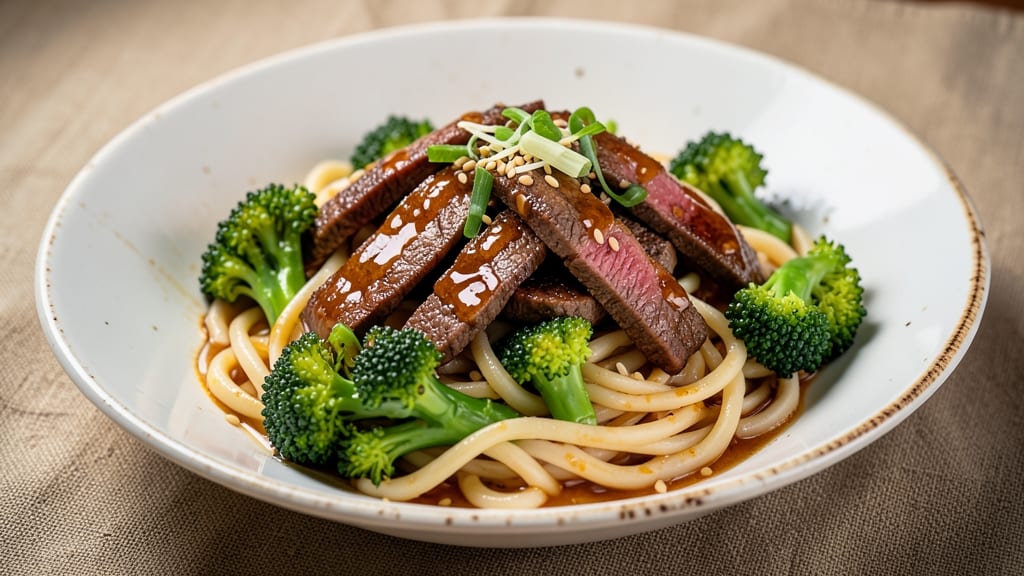
This beef and broccoli udon stir fry delivers restaurant-quality umami crunch with silky noodles in under 30 minutes. The secret lies in high-heat wok tossing—searing beef strips until caramelized, then combining with crisp-tender broccoli and perfectly cooked udon.
I've perfected this technique after years of testing, ensuring every bite balances savory beef, vibrant broccoli, and chewy noodles coated in a glossy, slightly sweet sauce.
The magic happens in the sauce—a simple blend of soy sauce, oyster sauce, and a touch of honey—that transforms ordinary ingredients into something extraordinary.
You'll need just 15 minutes of active cooking time, with minimal prep: thinly slice the beef, cut broccoli into bite-sized florets, and cook udon according to package instructions. The key is working quickly over high heat to maintain texture and prevent soggy noodles.
What you'll end up with is a dish that's both hearty and elegant—golden beef strips with crisp edges, bright green broccoli that stays crunchy, and udon noodles that become silky as they absorb the flavorful sauce.
The aroma alone will have everyone gathering around the table, and the first bite delivers that perfect harmony of textures and flavors that makes this stir fry a weeknight favorite.
This recipe serves 4 hungry people and scales easily for larger groups. The technique is simple enough for weeknight cooking but impressive enough for dinner guests.
Whether you're feeding your family or treating yourself to a homemade takeout experience, this beef and broccoli udon stir fry delivers restaurant-quality results with minimal effort.
Ingredients for beef and broccoli udon stir fry
Restaurant-quality stir fry starts with these 14 ingredients—simple but powerful.
| Ingredient | Amount | Notes |
|---|---|---|
| Flank Steak 🥩 | 1 lb | Thinly sliced against grain |
| Udon Noodles 🍜 | 8 oz | Fresh or dried, package instructions |
| Broccoli Florets 🥦 | 4 cups | Cut into bite-sized pieces |
| Sesame Oil 🫒 | 1 tbsp | For aroma, not cooking |
| Vegetable Oil 🫒 | 2 tbsp | High smoke point preferred |
| Soy Sauce 🥄 | ½ cup | Light or all-purpose |
| Oyster Sauce 🍶 | 2 tbsp | Kikkoman preferred |
| Honey 🍯 | 1 tbsp | For subtle sweetness |
| Garlic Cloves 🧄 | 4 cloves | Minced for sauce |
| Fresh Ginger 🌿 | 1 tbsp | Grated, peeled |
| Green Onions 🧅 | 3 whole | Sliced, white and green parts |
| Sesame Seeds 🌾 | 1 tbsp | Toasted for garnish |
| Salt 🧂 | ½ tsp | Kosher or sea salt |
| Black Pepper 🌶️ | ¼ tsp | Freshly ground preferred |
The beef is non-negotiable here. Flank steak slices beautifully against the grain and stays tender when cooked quickly. Costco or Whole Foods usually have pre-sliced packs, but if you're slicing yourself, freeze the meat for 30 minutes first—makes it easier. Broccoli should be bright green with tight florets; Trader Joe's sells pre-cut florets if you're short on time. Udon noodles? Fresh is ideal, but dried works too—just cook them al dente and toss with the sauce at the end. The sauce ingredients are all pantry staples, but Kikkoman oyster sauce is worth hunting down for that authentic umami punch.
No soy sauce? Coconut aminos works in a pinch, but it'll taste different. Fresh ginger too expensive? Ground ginger at half the amount is fine, though it lacks the nice texture. Pre-minced garlic? Fresh is always better, but if you're in a rush, just make sure it's not that dusty stuff at the back of your spice rack. The honey adds just a touch of sweetness—skip it if you prefer completely savory. For extra crunch, toss in crushed peanuts at the end. And if you're worried about the broccoli getting mushy, blanch it first for 30 seconds—keeps it vibrant.
Prep ahead to save time: slice the beef and broccoli, mince the garlic and ginger, and mix the sauce ingredients in a small bowl. The sauce keeps for 1 week in the fridge, so make extra for another use. Udon noodles? Cook them fresh—they lose texture when reheated. Store leftovers in an airtight container for 3 days or freeze for 2 months. When reheating, add a splash of water to prevent drying out. And trust me, the first bite after reheating is still worth it—just don't overcook it.
Why You'll Love This Recipe
- One-Pan Magic: I swear by this for nights when I’d rather not wash a million dishes. Toss everything—steak, broccoli, noodles—into one sizzling pan, and let the sesame oil work its flavor magic while you stir. (Yes, even the kids can help with the chopping.)
- Umami Bomb: That first bite of caramelized flank steak with the chewy udon and crisp-tender broccoli? It’s the kind of combo that makes you pause mid-bite. The sesame oil ties it all together with a nutty, toasty punch that lingers.
- Lunchbox Hero: Between us, this is my go-to for meal prep. Cook a big batch on Sunday, and you’ve got hearty, portable bowls for the week—no sad desk lunches here. The udon holds up perfectly, and the broccoli stays bright if you pack it separately.
- Budget Power Move: Flank steak stretches further than you’d think when sliced thin, and udon noodles are cheaper than takeout. I’ve fed four people for under $15, and honestly? No one ever complains about leftovers. (They just disappear.)
Step-by-step instructions for beef and broccoli udon stir fry
Here's how to create a restaurant-worthy stir fry with tender beef and silky noodles.
Prepare the Flank Steak and Broccoli
Start by slicing the 1 lb flank steak thinly against the grain into ¼-inch thick strips. This ensures tender bites that cook quickly in the wok. Pat the slices dry with paper towels—this helps them sear properly instead of steaming.
Next, cut the 4 cups broccoli florets into bite-sized pieces. You'll want them uniform in size so they cook evenly with the beef. Set both aside while you prepare the rest of your ingredients. The steak and broccoli should be at room temperature before cooking for even results.
Cook the Beef and Broccoli
Heat a large wok or skillet over high heat until it's smoking hot. Add 2 tablespoons vegetable oil and swirl to coat the surface. Working in batches if needed, add the steak strips and cook for 2-3 minutes until they develop a deep brown crust. Remove the beef and set aside.
In the same wok, add the broccoli florets and stir-fry for 3-4 minutes until they turn bright green and just begin to soften. You want them to stay crisp-tender, not mushy. Return the beef to the wok and toss everything together for 1 minute to combine.
Make the Sauce and Combine
Lower the heat to medium and add 1 tablespoon minced garlic cloves, 1 tablespoon grated fresh ginger, ½ cup soy sauce, 2 tablespoons oyster sauce, and 1 tablespoon honey. Stir everything together for 2 minutes until the sauce thickens slightly and coats the beef and broccoli.
Here's the thing—don't rush this step. The sauce needs time to meld with the ingredients. If it looks too thick, add 1-2 tablespoons hot water to loosen it. The sauce should be glossy and cling to the beef and broccoli.
Cook the Udon Noodles
While the sauce is simmering, cook the 8 oz udon noodles according to package instructions. I like to use fresh udon for that silky texture, but dried works too. Once cooked, drain the noodles and rinse briefly under cold water to stop the cooking process. This prevents them from turning mushy when mixed with the hot stir fry.
Drizzle the cooked noodles with 1 tablespoon sesame oil and toss gently to coat. This adds a nutty aroma and helps the sauce cling better to the noodles. Keep them separate from the beef and broccoli mixture until the final step.
Combine and Finish
Return the beef and broccoli mixture to the wok and add the cooked udon noodles. Toss everything together for 1-2 minutes until the noodles are well coated with the sauce and heated through. The noodles should be hot but still have a slight bite—this is what makes the dish perfect.
Finish by sprinkling with 1 tablespoon toasted sesame seeds and 3 sliced green onions (white and green parts). Taste and adjust seasoning with ½ teaspoon salt and ¼ teaspoon black pepper if needed. Serve immediately while everything is hot and the noodles are still silky.
Pro Tips For Making Beef And Broccoli Udon Stir Fry
- Slice Against the Grain: Flank steak’s tough fibers run parallel to the grain—cutting perpendicular makes each bite tender. Use a sharp knife and angle it low (almost flat) for clean slices; no need to rush, just patience.
- Blanch Broccoli First: Toss florets in boiling water for 30 seconds, then ice bath—keeps them bright and crisp when they hit the pan. Overcooked broccoli turns to mush; this step guarantees texture that holds up to stir-frying.
- Don’t Crowd the Pan: Start with half the beef in a hot wok or skillet—you’ll need space for that crust. After 2 minutes, push meat to one side, add oil, then toss in the rest. Crowding steams instead of sears, and nobody wants soggy beef.
- Finish with Cold Noodles: Cook udon al dente, drain, and rinse with cold water. Tossing them in at the end keeps them from turning to glue; they’ll absorb the sauce better this way. (Yes, even if it feels counterintuitive.)
Storing and reheating your leftovers
Refrigerator Storage
Store leftovers in an airtight container for up to 3 days—the sauce keeps the beef and broccoli moist, but the udon noodles will soften over time. I like using glass Pyrex containers because they don’t absorb odors.
Let the stir fry cool completely before refrigerating to prevent condensation, which can make the noodles soggy. 🥫
Freezer-Friendly Tips
This stir fry freezes beautifully for up to 2 months if you handle the udon noodles carefully. Cook the noodles al dente (1 minute less than package instructions), drain, and rinse with cold water before freezing.
Pack the beef, broccoli, and sauce in one container, and the noodles separately in a ziplock bag with a splash of water to prevent drying. Thaw overnight in the fridge before reheating. ❄️
Microwave Reheating
For quick meals, microwave individual portions on medium power for 2-3 minutes, stirring halfway. Add 1-2 tablespoons water or beef broth to prevent drying—this helps revive the sauce and keeps the udon from turning rubbery.
If the texture seems off, toss everything back in the wok over medium heat for 1-2 minutes to restore that restaurant-style crunch. 🔥
Wok Reheating
My favorite method is reheating in the wok over medium-high heat with a splash of sesame oil (½ tbsp). Start with the beef and broccoli first, tossing for 2-3 minutes until heated through, then add the udon noodles and sauce.
The high heat helps crisp up the edges of the beef while keeping the noodles silky. Finish with a sprinkle of toasted sesame seeds and fresh green onions for that fresh-from-the-wok flavor. ✨
Sauce Refresh
If the sauce tastes flat after reheating, boost the umami by adding 1 tsp soy sauce or a dash of oyster sauce. A drizzle of honey (½ tsp) can also restore balance if the dish tastes too salty.
For extra brightness, toss in ½ tsp grated ginger or a pinch of black pepper—it’s amazing how these small tweaks bring back that restaurant-quality taste. 💡
Nutrition facts
Frequently asked questions about beef and broccoli udon stir fry
Can I use regular pasta instead of udon noodles?
While you can substitute, udon's thick, chewy texture is key for this dish. For best results, use fettuccine or spaghetti (cooked al dente) and reduce the sauce slightly. The noodles should still have bite when combined with the stir fry. Avoid thin noodles like linguine—they'll overcook too quickly.
How do I prevent the beef from becoming chewy?
Slice the beef thinly against the grain (¼-inch strips) and pat it completely dry before cooking. Use a very hot wok and cook in single layers for just 2-3 minutes until browned but still slightly pink inside. Overcrowding steams the meat instead of searing it.
What if I can't find oyster sauce?
No problem! Mix 1 tbsp soy sauce + 1 tsp honey + ½ tsp fish sauce (or Worcestershire) for umami depth. For vegetarian, use 1 tbsp soy sauce + 1 tsp mushroom sauce + ½ tsp sugar. The dish will still taste delicious—just slightly different in complexity.
Can I make this dish ahead of time?
but with smart prep! Cook the beef and broccoli with sauce, then refrigerate separately from the raw udon. When ready to serve, cook the udon fresh and toss with the pre-made mixture. The sauce will reheat beautifully, while the udon stays chewy. Never cook udon ahead—it turns mushy when reheated.
Why does my broccoli turn mushy?
Broccoli needs high heat and quick cooking (3-4 minutes max). Overcrowding the wok or using low heat steams it instead of stir-frying. For extra insurance, blanch florets in boiling water for 30 seconds before stir-frying. And always cook beef first—it's done faster and won't overcook the veggies.