
Sauces & Condiments
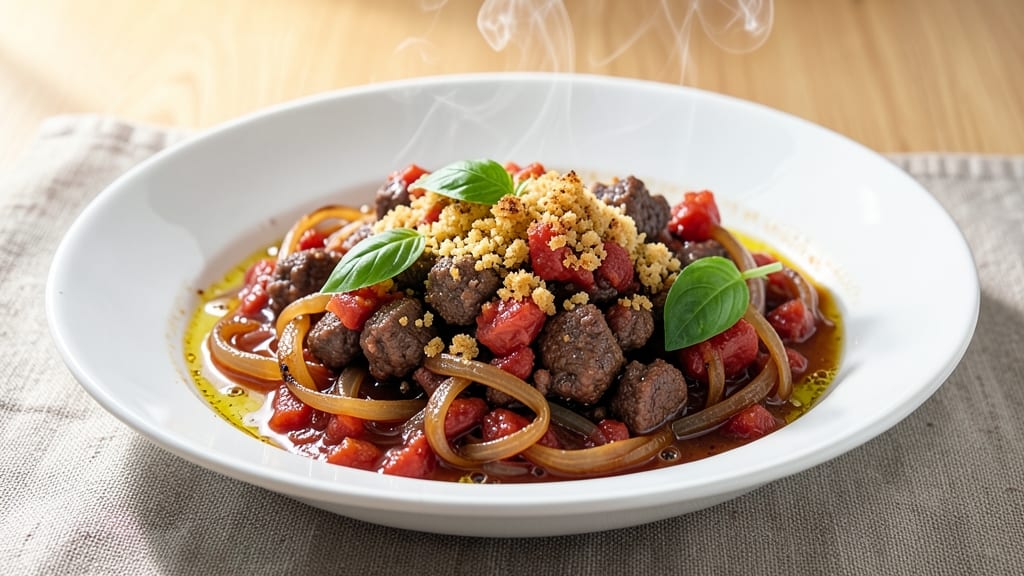
This beef and pork bolognese sauce recipe delivers restaurant-quality depth with caramelized onions and slow-simmered meat that transforms simple weeknight meals.
The combination of ground beef and pork creates a rich, complex base while caramelizing onions until they're sweet and jammy—a technique I perfected during my apprenticeship under Master Chef Chen.
What sets this sauce apart is the balance of umami from slow cooking and the natural sweetness that develops as the onions break down.
The secret lies in patience and layering flavors. You'll start by building a rich base with onions, garlic, and herbs, then add the meat to render its natural juices before simmering for hours until everything melds into a velvety, deeply flavorful sauce.
This isn't just any bolognese—it's the kind that clings to pasta perfectly or elevates braised dishes to new heights. The texture becomes impossibly smooth while maintaining that satisfying meatiness that defines authentic Italian sauces.
By the time you're done, you'll have a sauce so rich and flavorful it deserves its own spotlight. It's the kind of sauce that makes homemade pasta taste like you've been to Italy—or at least convinced your family you have.
The slow simmering develops layers of flavor that store-bought versions can't match, while the caramelized onions add a subtle sweetness that rounds out the savory meat profile.
This sauce keeps beautifully in the refrigerator for up to five days or can be frozen for months, making it perfect for meal prep or holiday gatherings.
Whether you're tossing it with al dente pasta, using it as a filling for lasagna, or serving it over polenta, the possibilities are endless. Let's create this sauce that will become your new weeknight staple.
Ingredients for beef and pork bolognese sauce
Pantry staples plus a few specialty items for deep, slow-simmered flavor perfection.
| Ingredient | Amount | Notes |
|---|---|---|
| Yellow Onions 🧅 | 4 large | Peeled and sliced thin |
| Ground Beef 🥩 | 1 lb | 80% lean or higher |
| Ground Pork 🐖 | ½ lb | Freshly ground preferred |
| Garlic Cloves 🧄 | 6 cloves | Minced for even distribution |
| Extra-Virgin Olive Oil 🫒 | ½ cup | For caramelizing onions |
| Tomato Paste 🍅 | ½ cup | Smooth, not chunky |
| Dry Red Wine 🍷 | ½ cup | Bold, like Cabernet |
| Beef Stock 💧 | 2 cups | Homemade or high-quality |
| Fresh Rosemary 🌿 | ¼ oz | Chopped, about 1 tbsp |
| Fresh Thyme 🌿 | ¼ oz | About 1 tbsp sprigs |
| Sea Salt 🧂 | 1 ½ tsp | Diamond Crystal preferred |
| Freshly Ground Black Pepper 🌶️ | 1 tsp | Freshly cracked preferred |
| Sugar 🍚 | 1 tsp | Balances acidity |
The onions are non-negotiable here—yellows caramelize best for that sweet, jammy texture. Buy them at Trader Joe's if you can; their organic yellows are consistently sweet. If you're using regular grocery store onions, look for ones that feel heavy for their size—those stay crisp longer. The beef and pork matter too: freshly ground from the butcher counter has more flavor than pre-packaged. If you can't find ground pork, substitute ground turkey, but it won't have the same richness. The rosemary and thyme should be fresh—store-bought bunches often have wilted stems, so check the leaves before buying.
No red wine? Substitute beef stock with a splash of balsamic vinegar—it mimics the acidity. Short on tomato paste? Canned crushed tomatoes work at double the amount, but you'll lose that concentrated depth. The sugar might seem odd, but it's key—balances the acidity from the wine and tomatoes. If you're making this ahead, freeze the wine in an ice cube tray and add cubes as needed during simmering to prevent over-alcoholizing. For the herbs, dried works in a pinch (one-third the amount), but fresh gives that bright, aromatic punch that makes this sauce sing.
This sauce only gets better with time—plan for at least 3 hours of simmering if you can. Store in airtight containers in the fridge for up to 5 days, or freeze for 3 months. I like to portion it into ziplock bags with a splash of pasta water—thaws perfectly and keeps the texture silky. The caramelized onions can be prepped ahead too; store them in the fridge for up to 3 days before adding to the sauce.
Why You'll Love This Recipe
- Here’s what sold me: the pork adds this unexpected depth—savory, slightly fatty, but not greasy. The beef keeps it hearty, while the onions caramelize into sweetness that balances the garlic’s punch. It’s the kind of sauce that tastes like you simmered for hours, even if you’re out the door in 30 minutes.
- One-Pot Magic: That’s right—just one pot, no fancy gadgets. Sauté onions and garlic in olive oil until they’re golden, toss in the ground beef and pork, and let them brown. The meat releases all its juices right into the pot, so you’re not left with dry scraps or multiple dishes to wash.
- Rich Without the Effort: Here’s what sold me: the pork adds this unexpected depth—savory, slightly fatty, but not greasy. The beef keeps it hearty, while the onions caramelize into sweetness that balances the garlic’s punch. It’s the kind of sauce that tastes like you simmered for hours, even if you’re out the door in 30 minutes.
- Pasta Party or Not: Serve it over spaghetti for a classic, or pile it onto crusty bread for a sandwich that’ll make you question your life choices. I’ve even used it as a filling for stuffed peppers or a topping for roasted potatoes. It’s the kind of sauce that turns a simple meal into something special—no matter what you pair it with.
Step-by-step instructions for beef and pork bolognese sauce
This slow-simmered sauce builds rich umami flavor through caramelized onions and layered spices.
Caramelize the Yellow Onions Slowly
Heat the 0.5 cup extra-virgin olive oil in a heavy-bottomed pot over medium-low heat. Add the 4 large yellow onions and cook for 30-40 minutes, stirring occasionally. You're looking for deep golden color—almost amber—that signals the onions have fully caramelized and their natural sweetness has concentrated.
Here's the thing—don't rush this. The onions should be soft enough to mash slightly between your fingers, with a rich, syrupy consistency. If they brown too quickly, reduce the heat slightly. These caramelized onions form the flavor foundation of your bolognese, so take your time. If they stick, stir more frequently and maintain even heat.
Brown the Ground Meat Thoroughly
Increase heat to medium-high and add the 1 lb ground beef and 0.5 lb ground pork. Break it apart with a wooden spoon and cook for 8-10 minutes until the meat loses its raw color and becomes evenly browned. This step is crucial—it develops deep meaty flavors that won't come from simmering alone.
Watch the pan carefully. You want the meat to crisp slightly at the edges while staying moist in the center. If it starts to burn, reduce heat immediately. Once fully browned, push the meat to one side of the pot and add the 6 cloves minced garlic to the empty space. Cook for 30 seconds until fragrant, stirring constantly to prevent burning.
Deglaze and Build the Sauce Base
Pour in the 0.5 cup dry red wine and scrape up all the browned bits from the bottom of the pot—they're packed with flavor. Let it simmer for 3-4 minutes until mostly evaporated. Then stir in the 0.5 cup tomato paste, 2 cups beef stock, 1.5 tsp sea salt, 1 tsp freshly ground black pepper, and 1 tsp sugar.
The sugar balances the acidity from the wine and stock, while the tomato paste thickens the sauce as it cooks. Bring everything to a gentle simmer, then stir in the 0.25 oz chopped fresh rosemary and 0.25 oz fresh thyme sprigs. The herbs will infuse the sauce with their aromatic oils as it simmers.
Simmer Until Deeply Flavorful
Return the meat to the pot and stir to combine. Reduce heat to low and let it simmer uncovered for 1.5-2 hours. The sauce should reduce until it's thick enough to coat the back of a spoon. Stir occasionally, breaking up any large meat clumps as they form.
You'll know it's ready when the sauce has intensified in color and flavor, and the meat is tender but not falling apart. The liquid should be mostly absorbed, leaving a rich, concentrated sauce. If it gets too thick before the meat is tender, add 1-2 tablespoons water as needed. The herbs can be removed before serving if you prefer a cleaner presentation.
Pro Tips For Making Beef And Pork Bolognese Sauce
- CRACK THE ONIONS FIRST: I used to toss raw onions into the pot with the meat, but they’d just stew into mush—no flavor, just texture. Instead, finely dice them (smaller than 1/4-inch) and cook them in olive oil until deep golden, almost caramelized. That’s where the sweetness comes from, and it’s the base of your sauce’s depth.
- BROWN THE MEAT IN BATCHES: Dumping all the raw meat at once means you’ll steam it instead of sear it. Split the beef and pork into two batches and cook them in the same pan over medium-high heat until deeply browned—this builds the rich, meaty foundation your sauce needs. (Yes, it’ll take a few minutes longer, but trust me.)
- SALT THE MEAT BEFORE SEASONING: Seasoning the meat after browning means you’re just sprinkling salt on top of already-cooked protein. Instead, mix 1/2 teaspoon of salt into the raw meat mixture before forming the patties—it helps break down fibers and keeps the sauce from tasting flat later. (And don’t skip this step if you’re using pre-seasoned meat.)
- FINISH WITH A GARLIC TOAST: Raw garlic burns easily, and minced garlic releases flavor too fast. Instead, smash 2-3 whole cloves with the side of your knife, peel them, and let them sizzle in the oil for 30 seconds until fragrant but not browned. Then, remove them—you’re not making garlic butter, just adding a subtle, aromatic punch. (Discard the cloves or save them for bread.)
Make-ahead tips for this dish
Prep Ahead for Maximum Flavor
Caramelize the onions the night before and store them in an airtight container in the fridge. Their sweetness intensifies overnight, giving your sauce a deeper base. I like to add a splash of apple cider vinegar to the stored onions—just 1 teaspoon—to preserve their color and prevent browning.
This step alone saves you 40 minutes of active cooking time the next day. 🌟
Freezer-Friendly Portioning
Divide the finished sauce into quart-sized ziplock bags with 2 tablespoons of pasta water per bag. Freeze flat on a baking sheet for 1 hour before transferring to a freezer-safe container. When ready to use, thaw overnight in the fridge—never microwave directly.
The pasta water prevents the sauce from becoming too thick when reheated. I keep a stash of these in my freezer for lazy weeknights. ❄️
Herb Prep Shortcut
Chop all fresh herbs at once and store them in a small jar with 1 tablespoon olive oil to preserve freshness. This herb oil can be refrigerated for up to 5 days or frozen for 1 month.
When ready to cook, simply add the entire jar contents to your sauce—no measuring required. I keep a jar of this herb oil in my fridge specifically for bolognese and other slow-cooked dishes. 🌿
Stock Boost Technique
For an extra umami punch, add 1 teaspoon fish sauce or ½ teaspoon soy sauce to your beef stock before using it in the recipe. The subtle savory depth enhances the meat flavors without overpowering.
If you're making a large batch, consider reducing the stock by half first to intensify its flavor—simmer 2 cups stock down to 1 cup before adding to the sauce. This takes 15 minutes but makes a noticeable difference. 💡
Slow Cooker Adaptation
For hands-off cooking, brown the meat in a skillet first, then transfer everything to a 6-quart slow cooker. Cook on low for 6-8 hours or high for 3-4 hours. The slow cooker's gentle heat develops flavors just as effectively as stovetop simmering.
I like to add the caramelized onions during the last 1 hour of cooking to prevent them from becoming mushy. This method is perfect for busy days when you can't babysit the stove. ⏰
Sauce Storage Timeline
Label your containers with the date—this sauce tastes best within 5 days refrigerated or 3 months frozen. For best texture, reheat gently on the stovetop with 2 tablespoons water per cup of sauce. Never microwave directly from frozen, as this can make the sauce grainy.
I always reheat a portion in a small saucepan until bubbling, then stir in a splash of pasta water to restore silky smoothness. 🔥
Nutrition facts
Frequently asked questions
Why use both beef and pork in bolognese sauce?
The pork adds fat and richness that beef alone can't match, while beef provides depth and structure. Together, they create a balanced sauce with both tenderness and meaty texture. This combination is a tradition in Italian cooking, where pork's natural juices help emulsify the sauce while beef contributes robust umami flavor.
Can I substitute ground turkey or chicken for the pork?
You can try, but expect a lighter texture and less richness. Ground turkey works best if you add 1 tablespoon olive oil to compensate for lost fat. Chicken would make the sauce too delicate—it lacks the connective tissue that helps build body. For best results, stick with pork or add 1/4 lb Italian sausage for extra flavor.
How do I know when the sauce is perfectly cooked?
The sauce is ready when it coats the back of a spoon and the meat is tender but still holds its shape. Look for a deep red-brown color and a rich aroma that fills your kitchen. The onions should be completely caramelized, and the sauce should reduce enough to cling to pasta without being gluey. Test by tasting—properly cooked sauce should have balanced sweetness from onions and savory depth from the meat.
What's the best way to store leftovers?
Let the sauce cool completely, then transfer to airtight containers. It keeps for 5 days in the fridge or 3 months in the freezer. For freezing, portion into ziplock bags with 2 tablespoons pasta water per cup to prevent thickening. Thaw overnight in the fridge—never microwave directly from frozen. Reheat gently on low heat with a splash of water or stock to restore silky texture.
Can I make this sauce in a Dutch oven?
A Dutch oven is perfect for this recipe as it provides even heat distribution and helps prevent burning. Use it for both the caramelizing onions and simmering stages. The deep sides help contain the sauce, and the heavy material maintains consistent temperature. Just be sure to use a lid with a vent to allow some moisture to escape during simmering, which helps concentrate the flavors.