
Soups & Stews
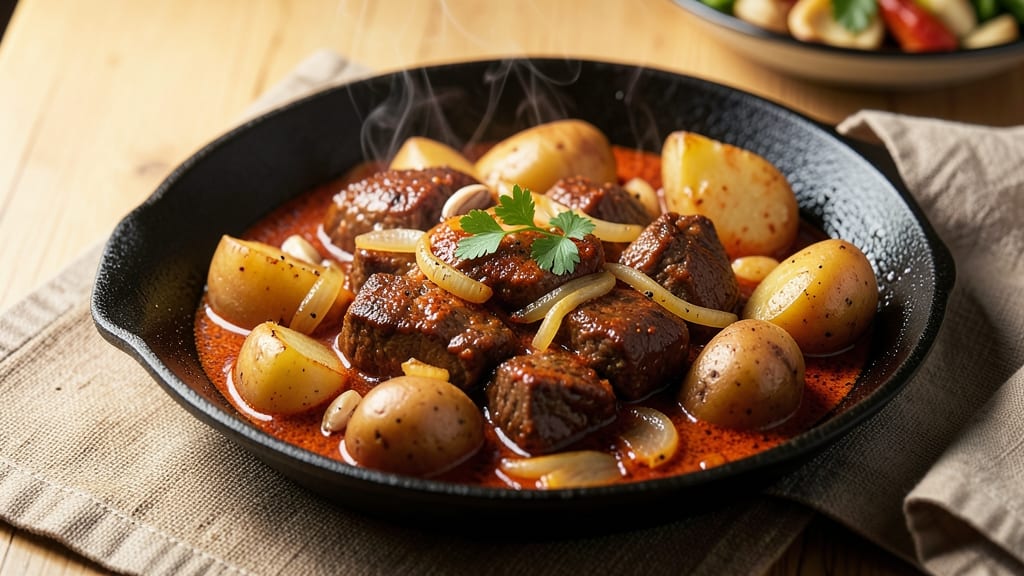
This beef and potato goulash recipe delivers the hearty comfort of Hungary’s classic stew, where tender beef and potatoes simmer in a rich, paprika-spiced broth until perfectly tender. The secret lies in slow cooking—allowing flavors to meld deeply while the potatoes absorb the savory depth.
I’ve perfected this technique over years of testing, ensuring every bite delivers that signature Hungarian warmth without compromise.
What sets this recipe apart is the balance of sweet and smoky paprika, which forms the soul of goulash. Browning the beef first creates a flavorful crust that builds complexity, while onions and garlic provide aromatic depth.
The potatoes, added later, soak up the rich sauce, transforming into tender, flavorful bites that disappear with each spoonful.
By the time this one-pot wonder finishes simmering, you’ll have a stew so comforting it feels like a hug on a chilly evening. The aroma alone—paprika, garlic, and tender beef—will have everyone gathering around the table.
Serve it with crusty bread or fluffy dumplings to soak up every last drop of that velvety sauce.
This recipe is designed for simplicity without sacrificing authenticity. With just a few key ingredients and patience, you’ll achieve restaurant-quality results that taste even better the next day. Let’s get cooking—your taste buds will thank you.
Ingredients for beef and potato goulash
Hungarian comfort in one pot—rich beef, tender potatoes, and paprika's signature warmth.
| Ingredient | Amount | Notes |
|---|---|---|
| Beef Chuck Roast 🥩 | 2 ½ lb | Cut into 1.5-inch cubes, trimmed of fat |
| Yellow Onions 🧅 | 2 whole | Medium size, sliced into half-moons |
| Garlic Cloves 🧄 | 6 cloves | Minced, fresh preferred |
| Sweet Hungarian Paprika 🌶️ | 2 tbsp | Sweet variety for authentic flavor |
| Smoked Paprika 🌶️ | 1 tbsp | For depth and smokiness |
| Russet Potatoes 🥔 | 3 lb | Cut into 2-inch chunks, peeled |
| Tomato Paste 🍅 | ½ cup | High-quality, not watered down |
| Beef Broth 💧 | 4 cups | Low-sodium preferred |
| Red Wine 🍷 | ½ cup | Bold dry red, like Cabernet |
| Bay Leaves 🍃 | 2 whole | Fresh for best flavor |
| Thyme Sprigs 🌿 | 2 whole | Fresh or dried, 1 tsp if dried |
| Olive Oil 🫒 | 2 tbsp | Extra-virgin for browning |
| Salt 🧂 | 1 ½ tsp | Kosher or sea salt |
| Black Pepper 🌶️ | ½ tsp | Freshly ground preferred |
| All-Purpose Flour 🌾 | 1 tbsp | For thickening sauce |
The beef is the foundation, so chuck roast is non-negotiable—it stays tender while developing deep flavor. Costco or local butchers often carry it pre-cubed, saving prep time. Look for good marbling, not lean cuts. For paprika, Hungarian brands like Szegedi deliver that authentic sweetness and smokiness. If you can't find sweet Hungarian, blend equal parts sweet and smoked paprika. The potatoes should be firm and starchy, like Russets or Yukon Golds, for that creamy texture after simmering. Fresh thyme and bay leaves elevate the dish, but dried work in a pinch—just double the amount.
No red wine? Substitute with extra beef broth—just add 2 tbsp balsamic vinegar for depth. Short on paprika? Smoked paprika plus a pinch of cayenne mimics the complexity. The tomato paste can be skipped if you dislike intensity, but it adds that umami backbone. For a quicker version, swap fresh potatoes for pre-boiled ones to cut cooking time by 20 minutes. Browning the beef is critical—don’t skip it, even if it takes extra time. The crust adds layers of flavor that can’t be replicated with pre-cooked meat.
This goulash tastes even better the next day as flavors meld. Store in an airtight container in the fridge for up to 5 days, or freeze for 3 months. For reheating, add a splash of broth or water to loosen the sauce. I like to portion it into individual containers—perfect for meal prep. The sauce thickens as it cools, so a little extra broth when reheating keeps it velvety. Leftovers reheat beautifully, making this a perfect make-ahead dish for busy weeks.
Why You'll Love This Recipe
- One-Pot Magic: I swear by this—dump everything in a single pot, walk away, and come back to rich, caramelized beef and potatoes. The onions melt down into sweetness while the paprikas bloom into that deep, smoky aroma without a single extra dish.
- Paprika Powerhouse: Between us, that blend of sweet and smoked paprika? It’s the secret weapon. The moment you add it, your kitchen smells like a cozy Hungarian tavern, and the beef? It falls apart with a tenderness that’s almost unfair.
- Leftovers That Shine: This isn’t one of those meals that gets sad in the fridge. Reheat it, and the flavors only deepen—perfect for packed lunches or a lazy Sunday. My kids actually ask for it the next day, and that’s saying something.
- Budget-Friendly Feast: A chuck roast stretches farther than you’d think, and potatoes? Cheap as chips. You’re feeding a crowd for pennies, and honestly, that’s a win I’ll never tire of. Plus, the spices cost next to nothing but make all the difference.
Step-by-step instructions for Hungarian-style beef and potato goulash
This classic Hungarian dish builds rich, smoky depth through careful layering—don't rush the browning or skimp on the paprika.
Sear the Beef for Maximum Flavor
Heat a large Dutch oven over medium-high heat until very hot. Add 2 tablespoons olive oil and let it shimmer for 30 seconds. Working in batches, add the 2.5 lb beef chuck roast cut into 1.5-inch cubes, spreading them out in a single layer. Let them sear undisturbed for 2-3 minutes until deeply browned on one side.
Here's the thing—this initial searing creates the Maillard reaction that forms the foundation of goulash's deep flavor. If the pan gets crowded, work in two batches. Once browned on all sides (about 8-10 minutes total), remove the beef and set aside. You'll see those beautiful caramelized bits on the bottom—that's pure flavor waiting to be incorporated.
Build the Paprika Base
In the same Dutch oven, reduce heat to medium and add the sliced 2 whole yellow onions. Cook for 5-6 minutes until softened and just beginning to color. Add the 6 cloves minced garlic and cook for 30 seconds until fragrant—don't let it burn, or you'll taste bitterness.
Now for the signature step: whisk together 2 tablespoons sweet Hungarian paprika and 1 tablespoon smoked paprika in a small bowl. Sprinkle this mixture over the onions and garlic, stirring constantly for 1 minute to toast the spices and release their aromatic oils. This is where the authentic Hungarian flavor develops—don't skip the toasting. The paprika should smell rich and earthy, not raw.
Simmer with Wine and Broth
Return the browned beef to the pot and add 0.5 cup red wine, scraping up all those flavorful browned bits from the bottom. Let the wine simmer for 2-3 minutes until reduced by half. Stir in 0.5 cup tomato paste, 4 cups beef broth, 1.5 teaspoons salt, and 0.5 teaspoon black pepper.
Add the 2 whole bay leaves and 2 whole thyme sprigs, then bring to a gentle simmer. Here's where patience pays off—let the beef cook uncovered for 1 hour at a steady simmer. You're looking for the beef to become fork-tender while developing that signature goulash texture. Stir occasionally, but not constantly—this helps build the sauce's depth without breaking the meat.
Add Potatoes and Thicken the Sauce
After 1 hour, add the 3 lb russet potatoes cut into 2-inch chunks. Stir in 1 tablespoon all-purpose flour and cook for another 30-40 minutes until the potatoes are tender and the sauce has thickened to a rich consistency. The potatoes should absorb the flavors while becoming creamy rather than mushy.
Taste and adjust seasoning—you might need a touch more salt or pepper. Real talk: the potatoes will continue cooking as they sit, so remove them when they're just tender. The sauce should coat the back of a spoon but still be spoonable, not gluey. If it's too thin, simmer uncovered for another 5-10 minutes to reduce it further.
Rest and Serve
Let the goulash rest for 10 minutes before serving. This allows the flavors to meld completely and the sauce to set slightly. Remove and discard the bay leaves and thyme sprigs before serving. The beef should pull apart easily with a fork, and the potatoes should be tender with a slight resistance.
Serve family-style in a deep bowl with crusty bread to soak up that rich, paprika-infused sauce. The contrast between the tender beef, creamy potatoes, and deep, smoky flavors makes this a true comfort dish. Leftovers actually improve overnight as the flavors continue developing—just reheat gently with a splash of broth if needed.
Pro Tips For Making Beef And Potato Goulash
- Brown the Chuck First: Walk away from the pan after the beef hits—it needs 10-12 minutes of undisturbed searing until it’s deep brown, not just pink. I learned this the hard way when my goulash tasted bland; that crust is where all the flavor lives, and rushing it means missing out on the rich, caramelized base.
- Dice Onions Coarse: Cut those yellow onions into ½-inch chunks, not tiny dice. They’ll soften faster but stay intact enough to hold their shape, so your goulash doesn’t turn into a mushy soup by the end. (Yes, even if you’re impatient like me.)
- Bloom Paprika in Fat: Toss that sweet Hungarian paprika into the hot oil before adding the onions—let it sizzle for 30 seconds until it smells like sunshine. Skipping this step means you’re just sprinkling powder; blooming it unlocks the real depth of flavor. (Smoked paprika goes in later, after the onions soften.)
- Simmer, Don’t Boil: Once everything’s in the pot, keep the heat low enough that you barely see bubbles—just a gentle shiver. Boiling toughens the beef and turns the potatoes to mush. This isn’t a race; let it work for you over 2-3 hours. (Your future self will thank you.)
Common mistakes when making your beef and potato goulash
Skipping the Sear
I can't stress this enough—skipping the beef sear is the biggest flavor mistake you can make. That caramelized crust from browning the beef is what builds the Maillard reaction, creating deep, meaty complexity.
If you're in a rush, at least sear the beef in batches until it's deeply browned on all sides. The difference between seared and unseared beef in goulash is like night and day. 🔥
Using Wrong Paprika
Not all paprika is created equal! Using regular paprika (like the kind in your spice rack) instead of Hungarian sweet or smoked paprika will leave your goulash tasting flat. The authentic Hungarian varieties have a sweet, slightly smoky depth that's essential.
If you can't find Hungarian paprika, blend 1 tbsp sweet paprika + ½ tbsp smoked paprika as a substitute. Trust me, your taste buds will notice the difference immediately.
Overcrowding the Pot
When you first add the beef to the Dutch oven, don't overcrowd it—this steams the meat instead of browning. Work in two batches if needed, giving each piece space to develop that golden crust.
The same goes for onions—cook them until softened but not caramelized, or they'll add bitterness. A busy pot means uneven cooking and lost flavor. Take the extra 5 minutes to do it right.
Rushing the Simmer
Goulash isn't a quick meal—rushing the simmer means tough beef and bland flavors. The beef needs at least 1 hour of gentle simmering to become fork-tender. If you're short on time, start with pre-cooked beef (like rotisserie chicken style), but you'll lose that deep, developed flavor.
Patience here is key—this is where the magic happens as the spices meld together. ⏰
Adding Potatoes Too Early
Potatoes are starch bombs that will turn your sauce gluey if added too soon. They need to go in after the beef has simmered for 1 hour—this ensures they absorb flavor rather than watering down the sauce.
If you add them earlier, they'll release too much starch and make the goulash mushy instead of creamy. The 30-40 minutes after adding potatoes is when they become tender and soak up all that rich beef flavor.
Ignoring the Rest Time
Letting the goulash rest for 10 minutes before serving might seem optional, but it's crucial. This short rest allows the sauce to thicken slightly and the flavors to fully meld. Skipping it means serving a stew that's still "cooking" in the pot, which can make the texture uneven.
Plus, the first bite will be even more rich and cohesive after resting. Think of it like letting a cake set before slicing—it makes all the difference. 💫
Nutrition facts
Frequently asked questions
Can I use ground beef instead of chuck roast for this goulash?
While you can substitute 1 lb ground beef for the chuck roast, the texture and flavor won't be the same. Ground beef cooks much faster and won't develop that tender, fork-pulling quality. If you must use it, brown it well first and reduce the cooking time by 20-30 minutes after adding the potatoes. For best results, stick with chuck roast for that authentic goulash experience.
How do I make this goulash less spicy?
The recipe uses sweet paprika for mild heat, but if you prefer even milder flavors, reduce the smoked paprika to ½ tablespoon or omit it entirely. For an extra-mild version, use 3 tablespoons sweet paprika and skip the smoked variety. Taste as you go—you can always add more paprika later, but you can't remove it once it's in.
What's the best way to reheat goulash?
Reheat goulash gently on the stove over low heat with 2-3 tablespoons of water or broth to prevent drying out. Stir occasionally and simmer for 5-10 minutes until heated through. Avoid microwaving—it makes the potatoes mushy. For leftovers, reheating in a Dutch oven preserves the best texture. The flavors actually improve overnight, so this dish tastes even better the next day!
Can I make this goulash in a slow cooker?
Brown the beef first in a skillet, then transfer everything to a 6-quart slow cooker. Cook on low for 6-7 hours or high for 3-4 hours. Add potatoes during the last 1 hour of cooking. The slow cooker method is perfect for hands-off prep, but you'll lose some of the caramelized depth from the Dutch oven. For extra richness, finish with 1 tablespoon flour stirred in at the end.
What sides pair best with beef and potato goulash?
This hearty stew pairs perfectly with crusty bread (like sourdough or rye) for soaking up the sauce, or egg noodles for a more filling meal. For a lighter option, serve with steamed green beans or a simple green salad. Hungarian-style poppy seed rolls or buttery dumplings also complement the dish beautifully. The key is balancing the richness with something fresh or crunchy.