
Soups & Stews
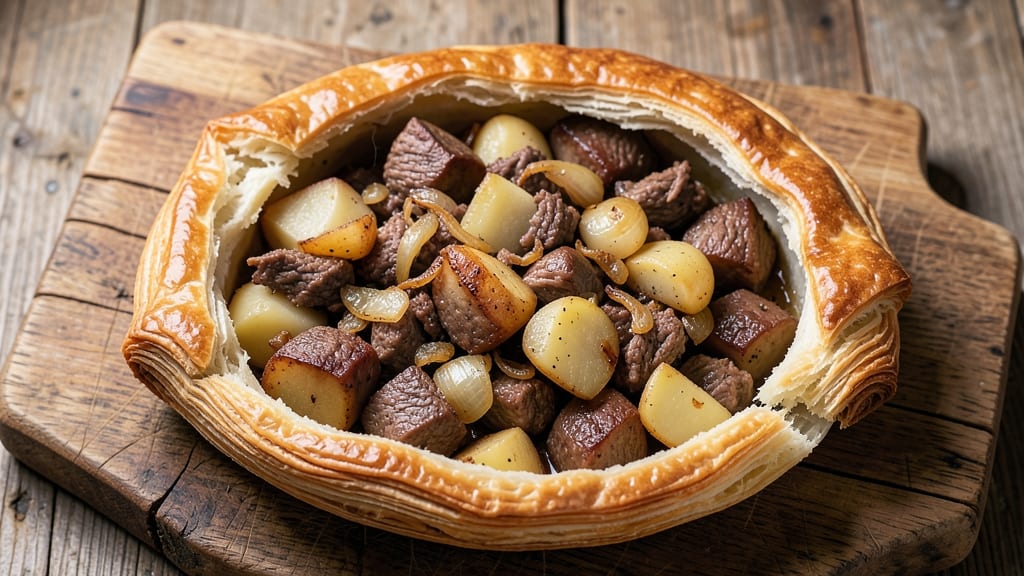
This beef and potato pasty recipe delivers the hearty, rustic charm of a classic Cornish pasty—flaky pastry hugging tender beef, potatoes, and onions in a savory embrace. The secret lies in the buttery, layered dough that creates a crispy crust while keeping the filling juicy and aromatic.
I've perfected this recipe after years of testing, ensuring every bite delivers that satisfying balance of textures and flavors you'd find in a traditional British mineworker's lunch.
The filling is where the magic happens: tender chunks of beef slow-cooked with potatoes and onions until perfectly tender, seasoned with just enough salt, pepper, and a touch of nutmeg to enhance the natural flavors.
What makes this pasty special is the way the pastry dough is folded and sealed—creating that signature half-moon shape that traps all the juices inside. The dough itself is simple but requires patience, with layers of flour, lard, and cold butter worked together until it's just the right consistency.
When it emerges from the oven, you'll have a pasty with a golden, crispy crust that gives way to tender, flaky layers, enclosing filling that's rich, savory, and impossibly satisfying.
The aroma alone will have everyone gathering around the table, and the first bite delivers that perfect harmony of textures—crispy crust, tender meat, and creamy potatoes. This is comfort food at its finest, a dish that feels like a warm hug on a cold day.
Serve it hot with a pat of butter melting on top or a drizzle of gravy for that extra touch of indulgence. The pasty keeps well for a day or two, making it perfect for meal prep or bringing to gatherings.
Whether you're recreating a traditional Cornish meal or simply craving a hearty, satisfying dish, this beef and potato pasty delivers every time.
Ingredients for beef and potato pasty
Flaky layers and hearty filling—this pasty needs just 12 simple ingredients for rustic perfection.
| Ingredient | Amount | Notes |
|---|---|---|
| All-Purpose Flour 🌾 | 3 cups | Plus 2 tbsp for dusting |
| Unsalted Butter 🧈 | ¾ cup | Cold, cubed for layers |
| Leaf Lard 🧈 | ½ cup | Or vegetable shortening |
| Ice Water 💧 | ½ cup | For dough consistency |
| Salt 🧂 | 1 ½ tsp | Diamond Crystal preferred |
| Ground Black Pepper 🌶️ | ½ tsp | Freshly cracked |
| Ground Nutmeg 🌿 | ¼ tsp | Freshly grated |
| Russet Potatoes 🥔 | 2 medium | Peeled, cubed (1 inch) |
| Yellow Onion 🧅 | 1 whole | Peeled, chopped |
| Chuck Roast 🥩 | 1 lb | Trimmed, cubed (1 inch) |
| Beef Stock 💧 | ¼ cup | Low-sodium preferred |
| Egg 🥚 | 1 whole | For egg wash |
The dough is where magic happens. King Arthur flour gives the best texture, but any all-purpose works. For the butter, Plugrá or European-style has more fat—perfect for flaky layers. Leaf lard is traditional (find it near the baking section), but vegetable shortening saves money. Keep everything cold until mixing—warm butter makes tough dough. The nutmeg is non-negotiable; it's what gives that classic Cornish flavor (and yes, a pinch more won't hurt).
No leaf lard? Vegetable shortening or extra butter works, but texture won't be identical. Chuck roast is key—sirloin stays too firm. Your grocery store's pre-cubed chuck works fine, but if you're ambitious, trim and cube yourself for even cooking. Potatoes should be starchy (Russets or Yukon Golds), not waxy. Onions? Yellow or red both work—just chop them evenly. The egg wash? Water + milk in a pinch, but egg gives that golden sheen.
Dough keeps 3 days wrapped in plastic in the fridge, or 3 months frozen between parchment. Cooked pasties reheat beautifully—350°F for 15 minutes until crispy. Filling reheats well too, so make extras. Store leftovers in an airtight container—they're even better the next day, if that's possible. Freeze filled pasties (unbaked) for 2 months—just add 10 minutes to baking time.
Why You'll Love This Recipe
- No-Fuss Dough Magic: I swear by that leaf lard and ice water combo—it makes the crust flaky without any fancy rolling or kneading. Just toss, fold, and bake; the dough handles like butter (literally).
- Meat & Spud Harmony: That crispy, golden crust hides the most tender beef and buttery potatoes—savory, salty, and just sweet enough. Honestly, the first bite makes me forget I’m eating comfort food.
- Weeknight Workhorse: Double the recipe, freeze half, and you’ve got dinner covered for lazy nights. Or serve it at picnics, potlucks, or even as a hearty lunch—it’s always a hit.
- Budget-Friendly Feast: A pound of beef and a few potatoes stretch farther than you’d think, especially when wrapped in that rich, buttery crust. My wallet and my family thank me every time.
Step-by-step instructions for beef and potato pasty
Let's build this rustic pasty with a flaky crust and hearty filling that'll impress everyone.
Make the Perfect Dough for a Flaky Crust
In a large bowl, combine the 3 cups all-purpose flour and 1.5 teaspoons salt. Cut in the 0.75 cup cold cubed unsalted butter and 0.5 cup leaf lard using a pastry cutter or your fingers until the mixture resembles coarse crumbs with pea-sized butter pieces. This creates pockets that will melt during baking and create flaky layers.
Gradually add the 0.5 cup ice water one tablespoon at a time while mixing with a fork. Stop adding water as soon as the dough begins to come together—it should be just slightly sticky but not wet. I like to press it gently; if it doesn't hold when squeezed, add one more teaspoon of water. Turn the dough out onto a lightly floured surface and knead it just 4-5 times until smooth. Overworking develops gluten and makes the crust tough.
Prepare the Savory Filling
While the dough rests, prepare the filling by dicing the 2 medium russet potatoes into 1-inch cubes and chopping the 1 whole yellow onion into small pieces. In a large skillet, heat 1 tablespoon of oil over medium heat and cook the potatoes and onions for 8-10 minutes until the potatoes begin to soften and the onions turn translucent. This jump-start on the cooking process ensures the filling is tender when baked.
Push the vegetables to one side of the skillet and add the 1 lb chuck roast cut into 1-inch cubes. Cook the beef for 5-6 minutes until it starts to brown on all sides. This searing step develops deep flavor in the filling. Add the 0.5 teaspoon ground black pepper and 0.25 teaspoon ground nutmeg, then pour in the 0.25 cup beef stock. Let the mixture simmer for 3-4 minutes until the liquid reduces slightly and the flavors meld together.
Assemble the Pasty with Precision
Divide the dough into two equal pieces and roll each into a 12-inch circle on a floured surface. Keep the second circle covered with a damp towel to prevent drying. Spoon the hot filling onto one of the rolled dough circles, leaving a 1-inch border around the edges. This border is crucial for creating a proper seal when folding.
Fold the other dough circle over the filling, pressing the edges firmly to seal. Use a fork to crimp the edges together, creating a decorative pattern while ensuring no filling escapes. Place the assembled pasty on a parchment-lined baking sheet and brush the top with the beaten egg. This egg wash will give the crust a beautiful golden finish. Cut a small slit in the center to allow steam to escape during baking.
Bake Until Golden and Crisp
Preheat your oven to 425°F and bake the pasty for 40-45 minutes until the crust is deep golden brown and crisp. The pasty is done when it sounds hollow when tapped on the bottom and the internal temperature reaches 165°F in the thickest part of the filling. The crust should be golden brown all over with no pale spots.
Let the pasty rest for 10 minutes before slicing. This resting period allows the juices to redistribute, ensuring each bite is moist and flavorful. Serve with a simple green salad or steamed vegetables for a complete meal. The contrast of the flaky, buttery crust with the hearty beef and potato filling makes this pasty a true comfort food winner.
Pro Tips For Making Beef And Potato Pasty
- Chill the Dough Properly: Don’t skip the 30-minute fridge rest after mixing—this isn’t just about handling. The cold butter and lard need time to firm up enough to layer properly under the filling. I used to rush it, and the pasty would either tear when folding or steam like a sad dumpling. Give it a solid 30 minutes, and the crust will hold its shape like it’s supposed to.
- Use Leaf Lard, Not Shortening: Leaf lard has more fat content and renders differently than store-bought shortening or butter alone. It creates that signature flaky, slightly crisp crust without turning the dough greasy. If you’re using butter, mix it with a little cold lard (about 2 tablespoons per ½ cup butter)—this makes all the difference in texture.
- Pre-Cook the Potatoes: Parboil the potatoes for 8–10 minutes before adding them to the filling. This ensures they’re tender but not mushy when baked, and they’ll soak up the beef juices instead of turning the center soggy. Drain them well and let them cool slightly—hot potatoes make the filling too wet to handle.
- Seal the Edges with Water: Before folding the pasty, brush the edges of the dough with a little ice water. This helps the layers stick together when you crimp them, so they don’t split open during baking. I know it sounds counterintuitive (water + hot oven?), but it works—just don’t overdo it, or the crust will get gummy.
Dietary considerations for these flavors
Gluten-Free Adaptation
For a gluten-free version, replace the all-purpose flour with a 1:1 gluten-free baking flour blend like King Arthur Measure for Measure. Add ½ teaspoon xanthan gum to help bind the dough—this is crucial for that signature flaky texture.
Chill the dough longer (up to 1 hour) before rolling, as gluten-free dough can be more delicate. 🌾
Dairy-Free Options
Skip the butter and use ½ cup dairy-free margarine (like Miyoko's) or extra leaf lard for the dough. For the filling, swap the beef stock for a low-sodium vegetable broth and add 1 tablespoon nutritional yeast to boost umami flavor.
The crust will still be crispy, though slightly less rich.
Vegetarian Twist
Replace the beef with 1 lb crumbled tempeh or extra-firm tofu, pressed and pan-fried until crispy. Add 1 teaspoon smoked paprika and ½ teaspoon garlic powder to mimic the beefy depth. Potatoes and onions stay the same—this version is just as hearty and satisfying! 🥔
Lower-Carb Version
Swap the potatoes for 2 cups cauliflower rice (finely chopped cauliflower) and reduce the filling liquid by 2 tablespoons to prevent sogginess. The cauliflower will soften during baking, creating a lighter texture while keeping the dish filling. Serve with a side of sautéed greens to balance the carbs.
Allergen-Friendly Tips
For nut allergies, ensure your lard or shortening is nut-free (check labels). Egg wash can be replaced with 1 tablespoon milk + 1 tablespoon water for those avoiding eggs. Always double-check ingredient labels—some gluten-free flours or dairy-free margarines may contain hidden allergens.
Nutrition facts
Frequently asked questions
Why does traditional pasty dough use lard instead of butter?
Lard creates a higher melting point fat that stays crisp longer, giving that iconic flaky texture. It also has a neutral flavor that lets the beef and potato filling shine. For a lighter version, you can substitute up to half with vegetable shortening, though it won't be quite as traditional.
Can I make pasties ahead of time?
Assemble and bake them up to 3 days ahead, then reheat at 350°F for 15 minutes until crispy. For longer storage, freeze unbaked pasties (wrapped tightly) for up to 2 months—just add 10-15 minutes to baking time. The flavors actually improve overnight!
What's the secret to keeping the filling moist?
Pre-cooking the potatoes and onions until slightly tender before adding beef is key. The 1-inch border around the filling also prevents leaks, and cutting a steam vent ensures even cooking. Never overfill—the crust needs room to crisp properly.
How do I fix a leaky pasty?
If filling escapes during baking, let it cool slightly, then seal any cracks with extra dough and egg wash. For a quick fix, brush melted butter over the damaged area after baking. The best prevention? Leave that 1-inch border and press edges firmly with a fork during assembly.
What's the best way to serve leftover pasty?
Slice and reheat in a 375°F oven for 10 minutes> with a splash of beef stock for extra moisture. For a picnic-style serving, wrap slices in parchment and pack with a side of mustard. The crust reheats beautifully—just watch for browning and cover with foil if needed.