
Soups & Stews
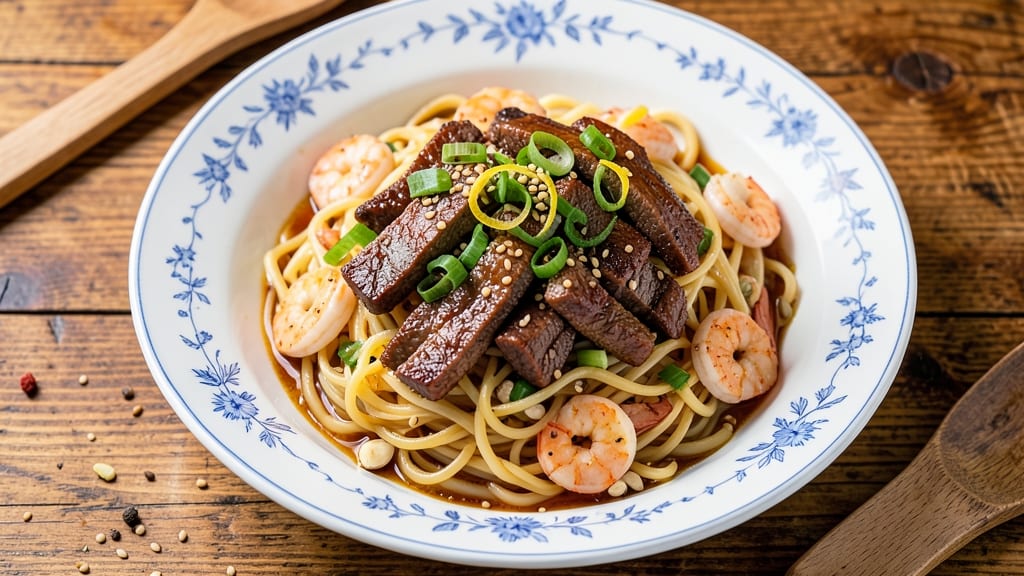
This beef and shrimp lo mein recipe delivers restaurant-quality wok heat with perfectly chewy noodles and a sweet-chili crunch that'll have you reaching for seconds.
The key lies in high-heat searing of the proteins followed by a quick stir-fry that locks in juices while building layers of umami from soy, garlic, and ginger. I've adapted the traditional technique for home cooks without a wok—just a heavy skillet and proper timing.
What sets this recipe apart is the balance of textures: tender beef strips, plump shrimp with just a hint of pink, and noodles that stay chewy rather than mushy.
The sauce starts with a simple soy-ginger base but gains depth from a touch of honey and chili flakes, creating that signature sweet-spicy contrast. For authenticity, we'll use egg noodles (though rice noodles work too), and finish with a quick toss that coats everything evenly.
By the time you plate it, you'll have a dish that's vibrant, aromatic, and packed with that signature lo mein crunch—no takeout required. The beef develops a caramelized crust from the wok heat, while the shrimp stays tender and juicy.
Garnish with sliced green onions and toasted sesame seeds for that final restaurant-quality touch that makes all the difference.
This recipe works equally well as a weeknight dinner or impressive takeout alternative, scaling easily for crowds. The technique is straightforward once you master the high-heat searing, and the ingredients list stays simple without sacrificing flavor. Let's get cooking!
Ingredients for beef and shrimp lo mein
Wok heat, chewy noodles, and tender proteins come together in this restaurant-style lo mein.
| Ingredient | Amount | Notes |
|---|---|---|
| Egg Noodles 🍜 | 8 oz | Fresh or dried, chewy variety |
| Flank Steak 🥩 | 1 lb | Thinly sliced against grain |
| Large Shrimp 🦐 | 1 lb | Peeled, deveined, tails off |
| Green Onions 🧅 | ½ cup | Sliced, white and green parts |
| Sesame Seeds 🌾 | 1 tbsp | Toasted for garnish |
| Garlic Cloves 🧄 | 6 cloves | Minced for sauce |
| Fresh Ginger 🌿 | 1 tbsp | Grated, peeled |
| Soy Sauce 🍶 | ½ cup | Light or regular |
| Oyster Sauce 🍶 | 2 tbsp | For umami depth |
| Honey 🍯 | 1 tbsp | For sweet-spicy balance |
| Vegetable Oil 🫒 | ½ cup | High smoke point |
| Red Chili Flakes 🌶️ | 1 tsp | Adjust for heat preference |
| Salt 🧂 | 1 tsp | Kosher or sea salt |
| Black Pepper 🌶️ | ½ tsp | Freshly ground |
The flank steak is non-negotiable for that signature lo mein texture—ask your butcher to slice it paper-thin against the grain. Costco or Whole Foods usually carry pre-sliced versions if you're short on time. For shrimp, frozen works perfectly—just thaw and pat dry before cooking. The egg noodles should be chewy when cooked, not mushy, so look for brands like King Noodle or Martelli if you're buying dried. Fresh noodles cook faster but lose texture if overcooked. Garlic and ginger need to be fresh for that bright, aromatic punch—no powdered shortcuts here.
No oyster sauce? Substitute with extra soy sauce plus a dash of fish sauce for umami. Running low on honey? Maple syrup or agave keeps the sweet-spicy balance. Chili flakes too spicy? Swap for crushed red pepper or skip entirely. The soy sauce can be light or regular, but avoid low-sodium versions—they lack depth. For extra crunch, toast the sesame seeds in a dry pan for 30 seconds until golden. And if you're using rice noodles, soak them first—they absorb sauce differently than egg noodles.
Prep ahead by slicing the beef and shrimp, then store separately in the fridge until ready to cook. Noodles keep for 3 days in an airtight container, but cook them fresh for best texture. The sauce components (soy, oyster, honey) can be mixed in advance and stored for up to 1 week. For leftovers, reheat gently in a skillet with a splash of water to restore crispness. Garnish with extra green onions and sesame seeds right before serving—that's where the restaurant magic happens.
Why You'll Love This Recipe
- One-Pan Magic: I swear by this—just toss everything in one skillet. The flank steak slices and shrimp cook together while the noodles soften in the same pan, no extra dishes needed. (Yes, even on a Tuesday night.)
- Umami Bomb: That combo of seared flank steak and plump shrimp in a savory-sweet sauce? It’s the kind of flavor that makes you pause mid-bite. The sesame seeds add a little crunch that ties it all together—simple, but ridiculously good.
- Lunchbox Hero: Between us, this is my go-to for meal prep. The leftovers reheat like a dream—just add a splash of water and stir. Pack it cold for work or save it for dinner; it’s just as satisfying either way.
- Budget Flex: Flank steak is cheaper than you think, and shrimp stretches further than you’d expect. I make this for four people for under $20, and everyone leaves happy. (My daughter picks out the shrimp first, but still asks for seconds.)
Step-by-step instructions for beef and shrimp lo mein
Master the wok technique for perfectly chewy noodles and tender proteins.
Prepare the Protein for Quick Cooking
Slice the 1 lb flank steak thinly against the grain into ¼-inch strips—this ensures tender bites. Pat dry with paper towels to remove excess moisture, which prevents steaming instead of searing. In a bowl, toss the steak with ½ teaspoon black pepper and ½ teaspoon salt, coating evenly. Set aside.
For the 1 lb large shrimp, peel and devein them, leaving the tails intact for presentation. Toss with ½ teaspoon salt and ½ teaspoon black pepper. The shrimp will cook in seconds, so keep them separate until the last minute to avoid overcooking.
Cook the Noodles Al Dente
Cook the 8 oz egg noodles in boiling salted water for 1 minute less than package instructions—al dente is key. Drain and immediately rinse under cold water for 10 seconds to stop cooking. Toss with 1 tablespoon vegetable oil to prevent sticking. Overcooked noodles turn mushy in stir-fries.
While the noodles cook, heat 2 tablespoons vegetable oil in a 14-inch wok or skillet over high heat until shimmering. Add the 6 cloves minced garlic and 1 tablespoon grated fresh ginger, stirring for 30 seconds until fragrant but not browned. This aromatic base forms the sauce foundation.
Stir-Fry the Beef in Stages
Working in two batches to avoid crowding, add half the steak strips to the wok. Stir-fry for 1-2 minutes until deep brown and just cooked through—the meat should still have a slight pink center. Remove and set aside. Repeat with remaining steak, then set aside both batches.
Add the remaining 3 tablespoons vegetable oil to the wok and return it to high heat. Add the shrimp and cook for 1-2 minutes until pink and opaque. The shrimp will finish cooking in the sauce, so don't overcook. Remove and set aside with the beef.
Build the Sweet-Chili Sauce
Reduce heat to medium and add ½ cup soy sauce, 2 tablespoons oyster sauce, and 1 tablespoon honey to the wok. Stir constantly for 1 minute until the sauce thickens slightly. Add 1 teaspoon red chili flakes and ½ cup sliced green onions, tossing to combine. The sauce should coat the back of a spoon.
Return the cooked beef and shrimp to the wok, tossing everything together for 30 seconds to coat evenly. Add the drained noodles and toss vigorously for 1-2 minutes until the noodles are fully coated and heated through. The dish should sizzle with residual heat.
Plate and Garnish for Presentation
Transfer the lo mein to serving plates, garnishing each with 1 tablespoon toasted sesame seeds and an extra sprinkle of green onions. Serve immediately while steaming hot—this dish loses its wok-fresh texture when left to sit. The perfect lo mein delivers chewy noodles, tender beef, plump shrimp, and a glossy sauce with sweet-chili crunch.
Pro Tips For Making Beef And Shrimp Lo Mein
- SLICE THIN STEAK: Cut flank steak against the grain into ¼-inch strips—thinner than you think. I used to eyeball it and end up with chewy chunks; now I measure with a ruler. The noodles won’t hold up if the beef fights them.
- PEEL SHRIMP FAST: Pop those shrimp out of their shells before cooking—just slide your thumb under the tail and pull. No need to remove the vein; a quick squeeze with your fingers will do. Clean shrimp cooks faster and looks pro.
- STIR-FRY IN BATCHES: Don’t toss everything in at once—cook beef first, then shrimp, then veggies. I learned this the hard way when my shrimp turned rubbery waiting for the noodles. High heat is your friend, but not for crowded pans.
- TOSS NOODLES DRY: Drain egg noodles, shake off all the water, then toss them in a dry wok with a splash of oil. Wet noodles steam instead of sear, and that’s how you end up with sad, mushy lo mein. A quick shake fixes everything.
Serving suggestions for this dish
Garnish Like a Pro
Toast your sesame seeds in a dry skillet over medium heat for 30 seconds until golden—this adds nutty depth. Sprinkle them over the finished dish right before serving to keep them crisp. I always use a fine-mesh strainer to shake them evenly for that restaurant-quality finish. 🌾
Serve with Classic Sides
A crisp cucumber salad> with rice vinegar and sesame oil cuts through the richness. Toss 1 cup thin cucumber slices with 1 tbsp rice vinegar, 1 tsp sesame oil, and ¼ tsp sugar.
For extra crunch, add 1 tbsp toasted peanuts and 1 tbsp chopped cilantro. This keeps the meal light and refreshing.
Dipping Sauce Options
Prepare a quick sriracha mayo> by mixing 2 tbsp mayonnaise with 1 tsp sriracha> and ½ tsp lime juice. For a tangier option, whisk 2 tbsp hoisin sauce with 1 tsp rice vinegar> and a pinch of red pepper flakes.
Serve in small bowls for dipping—it adds another flavor layer that guests will love.
Family-Style Presentation
For gatherings, serve lo mein in a large stoneware dish> with a chopstick holder> at the center. Garnish with extra green onions> and sesame seeds in a decorative pattern.
Use a ladle> for serving to keep portions consistent. This makes the dish feel special while keeping it approachable for all ages.
Leftovers Reinvented
Transform leftover lo mein into fried rice> by breaking up the noodles and scrambling with 1 egg>, ½ cup frozen peas>, and 1 tbsp soy sauce>.
For a quick soup, add 4 cups chicken broth> and 1 tsp cornstarch> to thicken. Both options prevent waste while keeping flavors vibrant. ✨
Nutrition facts
Frequently asked questions
Can I substitute chicken for the shrimp in this recipe?
Yes, but you'll need to adjust cooking times. Cut boneless chicken breast into ½-inch cubes and cook for 3-4 minutes until just done (165°F internal temp). Chicken stays juicier than shrimp, so remove it earlier and let it finish in the sauce. For texture contrast, try adding ½ cup diced bell peppers with the chicken.
How do I prevent the noodles from turning mushy?
Cook them 1 minute less than package instructions and rinse immediately in cold water. Toss with 1 tablespoon oil to create a barrier. For extra chewiness, use fresh egg noodles (they hold up better than dried) or add ½ cup bean sprouts to soak up excess moisture during cooking.
What's the secret to getting that restaurant-style wok heat at home?
Use a heavy skillet or wok on high heat until oil shimmers. Work in batches to avoid crowding, and keep everything moving constantly. For extra smokiness, add ½ teaspoon gochujang (Korean chili paste) to the sauce. A 14-inch pan gives the best surface area for proper searing.
Can I make this recipe gluten-free?
Swap regular soy sauce for tamari or coconut aminos and use rice noodles instead of egg noodles. Soak rice noodles for 15-20 minutes before cooking. For extra umami, add 1 tablespoon fish sauce to the sauce. The texture will be slightly different but still delicious.
Why does my sauce turn out too thin?
Simmer the sauce longer (up to 2-3 minutes) to reduce it. For instant thickening, mix 1 teaspoon cornstarch with 1 tablespoon water and stir into the sauce at the end. If using store-bought oyster sauce, choose a thicker brand or add ½ teaspoon xanthan gum to the sauce mixture.