
Soups & Stews
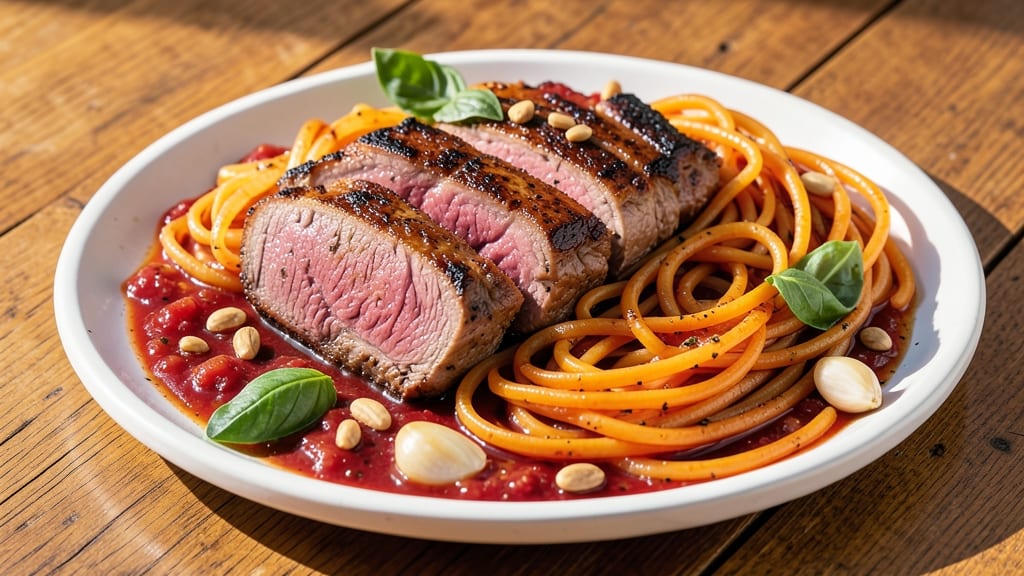
This beef and spaghetti squash recipe transforms a simple one-pan dinner into a restaurant-worthy meal with tender beef and silky squash strands. The secret lies in slow-braising the beef until fork-tender while roasting the squash until its flesh naturally separates into delicate, noodle-like strands—no peeling required.
Aromatic herbs and rich tomato sauce tie everything together, creating a dish that’s hearty yet balanced, perfect for cozy weeknights or special dinners.
What sets this recipe apart is the simplicity of preparation paired with maximum flavor. You’ll start by searing beef chunks in a Dutch oven, then layer in garlic, onions, and herbs before adding crushed tomatoes and broth.
Meanwhile, the spaghetti squash roasts alongside, its natural sweetness caramelizing as it softens. The result? A foolproof one-pan meal where every bite delivers juicy beef and creamy squash strands in perfect harmony.
The dish comes together in under an hour, with minimal cleanup—just one pot to wash. The beef stays moist and flavorful, while the squash strands achieve that silky, al dente texture that rivals pasta.
A sprinkle of fresh parsley and a drizzle of olive oil elevate the plating, making it feel like a gourmet dish without the fuss. This is comfort food at its finest, where every ingredient plays a role in creating something truly satisfying.
Serve with crusty bread to soak up the rich sauce or alongside a simple green salad for balance. The leftovers reheat beautifully, making it ideal for meal prep. Whether you're feeding a family or treating yourself, this recipe delivers bold flavors and effortless elegance—all in one pan.
Ingredients for beef and spaghetti squash
Transform one-pan simplicity into restaurant-quality beef and silky spaghetti squash strands with these carefully chosen ingredients.
| Ingredient | Amount | Notes |
|---|---|---|
| Chuck Roast 🥩 | 1 ½ lb | Trimmed of excess fat |
| Spaghetti Squash 🍠 | 1 whole | Medium-sized, halved lengthwise |
| Yellow Onion 🧅 | 1 whole | Medium, diced |
| Garlic Cloves 🧄 | 4 cloves | Fresh, minced |
| Canned Crushed Tomatoes 🍅 | 15 oz | High-quality, no salt added |
| Beef Broth 💧 | 1 ½ cups | Low-sodium preferred |
| Dry Red Wine 🍷 | ½ cup | Bold variety like Cabernet |
| Fresh Rosemary 🌿 | ¼ cup | Chopped, fresh preferred |
| Fresh Thyme 🌿 | ¼ cup | Leaves only, chopped |
| Olive Oil 🫒 | 2 tbsp | Extra-virgin, for searing |
| Salt 🧂 | 1 ½ tsp | Kosher or sea salt |
| Black Pepper 🌶️ | ½ tsp | Freshly ground |
| Fresh Parsley 🌿 | ¼ cup | Chopped, for garnish |
The chuck roast is non-negotiable here—its collagen-rich fat renders beautifully during slow cooking, creating a fork-tender texture. Look for cuts with good marbling at Whole Foods or your local butcher shop; avoid pre-cut packages that often contain less desirable trimmings. For the spaghetti squash, medium-sized (about 3-4 pounds) yields the best strands. The canned crushed tomatoes should be San Marzano if possible, or at minimum a high-quality brand like Muir Glen—the lower acidity preserves the beef's rich flavor. Fresh herbs make all the difference, so Trader Joe's bulk bins are perfect for stocking up on rosemary and thyme.
No red wine? Substitute with an extra 0.5 cup beef broth—just add a splash of balsamic vinegar for depth. Fresh herbs unavailable? Dried thyme at one-third the amount works, but fresh rosemary's piney aroma is irreplaceable. The olive oil should be extra-virgin—anything less will burn during searing. For the squash, if you can't find medium-sized, two small squashes work equally well. The chuck roast can be substituted with stew meat if needed, but chuck's fat content is ideal for this dish. The beef broth should be low-sodium to control seasoning balance.
This dish reheats beautifully—3-4 days in the fridge with the sauce kept separate prevents the squash from getting soggy. For longer storage, freeze for up to 3 months in airtight containers. The squash strands can be prepped ahead and stored separately for 2 days in the fridge before assembly. The beef and sauce keep well together for 4 days refrigerated. Garnish with fresh parsley just before serving to maintain vibrant color and freshness.
Why You'll Love This Recipe
- One-Pot Magic: I swear by this—just brown the chuck roast, toss in the squash halves (no peeling!), and let the oven do the rest. Minimal chopping, zero cleanup, and that rich beef sauce clings to every strand of squash like it’s been simmering all day.
- Savory-Sweet Balance: Between us, the crushed tomatoes and caramelized onions create this perfect contrast—deep, smoky beef against the natural sweetness of the squash. It’s the kind of dish where every bite feels like a hug, especially when the roast gets tender enough to pull apart.
- Meal Prep MVP: Honestly, this is my secret weapon for busy weeks. The leftovers reheat beautifully, and the squash holds up better than pasta—no mushy strands here. Pack it for lunches or serve it cold over salad for a totally different vibe.
- Budget-Friendly Feast: Chuck roast is a steal, and spaghetti squash stretches farther than you’d think. I’ll be real: my grocery bill drops when this becomes a staple. Plus, the canned tomatoes mean no fancy shopping—just good, hearty flavor without breaking the bank.
Step-by-Step instructions for beef and spaghetti squash one-pan dinner
This method delivers tender beef and silky spaghetti squash strands in a single flavorful pan.
Sear and Slice the Chuck Roast
Pat the 1.5 lb chuck roast completely dry with paper towels. Heat 2 tbsp olive oil in a large Dutch oven over medium-high heat until shimmering. Season the beef generously with 1.5 tsp salt and 0.5 tsp black pepper on all sides, then sear for 4-5 minutes per side until developing a deep brown crust.
Remove the beef from the pan and let it rest for 5 minutes. Using a sharp knife, slice the roast against the grain into ¼-inch thick strips. You'll end up with about 4-5 slices that will cook quickly in the remaining liquid. Set aside for now - we'll add it back later.
Sauté Aromatics and Brown the Squash
In the same Dutch oven, add the 1 whole yellow onion and cook for 5-6 minutes until softened and lightly caramelized. Add the 4 cloves minced garlic, 0.25 cup chopped fresh rosemary, and 0.25 cup chopped fresh thyme, cooking for 30 seconds until fragrant.
Carefully place the halved spaghetti squash cut-side down in the pan. Cook for 8-10 minutes until the cut sides develop golden brown spots. The squash will release its natural sugars, creating a caramelized base for the sauce. Flip the squash halves and continue cooking for another 5 minutes to ensure even browning.
Build the Flavorful Sauce
Remove the spaghetti squash from the pan and set aside. Add the sliced beef back to the Dutch oven along with the 15 oz canned crushed tomatoes, 1.5 cups beef broth, and 0.5 cup dry red wine. Bring to a simmer and cook for 10 minutes, stirring occasionally, until the sauce thickens slightly and the beef begins to tenderize.
Return the spaghetti squash to the pan and cover tightly. Reduce heat to low and let everything cook for 20-25 minutes, until the beef is fork-tender and the squash strands can be easily scraped with a fork. The squash should be soft enough that a knife slides in with minimal resistance.
Finish and Garnish
Once the beef is tender and the squash is fork-tender, remove the squash halves and scrape the strands directly into the sauce using a fork. Return everything to the pan and simmer uncovered for 5-7 minutes to allow the flavors to meld and the sauce to reduce slightly.
Taste and adjust seasoning if needed. Garnish with 0.25 cup chopped fresh parsley and serve immediately, with the silky spaghetti squash strands perfectly coated in the rich beef sauce. The dish should have a balance of tender beef, sweet squash, and aromatic herbs with just the right amount of acidity from the tomatoes and wine.
Pro Tips For Making Beef And Spaghetti Squash
- SEAR THE CHUCK ROAST: Chuck roast needs a good crust to stay juicy when it slows down later. Hit it with a hot, dry pan for 5-6 minutes per side—don’t rush, or you’ll end up with a gray, undercooked center. I used to skip this and wondered why my beef always turned out dry.
- CUT THE SQUASH LENGTHWISE: Halve the spaghetti squash lengthwise instead of slicing it into rings. It cooks faster and more evenly, and the strands scrape out cleaner. I learned this the hard way—ring cuts always left me with uneven, mushy bits.
- SWEAT THE ONIONS LOW AND SLOW: Yellow onions for this dish should caramelize just enough to sweeten the sauce, not burn. Keep the heat at medium-low and stir often—if they turn dark too soon, you’ve lost that rich depth. Sounds boring, but it makes a real difference.
- USE A LITTLE WATER IN THE TOMATOES: Stir in 2-3 tablespoons of water when opening the crushed tomatoes. It thins the sauce just enough to coat the beef and squash without making it watery. I was skeptical until I tried it—now I never skip it.
Troubleshooting great beef and spaghetti squash
Squash Too Dry
If your spaghetti squash strands come out dry or tough, it likely didn’t cook long enough. The squash needs to reach 180°F internal temperature for silky perfection. I’ve found that 30-35 minutes of covered simmering (after browning) is ideal.
For extra moisture, add ¼ cup beef broth when returning the squash to the pan in Step 3. 🌱
Beef Overcooked
Slicing the chuck roast too thin before adding it back to the pan causes it to overcook quickly. Keep the slices ¼-inch thick and add them back only after the aromatics are sautéed but before the tomatoes and wine.
For extra insurance, remove the beef after 15 minutes of simmering and let it rest while the squash finishes. 🥩
Sauce Too Thin
A thin sauce usually means the beef wasn’t cooked long enough to render its fat. Let the beef simmer uncovered for an extra 5-7 minutes at the end to thicken the sauce naturally.
If it’s still too thin, remove the squash and beef, then reduce the sauce on medium-high heat for 3-4 minutes**—just until it coats the back of a spoon. 🍲
Squash Not Separating
If the squash refuses to separate into strands, it likely wasn’t roasted enough before simmering. In Step 2, ensure the cut sides develop deep golden-brown spots before adding liquid. For stubborn squash, microwave the halves for 2-3 minutes before scraping to soften them further. 🍠
Mushy Squash Strands
Overcooking the squash after scraping turns strands to mush. Once you scrape the squash into the sauce, simmer uncovered for only 5-7 minutes—no longer! The residual heat will finish cooking it. If needed, reheat the sauce separately and toss in the squash strands just before serving. ⏱️
Herbs Too Strong
Fresh herbs can overpower the dish if added all at once. Instead of adding all the rosemary and thyme in Step 2, divide them: use ½ the amount during sautéing and reserve the rest to sprinkle in at the very end. This balances the flavors without overwhelming them. 🌿
Nutrition facts
Frequently asked questions
Can I substitute ground beef for chuck roast in this recipe?
Ground beef works but will yield a different texture—it cooks much faster and may dry out. For best results, use 80/20 ground chuck and cook it just until browned (3-4 minutes) before adding the tomatoes and wine. The fat content helps create a richer sauce, but expect a more crumbly texture than sliced chuck.
How do I know when the spaghetti squash is fully cooked?
The squash is done when a fork slides in with minimal resistance and the flesh separates easily into strands. Test by inserting a knife—it should go through like butter. If it's still firm, cover and simmer 5-10 more minutes. Overcooking turns strands mushy, so aim for 180°F internal temperature.
Can I make this recipe ahead of time?
Yes! Store the cooked beef and sauce separately from the squash strands in airtight containers for up to 4 days. Reheat the sauce first, then gently toss in the squash strands just before serving to maintain texture. For squash-only prep ahead, scrape the strands and refrigerate for 2 days—they reheat beautifully in the sauce.
What's the best way to reheat leftovers?
Reheat sauce and beef separately on low heat until warmed through, then combine with squash strands just before serving. Microwaving works too—heat sauce for 1-2 minutes, then stir in squash for 30 seconds. Never reheat squash strands alone, as they'll absorb too much moisture and turn soggy.
Can I use butternut squash instead of spaghetti squash?
Butternut squash won't create strands, but it works beautifully mashed or cubed in this dish! Roast the cubes until tender (25-30 minutes at 400°F) and add them to the sauce during the final 10 minutes of simmering. The sweetness pairs well with the beef, though the texture will be more rustic than noodle-like.