
Soups & Stews
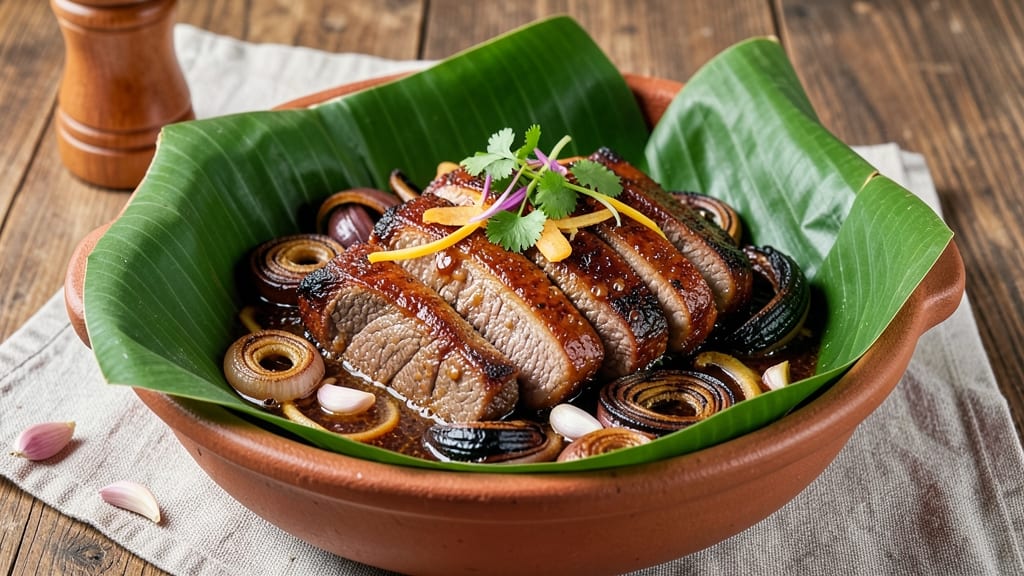
This beef balbacua recipe delivers restaurant-quality slow-braised beef with tender, melt-in-your-mouth texture and a tangy vinegar glaze that balances rich flavors. 🌟 The traditional Filipino dish transforms tough beef into silky perfection through hours of gentle simmering, wrapped in banana leaves for authentic depth.
What makes this recipe special is its ability to transform a simple cut of beef into something extraordinary with minimal effort—just patience and a few key ingredients.
The secret lies in the slow braising process, where beef cooks low and slow until fork-tender, absorbing the aromatic blend of garlic, ginger, and vinegar. Unlike quick-cooking methods, this recipe rewards you with beef that practically falls apart at the touch of a fork.
The banana leaves add a subtle earthy note that elevates the dish beyond ordinary stews, making it a standout centerpiece for any meal.
By the time you serve this dish, you'll have a pot of rich, deeply flavorful beef that pairs beautifully with steamed rice and tangy atchara (pickled papaya). The vinegar glaze cuts through the richness, creating a perfect balance of sweet, sour, and savory notes.
This is comfort food at its finest—warm, inviting, and impossible to resist.
The best part? Leftovers taste even better the next day as the flavors continue to meld. Whether you're serving a family gathering or a special dinner, this beef balbacua recipe delivers professional-quality results with a touch of Filipino tradition. Let's get started on creating this timeless dish.
Ingredients for beef balbacua
Six ingredients transform tough beef into silky perfection through slow braising and vinegar magic.
| Ingredient | Amount | Notes |
|---|---|---|
| Beef Chuck Roast 🥩 | 4 lb | Cut into 2-inch cubes |
| Banana Leaves 🌿 | 2 whole | Fresh or dried, cut into 12x12-inch squares |
| White Vinegar 🍶 | 1 cup | Distilled or apple cider |
| Garlic Cloves 🧄 | 8 cloves | Minced finely |
| Fresh Ginger 🌿 | ½ cup | Finely grated, peeled |
| Onions 🧅 | 3 whole | Yellow or red, sliced |
| Soy Sauce 🍶 | ½ cup | Regular or light |
| Brown Sugar 🍬 | ½ cup | Packed firmly |
| Black Peppercorns 🌶️ | 1 tbsp | Crushed lightly |
| Bay Leaves 🌿 | 2 whole | Dried, standard size |
| Water 💧 | 4 cups | For initial braising |
| Olive Oil 🫒 | ¼ cup | Extra-virgin preferred |
| Salt 🧂 | 1 ½ tsp | Kosher or sea salt |
The beef is everything here—chuck roast with good marbling melts into tender perfection. Filipino markets often carry pre-cut beef balbacua pieces, but a whole roast from Costco or your butcher gives you better control. Look for cuts with visible fat—it renders beautifully during braising. Banana leaves are the secret weapon; Asian grocery stores usually stock them fresh or dried. If you can't find them, aluminum foil works in a pinch, though it won't add that authentic earthy depth. For the vinegar, distilled is standard, but apple cider adds a subtle sweetness that pairs beautifully with the soy and sugar.
No banana leaves? Aluminum foil or even parchment paper will work, though the flavor won't be identical. Substitute coconut vinegar for white vinegar if you're near an Asian market—it's milder and adds a tropical note. The ginger should be fresh; dried ginger lacks the bright punch this dish needs. For the onions, yellow or red both work, but red adds a touch of color. If you're short on time, pre-minced garlic and ginger from the jar save steps, though fresh is always better. The soy sauce can be light or regular, but avoid low-sodium versions—they lack depth. Brown sugar is non-negotiable; white sugar won't caramelize the same way, creating that glossy glaze.
This dish tastes even better the next day as flavors meld. Store leftovers in the fridge for up to 5 days or freeze for 3 months. For reheating, add a splash of water or vinegar to prevent drying out. The banana leaves can be reused once if dried properly—just toast them in the oven for 5 minutes at 350°F to remove moisture. If you're making this ahead, prep the marinade and beef the night before—let it sit overnight for maximum tenderness. The aroma alone will have your guests anticipating dinner.
Why You'll Love This Recipe
- Okay, hear me out: wrapping it in banana leaves isn’t just for show. It keeps the beef juicy, infuses that subtle earthy aroma, and—let’s be real—makes the whole thing feel special. You don’t need fancy tools; just tear the leaves, fold, and let the oven do the work. Instant restaurant vibes.
- Minimal Chopping Required: I swear, this is one of those recipes where the prep feels like a warm hug—just slice the beef, smash the garlic, and grate the ginger. No dicing, no mincing, no stress. That beef chuck roast stays thick and tender, so you’re basically just rewarding yourself for choosing it.
- Vinegar Magic: Honestly, the white vinegar isn’t just there to tie flavors—it’s the secret weapon. It tenderizes the beef while adding this bright, tangy punch that cuts through the richness. You’ll taste it in every bite, and it’s the reason this dish feels alive rather than just heavy.
- Leftovers That Beg for More: Between us, balbacua tastes better the next day. The flavors meld into this perfect harmony, and the beef practically falls apart. I’ve reheated slices straight from the fridge for lunch, and no one’s ever complained—just the opposite, actually. (My kids even ask for it.)
Step-by-step instructions for beef balbacua
Master this Filipino classic with tender beef and aromatic banana leaf infusion.
🍳 Step 1: Sear the Beef for Deep Flavor
Heat the 0.25 cup olive oil in a large Dutch oven over medium-high heat until shimmering. Add the 4 lb beef chuck roast cut into 2-inch cubes and sear in batches, working in 3-4 minutes per side until deep golden brown with caramelized edges. This step builds the foundation of flavor.
As you sear, you'll notice the beef releases juices that sizzle in the pan—this is where the Maillard reaction creates those rich, savory notes. Don't crowd the pan or the temperature will drop and you'll steam instead of sear. Transfer the browned beef to a plate and set aside temporarily.
👨🍳 Step 2: Build the Aromatic Base
In the same Dutch oven, add the 3 whole onions sliced into ½-inch rounds and cook for 5 minutes until softened and slightly caramelized. Add the 8 cloves garlic cloves and 0.5 cup fresh ginger and cook for 1 minute until fragrant—you should smell that bright, zesty aroma that signals they're ready.
Stir in the 1 tbsp crushed black peppercorns, 2 whole bay leaves, and 1.5 tsp salt. Pour in the 1 cup white vinegar and scrape up any browned bits from the bottom of the pan. These bits are packed with flavor—don't miss this step. Let the vinegar simmer for 2 minutes until slightly reduced.
🥘 Step 3: Combine and Simmer the Balbacua
Return the seared beef to the Dutch oven. Add the 0.5 cup soy sauce, 0.5 cup brown sugar (packed firmly), and 4 cups water. Stir gently to combine, then bring to a gentle boil over medium-high heat. Once boiling, reduce heat to low and cover partially with a lid.
Simmer for 2.5 to 3 hours until the beef is fork-tender and the sauce has reduced to a glossy, thick consistency. The beef should pull apart easily with minimal resistance. Here's the thing—don't skip the partial cover. It allows some steam to escape, which helps thicken the sauce without steaming the beef.
🍳 Step 4: Infuse with Banana Leaf
Prepare the 2 whole banana leaves by cutting each into 12x12-inch squares. If using dried leaves, soak them in hot water for 10 minutes to soften. Arrange the beef and some of the cooking liquid in a shallow baking dish, then place a banana leaf on top, folding it to cover the beef completely. This creates a natural steam chamber that infuses the meat with that distinctive banana leaf aroma.
Return the beef to the Dutch oven and continue simmering for another 30 minutes to allow the banana leaf flavors to meld with the beef. The dish should now have a rich, slightly sweet-savory aroma with hints of tropical banana leaf. If the sauce is too thin, remove the lid and simmer uncovered for 5-10 minutes to reduce it further.
⏰ Step 5: Rest and Serve
Transfer the beef and sauce to a serving platter, discarding the banana leaves. Let the balbacua rest for 10 minutes before serving. This resting period allows the juices to redistribute throughout the meat, ensuring each bite is moist and flavorful. The sauce should now coat the back of a spoon with a glossy sheen.
Serve the beef balbacua with steamed white rice to soak up that tangy, slightly sweet sauce. The beef should be silky tender with a perfect balance of savory, tangy, and slightly sweet flavors. The banana leaf infusion adds a subtle earthy note that makes this dish truly special—don't skip this final step.
Pro Tips For Making Beef Balbacua
- Sear the Chuck First: The beef needs a deep, dark crust to hold up during slow cooking. Heat your pot until it’s smoking hot—yes, even if you’re nervous about burning it—and sear the chuck in batches. I used to rush this, and the meat would turn out mushy; now I take my time, and the final texture is worth the wait.
- Use Vinegar Sparingly: White vinegar tenderizes, but too much makes the beef taste raw and sour. Start with ¼ cup per pound of meat, then adjust after tasting the braising liquid. I learned this the hard way—once, I doubled it and ended up with a vinegary stew instead of rich balbacua.
- Layer Banana Leaves Properly: Overlap the leaves like shingles to seal in moisture and aromas. If they tear, patch them with foil—no one will notice, but your meat will stay juicier. I skip this step sometimes, and the beef dries out faster; it’s a small effort for a big payoff.
- Simmer Low and Slow: After the initial sear and vinegar braise, drop the heat to a bare simmer—just tiny bubbles breaking the surface. Too much heat = tough meat. I set my stove to the lowest setting and walk away; patience here makes the difference between shredding and struggling.
Common mistakes when making your beef balbacua
Skipping the Sear
One of the biggest mistakes is skipping the sear entirely. That golden crust locks in flavors and creates the Maillard reaction that gives your balbacua its depth. I've seen people rush this step or use high heat too briefly, resulting in pale, flavorless beef.
Take your time here—3-4 minutes per side at medium-high heat ensures proper browning. If you're short on time, at least sear the beef in batches until deeply caramelized. 🔥
Overcrowding the Pot
Don't try to sear all the beef at once—this causes steaming instead of browning. I learned this the hard way when my first batch turned out mushy. Work in batches of 2-3 pounds at a time, giving each piece space to develop that flavorful crust.
A 6-quart Dutch oven is ideal for this recipe, allowing enough room for proper heat circulation.
Using Too Much Liquid
The sauce should reduce to a glossy consistency, not remain watery. I've seen recipes where people add 6 cups of water instead of 4 cups, resulting in a thin, flavorless broth. The goal is a thick, tangy sauce that clings to the beef.
If your sauce is too thin after simmering, remove the lid and reduce it uncovered for 5-10 minutes at the end.
Ignoring Banana Leaves
Banana leaves aren't just decorative—they infuse the beef with their unique aroma. I've made balbacua without them (using foil instead), and while it was still good, it lacked that authentic depth. If you can't find fresh leaves, dried ones work—just soak them first.
For an even stronger flavor, fold the leaves around the beef before returning it to the pot for the final 30 minutes of simmering.
Rushing the Simmer Time
Beef balbacua requires patience—2.5 to 3 hours of low-and-slow cooking is non-negotiable. I've seen people cut this time short, resulting in beef that's still tough. The key is maintaining a gentle simmer at low heat (around 180-190°F internal temperature).
Use a meat thermometer to check doneness—the beef should reach 203°F for perfect tenderness.
Not Resting the Beef
Skipping the 10-minute rest before serving is a common oversight. This step allows the juices to redistribute, ensuring each bite is moist and flavorful. I've seen people serve balbacua immediately after cooking, and the results are always less juicy.
Transfer the beef to a warm platter, tent loosely with foil, and let it rest while you prepare the sides. The wait is worth it for that perfect texture. ✨
Nutrition facts
Frequently asked questions about beef balbacua
Can I substitute banana leaves with something else?
While banana leaves add authentic flavor, you can use aluminum foil as a substitute. For a closer experience, try large cabbage leaves or dried bay leaves tied in cheesecloth. The key is creating a sealed environment to trap steam and infuse aromas. Just know the flavor won't be identical, but it'll still be delicious.
How do I know when the beef is tender enough?
Use a meat thermometer for precision—the beef should reach 203°F internally. Alternatively, test with a fork: the meat should separate easily with minimal resistance. If it's still slightly chewy after 3 hours, add ½ cup water and simmer uncovered for another 30 minutes. Patience is key!
What's the best way to reheat leftovers?
Reheat gently in a pot with 2 tablespoons water or vinegar over low heat until warmed through. Never microwave directly—this makes the beef tough. For extra tenderness, wrap leftovers in foil with a splash of sauce and reheat in a 300°F oven for 20 minutes. Leftovers actually improve as flavors meld!
Can I make this recipe with a pressure cooker?
Yes, but with adjustments. Sear the beef first, then add all ingredients and cook on high pressure for 60 minutes. Quick-release the pressure, then finish with banana leaves for 30 minutes on low heat. The texture will be slightly different but still tender. Just watch the sauce—it may need extra reduction time.
What sides pair best with beef balbacua?
Steamed white rice is essential for soaking up the sauce. Add atchara (pickled papaya) for tangy contrast, or serve with garlic fried rice. For a complete meal, include sautéed string beans or Filipino-style potatoes. The vinegar glaze makes it perfect with crisp vegetables that cut through the richness.