
Soups & Stews
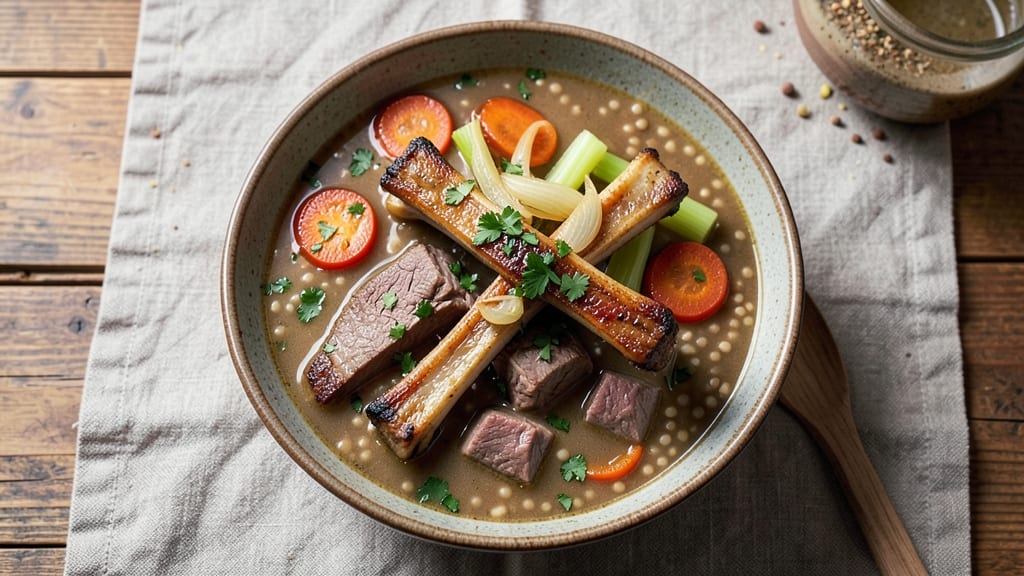
This beef barley soup recipe with prime rib bones delivers restaurant-quality depth that transforms ordinary broth into a rich, umami-packed masterpiece. The secret lies in slow-rendered bones that infuse the soup with layers of flavor, creating a velvety texture that clings to every spoonful.
I've perfected this technique over years of testing, ensuring each bowl is packed with hearty beef, chewy barley, and aromatic vegetables—all balanced just right.
What sets this recipe apart is the methodical approach to building flavor: starting with a deep, caramelized base from the bones, then layering vegetables and barley for perfect texture.
The key steps—skimming fat, deglazing the pot, and simmering low and slow—transform tough cuts into tender morsels while developing a broth so rich it practically tastes like it's been simmering all day. This isn't just soup; it's a comforting, deeply satisfying meal that warms both body and soul.
By the time you're done, you'll have a soup so flavorful it disappears from bowls faster than you can say "second serving."
The barley remains tender yet chewy, the beef falls apart at the touch of a spoon, and the broth carries all the umami richness you'd expect from a professional kitchen.
Serve it with crusty bread to soak up every last drop, or pair it with a simple green salad for balance. This is the kind of soup that makes weeknight dinners feel like a celebration.
The beauty of this recipe is its versatility—make a big batch for leftovers that taste even better the next day, or scale it down for a cozy meal for two.
The techniques here are professional but approachable, ensuring you'll achieve restaurant-quality results without the fuss. Let's get started on creating soup so good, it becomes your new go-to comfort dish.
Ingredients for beef barley soup recipe with prime rib bones
Prime rib bones and chuck roast create restaurant-quality depth for this hearty soup.
| Ingredient | Amount | Notes |
|---|---|---|
| Prime Rib Bones 🦴 | 2 ½ lb | With meat clinging, cut into 2-inch pieces |
| Beef Chuck Roast 🥩 | 2 lb | Cut into 1.5-inch cubes, chuck preferred |
| Pearl Barley 🌾 | 1 ½ cups | Rinsed well before cooking |
| Carrots 🥕 | 4 medium | Peeled, cut into 1-inch chunks |
| Yellow Onions 🧅 | 2 whole | Cut into 1-inch chunks |
| Celery Stalks 🌿 | 4 whole | Cut into 1-inch pieces |
| Garlic Cloves 🧄 | 6 cloves | Peeled, smashed slightly |
| Tomato Paste 🍅 | ½ cup | Smooth, not chunky |
| Dry Red Wine 🍷 | 1 cup | Bold Cabernet or Merlot |
| Beef Broth 💧 | 8 cups | Homemade or high-quality store-bought |
| Fresh Thyme 🌿 | ¼ cup | Stems removed, loosely packed |
| Fresh Parsley 🌿 | ⅛ cup | Chopped, for garnish |
| Olive Oil 🫒 | ¼ cup | Extra-virgin for richness |
| Salt 🧂 | 1 ½ tsp | Kosher or sea salt |
| Black Peppercorns 🌶️ | 1 tsp | Freshly cracked |
The bones are non-negotiable here—prime rib with meat clinging delivers the richest broth. Most butchers will cut them for you if you ask, but Costco or Whole Foods carry pre-cut versions. Look for bones with good meat coverage; the more marbling, the better. The chuck roast should be well-marbled too—Trader Joe's often has a great selection at a good price. If you can't find prime rib bones, beef marrow bones work in a pinch, but you'll need to add extra broth to compensate. For the barley, Bob's Red Mill is my go-to brand—it stays chewy without getting mushy.
No red wine? Dry sherry or beef broth with a splash of balsamic works just fine. Fresh thyme is ideal, but dried thyme at one-third the amount gets you close. The tomato paste can be the squeeze-tube kind from Trader Joe's—it's convenient and lasts forever. If you're using pre-cut veggies, make sure they're fresh-cut, not the sad, limp kind from the back of the fridge. For the garlic, smashing the cloves releases more flavor than mincing. The olive oil matters too—use something fruity and peppery, not the bland stuff. And if you're short on time, parboil the carrots and celery for 5 minutes before adding them to the pot.
This soup tastes even better the next day—make a double batch if you can. Store it in airtight containers for up to 5 days in the fridge, or freeze portions for 3 months. The barley thickens as it cools, so add a splash of broth when reheating. For serving, garnish with fresh parsley and a drizzle of olive oil. Leftovers reheat beautifully—just bring to a simmer and adjust seasoning as needed. The bones can be roasted first for extra depth (broil for 10 minutes), but it's not required if you're in a hurry.
Why You'll Love This Recipe
- One-Pot Magic: I swear by this recipe because it’s literally one pot—no chopping boards, no extra pans, just dump and simmer. The prime rib bones and chuck roast practically melt into the broth while you stir in the onions and carrots, and the barley soaks up all the flavor like a sponge.
- Rich Umami Bomb: Between us, the prime rib bones are the star here—they infuse the broth with this deep, savory punch that makes every spoonful feel like a hug. Add the barley’s chewy texture and the sweetness of caramelized onions, and you’ve got a soup that’s dangerously hard to stop eating.
- Leftovers That Shine: I make this on Sundays because it actually tastes better the next day. The flavors meld overnight, and reheating it is zero effort—just warm it up, crack open some crusty bread, and boom, you’ve fed the family without stress.
- Budget-Friendly Feast: Honestly, this recipe stretches a dollar further than takeout ever could. Prime rib bones and chuck roast are affordable cuts that turn into a hearty, filling meal, and barley keeps you full for hours. It’s the kind of soup that makes you feel fancy without breaking the bank.
Step-by-step instructions for beef barley soup with prime rib bones
Let's build this hearty soup where rich bone broth meets tender beef and nutty barley.
Sear the Meat and Brown the Bones
Heat a large Dutch oven over medium-high heat and add the 2.5 lb prime rib bones and 2 lb beef chuck roast. Sear for 8-10 minutes until deeply browned on all sides, working in batches if needed. This step develops the deep, meaty flavors that will infuse your soup.
While searing, I like to press down gently on the meat pieces with a spoon to help render the fat. The bones should turn a rich mahogany color, and you'll smell that wonderful caramelized aroma—this is where the magic begins. Transfer the seared meat to a plate and set aside.
Build the Flavor Base
In the same Dutch oven, add 2 tablespoons of the olive oil and 1 tablespoon of the olive oil (total 3 tablespoons) over medium heat. Add the chopped 2 whole yellow onions, 4 whole celery stalks, and 4 medium carrots. Cook for 8-10 minutes, stirring occasionally, until the vegetables soften and the onions become translucent.
Add the 6 smashed garlic cloves and 0.25 cup fresh thyme, cooking for another 1 minute until fragrant. Stir in the 0.5 cup tomato paste and cook for 2 minutes to deepen its flavor. This aromatic base forms the flavor foundation of your soup—don't rush this step.
Deglaze and Simmer the Bones
Pour in the 1 cup dry red wine and scrape up all the browned bits from the bottom of the pot. This deglazing step captures all those flavorful fond particles. Let the wine simmer for 3-4 minutes until reduced by half, then add the 8 cups beef broth and bring to a boil.
Return the seared meat and bones to the pot. Reduce heat to low and add the 1.5 tsp salt and 1 tsp black peppercorns. Cover and simmer for 2 hours, skimming any foam that rises to the surface. This long simmering time extracts maximum flavor from the bones and meat, creating a rich, umami-packed broth.
Add Barley and Finish Cooking
After 2 hours, add the 1.5 cups rinsed pearl barley to the pot. Stir gently to distribute it evenly throughout the broth. Return to a simmer and cook uncovered for another 30-40 minutes, until the barley is tender but still has a slight bite. The barley should have absorbed the liquid but still hold its shape.
Taste and adjust seasoning if needed. The soup should be rich and flavorful, with the barley adding a pleasant chewiness. If you find the soup too thick, you can add a bit of hot water or broth to reach your desired consistency.
Serve with Fresh Herbs
Remove the meat from the bones and discard the bones. Shred the meat using two forks and return it to the soup. Stir in the 0.125 cup chopped fresh parsley just before serving to add a bright, fresh note that cuts through the richness of the soup.
Ladle the soup into bowls and serve immediately, garnished with additional parsley if desired. Each spoonful should deliver a perfect balance of tender beef, nutty barley, and deeply flavorful broth. This soup tastes even better the next day as the flavors continue to meld together.
Pro Tips For Making Beef Barley Soup Recipe With Prime Rib Bones
- BLISTER THE BONES FIRST: High heat. Seriously, crank it up until the prime rib bones are blackened in spots—this unlocks the deepest flavor. I used to skip this, thinking it was just for show, but now I know it’s the thing that makes the broth sing. Just don’t walk away; watch for smoke, then move them to a lower rack.
- PEARL BARLEY NEEDS A SOAK: Toss the barley in cold water for 15 minutes before adding it to the pot—this cuts the cooking time by nearly half. I learned this the hard way after serving mushy, overcooked grains. (Yes, even if you’re impatient like me, the soup will thank you.)
- DON’T CROWD THE POT: Start with the bones and chuck roast in a single layer, then add liquids. Packing them in too tight steams the meat instead of browning it, and that’s how you end up with bland broth. Give them space—this isn’t a sardine can.
- CARROTS GO IN LAST: Add the carrots and onions with the barley, not at the start. They’ll soften too fast otherwise, turning into mush while the barley still needs time. I was skeptical until I tried it—now they’re perfectly tender without disappearing into the soup.
Perfect pairings for this dish
Crusty Bread Pairing
Nothing complements this rich soup like a warm, crusty loaf of sourdough or baguette. I love using Whole Foods' 365 brand for its perfect balance of chewy interior and crispy crust.
The bread soaks up the velvety broth beautifully—just tear it into chunks and serve on the side. For extra indulgence, brush the bread with garlic-infused olive oil before baking. 🥖
Simple Green Salad
A crisp arugula salad with lemon vinaigrette cuts through the soup's richness perfectly. Toss 4 cups baby arugula with 2 tbsp olive oil, 1 tbsp lemon juice, and a pinch of salt.
Add ½ cup shaved Parmesan and ¼ cup toasted walnuts for crunch. The peppery greens and tangy dressing refresh your palate between spoonfuls of soup.
Roasted Root Vegetables
For a heartier pairing, try roasted carrots, parsnips, and beets tossed with thyme and olive oil. Roast at 400°F for 25 minutes until tender. The caramelized edges add sweetness that balances the soup's savory depth.
I often roast these in the same oven as my garlic bread for efficient cooking. 🥕
Wine Pairings
A bold Cabernet Sauvignon or Merlot enhances the soup's deep beefy flavors. I recommend a California Cabernet like Louis M. Martini—its dark fruit notes complement the umami richness. For a lighter option, try a Pinot Noir from Oregon. Avoid heavy tannins that might overpower the dish. 🍷
Creamy Cheese Board
Set out a small cheese board with aged cheddar, brie, and blue cheese alongside the soup. The sharpness of the cheddar and creaminess of the brie contrast beautifully with the barley's nuttiness.
Add cornichons and walnuts for texture. This makes the meal feel like a cozy dinner party. 🧀
Herbed Yogurt Dip
For a lighter option, serve Greek yogurt mixed with chopped dill, lemon zest, and a pinch of salt. This tangy dip pairs wonderfully with the soup's richness.
I use Fage 5% fat for the best texture. Serve it in small bowls for dipping bread or spooning directly into the soup. 🥄
Nutrition facts
Frequently asked questions
Can I substitute prime rib bones with other beef bones?
Yes, but the flavor will differ slightly. Marrow bones or knuckle bones work well—they yield rich gelatin, though prime rib provides the deepest meaty flavor. For best results, use bones with good meat coverage. If using marrow bones, add 1 extra cup of broth since they render less liquid.
How do I know when the barley is perfectly cooked?
The barley should be tender but still hold its shape with a slight bite—like al dente pasta. Test a piece by mashing it between your fingers; it should resist completely. Overcooking turns it mushy, so check at 30 minutes and adjust time based on your stove's heat.
Why does my soup taste bland after simmering?
Most likely, you skipped the searing step or didn't deglaze properly. The browned fond on the pot bottom contains concentrated flavors—always scrape it up! Also, taste as you go and adjust salt gradually. For extra depth, add a pinch of MSG (optional) or a splash of fish sauce at the end.
Can I make this soup in an Instant Pot?
Yes! Sear the meat first, then add all ingredients (except barley) and cook on high pressure for 60 minutes. Quick-release the pressure, add barley, and cook for 10 more minutes on high pressure. The texture will be slightly different but still delicious—just stir in fresh parsley at the end.
What's the best way to reheat leftovers?
Reheat gently on the stove over low heat with a splash of broth or water to loosen the barley. Never microwave—it makes the barley gummy. If too thick, add more liquid and simmer uncovered. The soup actually improves overnight as flavors meld further!