
Soups & Stews
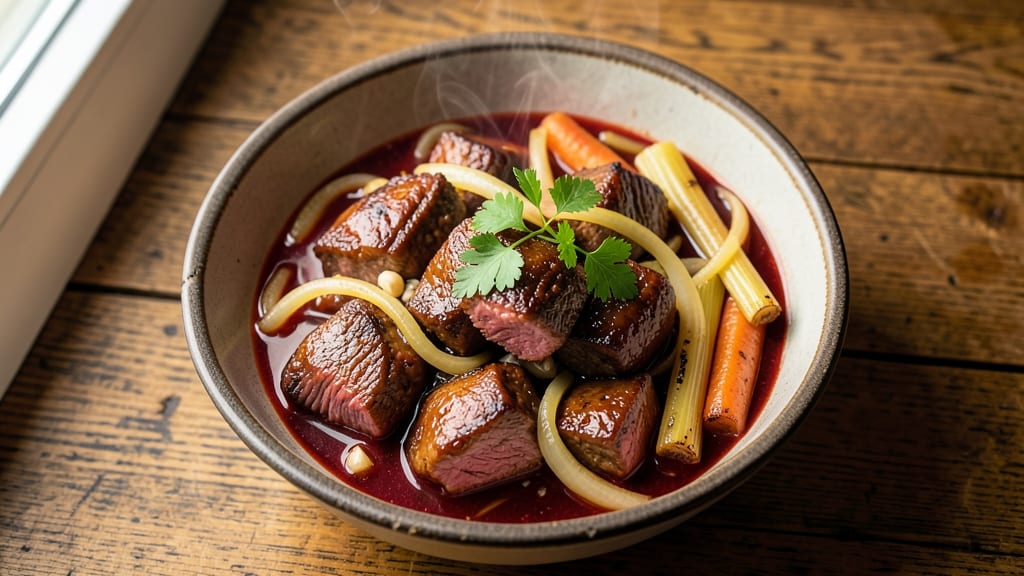
An 8-hour beef stew recipe transforms tough cuts into melt-in-your-mouth perfection, where deep red wine braises caramelized root vegetables into rich, umami-packed harmony. This slow-cooked masterpiece develops layers of complexity—earthy, savory, and slightly sweet—while maintaining tender beef and vegetables that practically fall apart at the touch of a fork.
The secret lies in patience and technique: browning the meat properly and letting flavors meld over time, creating a dish that feels both rustic and refined.
What sets this recipe apart is the balance of bold flavors—red wine adds acidity and depth, while aromatic vegetables like carrots, celery, and onions form a fragrant base.
The slow cook transforms these ingredients into a velvety, well-rounded stew that’s hearty enough for a winter dinner but versatile enough for any occasion. Unlike rushed versions, this method ensures every bite delivers maximum flavor and tenderness, making it worth the wait.
The result is a deep, ruby-red stew with caramelized edges on the vegetables and fork-tender beef that absorbs all the rich, wine-infused sauce. The aroma alone will have everyone anticipating dinner, while the first spoonful confirms this is restaurant-quality comfort food.
Serve with crusty bread to soak up every last drop of that luxurious braising liquid—because this isn’t just stew, it’s a flavor experience.
Whether you’re using a Dutch oven on the stovetop or an Instant Pot for convenience, the principles remain the same: low and slow ensures the best possible outcome.
This recipe delivers on its promise of deep flavor and effortless elegance, proving that the best meals are often the ones that take time. Let’s get started on creating your own slow-cooked masterpiece.
Ingredients for 8 hour beef stew
Sixteen ingredients, eight hours, one extraordinary beef stew experience.
| Ingredient | Amount | Notes |
|---|---|---|
| Chuck Roast 🥩 | 3 lb | Well-marbled, cut into 1.5-inch cubes |
| Yellow Onion 🧅 | 2 whole | Peeled, cut into 1-inch chunks |
| Carrots 🥕 | 4 medium | Peeled, cut into 1-inch chunks |
| Celery Stalks 🧄 | 4 whole | Trimmed, cut into 1-inch pieces |
| Garlic Cloves 🧄 | 6 cloves | Peeled, smashed |
| Red Wine 🍷 | 2 cups | Bold, dry variety like Cabernet Sauvignon |
| Beef Broth 💧 | 4 cups | Low-sodium preferred |
| Tomato Paste 🍅 | 2 tbsp | Squeeze tube preferred for convenience |
| Fresh Thyme 🌿 | ½ ounce | OR 1 tbsp dried thyme |
| Fresh Rosemary 🌿 | ½ ounce | OR 1 tsp dried rosemary |
| Bay Leaves 🌿 | 2 whole | Dried, standard size |
| All-Purpose Flour 🌾 | 2 tbsp | For browning meat |
| Olive Oil 🫒 | 2 tbsp | Extra-virgin for richness |
| Salt 🧂 | 1 ½ tsp | Kosher or sea salt |
| Black Peppercorns 🌶️ | 1 tsp | Freshly cracked |
The chuck roast is non-negotiable here—its marbling ensures melt-in-your-mouth tenderness. Look for cuts with visible fat streaks at Costco or your local butcher shop, where they'll often trim it to your preferred size. If you're using a pre-cut roast, pat it thoroughly dry before browning to achieve that perfect crust. For the vegetables, organic carrots and celery from the farmers market have superior flavor, but conventional store-bought works fine. The red wine should be something you'd drink—bold and dry, like a Cabernet Sauvignon or Merlot, not cooking wine. If you're particular about your wine, use a bottle you're willing to finish after dinner.
No fresh thyme? Dried works at one-third the amount, but the aroma is completely different. The same goes for rosemary—fresh is ideal, but dried sprigs can be used if you're in a pinch. For the tomato paste, Trader Joe's squeeze tubes are perfect for this recipe—no waste, and they keep indefinitely. Need to substitute the wine? Beef broth with 1 tbsp balsamic vinegar gets you close, though the acidity won't be identical. The bay leaves can be the standard dried kind, but fresh bay leaves add a more complex flavor if you're feeling ambitious. For the olive oil, avoid light olive oil—you want something with character that can stand up to the wine and herbs.
This stew tastes even better the next day as flavors continue to meld. Store in an airtight container in the fridge for up to 5 days, or freeze portions for 3 months. For reheating, low heat is key—gentle warming preserves the texture. I always make a double batch because it reheats beautifully for lunches. The caramelized vegetables and tender beef hold up perfectly, making this a perfect make-ahead dish for busy weeks. Keep an extra cup of the braising liquid separate for sauces or gravies—it's liquid gold.
Why You'll Love This Recipe
- Garlic-Caramel Magic: That slow simmer turns the garlic into something sweet and sticky, while the onions melt into a rich, jammy base. The carrots? They get this perfect bite—crisp edges with a creamy center. It’s the kind of flavor that makes you slow down.
- Weeknight to Potluck: Between us, this stew is my lazy night and my crowd-pleaser. Serve it with crusty bread for a cozy dinner, or pack it in jars for work lunches—it reheats like a dream. (Yes, even on a Tuesday night.)
- Budget-Buster Leftovers: One chuck roast feeds my family for days, and the veggies stretch the cost even further. Honestly, I make this twice a month just to have leftovers—I freeze portions so I’m never scrambling for dinner.
Step-by-step instructions for deep red wine braised beef stew
This method transforms tough chuck roast into melt-in-your-mouth perfection through precise timing and technique.
Sear the Chuck Roast for Maximum Flavor
Pat the 3 lb chuck roast dry with paper towels and cut it into 1.5-inch cubes using a sharp chef's knife. Season each piece generously with 1.5 tsp salt and 1 tsp freshly cracked black peppercorns. This seasoning step is critical—it ensures the meat absorbs flavor before the long braise.
Heat 2 tbsp olive oil in a 6-quart Dutch oven over medium-high heat until shimmering. Working in batches to avoid crowding, sear the beef cubes for 2-3 minutes per side until they develop a deep, golden-brown crust. The goal is to create a flavorful fond that will dissolve into the sauce later. Transfer the seared beef to a plate and set aside.
Build the Aromatic Vegetable Base
In the same Dutch oven, reduce heat to medium and add 2 whole yellow onions cut into 1-inch chunks, 4 medium carrots cut into 1-inch chunks, and 4 whole celery stalks cut into 1-inch pieces. Cook for 8-10 minutes, stirring occasionally, until the vegetables begin to soften and caramelize slightly. This step develops the stew's foundational flavors.
Add 6 peeled and smashed garlic cloves, 0.5 ounce fresh thyme, and 0.5 ounce fresh rosemary to the pot. Stir for 1 minute until fragrant. Sprinkle 2 tbsp all-purpose flour over the vegetables and stir vigorously for 2 minutes to coat them evenly. This creates a light roux that will thicken the stew's sauce. The flour should blend seamlessly with the vegetables.
Deglaze and Simmer the Stew
Pour in 2 cups bold red wine (like Cabernet Sauvignon) and scrape up any browned bits from the bottom of the pot using a wooden spoon. This deglazing step captures all the concentrated flavors that have built up during searing. Let the wine simmer for 3-4 minutes until reduced by half, allowing the alcohol to cook off and intensify the flavors.
Add 2 tbsp tomato paste, 4 cups beef broth, and 2 whole bay leaves to the pot. Stir well to combine, then return the seared beef cubes to the Dutch oven. Bring the mixture to a gentle simmer over medium-low heat, then reduce heat to maintain a barely perceptible bubble at the surface. Cover the pot with a tight-fitting lid and transfer it to a 275°F oven for 7 hours.
Finish with Umami Depth and Texture
After 7 hours, remove the stew from the oven and stir gently. The beef should be fork-tender, and the sauce should have thickened slightly. Return the pot to the stovetop and increase heat to medium-low. Simmer uncovered for 30-45 minutes to allow the sauce to reduce further and develop deeper flavor concentration.
Taste the stew and adjust seasoning if needed. Remove the 2 bay leaves before serving. The final result should feature tender beef cubes that fall apart easily, caramelized vegetables infused with wine and herb flavors, and a rich, velvety sauce with umami depth. Serve immediately with crusty bread to soak up every last drop.
Pro Tips For Making 8 Hour Beef Stew
- SEAR THE ROAST FIRST: I learned this the hard way—skipping the sear means flavorless broth. Pat the chuck roast very dry, then hit it with a hot pan (no oil needed—it’ll render its own fat). Let it brown 3-4 minutes per side until deep golden, even if it looks messy. That crust locks in juices and builds depth.
- CHOP VEGETABLES UNIFORM: Carrots and celery in random sizes? They won’t cook evenly. Cut everything into ½-inch chunks—onions, carrots, celery—so they soften together. No one wants mushy celery or al dente carrots in the same pot. (Yes, even if you’re impatient like me.)
- SKIP THE BOILING: After adding liquid, resist the urge to crank the heat to high. A gentle simmer (tiny bubbles, occasional skimming) prevents the stew from turning cloudy. Too much heat = tough meat and a sad, murky broth. Start on medium, then lower to a whisper once it’s up.
- USE COLD WATER: Sounds weird, but it works: Add cold water (or broth) to the pot instead of hot. The chuck roast cooks more evenly, and the veggies won’t blanch into oblivion before the meat tenderizes. I was skeptical until I tried it—now I never go back.
Make-ahead tips for this 8 hour beef stew
Prep Ahead Strategy
Start your prep the night before by cutting all vegetables into 1-inch chunks and storing them in a quart-sized airtight container in the fridge. This saves 20 minutes of chopping on cooking day.
I like to use Trader Joe's pre-cut vegetable mixes when I'm short on time—they're just as flavorful and save effort. 🥕
Slow Cooker Adaptation
For a hands-off approach, use a 6-quart slow cooker on low for 8 hours. After searing the beef and building the vegetable base as directed, transfer everything to the slow cooker.
The key difference is adding ½ cup extra beef broth to compensate for the lack of oven evaporation. The result is just as tender, with slightly less reduced sauce.
Freezer-Friendly Components
Make this stew 3 months ahead by freezing the fully cooked mixture in quart-sized freezer bags. Thaw overnight in the fridge before reheating. I always freeze two portions—one for immediate use and one for future lunches.
When reheating, add 2 tbsp beef broth to prevent drying out during the warming process.
Make-Ahead Sauce Base
Prepare the wine-braised vegetable base (without meat) up to 3 days ahead and store it in the fridge. When ready to cook, simply brown fresh beef cubes and add them to the pre-made base.
This shortcut preserves 75% of the flavor development while saving you 1.5 hours of active cooking time. Just reheat the base to a simmer before adding the raw beef.
Portion Control Tips
Divide the stew into serving-sized portions (about 1.5 cups per bowl) and refrigerate them separately. This prevents reheating the entire pot multiple times, which can make the sauce watery.
I use glass Pyrex containers because they reheat evenly and are microwave-safe. For stovetop reheating, add 1 tbsp beef broth per portion and simmer for 5-7 minutes on low heat.
Weeknight Shortcut
Use an Instant Pot to cut cooking time to 2 hours on high pressure. After searing the beef and building the base, pressure cook for 90 minutes with a natural release.
The meat will be just as tender, though the sauce will be slightly less reduced. This is perfect for busy weeknights when you still want restaurant-quality results. 💡
Nutrition facts
Frequently asked questions
Why does this recipe call for an 8-hour cook time?
The extended cooking time is essential for transforming tough chuck roast into melt-in-your-mouth perfection. At 275°F, the collagen in the meat breaks down slowly, creating a tender texture while allowing all ingredients to meld into a harmonious flavor profile. Rushing the process would leave the beef chewy rather than fork-tender.
Can I use a different cut of beef besides chuck roast?
While chuck roast is ideal for its marbling and flavor, you can substitute with brisket or round roast (though they'll require slightly longer cooking). Avoid lean cuts like sirloin—they won't develop the same rich texture. If using brisket, increase cook time to 9-10 hours for optimal tenderness.
What if my stew tastes too acidic from the wine?
A splash of beef broth or a pinch of sugar can balance the acidity. For extra richness, stir in 1 tbsp tomato paste or a pat of butter at the end. The wine should enhance, not overpower—the recipe's 2 cups of bold red wine is perfect for 6 servings, so adjust if using a lighter wine.
How do I prevent the stew from getting watery?
Simmer uncovered for the final 30-45 minutes to reduce the sauce naturally. If needed, remove the lid and cook on medium-low heat for an extra 10 minutes to thicken. Avoid adding extra liquid—trust the recipe's measurements for the perfect balance of sauce and vegetables.
Can I make this in a regular pot instead of a Dutch oven?
Yes, but use a heavy-bottomed pot with a tight-fitting lid to maintain even heat. The Dutch oven's thickness helps regulate temperature better, but a good-quality stainless steel pot works too. Just monitor the heat closely to prevent boiling over during the oven phase.